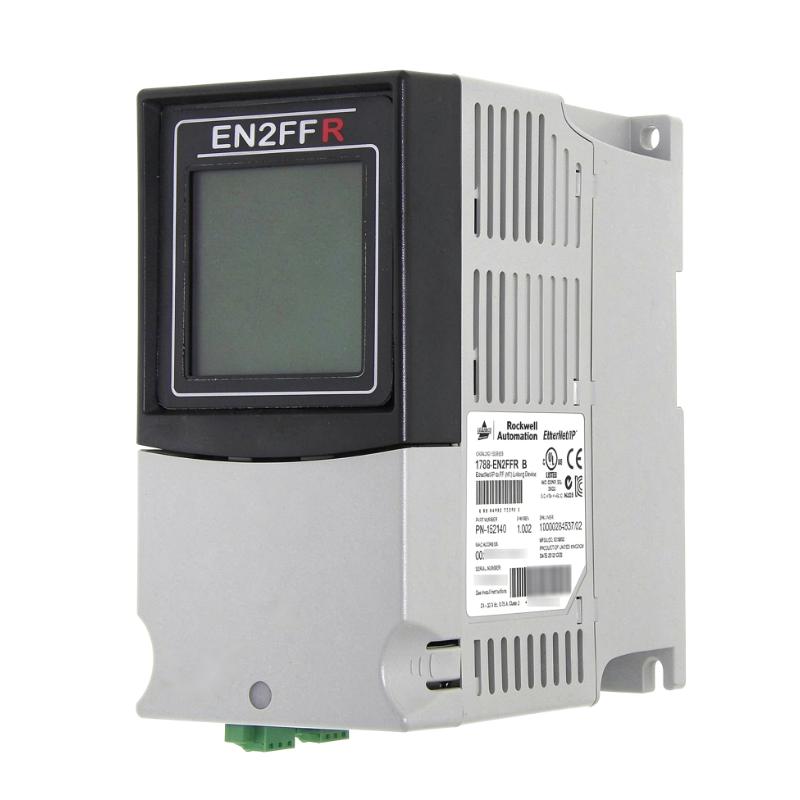
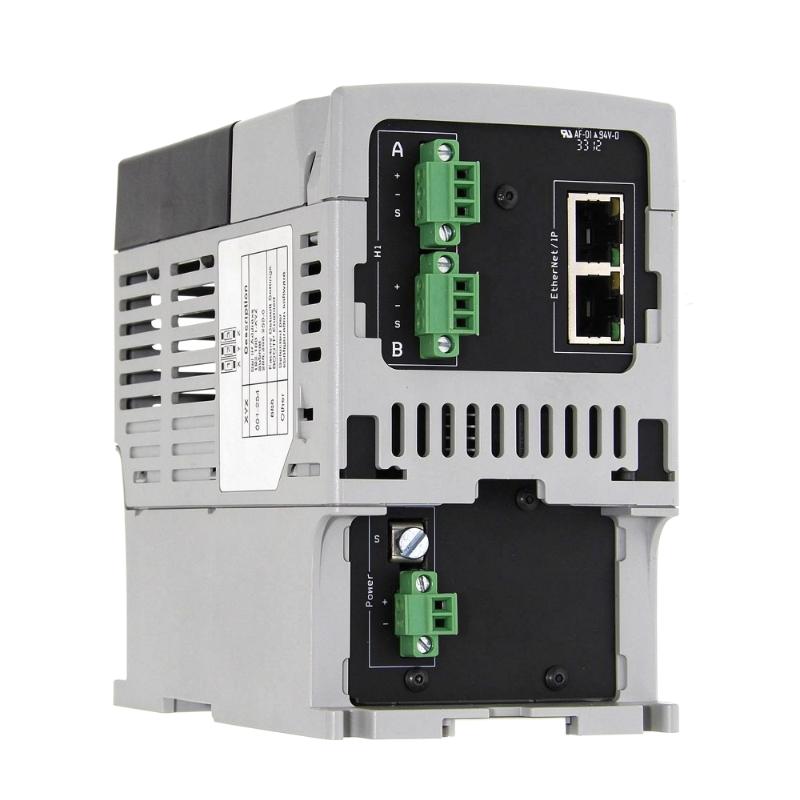
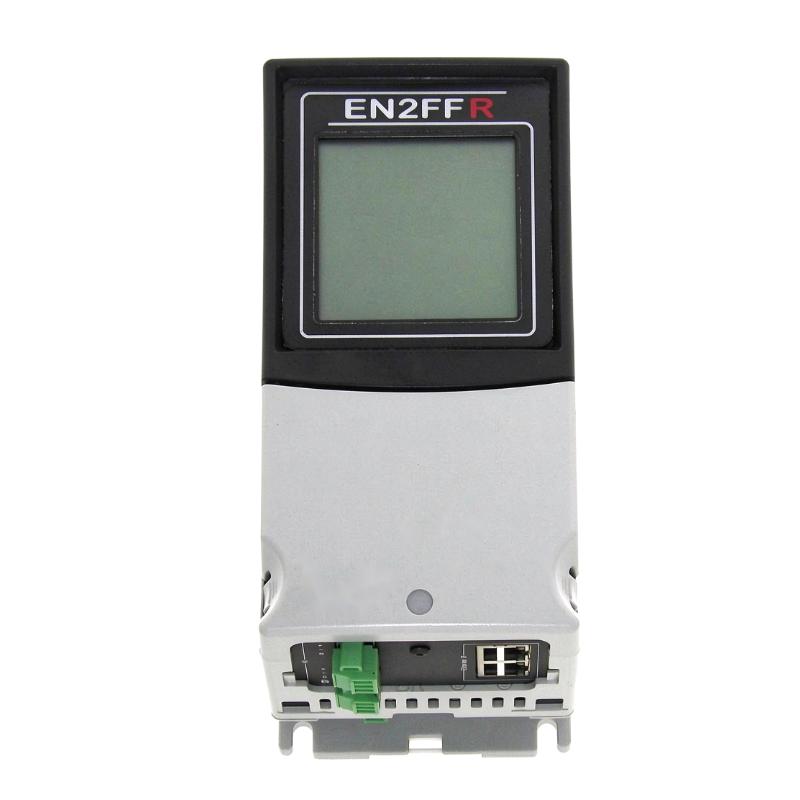
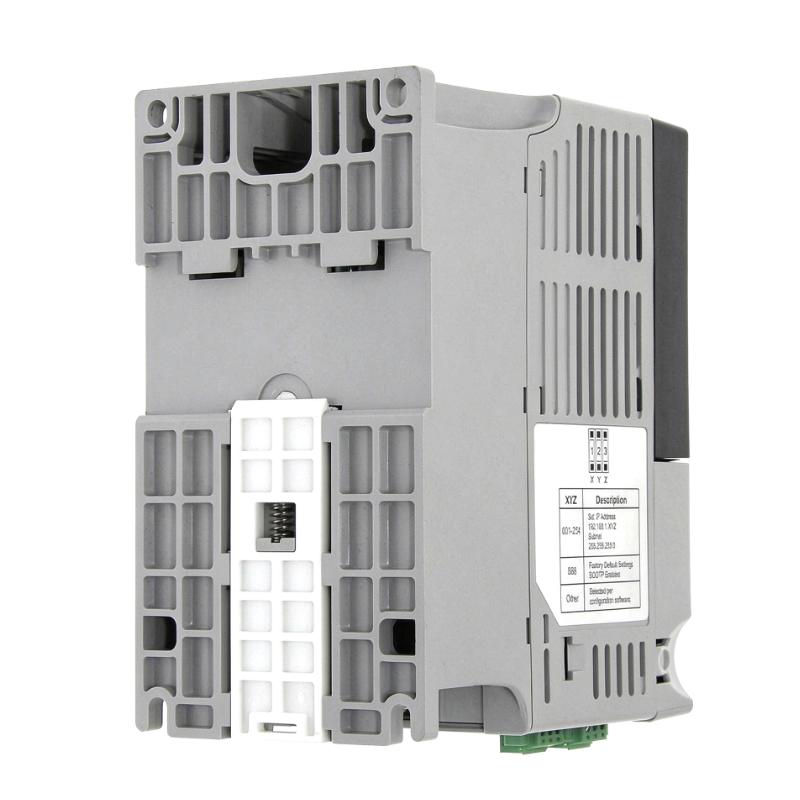
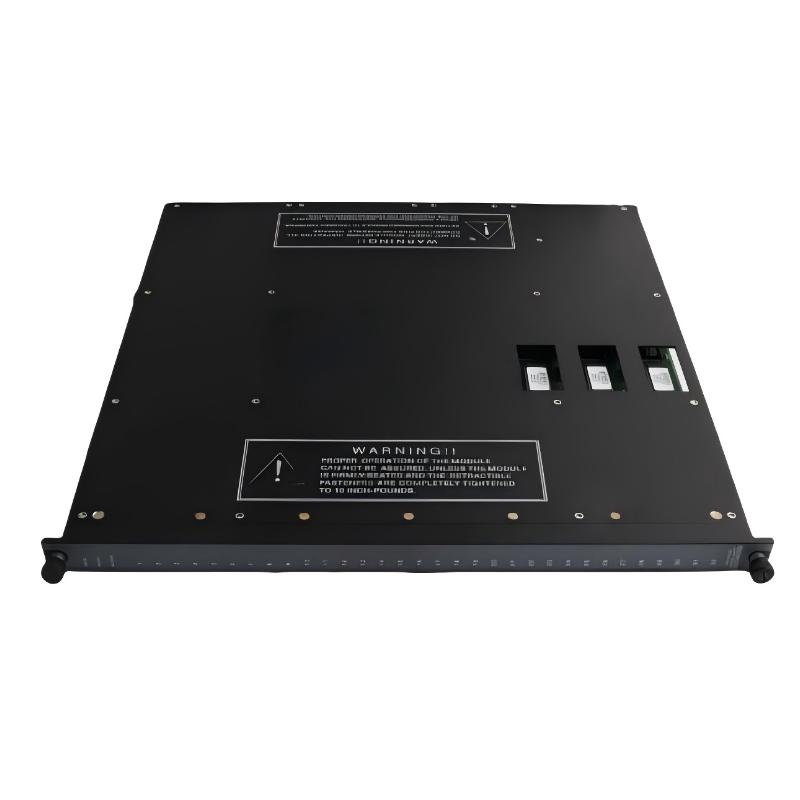
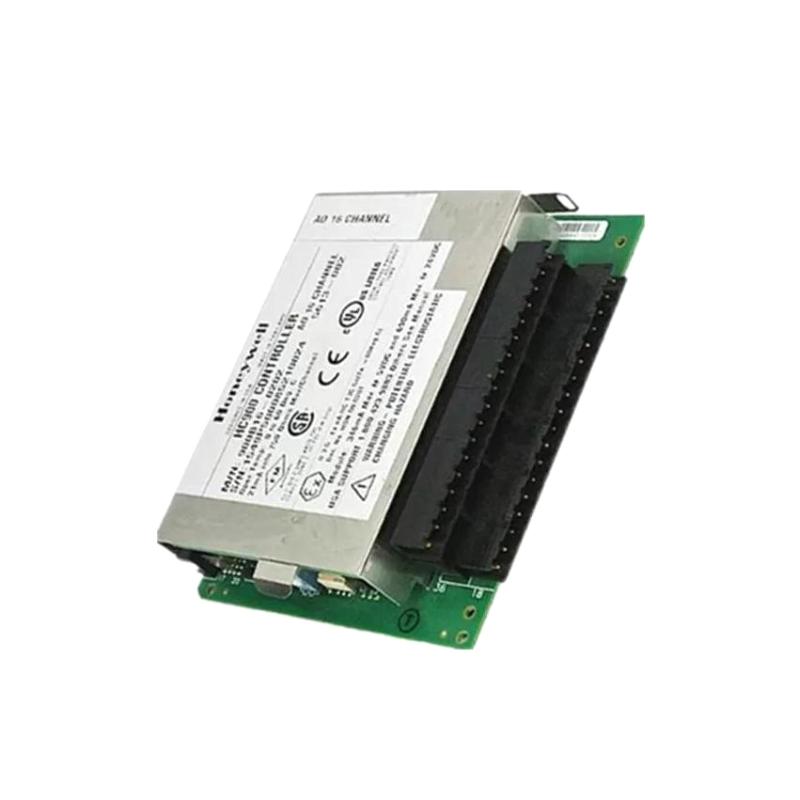
Allen Bradley 1788-EN2FFR Redundant EtherNet/IP to Fieldbus Gateway Device
Allen Bradley 1788-EN2FFR Redundant EtherNet/IP to Fieldbus Gateway Device
0.0
Points
Brand:Allen Bradley PLC Item No.:1788-EN2FFR Product Origin:USA Product Dimensions:152 x 80 x 136 mm Product Weight:0.54 kg Payment:T/T, Western Union, Credit Card Goods_stock:15 Shipping Port:Xiamen, China Lead Time:1-3 Days Condition:Brand New And Original Warranty:1 Year Certificate:COO
The Allen Bradley 1788-EN2FFR Redundant EtherNet/IP to Fieldbus Gateway Device is described as a gateway intended for industrial communication integration, with redundancy indicated in its product designation. Gateways are used in automation architectures to connect compatible networks and facilitate data exchange between controllers and field equipment.
EtherNet/IP is commonly used for communication in industrial control systems. Fieldbus technologies, meanwhile, support communication with a variety of instruments and devices. When a gateway supports the required protocols, it can provide an interface between these network environments without requiring every connected device to use the same communication technology.
For systems where availability is important, redundancy may also be a consideration. However, engineers must distinguish between a product that supports redundant operation and one that merely participates in a redundant system. The supported failover mechanism, configuration requirements, and behavior during faults must be confirmed before the device is selected for a critical application.
Before purchasing or installing the 1788-EN2FFR, verify the complete catalog number, supported fieldbus protocol, redundancy capabilities, and compatibility with the existing control platform. These checks help reduce commissioning problems and avoid assumptions based solely on a product title.
Technical Specifications
Parameter
Specification
Brand
Allen Bradley
Model
1788-EN2FFR
Product Type
Redundant EtherNet/IP to Fieldbus Gateway Device
Dimensions
152 × 80 × 136 mm
Weight
0.54 kg / 1.19 lb
Ethernet Protocol
EtherNet/IP, subject to exact model verification
Fieldbus Protocol
Verify against the manufacturer's documentation
Redundancy Function
Confirm supported redundancy architecture and failover behavior
Compatibility
Verify controller, network, and field-device requirements before installation
Note: Dimensions and weight are based on the supplied product data. The exact catalog number, product function, fieldbus compatibility, and redundancy specifications should be verified before the device is used in an industrial application.
Recommended Related Models
The following Allen Bradley product families may be relevant when reviewing industrial network architecture, controllers, and distributed I/O. They are related product groups, not confirmed direct replacements for the 1788-EN2FFR.
Product Family
Typical Application
Allen Bradley 1756 Series
ControlLogix controllers and communication modules
Allen Bradley 1769 Series
CompactLogix controllers and I/O modules
Allen Bradley 1734 Series
POINT I/O modules and accessories
Allen Bradley 1794 Series
FLEX I/O modules and accessories
Allen Bradley 1786 Series
ControlNet network components and accessories
Popular Related Models
When maintaining industrial communication systems, review the exact catalog numbers of the installed controllers, network interfaces, and I/O modules to ensure compatibility.
Product Family
Product Category
1756 Series
ControlLogix automation platform
1769 Series
CompactLogix automation platform
1734 Series
POINT I/O system
1794 Series
FLEX I/O system
1786 Series
ControlNet network hardware and accessories
Selection recommendation:Before purchasing the Allen Bradley 1788-EN2FFR, confirm its exact product identity, supported fieldbus protocol, redundancy features, and compatibility with the target control system. This is especially important when the gateway is intended for an application where communication availability is critical.
Applications
The Allen Bradley 1788-EN2FFR Redundant EtherNet/IP to Fieldbus Gateway Device is identified by a product description emphasizing EtherNet/IP connectivity, fieldbus integration, and redundancy. Before deploying this model, engineers should verify the exact supported fieldbus protocol, redundancy architecture, and compatible control platforms against the manufacturer's documentation.
In industrial automation, gateway devices can help integrate communication networks that use different protocols, allowing control systems to exchange data with compatible field equipment.
Potential application areas include:
Industrial network integration: Connecting compatible Ethernet-based control systems with supported fieldbus networks.
Process automation: Supporting data exchange between controllers and field-level equipment when the gateway supports the required protocol.
Distributed control environments: Helping integrate networked devices across different parts of an automation system.
System availability planning: Evaluating supported redundancy functions where communication continuity is important.
Maintenance and replacement: Identifying gateway hardware by its complete catalog number when servicing existing installations.
The exact application depends on the gateway's verified capabilities. Do not assume that every fieldbus protocol or redundant network configuration is supported.
Advantages
When the product's stated functions are confirmed against its technical documentation, a redundant EtherNet/IP-to-fieldbus gateway may offer several practical benefits for industrial network design.
Cross-network connectivity: Gateway technology can support data exchange between compatible Ethernet-based control systems and fieldbus devices.
Integration flexibility: A suitable gateway may help connect equipment that uses different industrial communication protocols.
Redundancy-oriented design: Where supported, redundant communication paths or gateway arrangements can help improve network availability.
Simplified system architecture: A dedicated gateway can provide a defined interface between supported network segments.
Maintenance efficiency: Accurate model identification and configuration records help engineers troubleshoot communication issues and plan replacements.
Legacy equipment integration: Compatible gateway solutions can help retain existing field devices when upgrading part of an automation network.
Redundancy does not automatically guarantee uninterrupted operation. Actual availability depends on the device design, supported redundancy mechanism, network configuration, and failure-recovery behavior.
Technical FAQs
Q1: What is the purpose of an EtherNet/IP-to-fieldbus gateway?
A gateway transfers or maps data between supported communication networks. The precise data types, operating modes, and supported fieldbus protocols depend on the specific device.
Q2: What does EtherNet/IP provide in an industrial control system?
EtherNet/IP uses standard Ethernet technology and the Common Industrial Protocol (CIP) to support industrial communication between compatible controllers, I/O systems, and other devices.
Q3: What does redundancy mean in gateway applications?
Redundancy generally involves an additional device, connection, or communication path intended to maintain availability if a supported component fails. The exact behavior must be confirmed in the product documentation.
Q4: Does a redundant gateway guarantee zero communication interruption?
No. Failover time and recovery behavior depend on the redundancy design, network topology, configuration, and supported fault conditions.
Q5: How can the correct fieldbus protocol be identified?
Check the complete catalog number, product label, technical manual, and supported protocol list. Do not infer fieldbus compatibility from the product description alone.
Q6: What should be checked if the gateway cannot exchange data?
Inspect the power supply, network connections, configuration, device status indicators, and protocol-specific diagnostics. Verify both sides of the gateway to isolate the communication fault.
Q7: Can any fieldbus device be connected to this gateway?
No. The field device must use a protocol and configuration supported by the gateway. Device addressing, data mapping, and communication parameters may also need to be configured.
Q8: What is important when configuring a redundant network?
Verify the supported redundancy topology, primary and secondary roles where applicable, network addressing, synchronization requirements, and failover behavior. Follow the manufacturer's documented procedure.
Q9: Can the gateway be replaced while the system is running?
Do not assume hot replacement is supported. Determine the impact on the control process and follow the manufacturer's instructions and site-approved maintenance procedures.
Q10: How should the gateway be tested after installation?
Check power and network status, confirm protocol configuration, test data exchange, and verify redundancy or failover behavior if the feature is documented and supported. Complete commissioning tests before returning the system to normal operation.