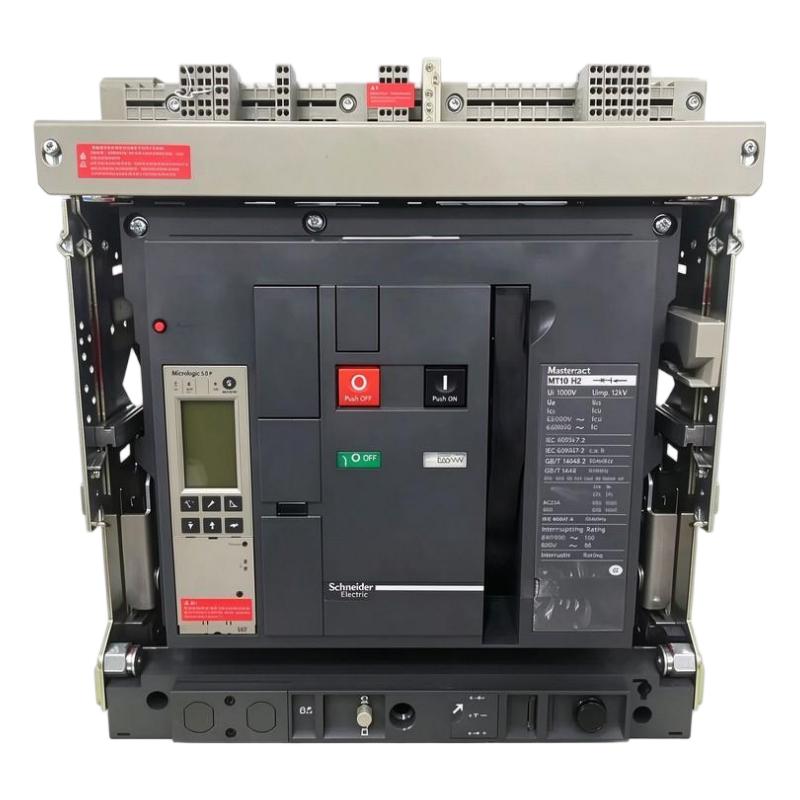
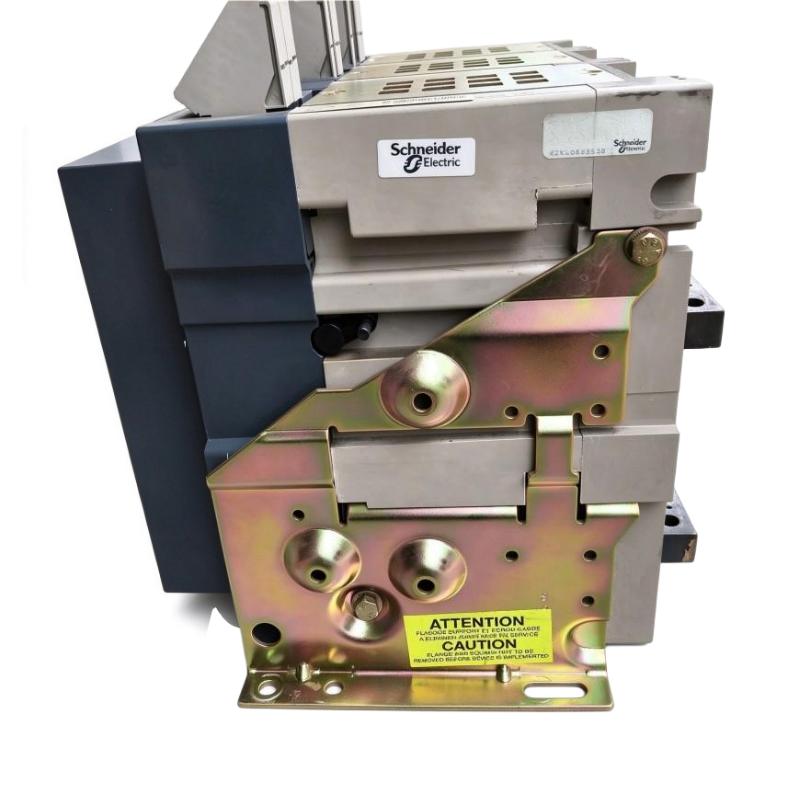
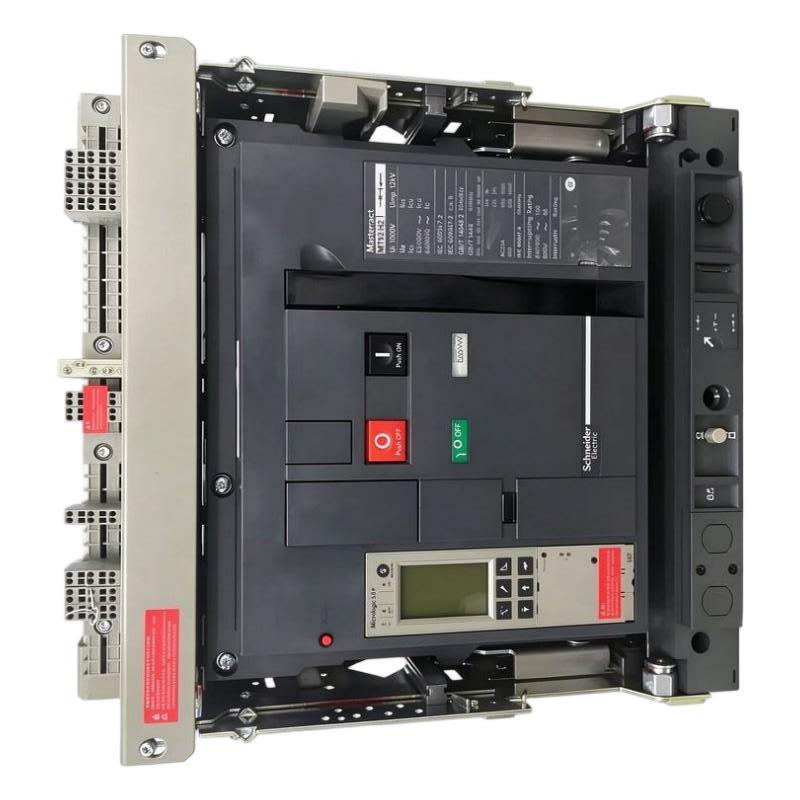
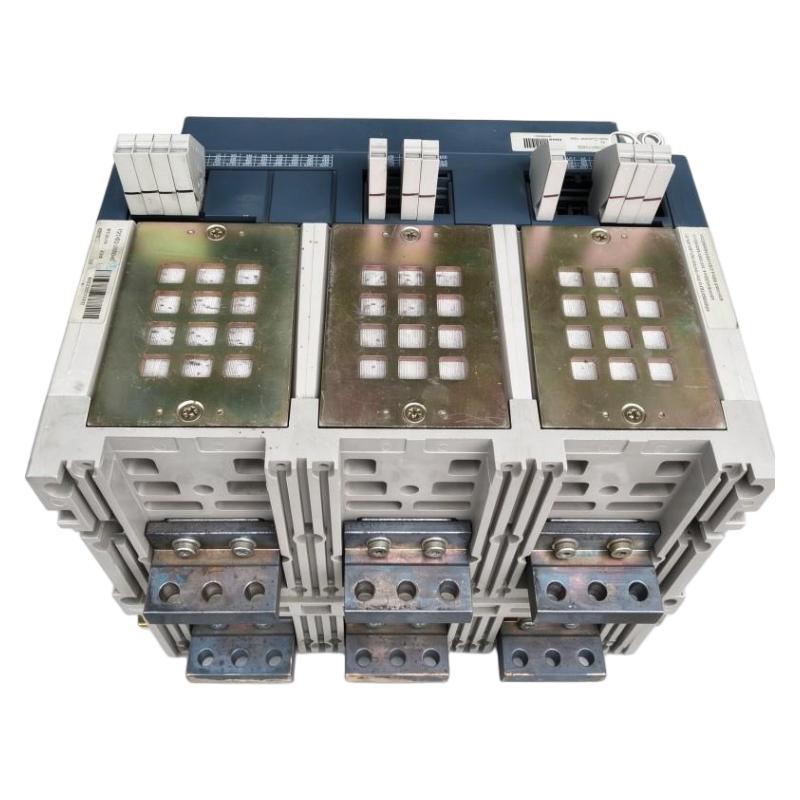
Brand:Schneider PLC Item No.:MT12H2 Product Origin:France Product Dimensions:352 x 422 x 297 mm Product Weight:50 kg Payment:T/T, Western Union, Credit Card Goods_stock:15 Shipping Port:Xiamen, China Lead Time:1-3 Days Condition:Brand New And Original Warranty:1 Year Certificate:COO
The Schneider MT12H2 Breaker is an industrial circuit breaker model for consideration in electrical distribution and protection applications. In industrial facilities, circuit breakers help protect electrical circuits by interrupting specified fault conditions and providing controlled switching within a properly designed electrical system.
Selecting the appropriate breaker requires careful evaluation of its electrical characteristics and the installation environment. Rated current, operational voltage, breaking capacity, trip-unit type, and protection coordination are key considerations. These parameters determine whether the device is suitable for the circuit and the equipment it is intended to protect.
For maintenance teams and industrial equipment integrators, accurate product identification is particularly important when replacing an existing breaker. The complete model reference should be checked against the installed unit, including any accessories or configuration-specific features. Physical similarity alone is not sufficient to establish interchangeability.
Industrial spare-parts suppliers can help support maintenance planning by providing clear model identification and verified specifications. Before installation, the selected breaker should be checked against the electrical system design and the manufacturer's instructions.
Technical Specifications
Parameter
Specification
Brand
Schneider Electric
Model
MT12H2
Product Type
Circuit Breaker
Product Category
Industrial Electrical Protection
Dimensions
352 × 422 × 297 mm
Weight
50 kg / 110.23 lb
Rated Current
Verify against the exact product reference
Rated Operational Voltage
Confirm from the product nameplate
Breaking Capacity
Verify for the applicable voltage and configuration
Trip Unit
Confirm the installed trip-unit type
Mounting and Connections
Verify against the specific product configuration
Installation Requirements
Follow the applicable manufacturer's instructions
Specification note: Dimensions and weight are based on the information supplied for this listing. Verify the electrical ratings and exact product configuration before installation or replacement.
Recommended Related Models
The following Schneider Electric product models and families may be useful for comparison when reviewing industrial circuit protection requirements. They should not be treated as direct substitutes without checking their ratings and configurations.
Model or Family
Product Type
Selection Consideration
Schneider MT10H2
Circuit Breaker
Compare ratings and installation requirements
Schneider MT12H2
Circuit Breaker
Confirm the complete product reference and configuration
Schneider MT25H2
Circuit Breaker
Verify current rating, breaking capacity, and mounting
Schneider NW Series
Air Circuit Breaker
Evaluate system requirements and application suitability
Popular Related Models
Other Schneider Electric circuit breaker families may also be relevant when maintaining or upgrading industrial electrical distribution systems.
Product Family
Product Type
Typical Evaluation Focus
Schneider MT Series
Circuit Breakers
Electrical ratings and configuration compatibility
Schneider MTE Series
Circuit Breakers
Protection requirements and installation fit
Schneider NW Series
Air Circuit Breakers
Main distribution and high-current protection applications
Schneider Compact Series
Molded Case Circuit Breakers
Breaking capacity, circuit requirements, and mounting
Selection reminder:Confirm the complete catalog number, nameplate ratings, breaking capacity, trip-unit configuration, and mounting details before ordering or installing a replacement. Similar model names do not guarantee electrical or mechanical interchangeability.
Applications
The Schneider MT12H2 Breaker is an industrial circuit protection product intended for use in electrical distribution and power control applications, subject to verification of its exact product configuration. Circuit breakers play an important role in industrial facilities by interrupting specified overload and short-circuit conditions to help protect electrical equipment and distribution circuits.
Potential application areas include:
Industrial Power Distribution: Protect electrical circuits in distribution assemblies when the breaker ratings match the system requirements.
Manufacturing Facilities: Support electrical protection arrangements for production equipment and industrial infrastructure.
Control and Distribution Panels: Integrate into compatible electrical panels according to the manufacturer's mounting and wiring requirements.
Industrial Machinery: Form part of a properly designed protection system for equipment supplied by industrial power circuits.
Maintenance and Replacement Projects: Provide a model reference for identifying and replacing existing circuit protection equipment after compatibility checks.
Electrical System Upgrades: Support equipment renewal when the breaker's electrical ratings and protection characteristics meet the revised system design.
Before selecting this model, verify the complete catalog reference, rated current, operating voltage, breaking capacity, trip-unit configuration, and mounting requirements. These details should not be inferred from the model designation alone.
Advantages
1. Protection Against Electrical Faults
A correctly selected circuit breaker interrupts specified abnormal current conditions, helping limit potential damage to conductors and connected equipment.
2. Integration into Industrial Electrical Assemblies
Industrial circuit breakers can be incorporated into compatible switchboards and distribution panels when their dimensions, terminals, and ratings meet the installation requirements.
3. Controlled Circuit Switching
Depending on the product design, a breaker can provide a means of switching a circuit during normal operation. Safe electrical isolation must still follow the applicable procedures.
4. Coordination with Other Protective Devices
Proper protection coordination helps determine which device operates during a fault, reducing unnecessary interruption to unaffected sections of an electrical system.
5. Support for Maintenance Planning
Recording the exact model, installed accessories, and electrical ratings helps maintenance teams identify the correct component during inspections and replacement work.
6. Application-Specific Selection
Checking trip characteristics, connection arrangements, and system fault levels helps ensure the selected breaker suits the intended installation.
Technical FAQs
Q1: What is the primary function of the Schneider MT12H2 Breaker?
Its intended role is circuit switching and protection, subject to the exact product configuration. Confirm the applicable protection functions and ratings using the product nameplate and technical documentation.
Q2: How does a circuit breaker respond to an overload?
Depending on its design, the breaker detects current exceeding the permitted operating conditions and trips according to its protection characteristics. The response depends on the trip mechanism and settings.
Q3: What is the difference between overload protection and short-circuit protection?
Overload protection addresses excessive current sustained over a period of time. Short-circuit protection responds to much higher fault currents that can develop when conductors come into unintended contact. The specific protection behavior depends on the breaker design.
Q4: How should the rated current be selected?
Consider the expected load current, conductor ampacity, installation conditions, equipment requirements, and applicable electrical codes. The selected rating must be suitable for the entire protected circuit.
Q5: Why is breaking capacity important?
Breaking capacity indicates the maximum fault current a breaker can safely interrupt under specified conditions. The selected value must be appropriate for the prospective short-circuit current at the installation point.
Q6: What could cause repeated breaker trips?
Possible causes include circuit overload, short circuits, ground faults, incorrect protection settings, or a problem with connected equipment. The fault should be identified before the circuit is re-energized.
Q7: What should be checked if the breaker will not close?
Check the operating mechanism, trip status, reset procedure, mechanical interlocks, and any installed accessories that may inhibit closing. Follow the manufacturer's operating instructions and do not force the mechanism.
Q8: How can signs of overheating be investigated?
Qualified personnel should inspect for discoloration, damaged insulation, abnormal heating, loose connections, or other signs of deterioration using approved procedures. Any required tightening or testing must follow the manufacturer's specifications.
Q9: Can the MT12H2 replace another breaker with similar dimensions?
Not without verifying compatibility. Compare rated current, voltage, breaking capacity, trip characteristics, mounting, terminal arrangement, and accessory configuration before selecting a replacement.
Q10: What safety procedures should be followed during maintenance?
Isolate all relevant energy sources, apply lockout/tagout procedures, and verify the absence of hazardous voltage with suitable test equipment. Work should be carried out by qualified personnel in accordance with applicable electrical-safety requirements.