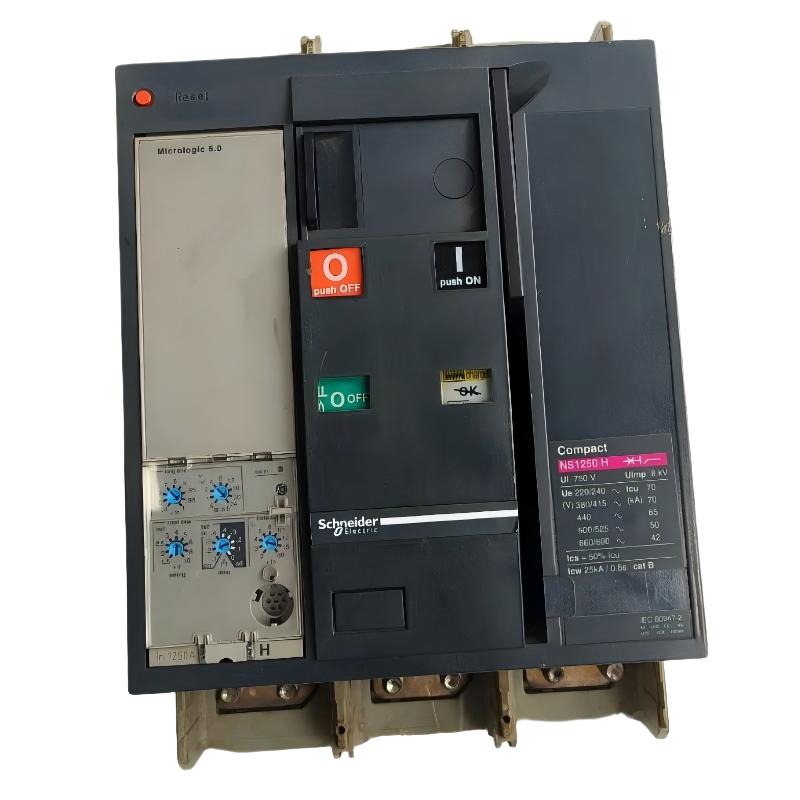
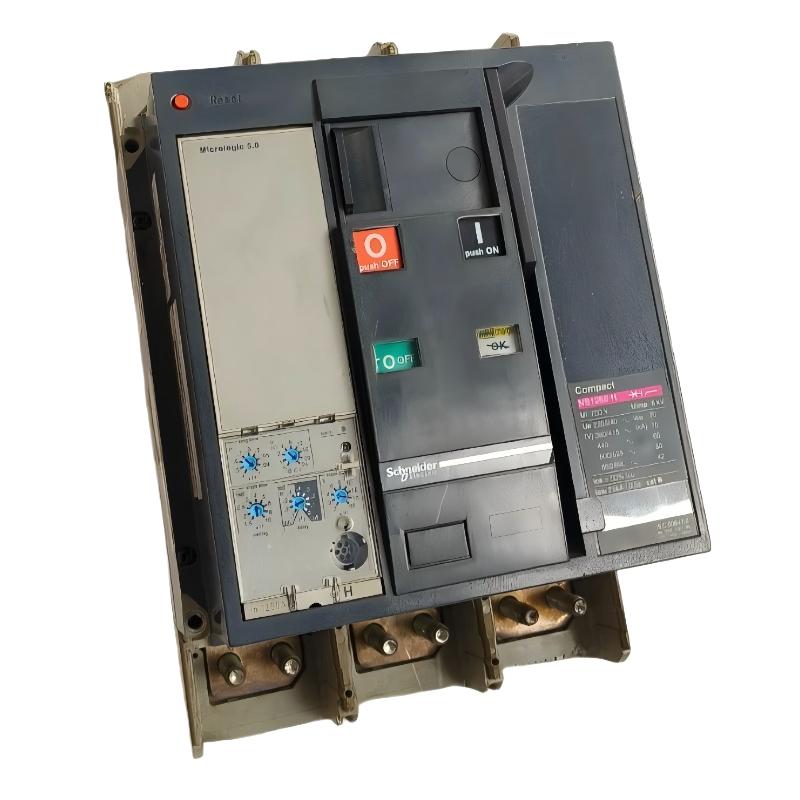
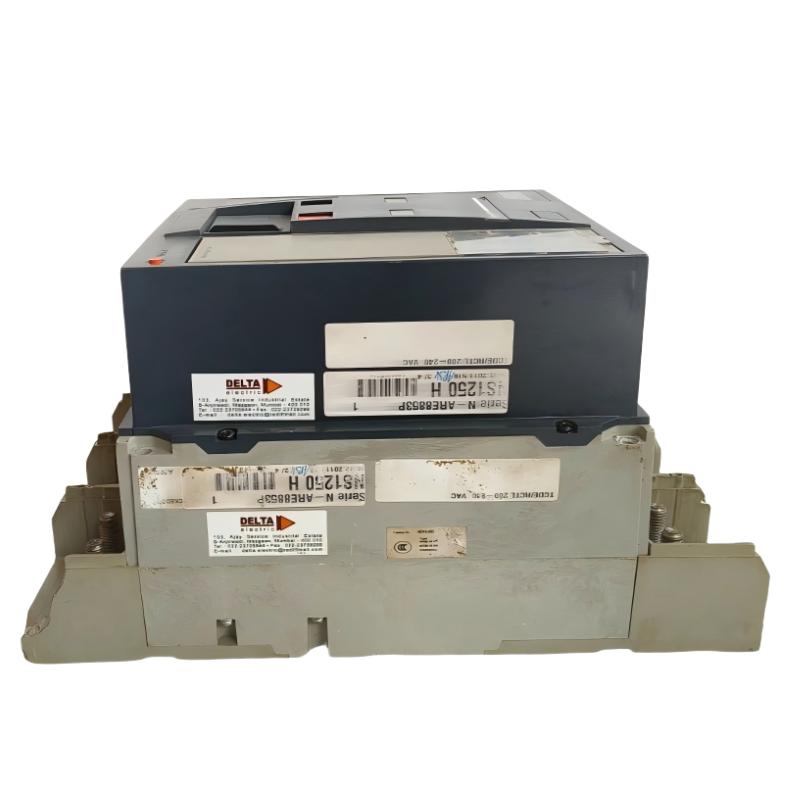
Brand:Schneider PLC Item No.:NS1250H Product Origin:France Product Dimensions:224 x 210 x 182 mm Product Weight:14 kg Payment:T/T, Western Union, Credit Card Goods_stock:15 Shipping Port:Xiamen, China Lead Time:1-3 Days Condition:Brand New And Original Warranty:1 Year Certificate:COO
The Schneider NS1250H Breaker is identified as a low-voltage circuit breaker for electrical distribution applications. In industrial facilities, circuit breakers play an important role in controlling power circuits and responding to abnormal electrical conditions.
For engineers and maintenance teams, selecting the correct breaker requires careful consideration of both electrical and mechanical characteristics. Rated current and breaking capacity must match the distribution system, while the protection configuration should be coordinated with the connected loads and other protective devices.
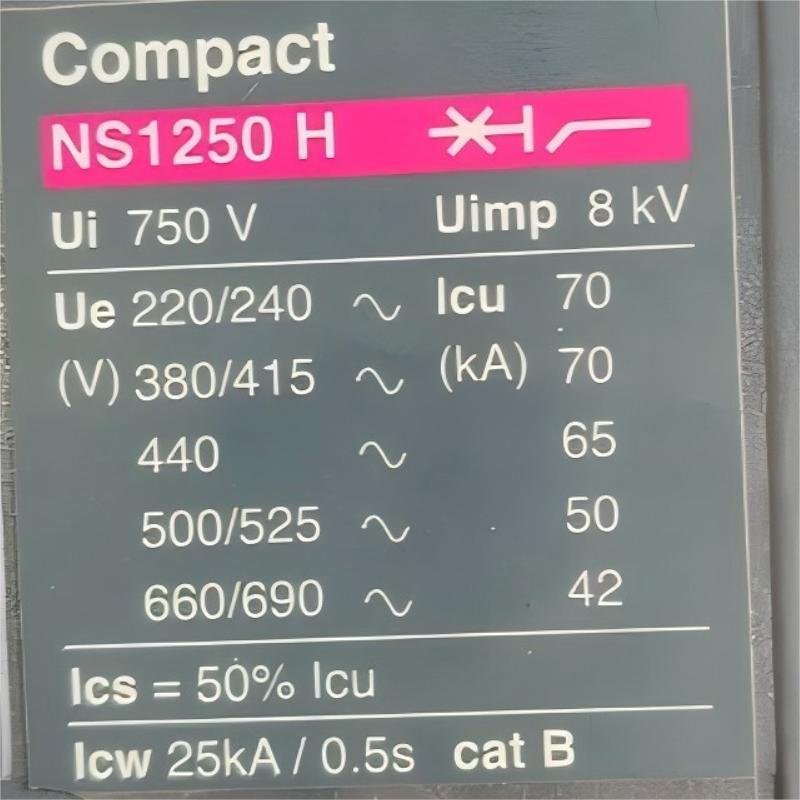
The NS1250H model reference is useful for equipment identification, spare-parts sourcing, and replacement evaluation. Before procurement or installation, confirm the complete product reference and configuration against the original nameplate and applicable Schneider Electric documentation.
Technical Specifications
Parameter
Specification
Brand
Schneider Electric
Model
NS1250H
Product Type
Low-Voltage Circuit Breaker
Product Category
Power Distribution Protection
Dimensions
224 × 210 × 182 mm
Weight
14 kg / 30.86 lb
Application
Industrial Electrical Distribution
Rated current, rated voltage, breaking capacity, trip unit type, and connection details require confirmation from the exact product documentation.
Recommended Related Models
The following Schneider Electric breaker references may be useful for comparison when reviewing low-voltage distribution equipment. They should not be assumed to have identical ratings or mounting compatibility.
Model
Product Description
Schneider NS630NA
Low-Voltage Circuit Breaker
Schneider NS800H
Low-Voltage Circuit Breaker
Schneider NS1000H
Low-Voltage Circuit Breaker
Schneider NS630N
Compact Circuit Breaker
Popular Related Models
Other Schneider Electric circuit breaker references that may be relevant to industrial distribution equipment sourcing include:
Schneider NS630NA Breaker
Schneider NS800H Breaker
Schneider NS1000H Breaker
Schneider NS630N Breaker
Schneider NS Series Circuit Breakers
Before choosing a related model for replacement, compare the electrical ratings, protection characteristics, mechanical dimensions, terminal arrangements, and switchgear compatibility.
Applications
The Schneider NS1250H Breaker is a low-voltage circuit breaker intended for power distribution and circuit protection applications. It may be considered for industrial electrical systems, distribution switchboards, and infrastructure projects where reliable switching and fault interruption are required.
Typical application environments include:
Industrial main power distribution systems
Factory electrical switchboards
Commercial building distribution networks
Manufacturing and processing facilities
Power feeder and distribution circuits
Electrical infrastructure and utility support systems
Selection should be based on the actual system voltage, load current, prospective short-circuit current, and protection coordination requirements.
Key Features and Engineering Benefits
Power Circuit Protection
The NS1250H is intended for use in low-voltage distribution systems where circuit protection is an essential part of electrical system design.
Integration into Distribution Assemblies
It can be evaluated for compatible switchgear applications. Installation suitability depends on the breaker configuration, connection arrangement, and cabinet design.
Support for Protection Coordination
Correct coordination with upstream and downstream protective devices helps improve fault isolation and reduce unnecessary interruptions to other circuits.
Industrial Electrical Applications
The model is relevant to power distribution environments where circuit switching, equipment protection, and maintenance planning are important.
Clear Model Identification
Using the complete NS1250H reference helps procurement and maintenance teams distinguish the required equipment when sourcing spare parts or reviewing replacement options.
Technical FAQs
Q1: What is the primary function of the NS1250H Breaker?
It is designed to provide switching and protection for low-voltage electrical circuits under specified operating and fault conditions.
Q2: What parameters should be considered when selecting this breaker?
Important parameters include rated operational voltage, rated current, short-circuit breaking capacity, pole configuration, protection characteristics, and installation requirements.
Q3: How does a circuit breaker respond to an overload?
When the current exceeds the configured protection threshold for the specified time, the protection mechanism initiates circuit interruption to help prevent damage to cables and connected equipment.
Q4: What is the difference between overload protection and short-circuit protection?
Overload protection addresses sustained excessive current, while short-circuit protection responds to much higher fault currents that require rapid interruption.
Q5: Why is protection coordination necessary?
Coordination helps ensure that the protective device nearest to a fault operates first where selectivity is achievable, limiting the interruption to the affected part of the electrical network.
Q6: What should be checked if the breaker trips repeatedly?
Inspect the connected load, downstream cables, fault history, protection settings, and system operating conditions. Repeatedly resetting the breaker without identifying the cause is not recommended.
Q7: Can the breaker be operated remotely?
Remote operation depends on the installed operating accessories and control configuration. Confirm the available accessories and wiring requirements for the exact unit.
Q8: What should be verified before installing the breaker in a switchboard?
Check mechanical compatibility, mounting arrangements, terminal connections, electrical clearances, insulation requirements, and the switchboard manufacturer's specifications.
Q9: How can abnormal heating at the terminals be investigated?
Inspect connection tightness according to the manufacturer's specified torque, contact condition, current loading, and signs of oxidation or damage. Electrical inspection must be performed by qualified personnel.
Q10: What information is needed to confirm a replacement breaker?
Verify the complete catalog reference, rated voltage, current, breaking capacity, protection unit, pole arrangement, and connection configuration. Similar model designations do not guarantee direct interchangeability.