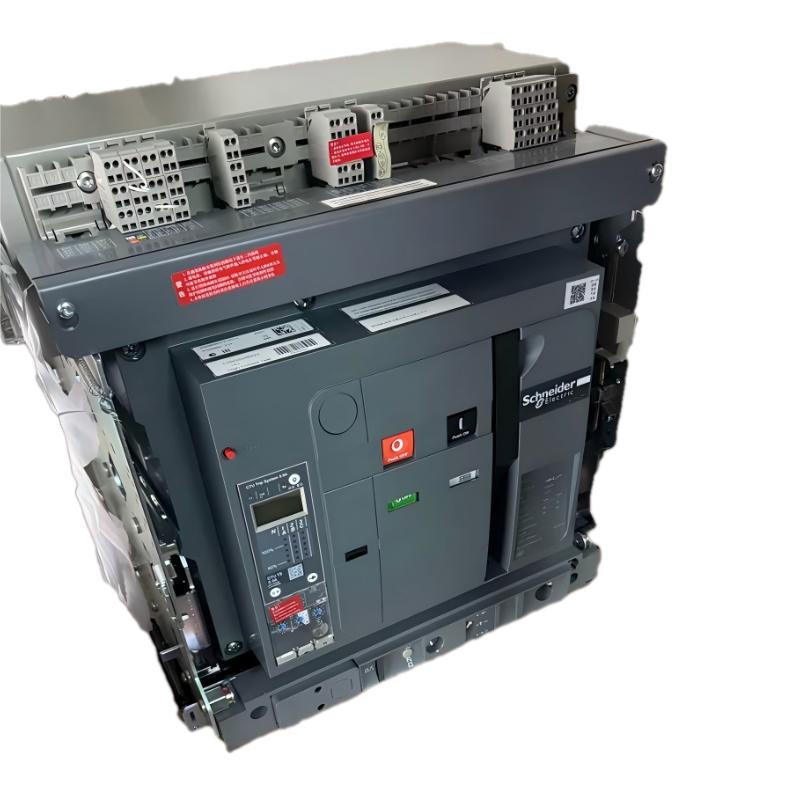
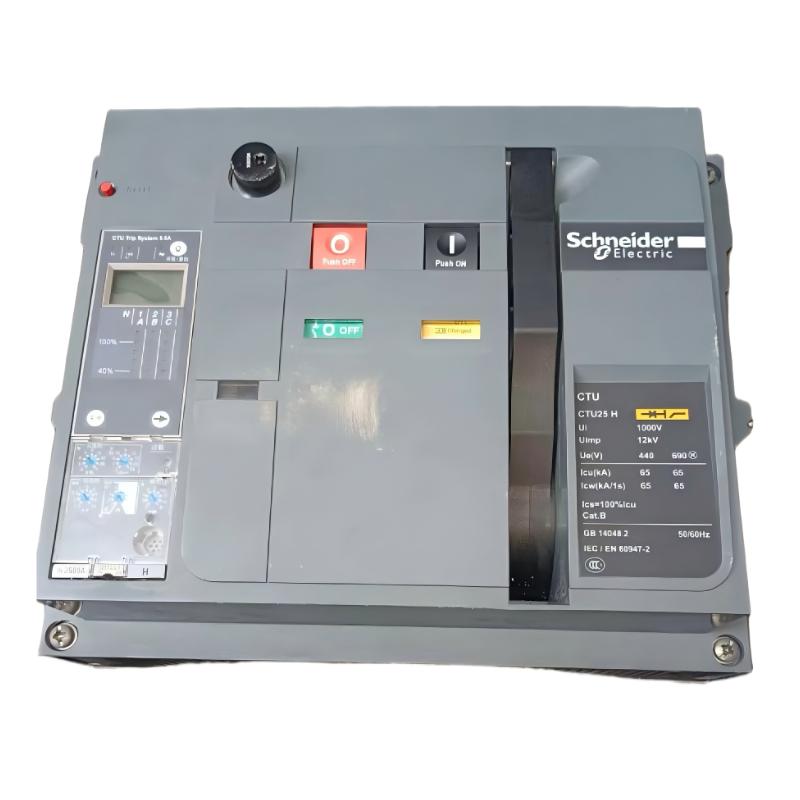
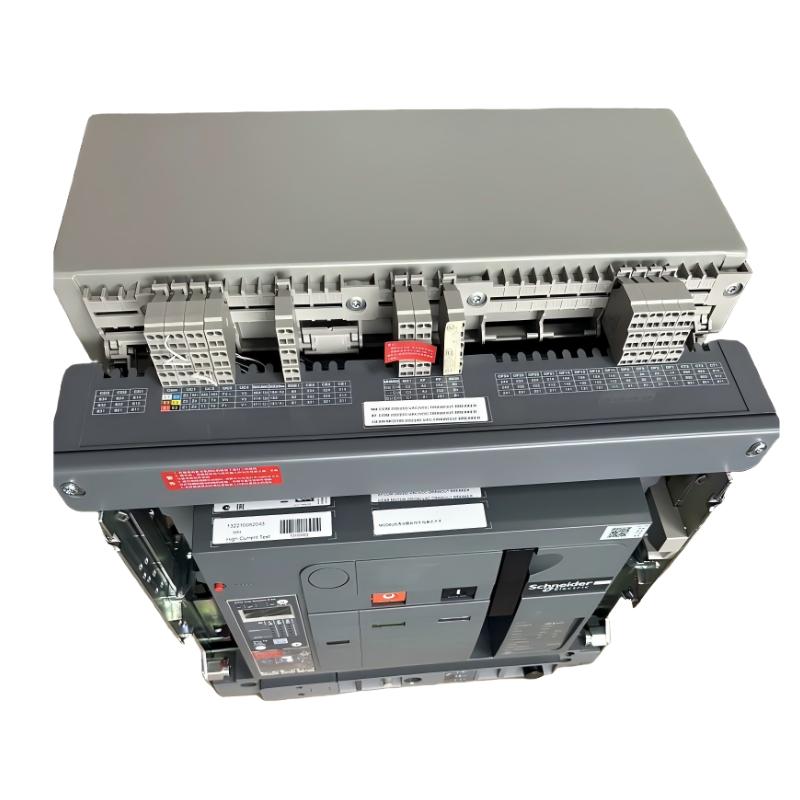
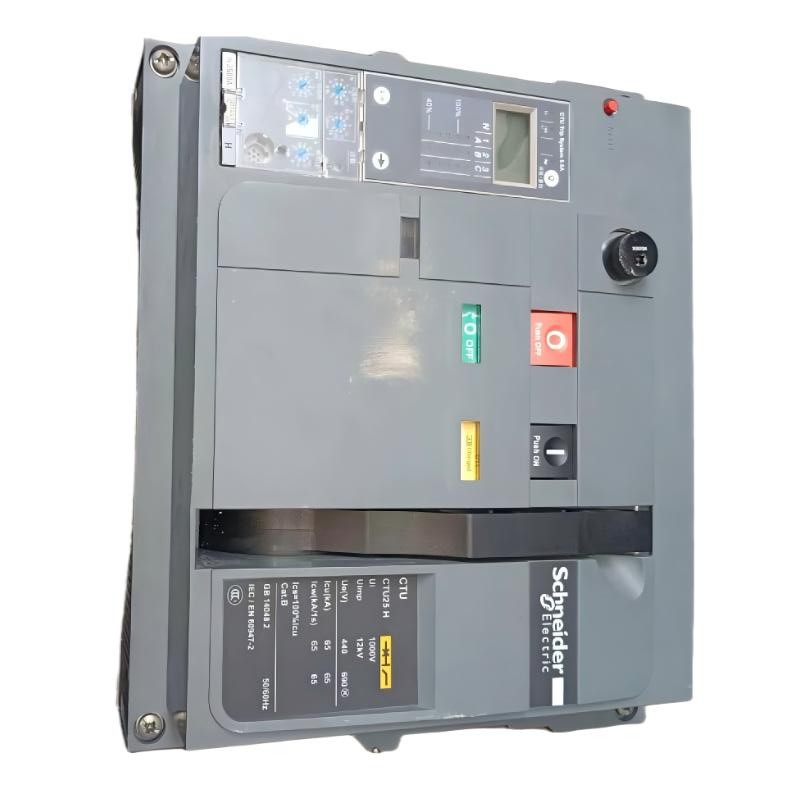
Brand:Schneider PLC Item No.:CTU25H Product Origin:France Product Dimensions:422 x 352 x 297 mm Product Weight:50 kg Payment:T/T, Western Union, Credit Card Goods_stock:15 Shipping Port:Xiamen, China Lead Time:1-3 Days Condition:Brand New And Original Warranty:1 Year Certificate:COO
The Schneider CTU25H Breaker is an industrial circuit breaker model intended for electrical distribution equipment sourcing and maintenance requirements. In modern industrial facilities, circuit protection equipment plays an essential role in maintaining electrical safety and protecting critical infrastructure against abnormal operating conditions.
Electrical distribution networks often supply a wide range of equipment, including production machinery, motor control systems, auxiliary installations, and automated processing lines. Reliable protection devices help manage electrical faults and reduce the possibility of damage spreading throughout the distribution system.
For industrial distributors, electrical contractors, and maintenance professionals, the CTU25H model designation provides an important identification reference when evaluating Schneider Electric replacement equipment. Accurate model matching is particularly important for facilities maintaining existing switchgear and established electrical installations.
Beyond the initial purchase, selecting the correct breaker configuration can help simplify installation planning, reduce procurement errors, and support long-term equipment maintenance. Electrical ratings, protection characteristics, and mechanical compatibility should always be checked before replacement.
If your project requires the Schneider CTU25H Breaker, confirming the complete product identification against the original equipment is an important step toward making a reliable purchasing decision.
Technical Specifications
The following table summarizes the available product identification and physical specifications of the Schneider CTU25H Breaker.
Parameter
Specification
Brand
Schneider Electric
Model Number
CTU25H
Product Type
Circuit Breaker
Product Category
Industrial Circuit Protection
Product Series
To Be Verified
Rated Current
To Be Verified
Rated Operational Voltage
To Be Verified
Rated Insulation Voltage
To Be Verified
Breaking Capacity
To Be Verified
Number of Poles
To Be Verified
Trip Unit Configuration
To Be Verified
Dimensions
422 × 352 × 297 mm
Net Weight
50 kg / 110.23 lb
Application
Industrial Power Distribution
Configuration and Selection Notes
The physical specifications above are based on the supplied product information. Electrical ratings and detailed hardware characteristics should be confirmed using the original nameplate or manufacturer documentation. This is particularly important when selecting a replacement for an existing switchgear installation.
Recommended Related Models
For customers sourcing Schneider Electric industrial circuit breakers, the following models from the broader Masterpact range may be relevant to related power distribution and equipment maintenance projects.
Model Number
Product Description
Schneider MT08N1
Masterpact Air Circuit Breaker
Schneider MT10N1
Masterpact Air Circuit Breaker
Schneider MT12N1
Masterpact Air Circuit Breaker
Schneider MT16N1
Masterpact Air Circuit Breaker
Schneider MT20N1
Masterpact Air Circuit Breaker
Schneider MT25N1
Masterpact Air Circuit Breaker
These models are related equipment options rather than confirmed direct replacements. Their electrical specifications and installation compatibility must be evaluated individually.
Popular Related Models
The following Schneider Electric circuit breaker models are also relevant to industrial power distribution equipment sourcing and maintenance.
Model Number
Product Description
Schneider MT06NA
Masterpact Air Circuit Breaker
Schneider MT08NA
Masterpact Air Circuit Breaker
Schneider MT10NA
Masterpact Air Circuit Breaker
Schneider MT12NA
Masterpact Air Circuit Breaker
Schneider MT16NA
Masterpact Air Circuit Breaker
Schneider MT08N2
Masterpact Air Circuit Breaker
Schneider MT10N2
Masterpact Air Circuit Breaker
Schneider MT12N2
Masterpact Air Circuit Breaker
Schneider MT16N2
Masterpact Air Circuit Breaker
Schneider MT20N2
Masterpact Air Circuit Breaker
When purchasing Schneider Electric circuit breakers, accurate model identification and technical compatibility should remain the primary considerations. Verifying electrical ratings, breaking capacity, protection configuration, and switchgear connections helps reduce replacement risks and supports dependable operation in industrial power distribution systems.
Applications
The Schneider CTU25H Breaker is an industrial circuit breaker model intended for electrical distribution equipment procurement, maintenance, and replacement applications. In industrial power networks, reliable circuit protection is essential for safeguarding electrical infrastructure, maintaining stable power delivery, and reducing the potential impact of electrical faults.
For industrial facilities operating complex distribution systems, selecting compatible protection equipment helps maintain electrical safety and supports uninterrupted production.
Typical application areas include:
Industrial Power Distribution: Used as a model reference for circuit protection requirements in industrial electrical distribution systems.
Manufacturing Facilities: Relevant to electrical installations supplying production machinery, processing equipment, and factory infrastructure.
Industrial Switchgear Systems: Can be evaluated for compatible switchgear assemblies and electrical distribution equipment.
Motor Feeder Applications: May be considered for appropriately designed motor feeder circuits, subject to verified electrical ratings and protection coordination.
Commercial Power Infrastructure: Relevant to large electrical installations requiring coordinated circuit protection.
Electrical Maintenance and Replacement: Suitable for procurement evaluation when maintaining existing Schneider Electric installations and sourcing replacement components.
Advantages
Dependable Electrical Protection
Circuit breakers provide an important layer of protection in industrial electrical systems. When correctly selected, they help interrupt abnormal current conditions and reduce the risk of damage to connected equipment.
Industrial Power Distribution Compatibility
The CTU25H provides a specific model reference for buyers evaluating Schneider Electric circuit protection equipment. Its suitability should be established by comparing the product configuration with the requirements of the existing installation.
Supports Protection Coordination
Proper coordination between circuit breakers helps isolate electrical faults and limit unnecessary shutdowns across connected distribution circuits. This is particularly important in facilities where production continuity is a priority.
Simplified Replacement Procurement
A clearly identified model number makes it easier for purchasing departments and maintenance engineers to communicate equipment requirements, organize spare-parts inventories, and evaluate replacement options.
Practical Maintenance Management
For industrial facilities maintaining established Schneider Electric electrical systems, selecting the correct replacement breaker can help reduce unnecessary modifications and simplify maintenance planning.
Long-Term Equipment Reliability
Reliable circuit protection contributes to the overall performance of industrial electrical infrastructure. Proper equipment selection, installation, and maintenance help support safer and more dependable operation.
Technical FAQs
Q1: What is the primary function of the Schneider CTU25H Breaker?
A: Its identified product type is a circuit breaker. Its intended role is to provide electrical circuit protection by interrupting current under specified abnormal operating conditions. Detailed protection functions should be verified against the original product documentation.
Q2: What is the difference between thermal and magnetic protection?
A: Thermal protection generally responds to sustained overcurrent conditions, while magnetic protection responds rapidly to high fault currents such as short circuits. The available protection mechanisms depend on the breaker design.
Q3: How should the rated current be selected for an industrial breaker?
A: Selection should consider the connected load, conductor ampacity, operating conditions, ambient temperature, and applicable electrical installation standards.
Q4: Why is short-circuit breaking capacity important?
A: Breaking capacity indicates the maximum fault current that a circuit breaker can safely interrupt under specified conditions. The selected breaker must have sufficient interrupting capacity for the prospective fault current at the installation point.
Q5: Can the CTU25H be used in motor feeder circuits?
A: Its suitability depends on the verified electrical characteristics and protection configuration. Motor feeder applications require appropriate coordination with motor overload protection and other protective components.
Q6: What is the purpose of auxiliary contacts in industrial circuit breakers?
A: Auxiliary contacts provide electrical status signals that can be used for remote monitoring, control system feedback, alarms, and electrical interlocking, provided the required accessories are supported.
Q7: What could cause a circuit breaker to trip during normal operation?
A: Possible causes include excessive load current, short circuits, insulation deterioration, incorrect protection settings, loose connections, and abnormal operating conditions. The underlying cause should be investigated before resetting the breaker.
Q8: How can engineers improve coordination between upstream and downstream breakers?
A: Protection coordination involves comparing trip characteristics, current ratings, and time-current curves to establish suitable operating sequences. The objective is to isolate faults while minimizing disruption to unaffected circuits.
Q9: What should be verified before replacing an existing CTU25H?
A: Check the complete model designation, rated current, operating voltage, breaking capacity, pole configuration, mounting arrangement, terminal connections, and accessory requirements.
Q10: Why is periodic circuit breaker testing important?
A: Periodic inspection and functional testing help identify mechanical deterioration, electrical connection problems, and potential protection failures. Maintenance intervals should follow manufacturer recommendations and the operating conditions of the installation.