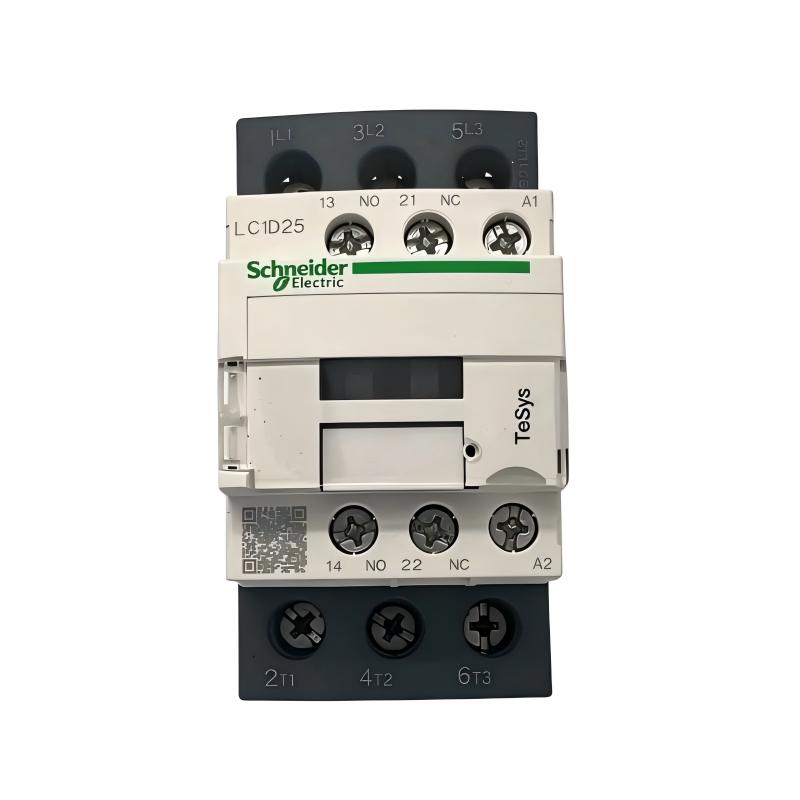
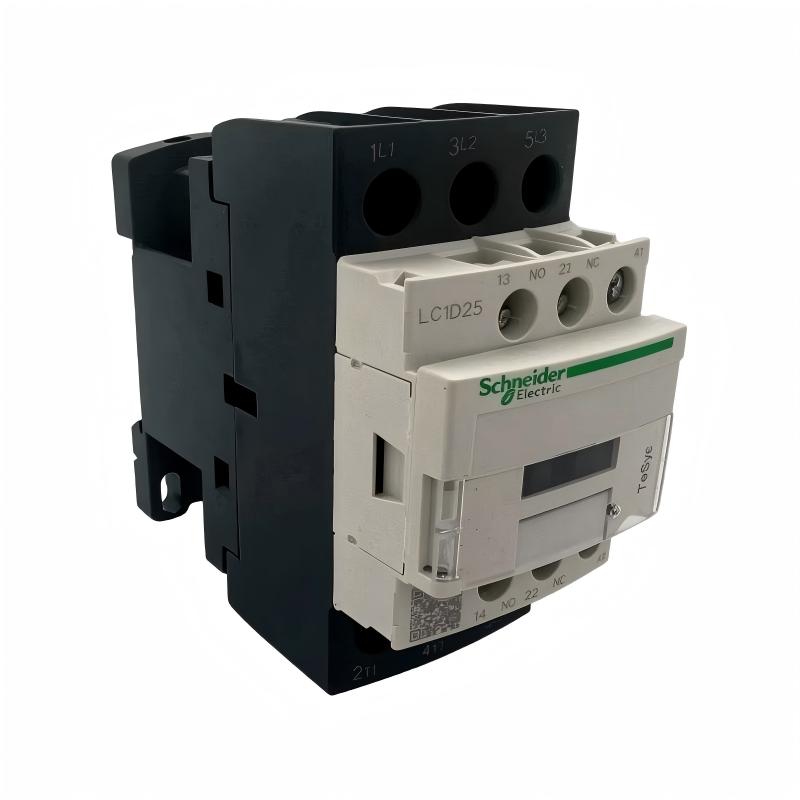
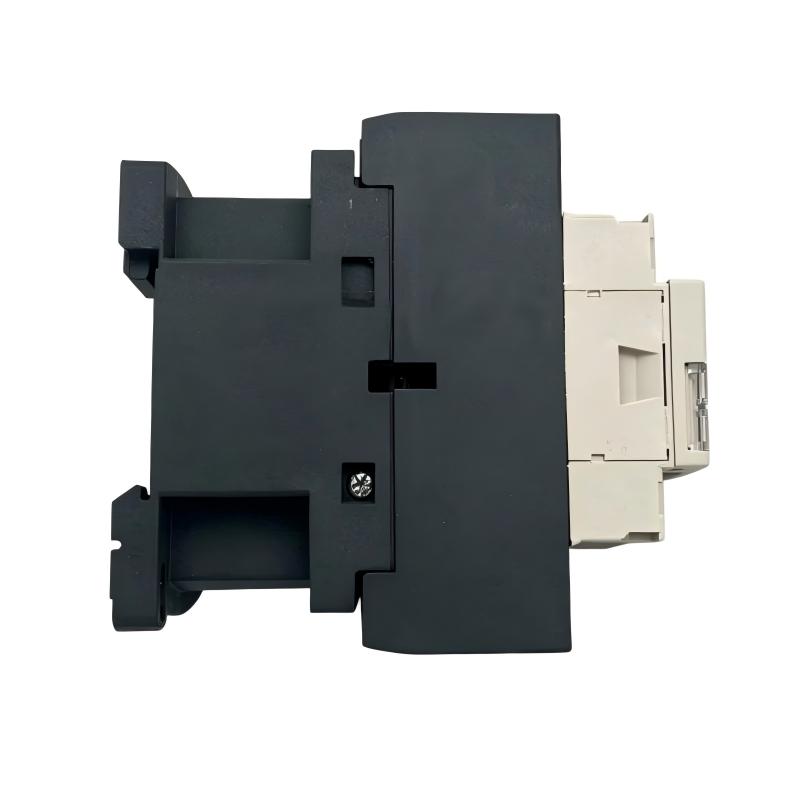
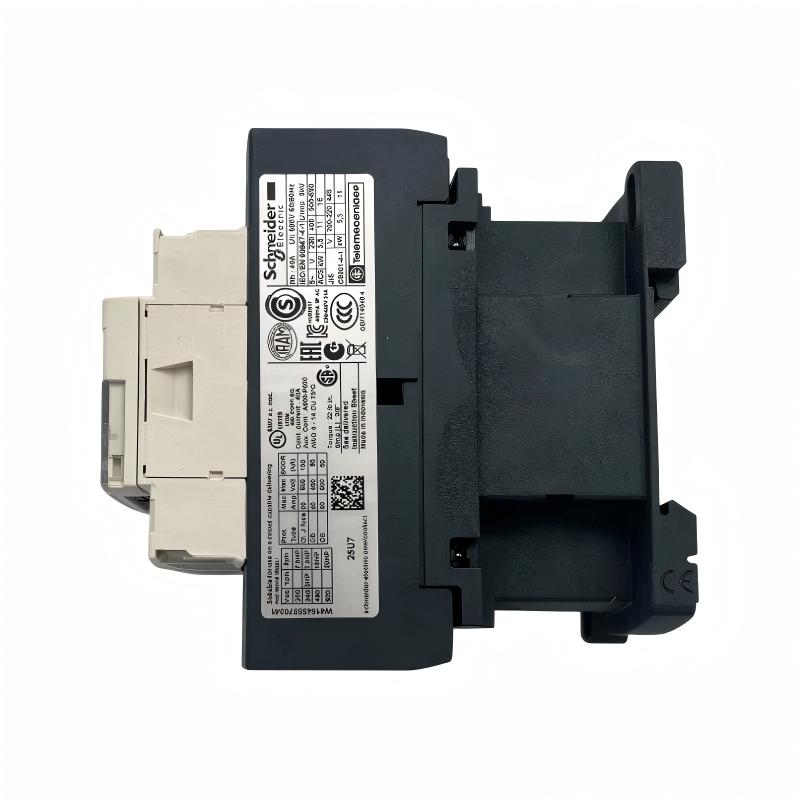
Brand:Schneider PLC Item No.:LC1D25E7 Product Origin:France Product Dimensions:85 x 45 x 92 mm Product Weight:0.37 kg Payment:T/T, Western Union, Credit Card Goods_stock:15 Shipping Port:Xiamen, China Lead Time:1-3 Days Condition:Brand New And Original Warranty:1 Year Certificate:COO
The Schneider LC1D25E7 TeSys D Contactor is an industrial electrical switching device developed for motor control and power circuit management. It uses electromagnetic operation to control the connection and disconnection of electrical loads, making it suitable for industrial machinery, automated production equipment, and electrical distribution panels.
As a member of Schneider Electric's TeSys D contactor family, the LC1D25E7 is designed for integration into motor starter assemblies and industrial control cabinets. Its compact construction supports practical panel installation, while its contactor design provides a straightforward switching solution for compatible electrical circuits.
For replacement and maintenance projects, users should verify the coil configuration, rated operational current, contact arrangement, and application requirements. Selecting the correct contactor helps maintain system reliability and supports safe, consistent equipment operation.
Technical Specifications
Parameter
Specification
Brand
Schneider Electric
Model
LC1D25E7
Product Family
TeSys D
Product Type
Contactor
Product Category
Industrial Motor Control Component
Main Function
Electromagnetic switching of electrical circuits
Typical Applications
Motor control, pumps, fans, conveyors, and machinery
Coil Configuration
E7 coil version
Dimensions
85 × 45 × 92 mm
Weight
0.37 kg / 0.82 lb
Recommended Related Models
The following models belong to the Schneider TeSys D contactor range and can be considered when comparing contactor configurations. They are not automatically interchangeable; verify electrical ratings and coil specifications before replacement.
Model
Product Type
LC1D09
TeSys D Contactor
LC1D12
TeSys D Contactor
LC1D18
TeSys D Contactor
LC1D25
TeSys D Contactor
LC1D32
TeSys D Contactor
LC1D38
TeSys D Contactor
Popular Related Models
Schneider LC1D09 TeSys D Contactor
Schneider LC1D12 TeSys D Contactor
Schneider LC1D18 TeSys D Contactor
Schneider LC1D25 TeSys D Contactor
Schneider LC1D32 TeSys D Contactor
Schneider LC1D38 TeSys D Contactor
Schneider LC1D40 TeSys D Contactor
Schneider LC1D50 TeSys D Contactor
Schneider LC1D65 TeSys D Contactor
Applications
Industrial Motor Control: Designed for switching and controlling motors in manufacturing equipment, industrial machinery, and automated production systems.
Pump Control Systems: Used in water treatment equipment, circulation pumps, and industrial fluid-handling applications.
HVAC Installations: Supports motor switching in ventilation systems, air-handling equipment, and industrial cooling applications.
Conveyor and Material Handling: Provides electrical switching for conveyor motors and material transport machinery.
Packaging and Processing Equipment: Integrates into machine control panels for packaging lines, processing systems, and automated production equipment.
Motor Starter Assemblies: Used as a switching component in direct-on-line motor starters and other suitable motor control arrangements.
Advantages and Key Features
1. Reliable Electrical Switching
The LC1D25E7 is designed to establish and interrupt electrical circuits through electromagnetic operation, supporting dependable control of industrial loads.
2. TeSys D Contactor Platform
As part of Schneider Electric's TeSys D family, this model is intended for industrial motor control applications where consistent switching performance is important.
3. Compact Installation Design
Its compact housing helps make efficient use of control cabinet space and supports integration into various electrical panel configurations.
4. Defined Coil Configuration
The E7 suffix identifies a specific coil version. Confirm the rated coil voltage before connecting the contactor to a control supply.
5. Integration with Automation Systems
The contactor can be operated through compatible control circuits, including relay-based and PLC-controlled arrangements.
6. Convenient Maintenance and Replacement
The clearly marked model reference helps maintenance teams identify the component and check its electrical and mechanical compatibility during replacement.
Technical FAQs
Q1: What is the main function of the Schneider LC1D25E7?
The LC1D25E7 is an electromagnetic contactor used to switch power circuits. It is commonly installed in industrial motor control panels and machinery electrical systems.
Q2: What does the LC1D25E7 model number indicate?
LC1D identifies the TeSys D contactor series. The numerical and letter suffixes identify the contactor version and coil configuration. The complete reference should be used when confirming product specifications.
Q3: What should be considered when selecting the coil supply?
The control supply must match the coil's rated voltage and frequency requirements. Check the product nameplate and technical documentation before energizing the coil.
Q4: Is the LC1D25E7 suitable for motor control applications?
Yes. It is designed for motor switching applications. The motor's rated current, starting conditions, utilization category, and operating environment must all be considered during selection.
Q5: Can the contactor be controlled by a PLC?
Yes. A PLC can operate the contactor through a compatible output circuit or an appropriately rated interposing relay. The control circuit must meet the coil's electrical requirements.
Q6: What is the difference between the LC1D18E7 and LC1D25E7?
Both belong to the TeSys D contactor family, but they have different contactor ratings and physical specifications. Selection should be based on the actual load requirements rather than appearance alone.
Q7: Why does a contactor fail to pull in?
Common causes include insufficient coil voltage, incorrect control wiring, an open control circuit, a damaged coil, or mechanical obstruction. Check the supply and control circuit before replacing the device.
Q8: What can cause contact overheating?
Excessive load current, loose terminal connections, unsuitable conductor sizing, frequent switching, or deteriorated contacts can contribute to overheating. Verify the load and inspect the connections after isolating the equipment.
Q9: Can the LC1D25E7 be used for resistive loads?
It may be used in suitable switching applications when the electrical ratings and utilization category are appropriate. The permissible load must be determined from the manufacturer's specifications.
Q10: What checks should be performed before installing a replacement?
Verify the complete model reference, coil voltage, main contact arrangement, auxiliary contact requirements, mounting arrangement, and load rating. Also inspect the wiring and terminals before commissioning.