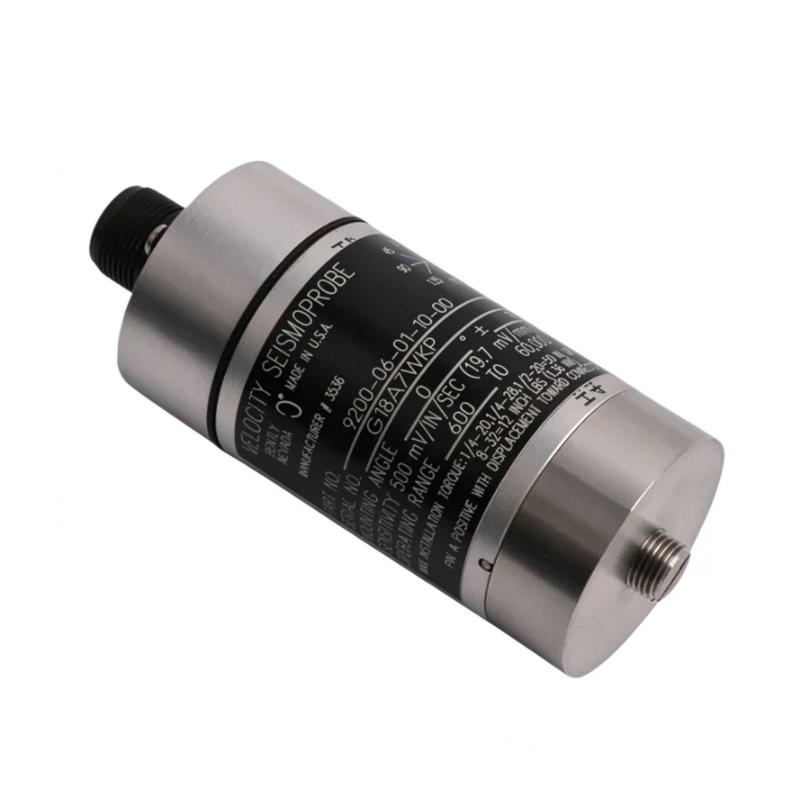
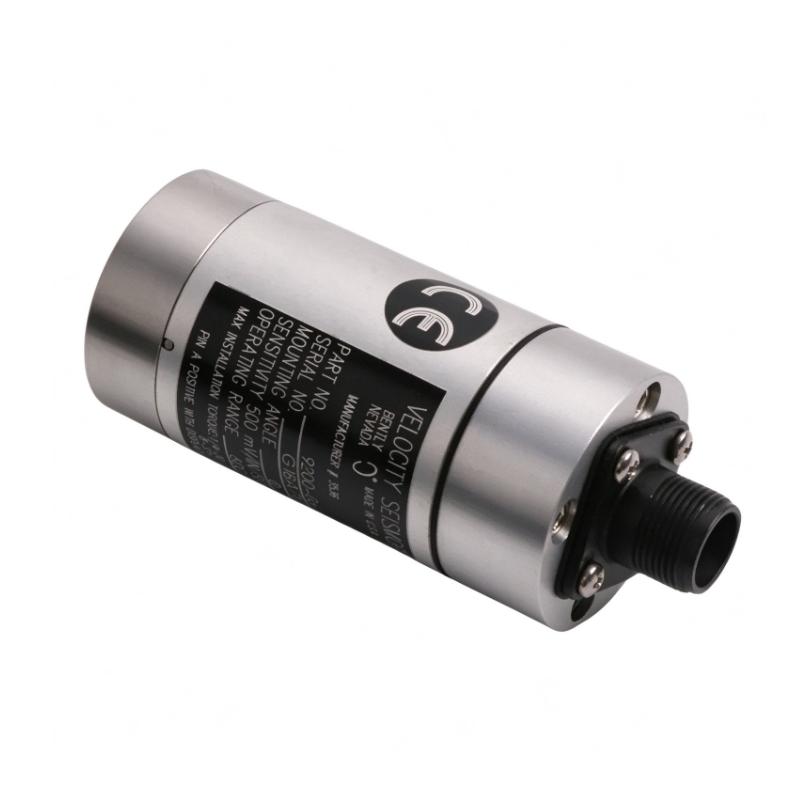
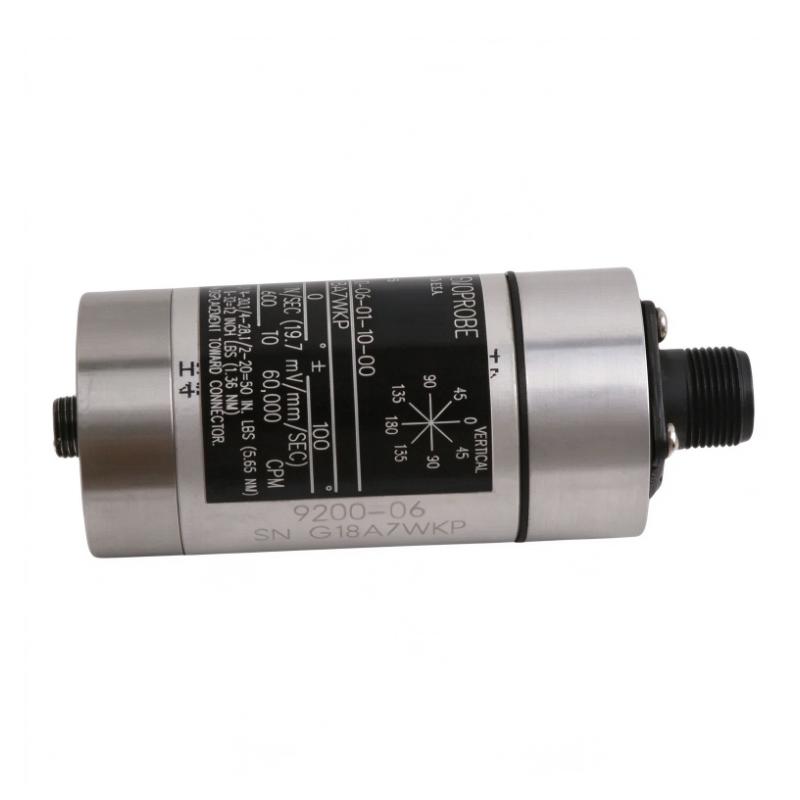
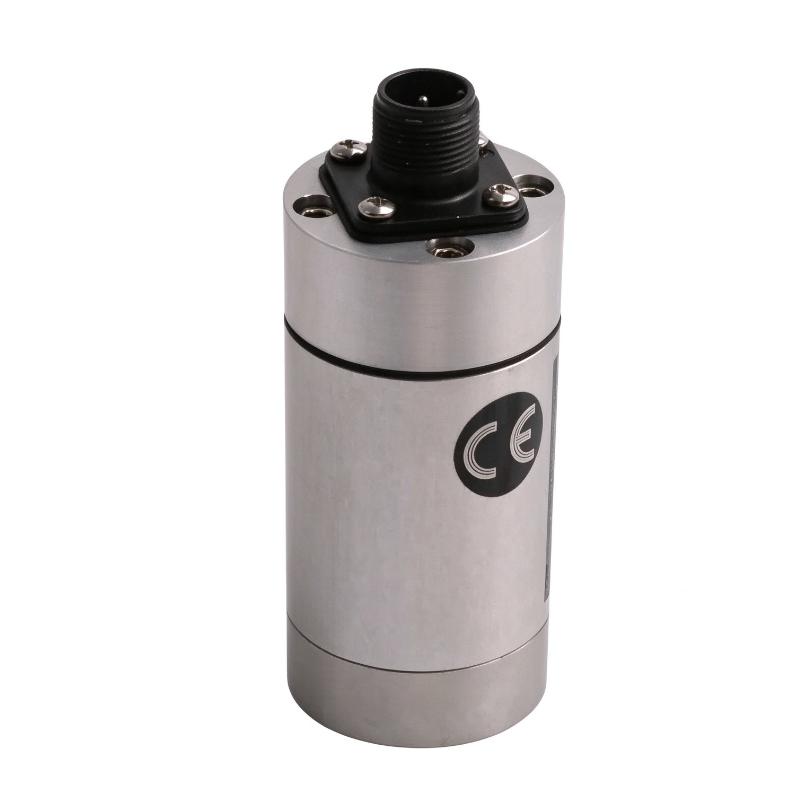
Brand:Bently Nevada PLC Item No.:9200-03-05-05-01 Product Origin:USA Product Dimensions:Sensor Diameter: 41.4 mm Product Weight:0.3 kg Payment:T/T, Western Union, Credit Card Goods_stock:15 Shipping Port:Xiamen, China Lead Time:1-3 Days Condition:Brand New And Original Warranty:1 Year Certificate:COO
The Bently Nevada 9200-03-05-05-01 Two-Wire Velocity-Type Seismic Sensor is an industrial vibration measurement component developed for machinery condition monitoring applications. It is intended to provide vibration velocity information for compatible monitoring arrangements, helping industrial operators assess the mechanical condition of rotating equipment.
In power generation, petrochemical processing, and other heavy industrial environments, vibration monitoring is an important part of equipment reliability management. Excessive vibration may be associated with mechanical imbalance, misalignment, looseness, bearing deterioration, or other developing machinery problems. A suitable seismic sensor helps provide measurement information that supports further condition analysis.
The 9200-03-05-05-01 features a two-wire configuration and a specified sensor diameter of 41.4 mm. Its application is focused on velocity-type seismic measurement rather than shaft-relative displacement measurement.
For maintenance engineers, system integrators, and industrial spare-parts purchasers, this model offers a dedicated sensor option for compatible Bently Nevada monitoring installations. Selecting the correct sensor technology and confirming electrical interface requirements are essential steps when replacing an existing unit.
With its industrial monitoring application and clearly identified model number, the 9200-03-05-05-01 is a relevant component to consider when maintaining machinery vibration measurement systems.
Technical Specifications
Parameter
Specification
Manufacturer
Bently Nevada
Model Number
9200-03-05-05-01
Product Type
Two-Wire Velocity-Type Seismic Sensor
Sensor Technology
Seismic Velocity Measurement
Electrical Configuration
Two-Wire
Sensor Diameter
41.4 mm
Weight
0.30 kg / 0.66 lb
Primary Application
Industrial Machinery Vibration Monitoring
Measurement Purpose
Vibration Velocity Monitoring
Product Category
Industrial Vibration Sensors
Recommended Related Models
The following Bently Nevada products are associated with vibration measurement and machinery condition monitoring. Their measurement technologies and electrical interfaces differ, so compatibility should be checked before selecting a replacement.
Model
Product Description
9200-01-05-05-00
Velocity Seismic Sensor
9200-02-05-05-00
Velocity Seismic Sensor
330500-00-00
Velomitor CT Velocity Transducer
330525-00
Velomitor Velocity Transducer
330750-40
Seismic Transmitter
330850-50
Seismic Transmitter
Popular Related Models
For industrial users maintaining Bently Nevada vibration monitoring installations, the following products are also worth considering for related sensor and signal measurement applications.
Model
Product Description
330103-00-05-10-02-00
3300 XL 8 mm Proximity Probe
330104-00-08-10-02-00
3300 XL 8 mm Proximity Probe
330180-90-00
3300 XL Extension Cable
330780-90-00
3300 XL Proximitor Sensor
3500/42M
Proximitor Seismic Monitor
3500/45
Position Monitor
3500/62
Process Variable Monitor
Applications
The Bently Nevada 9200-03-05-05-01 Two-Wire Velocity-Type Seismic Sensor is designed for industrial vibration monitoring applications involving rotating machinery and mechanical equipment. It provides velocity-related vibration measurements that help maintenance personnel evaluate machine operating conditions and identify potential mechanical abnormalities.
Velocity vibration monitoring is particularly useful for assessing the overall vibration behavior of rotating equipment. By incorporating suitable seismic sensors into a machinery monitoring arrangement, industrial facilities can improve their ability to identify developing mechanical problems and plan maintenance activities.
Typical applications include:
Steam Turbine Monitoring: Measuring casing vibration to support machinery condition assessment.
Industrial Motor Monitoring: Evaluating vibration behavior in large motors and associated mechanical equipment.
Pump and Compressor Systems: Supporting vibration monitoring in critical rotating machinery.
Power Generation Facilities: Providing vibration measurement capability for auxiliary and rotating equipment.
Oil and Gas Installations: Supporting machinery condition monitoring in continuous-operation environments.
Industrial Equipment Maintenance: Helping maintenance teams identify abnormal vibration trends and investigate potential mechanical faults.
For plants operating critical rotating assets, the 9200-03-05-05-01 offers a dedicated sensor option for velocity-based seismic monitoring applications.
Advantages
Velocity-Based Vibration Measurement
The sensor is designed for seismic vibration measurement, providing velocity-related information useful for evaluating the overall vibration condition of industrial machinery.
Two-Wire Sensor Configuration
Its two-wire design supports integration into compatible monitoring arrangements, helping simplify field wiring and sensor connection planning.
Suitable for Industrial Machinery Monitoring
The sensor is intended for applications involving rotating equipment, including motors, pumps, compressors, and other machinery requiring vibration supervision.
Compact Mechanical Design
With a specified sensor diameter of 41.4 mm, the unit offers a compact form factor for appropriate industrial mounting arrangements.
Support for Predictive Maintenance
Continuous or periodic vibration measurement can help maintenance personnel recognize changes in machine behavior before they develop into more serious operational problems.
Practical Replacement Component
The complete model number provides a clear identification reference for maintenance departments and industrial buyers sourcing replacement vibration sensors.
Technical FAQs
Q1: What is the primary function of the Bently Nevada 9200-03-05-05-01?
A: It is a two-wire velocity-type seismic sensor designed to measure machinery vibration in compatible industrial monitoring applications.
Q2: What is the difference between a velocity sensor and a proximity probe?
A: A velocity sensor measures vibration velocity, generally associated with the movement of the machine housing or bearing structure. A proximity probe measures relative displacement between the probe tip and a conductive target, commonly a rotating shaft.
Q3: What types of machinery can use a velocity-type seismic sensor?
A: Typical applications include motors, pumps, compressors, fans, and other rotating machinery where casing vibration monitoring is required.
Q4: Why is vibration velocity important in machinery monitoring?
A: Vibration velocity provides useful information about overall machine vibration severity. It helps maintenance personnel evaluate operating conditions and identify changes that may indicate mechanical deterioration.
Q5: What does the two-wire configuration mean?
A: It describes the sensor's electrical connection arrangement. The required wiring and monitoring interface must be confirmed according to the sensor's electrical specifications and the installed monitoring system.
Q6: Can this sensor directly replace an accelerometer?
A: Not necessarily. Velocity sensors and accelerometers have different measurement characteristics and electrical requirements. Replacement selection must consider the monitoring input, signal conditioning, sensitivity, and measurement range.
Q7: What could cause an unstable vibration signal?
A: Possible causes include loose mounting, damaged wiring, poor electrical connections, excessive electrical interference, incorrect monitoring input configuration, or a defective sensor.
Q8: How should the sensor be installed?
A: Install it at an approved measurement location using a compatible mounting arrangement. The mounting surface should be clean, stable, and suitable for transmitting the vibration being measured.
Q9: What maintenance checks should be performed on the sensor?
A: Inspect the sensor body, mounting interface, cable connections, and wiring condition. Compare vibration readings with historical operating data to identify unexpected changes.
Q10: What should buyers verify before ordering the 9200-03-05-05-01?
A: Confirm the complete part number, sensor technology, two-wire connection requirements, measurement application, mounting compatibility, and monitoring system interface.