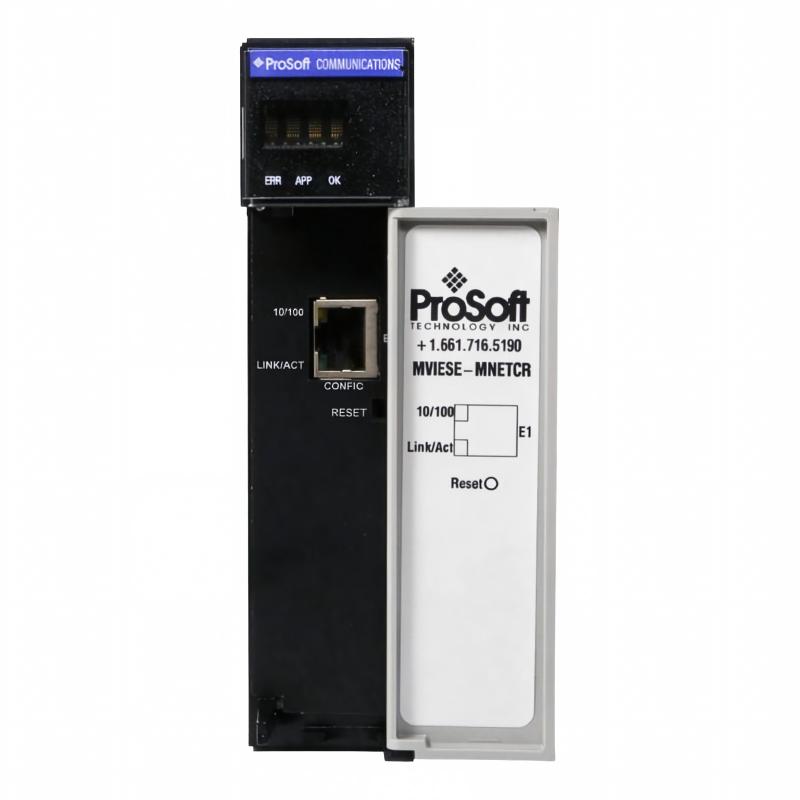
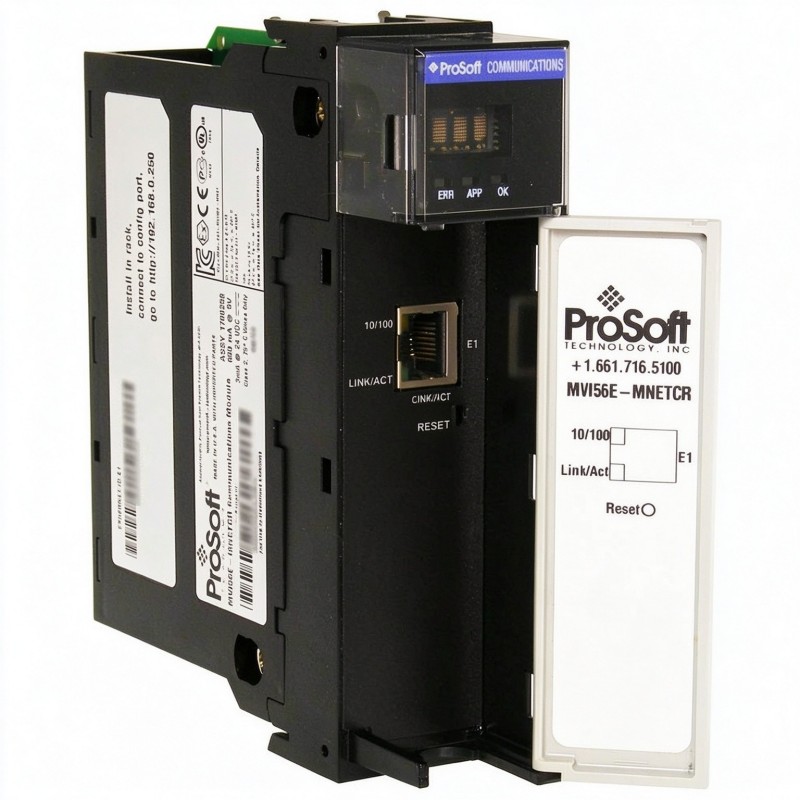
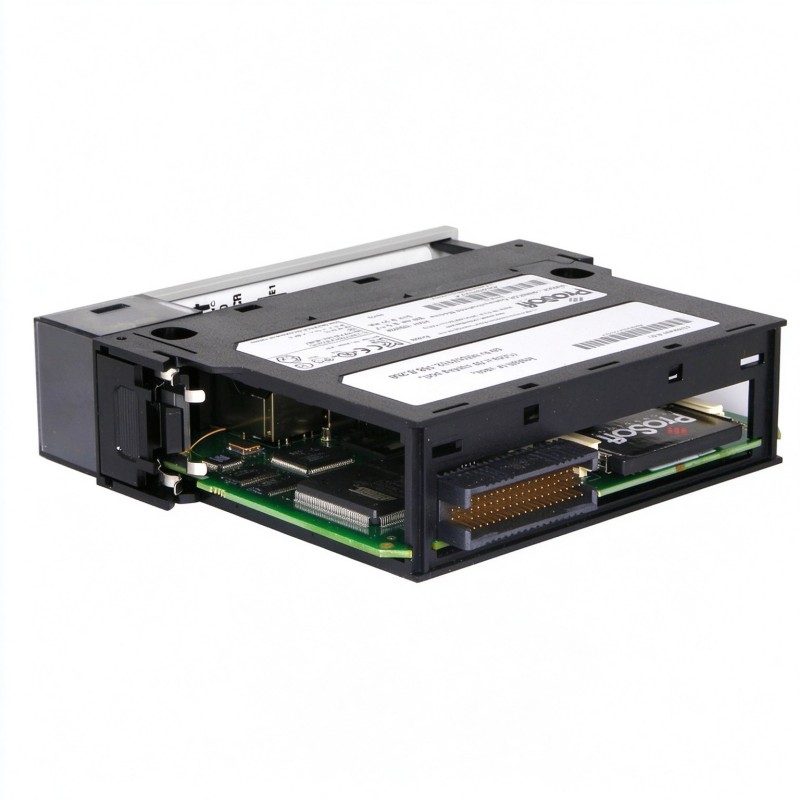
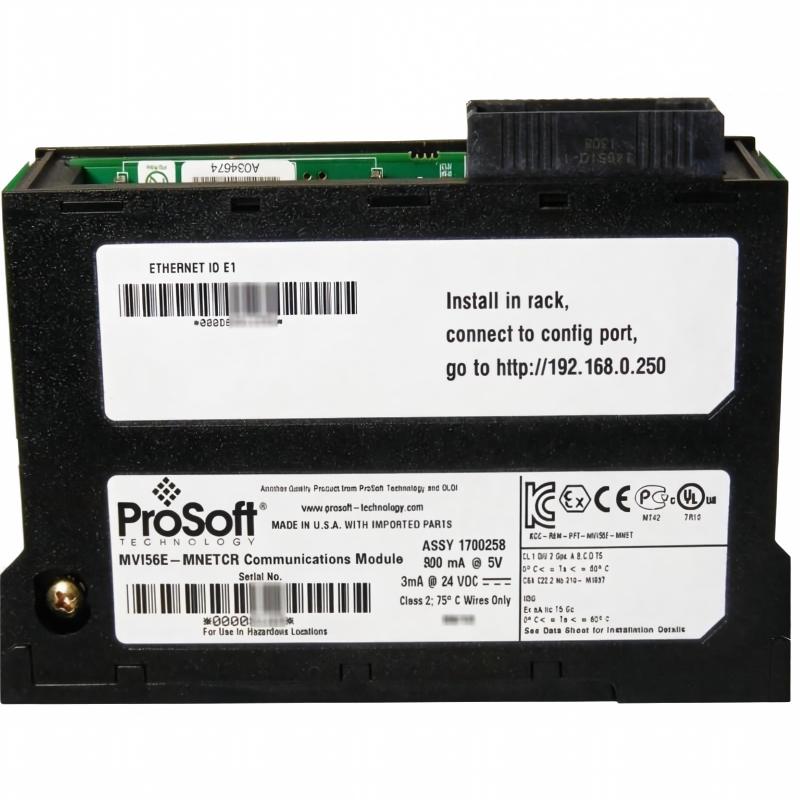
ProSoft MVI56E-MNETCR Modbus TCP/IP Multi-Client Enhanced Communication Module
ProSoft MVI56E-MNETCR Modbus TCP/IP Multi-Client Enhanced Communication Module
0.0
Points
Brand:Allen Bradley PLC Item No.:MVI56E-MNETCR Product Origin:USA Product Dimensions:145.2 x 34.6 x 139.6 mm Product Weight:0.24 kg Payment:T/T, Western Union, Credit Card Goods_stock:15 Shipping Port:Xiamen, China Lead Time:1-3 Days Condition:Brand New And Original Warranty:1 Year Certificate:COO
The ProSoft MVI56E-MNETCR Modbus TCP/IP Multi-Client Enhanced Communication Module is designed for industrial automation systems that need to exchange information with multiple Modbus TCP/IP devices. By providing a dedicated communication interface for compatible ControlLogix platforms, it helps connect PLC-based control systems with networked instruments, controllers, and other industrial equipment.
In multi-device installations, reliable communication depends on more than basic Ethernet connectivity. Network addressing, Modbus data mapping, device response behavior, and communication configuration all influence system performance. The MVI56E-MNETCR supports this integration task by providing enhanced Modbus TCP/IP communication with multi-client functionality.
It is a relevant component for control system integration, process monitoring, and automation projects involving equipment from different manufacturers. Before purchasing or installing the module, verify the required hardware platform and application configuration.
Technical Specifications
Parameter
Specification
Brand
ProSoft
Model
MVI56E-MNETCR
Product Type
Modbus TCP/IP Multi-Client Enhanced Communication Module
Communication Protocol
Modbus TCP/IP
Communication Function
Multi-Client
Dimensions
145.2 × 34.6 × 139.6 mm
Weight
0.24 kg / 0.53 lb
Recommended Related Models
Model
Product Description
MVI56E-MNETXT
Modbus TCP/IP Client/Server Communication Module
MVI56-AFC
Flow Computer Module
ILX56-PBM
PROFIBUS DP Master Communication Module
ILX56-PBS
PROFIBUS DP Slave Communication Module
ILX69-PBM
PROFIBUS DP Master Communication Module
ILX34-MBS232
Modbus Serial Communication Module
ILX34-MBS485
Modbus Serial Communication Module
Popular Related Models
Model
Product Description
1756-EN4TRK
EtherNet/IP Communication Module
1756-A7K
ControlLogix Chassis
1756-OF4K
Analog Output Module
20C-CPBS00000000D5
PowerFlex Drive Component
20C-DA1-A
PowerFlex Drive Component
25C-D017N104
PowerFlex 527 AC Drive
25C-D024N104
PowerFlex 527 AC Drive
25C-D2P3N104
PowerFlex 527 AC Drive
25C-D4P0N104
PowerFlex 527 AC Drive
25C-D6P0N104
PowerFlex 527 AC Drive
Applications
The ProSoft MVI56E-MNETCR is a Modbus TCP/IP Multi-Client Enhanced Communication Module designed to facilitate data exchange between compatible ControlLogix automation systems and Modbus TCP/IP devices. Its multi-client communication capability makes it suitable for installations where several networked devices need to exchange information with a central control system.
Typical applications include:
Multi-device connectivity: Support communication with multiple Modbus TCP/IP servers within an industrial Ethernet network.
PLC integration: Connect compatible ControlLogix systems with external equipment using Modbus TCP/IP.
Process data collection: Gather operational information from networked instruments and controllers.
Distributed automation: Support data exchange between different sections of a production or process control system.
System modernization: Integrate Modbus TCP/IP-compatible equipment into existing automation architectures.
Advantages
Multi-Client Communication Capability
The module is intended for applications requiring communication with multiple Modbus TCP/IP devices, helping centralize data exchange within an automation system.
Enhanced Network Integration
Its Modbus TCP/IP functionality provides a communication path between ControlLogix-based control systems and compatible Ethernet-connected equipment.
Support for Multi-Vendor Environments
Modbus TCP/IP is widely adopted in industrial automation. Using this protocol can simplify communication between equipment from different manufacturers when their data structures and supported functions are compatible.
Flexible Automation Architecture
The module can support applications involving process monitoring, equipment coordination, and centralized information exchange across distributed systems.
Compact Industrial Hardware
Its compact design makes it suitable for installation in industrial control environments where cabinet space and component organization are important considerations.
Technical FAQs
Q1: What is the main function of the MVI56E-MNETCR?
It provides enhanced Modbus TCP/IP communication with multi-client capabilities for compatible ControlLogix-based automation systems.
Q2: What does multi-client mean in this module's application?
It refers to supporting communication involving multiple Modbus TCP/IP clients, allowing several networked devices to exchange data through the configured communication architecture.
Q3: Which communication protocol does the module use?
The module is designed for Modbus TCP/IP communication over Ethernet networks.
Q4: Can the MVI56E-MNETCR connect to equipment from different manufacturers?
It can communicate with third-party devices that support compatible Modbus TCP/IP functions. Their register maps and communication requirements must be checked before integration.
Q5: What should be considered when connecting multiple Modbus devices?
Review IP addresses, network topology, client/server roles, device availability, register assignments, and communication traffic requirements.
Q6: Why might one connected device fail to exchange data?
Possible causes include an incorrect IP address, network interruption, unavailable server, invalid register reference, or incompatible Modbus function.
Q7: How should communication faults be investigated?
Check module status indicators, Ethernet connections, network addressing, configuration parameters, and the response status of individual Modbus devices.
Q8: Is register mapping necessary?
Yes. The control application must associate the required Modbus addresses with the appropriate controller data structures to exchange information correctly.
Q9: What should be verified before replacing an existing module?
Confirm the exact catalog number, hardware compatibility, configuration requirements, network settings, and existing data mappings.
Q10: What is important during commissioning?
Verify network connectivity, confirm communication with each intended device, check data values against the source equipment, and monitor communication status under normal operating conditions.