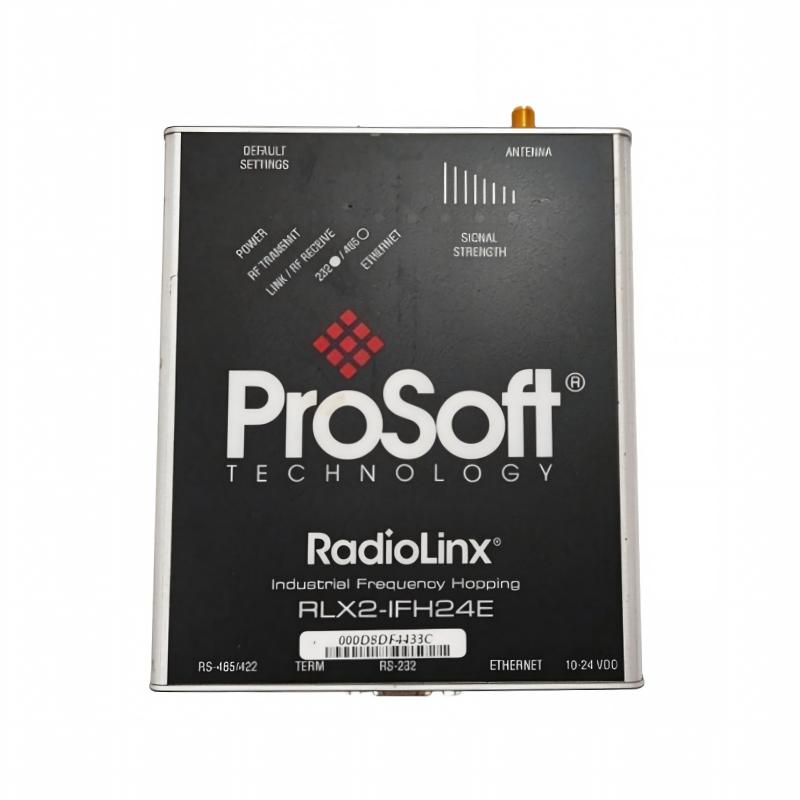
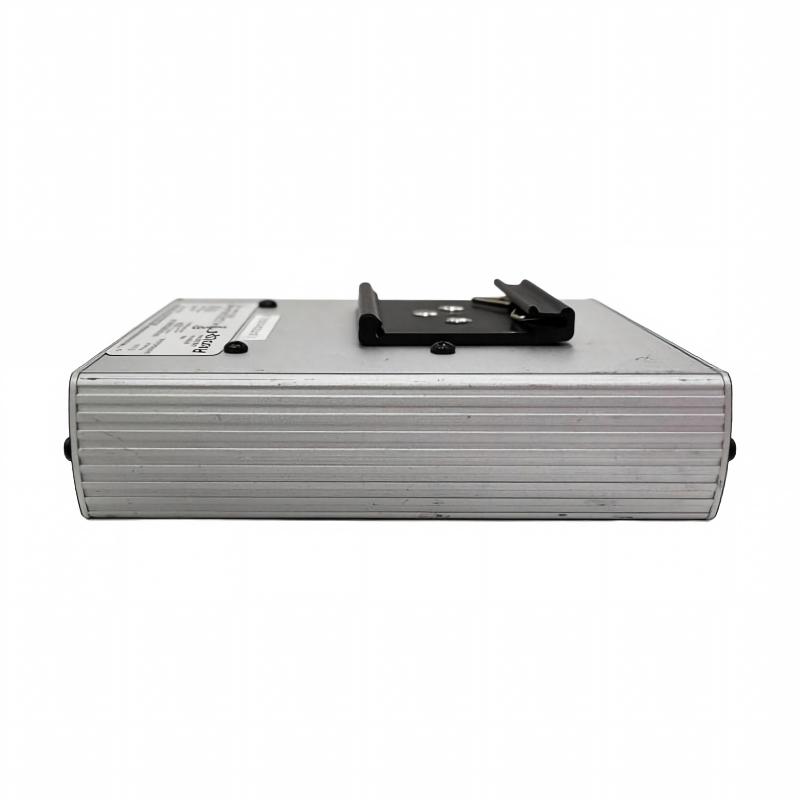
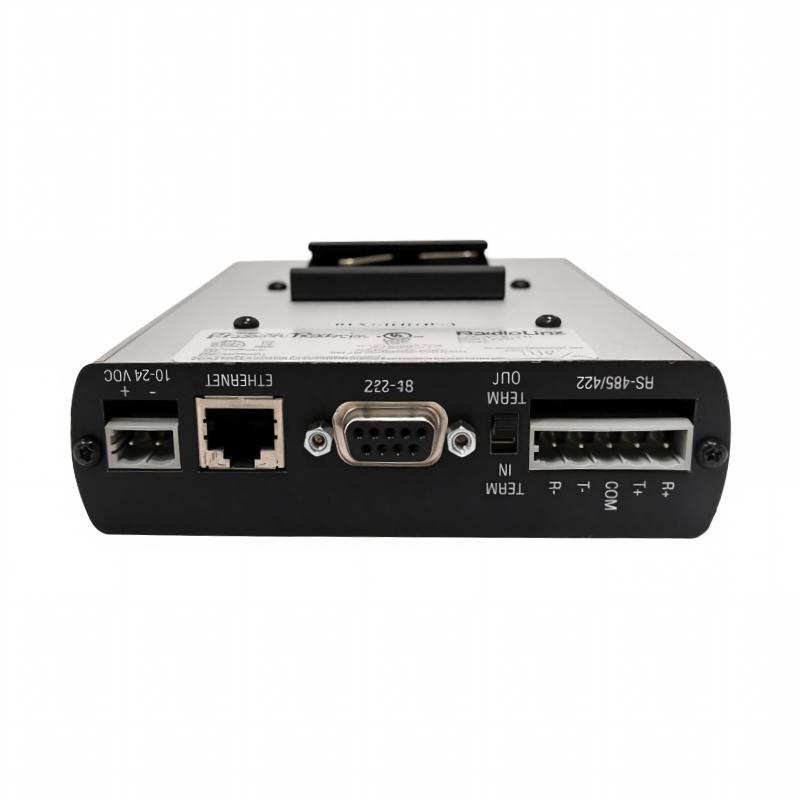
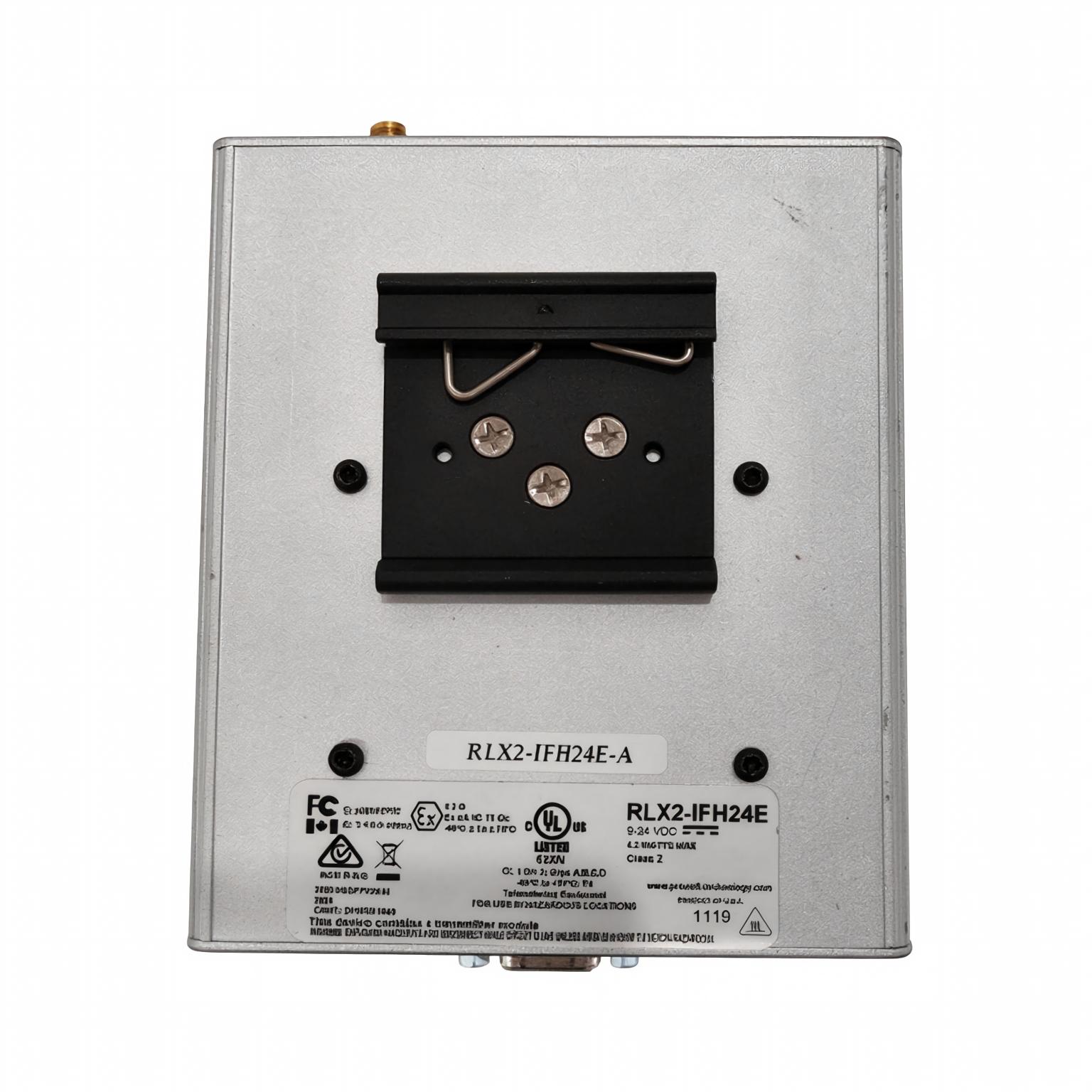
Brand:Allen Bradley PLC Item No.:RLX2-IFH24E-A Product Origin:USA Product Dimensions:147 x 38 x 118 mm Product Weight:0.369 kg Payment:T/T, Western Union, Credit Card Goods_stock:15 Shipping Port:Xiamen, China Lead Time:1-3 Days Condition:Brand New And Original Warranty:1 Year Certificate:COO
The ProSoft RLX2-IFH24E-A Industrial Wireless Ethernet Module, part of the RadioLinx product family, is designed to provide wireless connectivity for industrial communication systems. It offers an alternative to traditional wired Ethernet connections in facilities where equipment is distributed across different locations or cable installation is impractical.
Using 2.4 GHz frequency-hopping technology, the module supports several wireless network configurations and provides Ethernet and serial interfaces for connecting compatible industrial devices. Its 128-bit AES encryption capability adds protection to wireless data exchange, while diagnostic functions help maintenance personnel monitor communication conditions.
The RLX2-IFH24E-A is suitable for industrial network expansion, remote equipment connectivity, and distributed monitoring projects. Before deployment, users should verify radio configuration, antenna requirements, local wireless regulations, and compatibility with the intended network architecture.
Technical Specifications
Parameter
Specification
Brand
ProSoft
Model
RLX2-IFH24E-A
Product Type
Industrial Wireless Ethernet Module
Product Family
RadioLinx
Wireless Frequency
2.4 GHz
Wireless Technology
Frequency Hopping Spread Spectrum (FHSS)
Ethernet Interface
10/100 Base-T, RJ45
Serial Interfaces
RS-232, RS-422, RS-485
Wireless Security
128-bit AES Encryption
Network Topologies
Point-to-Point, Point-to-Multipoint, Repeater
Power Supply
9–24 VDC
Dimensions
147 × 38 × 118 mm
Weight
0.369 kg / 0.81 lb
Recommended Related Models
Model
Product Description
RLX2-IFH24E
RadioLinx Industrial Frequency Hopping Ethernet Radio
RLX-IFH24E
Industrial Frequency Hopping Ethernet Radio
MVI56E-SIE
Siemens Industrial Ethernet Communication Module
MVI56E-MNETR
Modbus TCP/IP Client/Server Communication Module
MVI56E-MNETCR
Modbus TCP/IP Multi-Client Enhanced Communication Module
MVI56E-MNETXT
Modbus TCP/IP Client/Server Communication Module
Popular Related Models
Model
Product Description
PLX82-EIP-PNC
EtherNet/IP to PROFINET Controller Gateway
PLX31-EIP-PND
EtherNet/IP to PROFINET IO Device Gateway
PLX32-EIP-PND
EtherNet/IP to PROFINET Gateway
ILX56-PBM
PROFIBUS DP Master Communication Module
ILX56-PBS
PROFIBUS DP Slave Communication Module
ILX69-PBM
PROFIBUS DP Master Communication Module
ILX34-MBS232
Modbus Serial Communication Module
ILX34-MBS485
Modbus Serial Communication Module
Applications
The ProSoft RLX2-IFH24E-A Industrial Wireless Ethernet Module provides wireless Ethernet connectivity for industrial automation, remote monitoring, and distributed control applications. Operating in the 2.4 GHz frequency band, it uses frequency-hopping technology to establish wireless communication links between networked devices.
It is particularly useful in installations where conventional Ethernet cabling is difficult to deploy or where wireless connections can simplify network expansion.
Typical applications include:
Remote equipment communication: Connect PLCs, controllers, and industrial devices located in separate areas.
Wireless network expansion: Extend Ethernet connectivity across production facilities and industrial sites.
Distributed automation: Support communication between remote control stations and centralized systems.
Process monitoring: Transfer operational information from remote equipment to monitoring systems.
Serial device networking: Connect compatible RS-232, RS-422, and RS-485 equipment through wireless infrastructure.
Advantages
2.4 GHz Frequency-Hopping Technology
The RLX2-IFH24E-A uses Frequency Hopping Spread Spectrum (FHSS) technology to support industrial wireless communication.
Flexible Network Configuration
Its supported network arrangements include point-to-point, point-to-multipoint, and store-and-forward repeater configurations, allowing engineers to design wireless links around different site requirements.
Multiple Communication Interfaces
Ethernet and serial connectivity provide flexibility when connecting different types of industrial equipment.
Wireless Data Security
Support for 128-bit AES encryption helps protect information transmitted across the wireless network.
Industrial Application Design
The module is designed for industrial environments where stable communication, practical installation, and convenient maintenance are important.
Convenient Network Diagnostics
Status indicators and diagnostic functions assist technicians in checking radio operation and investigating communication problems.
Technical FAQs
Q1: What is the main purpose of the RLX2-IFH24E-A?
It provides wireless Ethernet connectivity for industrial devices and automation networks.
Q2: Which frequency band does the module use?
It operates in the 2.4 GHz frequency band using Frequency Hopping Spread Spectrum technology.
Q3: What wireless network configurations are supported?
The module supports point-to-point, point-to-multipoint, and store-and-forward repeater configurations.
Q4: Does the RLX2-IFH24E-A support serial devices?
Yes. Its serial interfaces support RS-232, RS-422, and RS-485 connections for compatible equipment.
Q5: What Ethernet connection does it provide?
It provides a 10/100 Base-T Ethernet interface through an RJ45 connector.
Q6: Does the module support encrypted wireless communication?
Yes. It supports 128-bit AES encryption to help protect wireless data transmission.
Q7: What power supply is required?
The documented input power range is 9–24 VDC. The power source and wiring should follow the manufacturer's installation requirements.
Q8: Can the module be used to extend an industrial wireless network?
Yes. Its repeater configuration can help extend network coverage when the wireless layout and radio settings are properly designed.
Q9: What should be checked when wireless communication is unstable?
Inspect the power supply, antenna connections, signal strength, radio configuration, network addressing, and possible sources of radio interference.
Q10: What information should be recorded before replacing the module?
Record the radio configuration, frequency settings, network topology, security parameters, antenna arrangement, and connected Ethernet or serial devices.