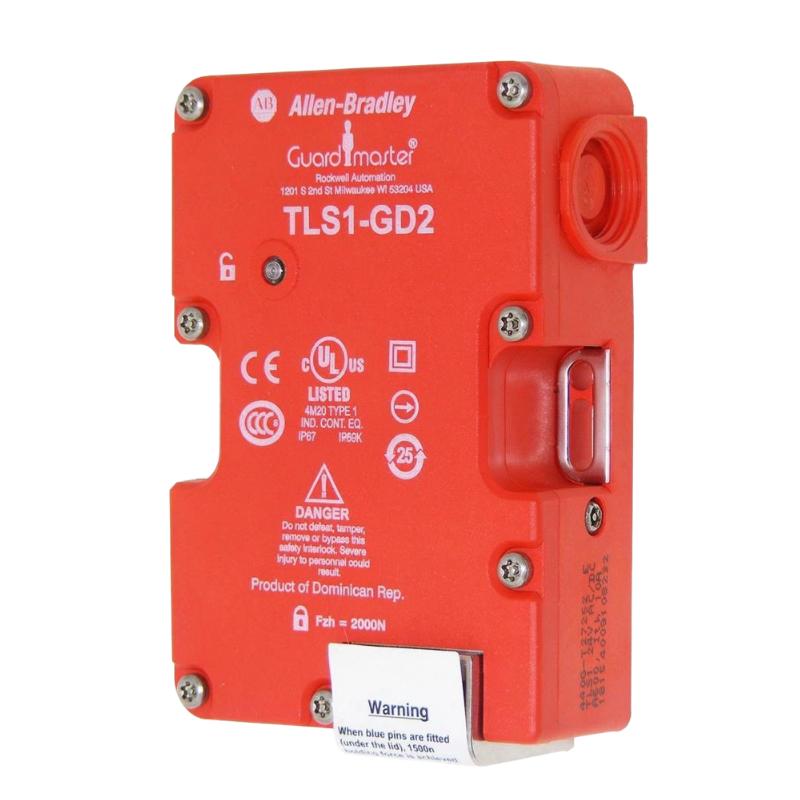
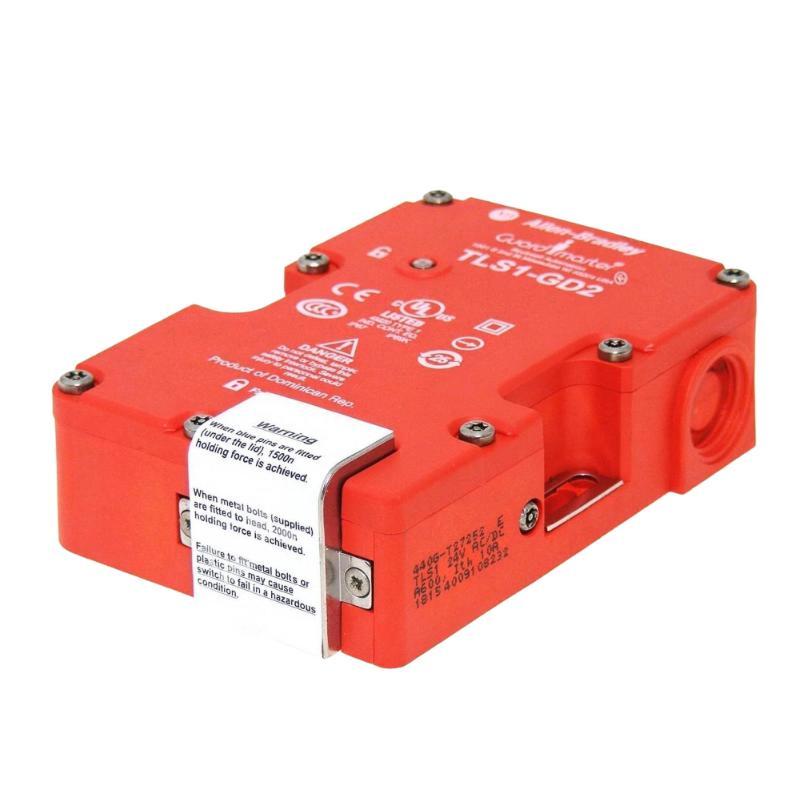
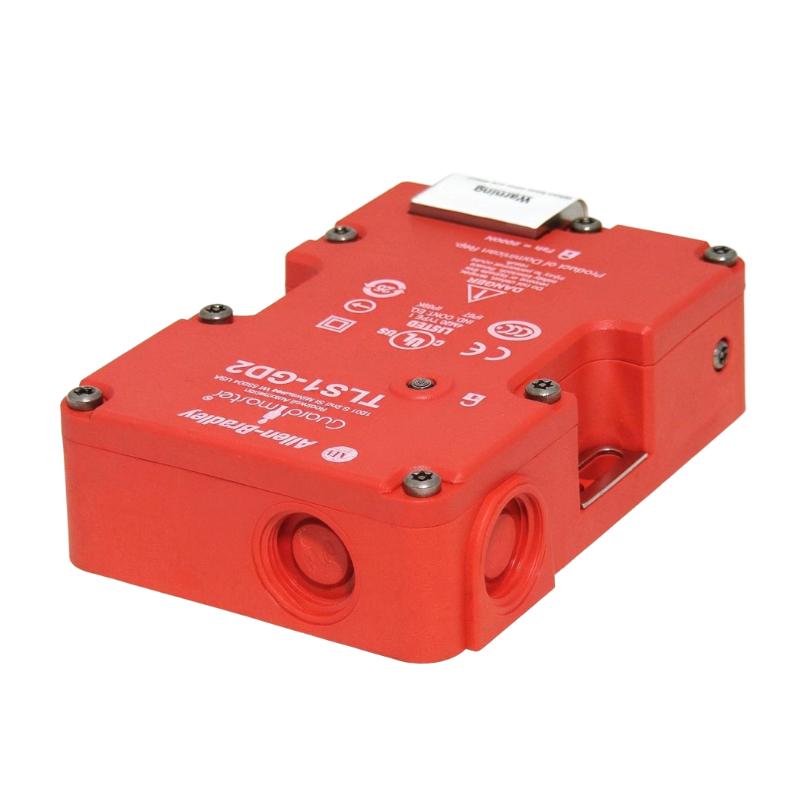
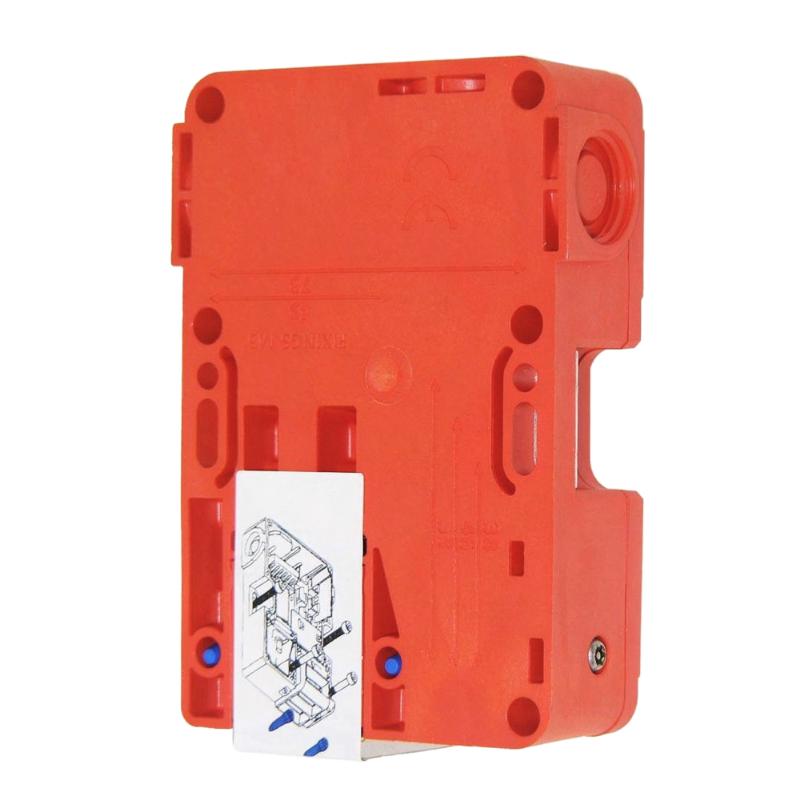
Allen Bradley 440G-T27252 Protective Locking Switch
Allen Bradley 440G-T27252 Protective Locking Switch
0.0
Points
Brand:Allen Bradley PLC Item No.:440G-T27252 Product Origin:USA Product Dimensions:136 x 29 x 95 mm Product Weight:0.13 kg Payment:T/T, Western Union, Credit Card Goods_stock:15 Shipping Port:Xiamen, China Lead Time:1-3 Days Condition:Brand New And Original Warranty:1 Year Certificate:COO
The Allen Bradley 440G-T27252 Protective Locking Switch is an industrial safety component intended for machinery access-control applications. Protective locking devices are used where a movable guard or access door must be monitored and controlled as part of a machine safety arrangement.
In automated manufacturing environments, safety doors and protective guards help separate operators from moving machinery and other hazardous processes. A correctly selected locking switch supports the intended safety design by providing an interface between the guard mechanism and the machine's safety control system.
When replacing an existing unit, it is important to confirm more than the catalog number alone. Mechanical mounting, actuator configuration, electrical characteristics, and safety-system compatibility should all be checked to avoid introducing an unsuitable device into the machine guarding arrangement.
We support industrial automation spare-parts sourcing for maintenance teams, machine builders, and equipment operators. Contact us with your required model and quantity to check availability and obtain a quotation.
Technical Specifications
Parameter
Specification
Brand
Allen Bradley
Model
440G-T27252
Product Type
Protective Locking Switch
Product Category
Machine Safety Component
Dimensions
136 × 29 × 95 mm
Weight
0.13 kg / 0.29 lb
Confirm the locking principle, actuator type, contact configuration, electrical ratings, and safety performance data against the product label and applicable technical documentation.
Recommended Related Models
The following Allen Bradley safety products may be relevant when designing or maintaining machine guarding systems. They have different functions and should not be treated as direct replacements without checking their specifications.
Model
Product Description
440G-LZ
Guard Locking Switch
440K-T
TLS-Z Guard Locking Switch
440K-E
Guardmaster Safety Interlock Switch
440N-Z21S16H
Guardmaster Safety Switch
Popular Related Models
Other Allen Bradley safety components that may be considered for industrial machine protection projects include:
Model
Product Description
440R-S13R2
Guardmaster Safety Relay
440R-N23132
Guardmaster Safety Relay
440C-CR30-22BBB
Guardmaster Configurable Safety Relay
440G-LZ
Guard Locking Switch
440K-T
TLS-Z Guard Locking Switch
For safety-critical replacement work, verify the device's exact operating principle, safety ratings, and compatibility with the existing control architecture before installation.
Applications
The Allen Bradley 440G-T27252 Protective Locking Switch is an industrial safety component designed for applications where access to hazardous machinery areas must be controlled. Protective locking switches are commonly installed on movable machine guards, access doors, and safety gates to help prevent unauthorized or premature access while machinery is operating.
Typical applications include:
Monitoring access doors on automated production equipment.
Securing protective guards around industrial machinery.
Controlling access to hazardous machine zones.
Supporting safety interlock arrangements on packaging and assembly lines.
Integrating guard monitoring into industrial machine safety systems.
The 440G-T27252 is intended for use in machinery safety applications where guard position and locking functions are important. Selection and installation should follow the machine risk assessment and the applicable safety-system design.
Advantages
Controlled Access to Hazardous Areas
Protective locking switches help manage access to machine interiors and hazardous operating zones, supporting safer maintenance and production procedures.
Integration into Machine Safety Circuits
The switch can form part of a machine guarding arrangement when connected to a compatible safety control system and installed according to the manufacturer's requirements.
Support for Guard Monitoring
A protective locking device helps provide a defined safety interface between movable guards and the machine control system.
Suitable for Industrial Equipment
Its application in machine guarding makes it relevant to automated production lines, processing equipment, and machinery requiring controlled access.
Useful for Maintenance and Replacement
For facilities operating Allen Bradley safety equipment, selecting the correct 440G-T27252 model helps maintain the intended guard-interlocking arrangement. Confirm the complete device configuration before ordering.
Technical FAQs
Q1: What is the primary purpose of the Allen Bradley 440G-T27252?
It is identified as a protective locking switch used in machinery guarding applications to help control access to hazardous areas.
Q2: Where is a protective locking switch typically installed?
It is commonly fitted to a machine guard, safety door, or access gate so that the guard's condition can be monitored by the machine safety system.
Q3: How does a protective locking switch contribute to machine safety?
It helps prevent access to hazardous machinery under specified operating conditions. Its effectiveness depends on correct installation, suitable safety control logic, and an appropriate risk assessment.
Q4: Can the 440G-T27252 be used on an automatic production line?
Protective locking switches are commonly used in automated machinery. Confirm that the specific model's operating characteristics and safety ratings meet the requirements of the production line.
Q5: Does the switch replace the machine safety controller?
No. A protective locking switch is a field-level safety device. It normally works as part of a broader safety arrangement that may include safety relays, safety controllers, and other protective equipment.
Q6: What should be checked before installing the switch?
Verify the model number, actuator arrangement, mounting position, electrical connections, and compatibility with the machine's safety circuit. Follow the manufacturer's installation instructions.
Q7: Why might a machine fail to recognize that a guard is closed?
Possible causes include incorrect actuator alignment, damaged wiring, loose connections, mechanical wear, or a fault in the associated safety control circuit.
Q8: What should be done if the locking mechanism does not operate correctly?
Stop the affected machine and follow the site's safety procedures. Inspect the device and associated wiring, then have qualified personnel determine whether adjustment or replacement is required.
Q9: Can the switch be bypassed to keep production running?
Bypassing a protective locking device can expose personnel to serious hazards and compromise the machine's safety function. It should not be bypassed as a production workaround.
Q10: What information is needed when sourcing a replacement?
Provide the complete catalog number and confirm the actuator, mounting, connection, and safety-system requirements. Also check the installed device's revision and configuration before ordering.