Yokogawa Electric

  1. Home
  2. Products
  3. Yokogawa Electric
  4. Yokogawa AAI143-H53 S1 Analog Input Module
Yokogawa AAI143-H53 S1 Analog Input Module

Yokogawa AAI143-H53 S1 Analog Input Module

0.0
Points

Brand:Yokogawa Electric
Item No.:AAI143-H53 S1
Product Origin:Japan
Product Dimensions:107.5 × 32.8 × 130 mm
Product Weight:0.3 kg
Payment:T/T, Western Union, Credit Card
Goods_stock:15
Shipping Port:Xiamen, China
Lead Time:1-3 Days
Condition:Brand New And Original
Warranty:1 Year
Certificate:COO

Add to cart


Introduction

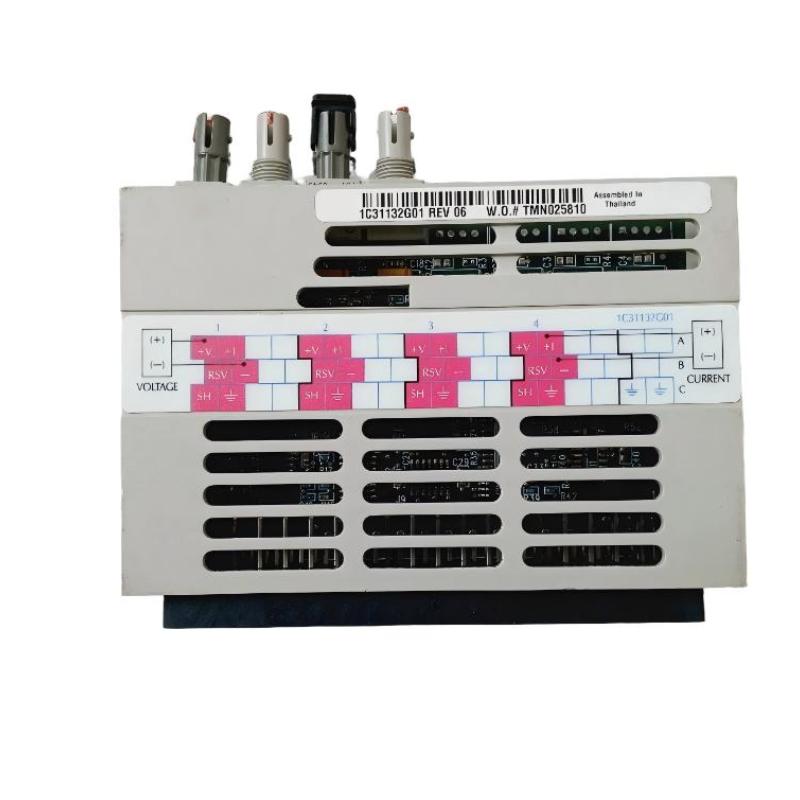
The Yokogawa AAI143-H53 S1 Analog Input Module brings a refined balance of measurement accuracy, structural durability, and system compatibility. Built for modern industrial control environments, it captures analog data with clarity and consistency, supporting operators who need reliable insights for real-time decision-making. Its solid-state stability, low noise susceptibility, and easy integration make it an ideal module for both plant expansions and full-scale modernization efforts.


Technical Specifications

SpecificationDescription
ModelAAI143-H53 S1
Input TypeAnalog (commonly 4–20 mA)
ChannelsMulti-channel configuration
IsolationChannel and system galvanic isolation
AccuracyHigh-accuracy, low-drift input circuitry
PowerSupplied via Yokogawa backplane
Operating ConditionsIndustrial temperature/vibration rating
MountingCompatible with Yokogawa I/O base assemblies
Dimensions107.5 × 32.8 × 130 mm
Weight0.3 kg

Recommended Related Models

  • Yokogawa AAI143-H50 Analog Input Module

  • Yokogawa AAI145 Isolated Analog Input Module

  • Yokogawa AAT141 Analog Output Unit

  • Yokogawa ADV151 Pulse Input Module


Popular Related Models

  • Yokogawa AAI835 Current Input Module

  • Yokogawa ADM52 Digital Input Module

  • Yokogawa AVR10D Remote I/O Station

  • Yokogawa CP451-10 Processor Module

Operational Applications

The Yokogawa AAI143-H53 S1 Analog Input Module is designed for plants where process accuracy and system resilience directly influence production throughput. It is widely deployed in continuous-process industries such as petrochemical refining, LNG terminals, paper mills, energy generation, metallurgy processes, and pharmaceutical manufacturing. Whether used for mission-critical loops or routine monitoring, it provides the dependable analog data that modern control systems rely on.


Core Advantages

  • Precision-driven input performance for stable and repeatable measurement results.

  • Strong noise resistance, ensuring clean signals even in high-EMI industrial zones.

  • Plug-and-integrate design that aligns effortlessly with Yokogawa CENTUM platforms.

  • Compact structure, ideal for dense cabinet layouts and modernization projects.

  • Long-term reliability with excellent thermal stability and minimal drift.

  • Supports diverse analog transmitters, making it flexible for multi-discipline processes.


Technical FAQs

  1. What input type does the AAI143-H53 S1 support?
    It handles standard 4–20 mA analog currents from field transmitters.

  2. Does it provide electrical isolation?
    Yes, isolation is built into the design for enhanced signal clarity and protection.

  3. Is it suitable in high-vibration environments?
    Its industrial-grade construction ensures stable operation under mechanical stress.

  4. Can I hot-swap this module?
    Many Yokogawa backplanes support hot-swapping; compatibility depends on the system configuration.

  5. Does it support module diagnostics?
    Yes, it includes diagnostics for wiring faults and internal health conditions.

  6. Is the accuracy affected by ambient temperature?
    A robust low-drift design minimizes temperature influence on measurement precision.

  7. Does it work with legacy Yokogawa systems?
    Yes, it integrates smoothly with both current and many older CENTUM architectures.

  8. What kind of maintenance does it require?
    Usually limited to periodic checks for wiring integrity and panel cleanliness.

  9. Is additional power wiring required?
    No—power is delivered through the system’s I/O backplane.

  10. Does it support redundant control configurations?
    Yes, it fits into redundant architectures for increased system availability.


Look forward to your comments!Comment
Latest comments
Tags:
Need Assistance? Chat with Us on WhatsApp!
Need Assistance? Click to Inquire
Back to top