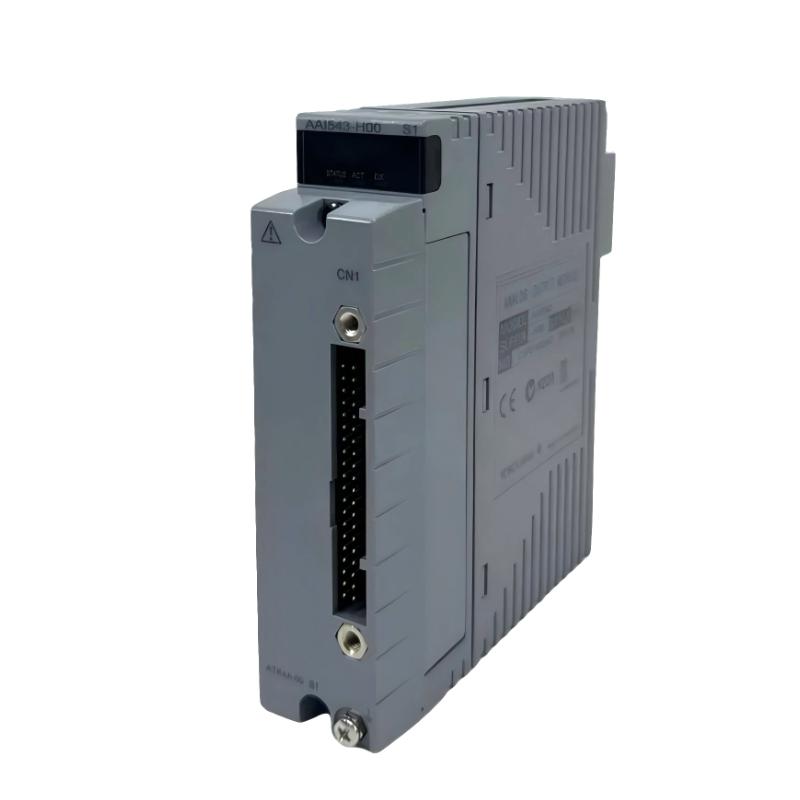
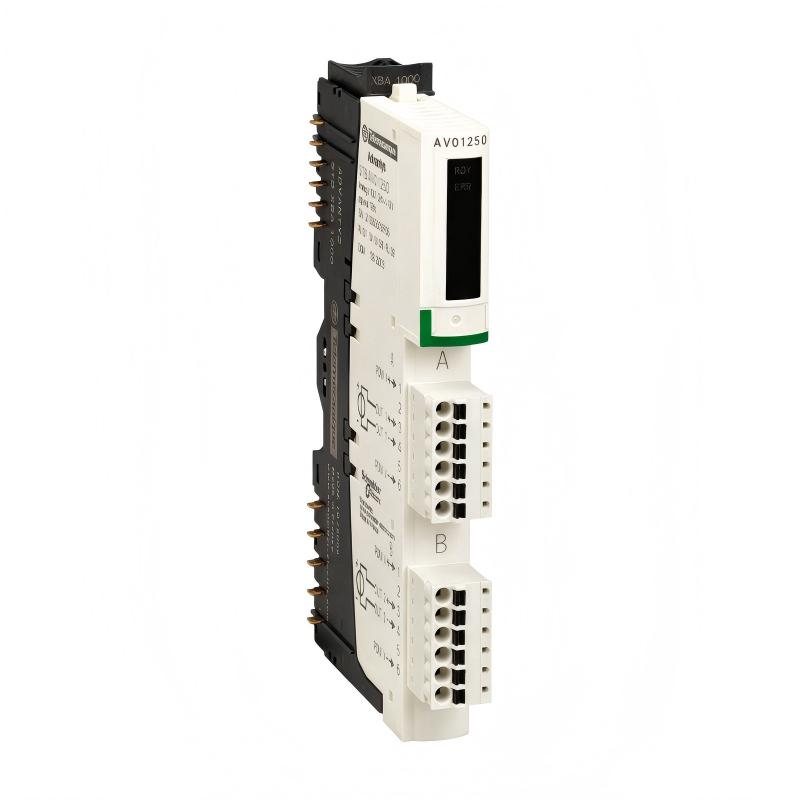
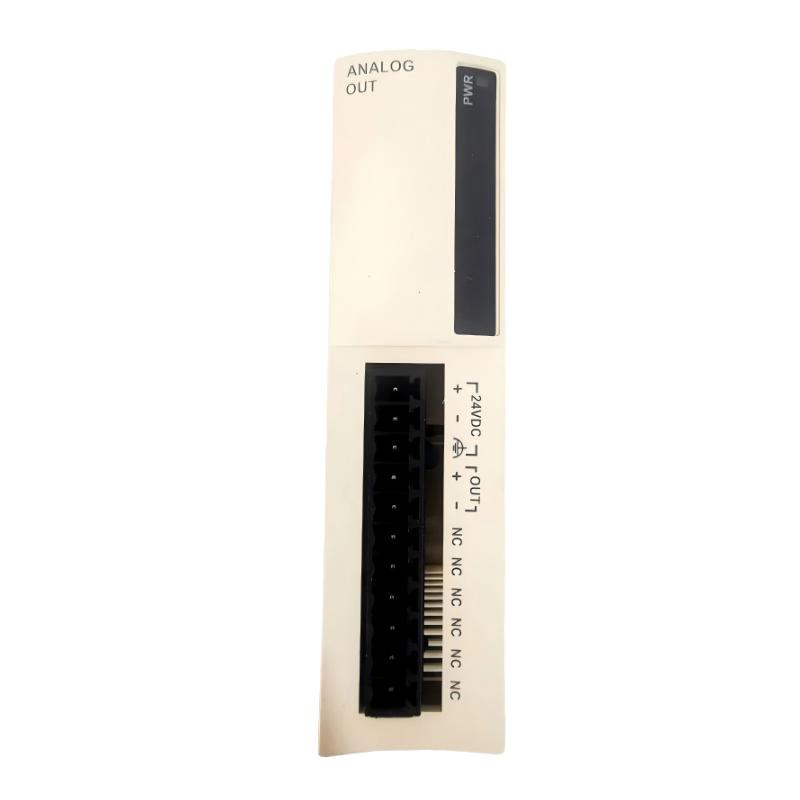
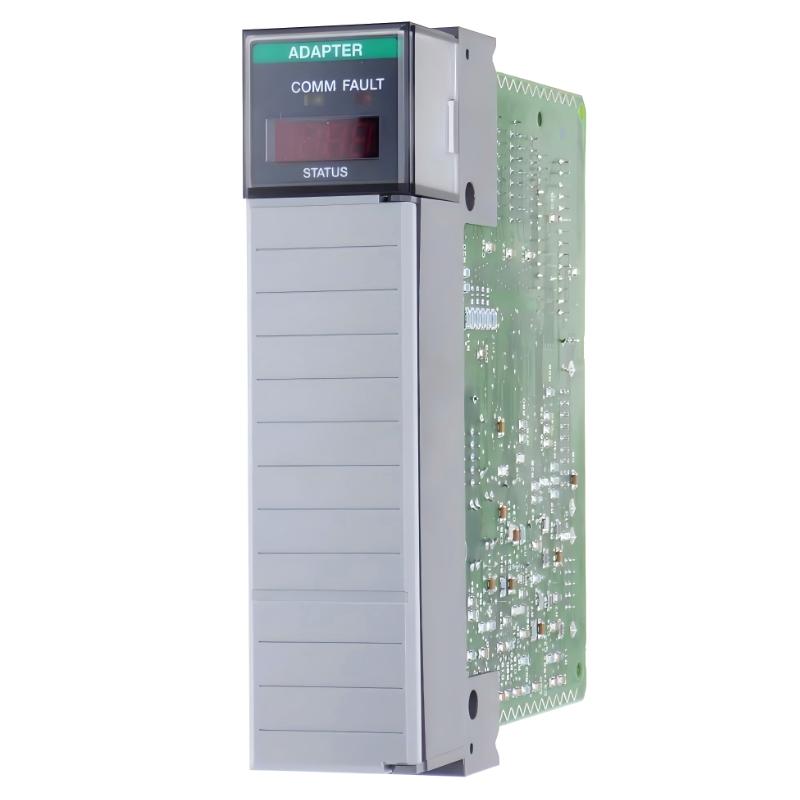
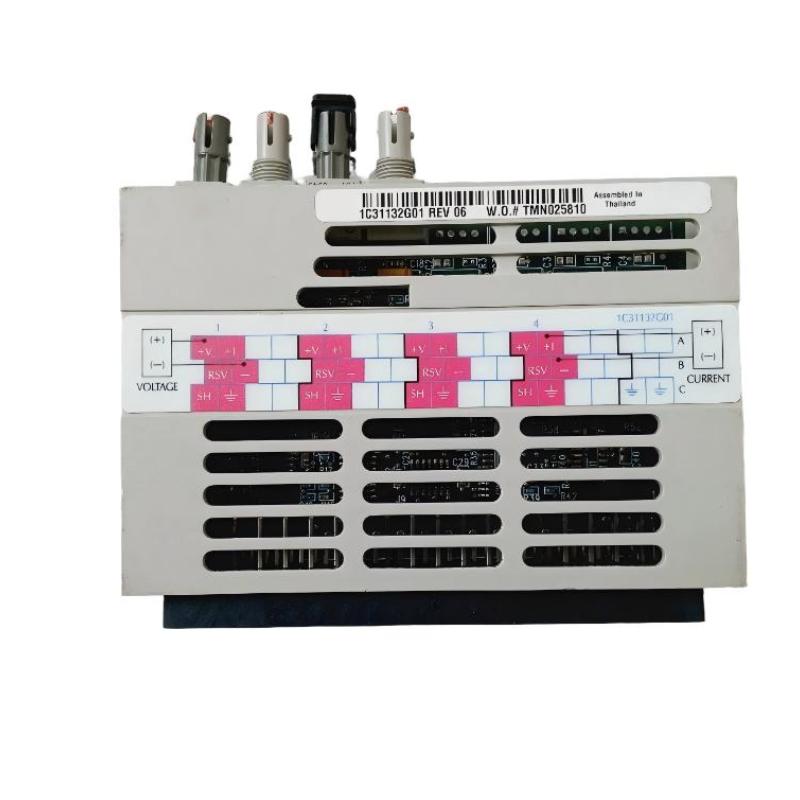
Brand:Yokogawa Electric Item No.:AAI543-H00/K4A00 Product Origin:Japan Product Dimensions:107.5 × 32.8 × 130 mm Product Weight:0.4 kg Payment:T/T, Western Union, Credit Card Goods_stock:15 Shipping Port:Xiamen, China Lead Time:1-3 Days Condition:Brand New And Original Warranty:1 Year Certificate:COO
The Yokogawa AAI543-H00/K4A00 Analog Output Module converts digital control signals into precise analog outputs for field devices in advanced distributed control systems. Developed according to Yokogawa’s stringent industrial standards, it emphasizes accuracy, stability, and seamless integration with control platforms. Its reliable performance ensures continuous process control, operational efficiency, and safety in mission-critical industrial environments.
Technical Specifications
Parameter
Specification
Product Type
Analog Output Module
Signal Function
Field analog signal control
Output Processing
High-precision signal conditioning
Electrical Design
Isolated analog output architecture
System Compatibility
Yokogawa control platforms
Dimensions (W × H × D)
107.5 × 32.8 × 130 mm
Weight
0.4 kg
Recommended Related Models
Model
Module Type
Primary Function
Yokogawa AAI141
Analog Input Module
General-purpose analog input
Yokogawa AAI143-S50
Analog Input Module
High-precision analog input
Yokogawa AAV144
Analog Output Module
Precise analog output control
Yokogawa ADV151
Digital Input Module
Discrete signal monitoring
Yokogawa ADO143
Digital Output Module
Actuator control and monitoring
Popular Related Models
Model
Module Type
Typical Application
Yokogawa AAI841
Analog Input Module
High-reliability process input
Yokogawa AAV542
Analog Output Module
Stable process control output
Yokogawa ADO143
Digital Output Module
Device actuation control
Yokogawa ADV551
Digital Input Module
Status and contact monitoring
Yokogawa CP451
CPU Module
Central control processing
Industrial Applications
The Yokogawa AAI543-H00/K4A00 Analog Output Module is designed for precise and stable analog signal control in distributed process control systems. It finds extensive use in oil and gas production, petrochemical and chemical plants, power generation stations, and other continuous process industries. Common applications include regulating valves, actuators, and other field devices requiring accurate current or voltage output to control process variables such as flow, pressure, temperature, and level.
Operational Advantages
This module delivers high-precision analog outputs with robust immunity to electrical noise and transient disturbances. Its isolated output architecture safeguards both the control system and connected field devices from interference and ground loops, ensuring consistent and reliable operation. The compact, modular design supports high-density cabinet installations while remaining serviceable. Seamless integration with Yokogawa control platforms simplifies commissioning, operation, and future system expansion. The AAI543-H00/K4A00 is engineered for dependable long-term performance in critical industrial environments.
Technical FAQs
What types of analog outputs does the module support?
The module supports standard industrial current and voltage analog outputs suitable for controlling field devices.
How is output accuracy maintained?
Precision signal conditioning circuitry ensures repeatable and stable analog output with minimal drift over time.
How does the module handle electrical interference?
Isolation and internal filtering minimize the effects of electromagnetic interference and transient disturbances on output signals.
Can multiple devices be controlled simultaneously?
Yes, each channel operates independently, maintaining stable output without cross-channel interference.
Are diagnostic functions available for output channels?
Yes, the module provides system-level diagnostics to monitor channel status and detect abnormal conditions.
Is the module compatible with redundant control systems?
Yes, it supports Yokogawa redundant configurations for high-availability, fault-tolerant operation.
How is output data synchronized with the control system?
Output values are updated in coordination with the system scan cycle to ensure timely and accurate control.
What protections exist against wiring errors or transient events?
Protective circuitry reduces risks from miswiring, voltage spikes, or transient electrical events.
How is cross-channel interference minimized?
Independent channel design and isolation prevent interaction between channels, maintaining uniform output quality.
How does the module ensure long-term operational reliability?
Industrial-grade components and robust design maintain stable performance during continuous operation.