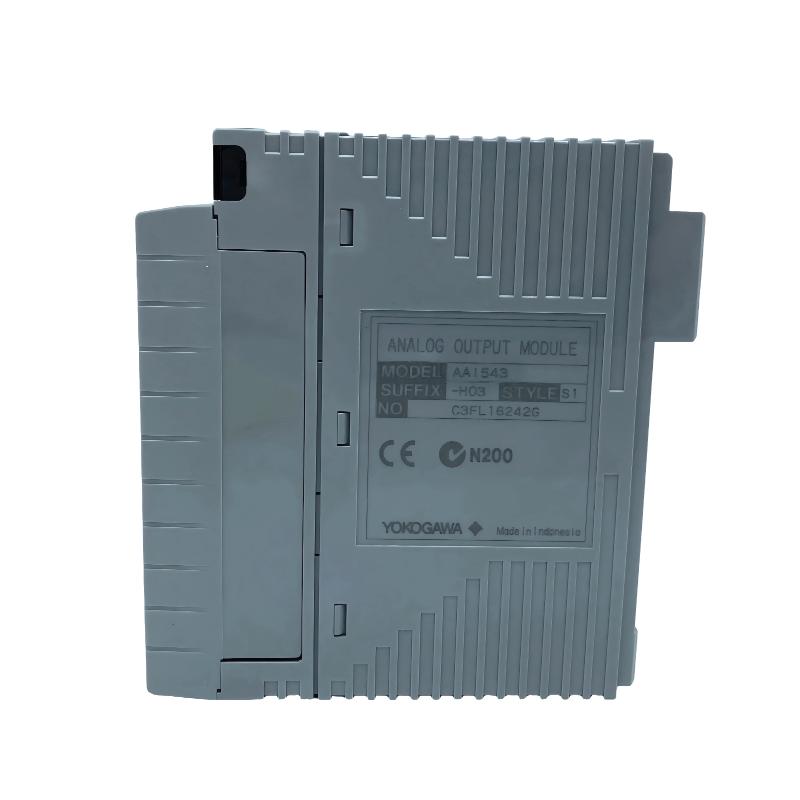
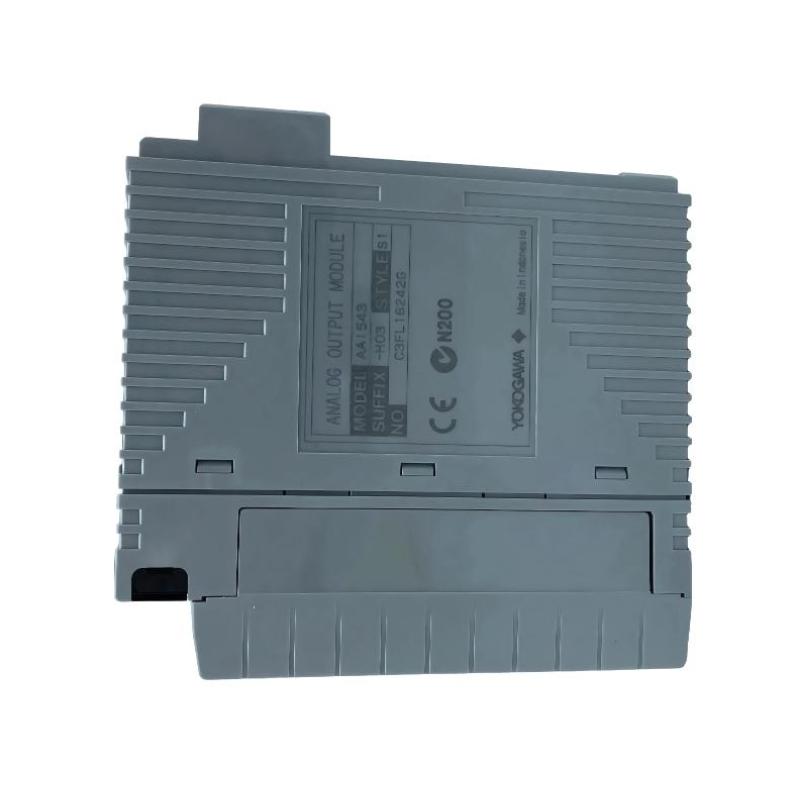
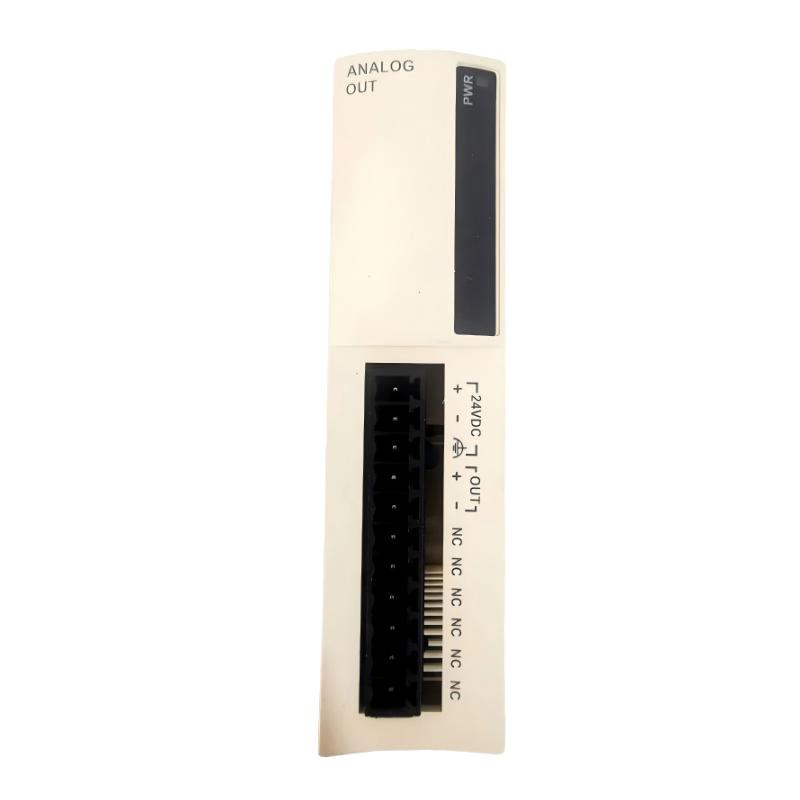
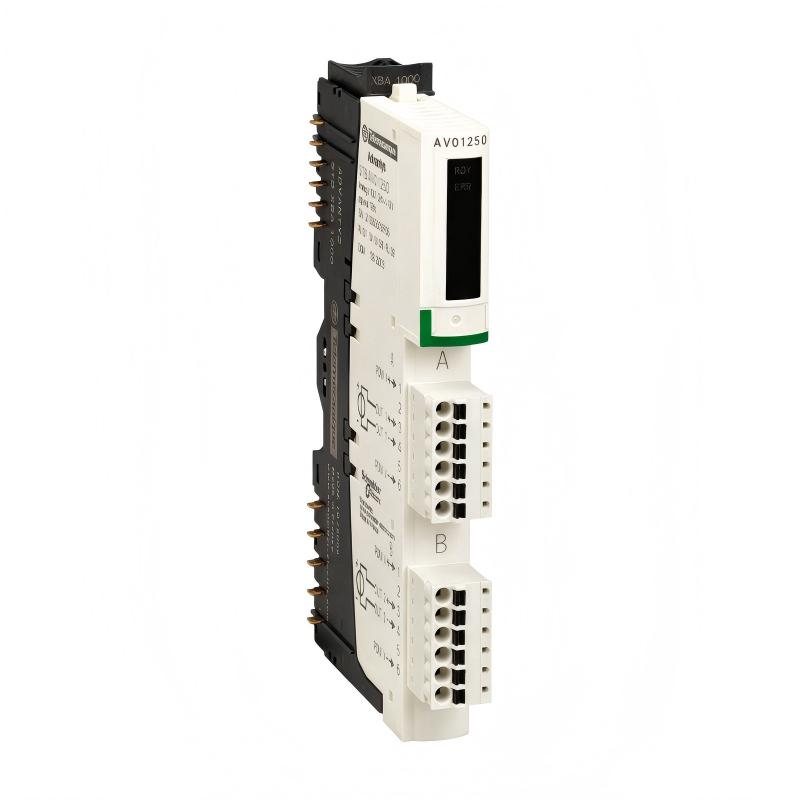
Brand:Yokogawa Electric Item No.:AAI543-H03/K4A00 Product Origin:Japan Product Dimensions:107.5 × 32.8 × 130 mm Product Weight:0.4 kg Payment:T/T, Western Union, Credit Card Goods_stock:15 Shipping Port:Xiamen, China Lead Time:1-3 Days Condition:Brand New And Original Warranty:1 Year Certificate:COO
The Yokogawa AAI543-H03/K4A00 Analog Output Module acts as a critical link between the control system and field devices by converting digital control commands into precise analog current outputs. It is engineered to support reliable execution of control strategies in demanding industrial environments.
With a focus on signal integrity and long-term stability, this module contributes to consistent plant performance. Its compatibility with Yokogawa’s automation platforms ensures predictable integration and dependable operation throughout the system lifecycle.
Technical Specifications
Parameter
Description
Product Type
Analog Output Module
Output Signal Type
Analog current output
Channel Configuration
Multiple independent output channels
Output Range Configuration
Software configurable
Diagnostic Capability
Channel-level status and fault reporting
Electrical Isolation
Channel and system isolation
System Compatibility
Yokogawa DCS I/O systems
Dimensions (W × H × D)
107.5 × 32.8 × 130 mm
Weight
Approx. 0.4 kg
Recommended Related Models
Model
Module Type
Primary Function
Yokogawa AAI543-H00
Analog Output Module
Standard configuration variant
Yokogawa AAI835
Analog Output Module
General-purpose output control
Yokogawa AAI841
Analog Output Module
High-density analog output
Yokogawa AAI943
Analog Output Module
Advanced diagnostics
Yokogawa AAI141
Analog Input Module
Analog signal acquisition
Popular Related Models
Model
Module Type
Typical Application
Yokogawa AAI833
Analog Output Module
Process control outputs
Yokogawa AAI143
Analog Input Module
Process monitoring
Yokogawa AAV144
Analog Input Module
High-accuracy input
Yokogawa AAI543-H10
Analog Output Module
Extended configuration variant
Yokogawa ADV151
Digital Input Module
Discrete signal processing
Applications
The Yokogawa AAI543-H03/K4A00 Analog Output Module is used in industrial control systems where precise and repeatable analog output is required to regulate critical process variables. It is well suited for continuous and hybrid processes in industries such as oil and gas, petrochemical processing, power generation, pulp and paper, and specialty chemicals.
This module is typically assigned to output control signals for valves, dampers, and variable-speed drives. In advanced control environments, it supports complex strategies such as cascade control and load-sharing by ensuring that the controller’s output values are accurately translated into stable field signals.
Advantages
The AAI543-H03/K4A00 is designed to deliver consistent analog output performance under demanding operating conditions. Its stable signal characteristics help minimize control deviation and support smooth operation of final control elements.
Built-in diagnostic functions provide visibility into output channel status, enabling maintenance teams to identify and resolve issues efficiently. The module’s electrical design improves resistance to noise and interference, making it reliable in dense control cabinets. As part of Yokogawa’s I/O ecosystem, it offers predictable behavior and seamless compatibility within larger automation systems.
Technical FAQs
1. What type of analog output signals does this module provide?
The module delivers industrial-standard current output signals suitable for most control and actuation devices.
2. Can different output ranges be assigned to individual channels?
Yes, output ranges can be configured independently for each channel through the control system software.
3. How does the module ensure consistent output accuracy across channels?
Precision circuitry and internal signal conditioning help maintain uniform performance for all output channels.
4. What diagnostic information is available to operators and engineers?
Channel status, fault indications, and operational conditions are reported to the control system for monitoring.
5. How does the module handle sudden changes in controller output commands?
Internal processing ensures smooth signal transitions, reducing the risk of abrupt changes affecting field devices.
6. Is the module suitable for use in advanced control applications?
Yes, its stable and repeatable outputs support advanced control functions such as model-based and multivariable control.
7. How does the module respond to abnormal field circuit conditions?
Abnormal conditions are detected and communicated to the control system to support timely corrective actions.
8. Can channels be reassigned if control strategies change?
Channels can be reconfigured through software to accommodate process modifications or system upgrades.
9. How does the module minimize the impact of electrical interference?
Electrical isolation and filtering techniques are employed to protect output signals from external noise.
10. How is module health information communicated within the system?
Operational and diagnostic data are transmitted over the system I/O bus for continuous supervision.