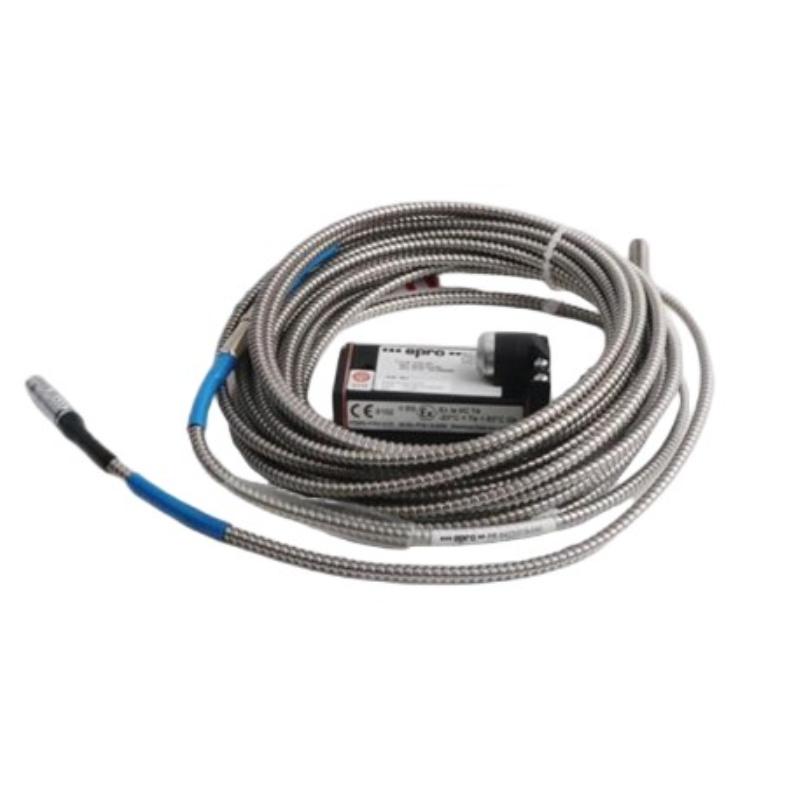
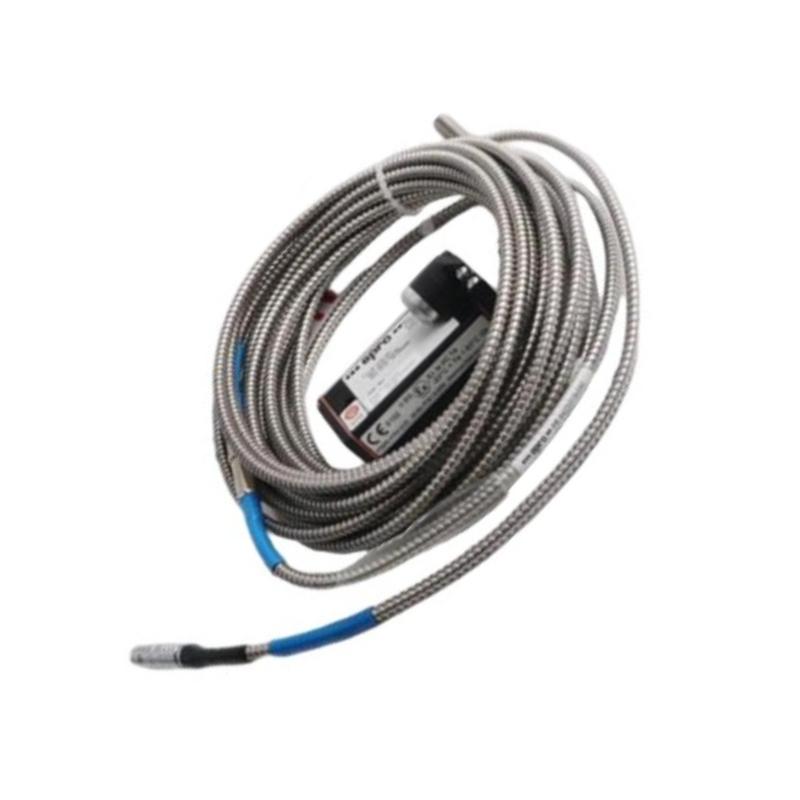
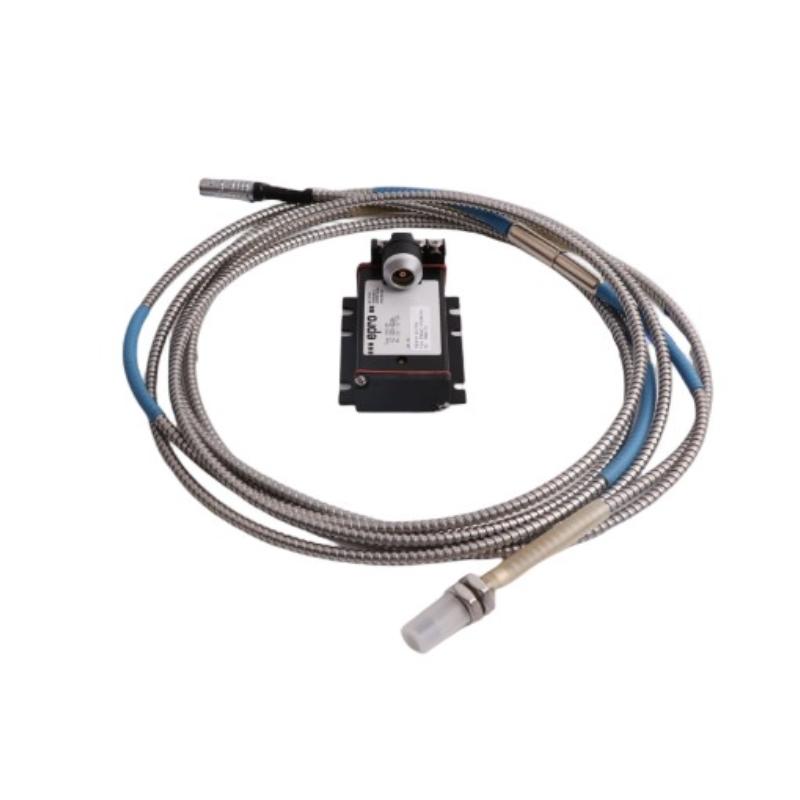
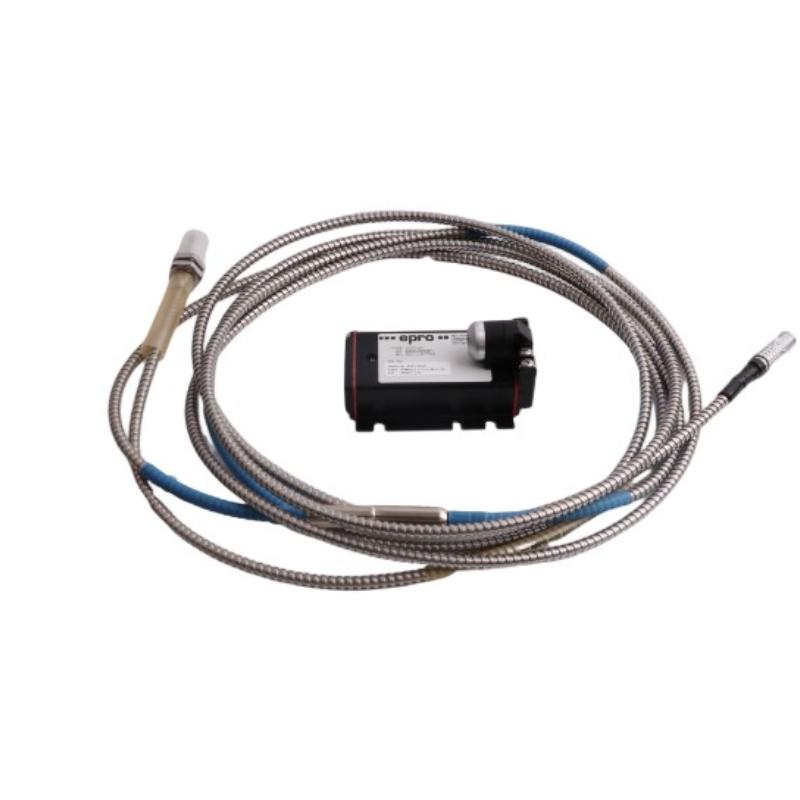
Brand:Epro PLC Item No.:PR6423/010-040-CN Product Origin:Germany Product Dimensions:Sensor Head Diameter: 8 mm Product Weight:0.1 kg Payment:T/T, Western Union, Credit Card Goods_stock:15 Shipping Port:Xiamen, China Lead Time:1-3 Days Condition:Brand New And Original Warranty:1 Year Certificate:COO
The Epro PR6423/010-040-CN 8 mm Eddy Current Sensor is engineered for high-accuracy displacement measurement in mission-critical rotating machinery. Designed for continuous monitoring applications, it delivers reliable performance in environments where mechanical stability and early fault detection are essential.
Its compact 8 mm sensing head and non-contact measurement method make it a trusted solution for predictive maintenance systems and industrial condition monitoring platforms.
The Epro PR6423/010-040-CN 8 mm Eddy Current Sensor is a high-precision non-contact measurement solution designed for critical industrial monitoring tasks. It is widely used in applications where shaft vibration, displacement, and position must be measured with high stability and accuracy.
Typical applications include:
Turbomachinery shaft vibration monitoring
Gas, steam, and hydro turbine condition monitoring
Industrial compressors and gearbox systems
Pumps and rotating machinery diagnostics
Bearing wear and shaft displacement analysis
High-speed rotating equipment protection systems
Its non-contact measurement principle ensures long service life and stable performance even in harsh industrial environments.
Advantages
Non-Contact Measurement — Eliminates mechanical wear and improves long-term reliability
High Precision Output — Suitable for micro-level displacement and vibration detection
Robust Industrial Design — Built for harsh environments and continuous operation
Stable Signal Response — Reliable measurement under high-speed rotation conditions
Wide Temperature Tolerance — Suitable for demanding industrial operating environments
Maintenance-Free Operation — No mechanical contact reduces maintenance requirements
High System Compatibility — Commonly integrated into turbomachinery monitoring systems
Technical FAQs
What is the measuring principle of this sensor?
It uses eddy current technology to measure displacement without physical contact.
What is it mainly used for?
It is primarily used for vibration and shaft displacement monitoring in rotating machinery.
Does it require physical contact with the target?
No, it is a non-contact sensor.
Can it be used in turbines?
Yes, it is widely used in steam, gas, and hydro turbine monitoring systems.
Is it suitable for high-speed rotating equipment?
Yes, it is designed specifically for high-speed machinery applications.
Does it require regular calibration?
It typically maintains stable performance but system-level calibration may be required.
What type of output does it provide?
It works as part of an eddy current measurement system with signal conditioning electronics.
Is it resistant to harsh environments?
Yes, it is designed for industrial environments with vibration and temperature variations.
Can it detect shaft misalignment?
Yes, it can be used to monitor displacement and eccentricity trends.
Is it used alone or with other modules?
It is typically used together with a driver or signal conditioning unit.