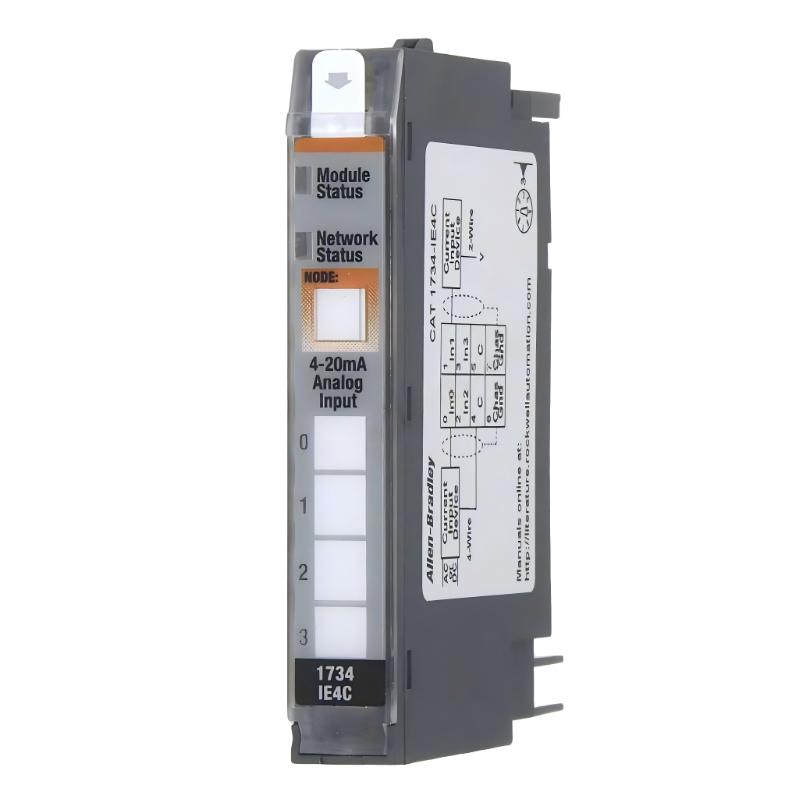
Troubleshooting Allen-Bradley 1734-IE4C Analog Input Instability in Industrial Automation Systems
The Allen-Bradley 1734-IE4C module is generally stable in industrial environments, but when issues occur, they are often misinterpreted as hardware failure. In most real cases, faults are caused by external wiring conditions, grounding issues, or power instability rather than module defects.
A typical symptom is unstable analog readings that fluctuate without any corresponding process change. Another common issue is intermittent channel dropout or inconsistent scaling in PLC monitoring systems.
Field Fault Symptoms and Observations
In a pipeline monitoring application, two channels of the module began showing irregular flow readings. Values would randomly jump between normal operating range and near-zero levels.
At first, the maintenance team suspected module failure and replaced the unit. However, the issue remained unchanged, indicating that the fault was not related to hardware.
This shifted the investigation toward field wiring and signal environment.
Diagnostic Approach in Real Applications
Signal testing at the transmitter side confirmed stable current output. However, at the PLC input terminals, the signal became unstable during heavy equipment startup events.
This clearly indicated that the issue was introduced during signal transmission rather than at the source.
Further inspection revealed that shielded cables were grounded at both ends and routed parallel to high-power motor cables. During motor startup, electromagnetic interference was induced into the analog signal lines.
Root Cause Analysis
The fault was caused by a combination of system-level issues rather than a single failure point.
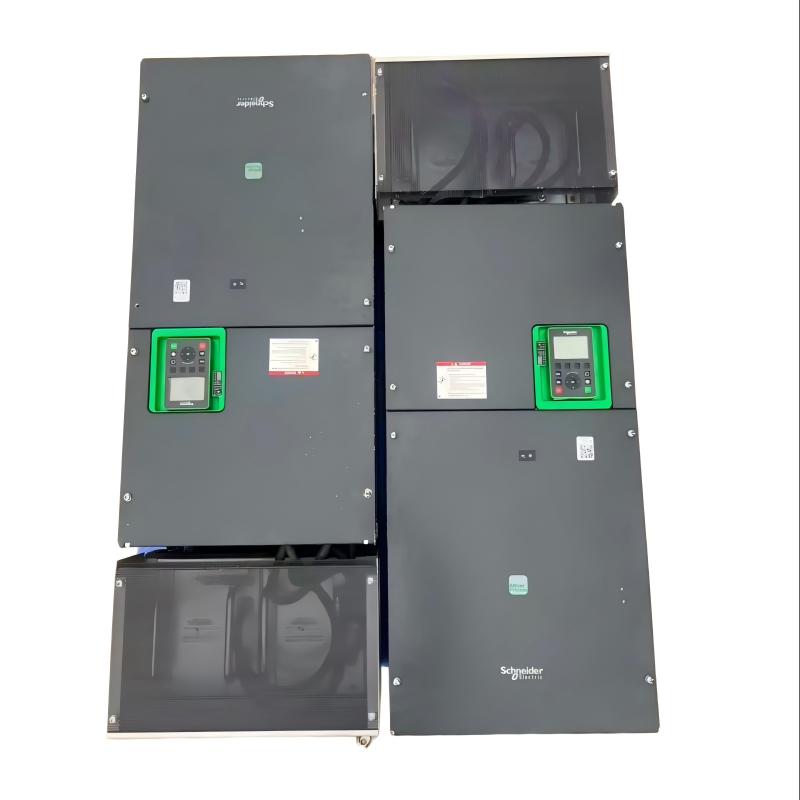
The main contributors included shared power distribution between analog and inductive loads, improper shielding practices creating ground loops, and cable routing too close to variable frequency drive output lines.
The module itself remained fully operational throughout all testing.
Recovery and System Correction
The corrective actions focused on improving system design rather than replacing hardware.
Analog power circuits were isolated from motor control systems to eliminate voltage fluctuations. Shield grounding was corrected to a single-point configuration to remove loop currents. Cable routing was adjusted to increase separation from high-noise power lines.
After these modifications, signal stability returned to normal and fluctuations were reduced to within acceptable measurement tolerance.
Engineering Insight
In practical industrial maintenance, replacing the module should never be the first step. Most analog input issues originate from field conditions rather than PLC hardware.
Proper troubleshooting always begins with power quality, grounding structure, and signal integrity verification before considering equipment replacement.