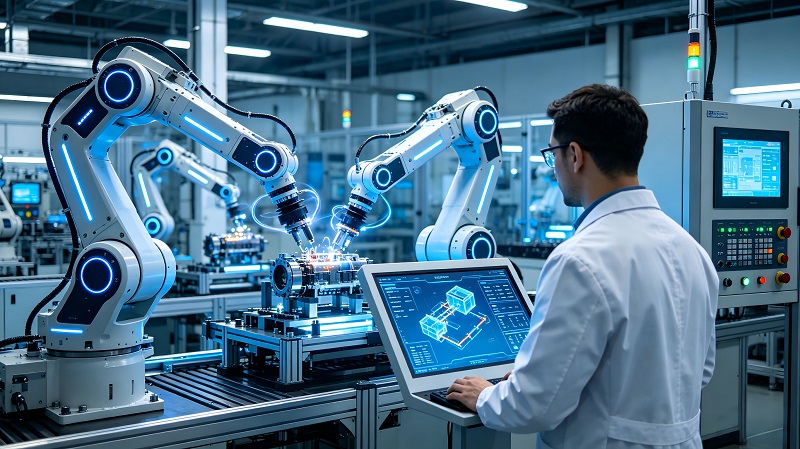
Global Industrial Automation Trends 2026: PLC, DCS, and Smart Factory Integration Driving Manufacturing Transformation
Industrial automation in 2026 is defined by deep integration between PLC systems, Distributed Control Systems (DCS), artificial intelligence, and Industrial Internet of Things (IIoT). The result is a new generation of smart factories capable of self-optimization and predictive decision-making.
Convergence of PLC and DCS Systems
Traditionally, PLC and DCS systems were used separately. PLCs handled discrete manufacturing processes, while DCS systems controlled large-scale process industries such as oil refining and chemical production.
Today, these systems are converging into unified automation architectures. This allows manufacturers to manage both discrete and process automation in a single integrated environment.
This convergence improves:
- System efficiency
- Data consistency
- Operational visibility
- Maintenance coordination
Rise of AI-Driven Industrial Optimization
Artificial intelligence is becoming a core component of industrial automation systems. AI models analyze real-time production data to identify inefficiencies and optimize machine performance.
AI is also used for:
- Predictive maintenance
- Quality control inspection
- Energy consumption optimization
- Production scheduling
This leads to continuous improvement in manufacturing performance.
Smart Factory and IIoT Expansion
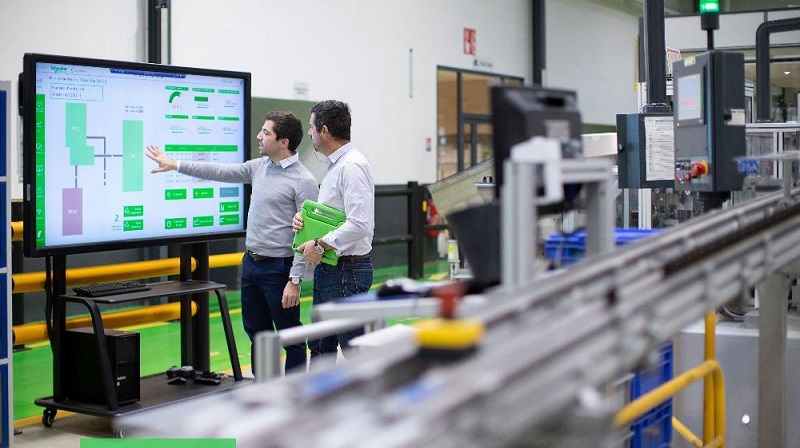
Smart factories rely on interconnected systems that communicate across machines, sensors, and control platforms. IIoT enables real-time data exchange between industrial devices.
Operators can now monitor entire production systems remotely using cloud-based dashboards and mobile devices.
Industrial Automation Market Growth
The global industrial automation market continues to expand, driven by demand for:
- Efficiency improvement
- Digital transformation
- Sustainable manufacturing
- Labor cost reduction
Companies investing in advanced PLC and DCS systems are gaining competitive advantages in global supply chains.
Future Outlook
The future of industrial automation will be defined by:
- Software-defined manufacturing
- AI-native PLC systems
- Cloud-connected DCS platforms
- Fully autonomous production systems
Manufacturers that adopt these technologies early will lead the next generation of global industrial production.