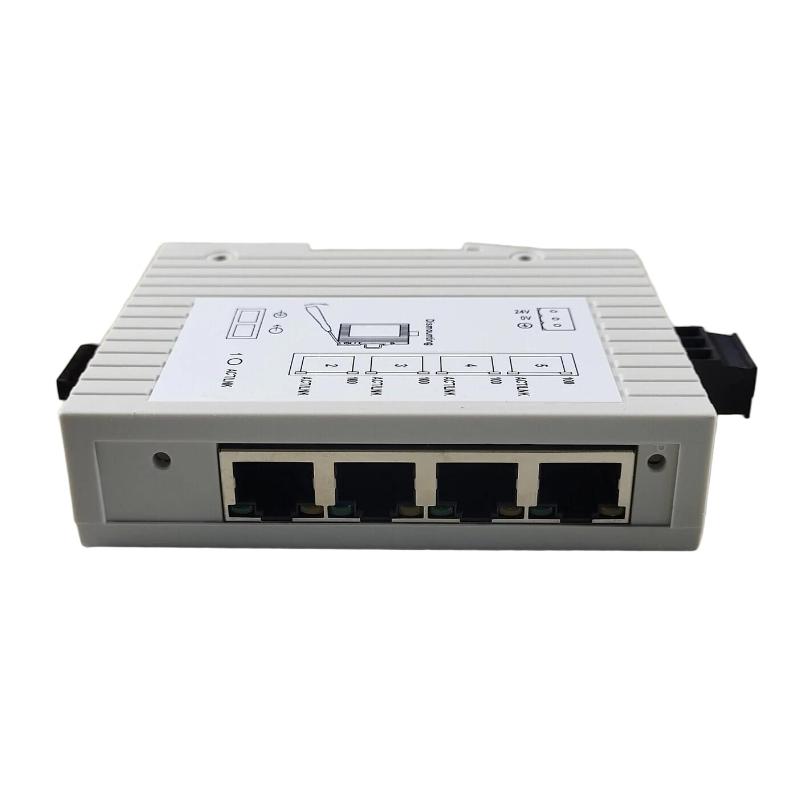
Schneider TCSESU043F1N0 Ethernet TCP/IP Switch Communication Fault Troubleshooting Guide (Link Failure & Packet Loss Diagnosis)
Schneider TCSESU043F1N0 Ethernet switch faults are frequently misdiagnosed as PLC or CPU communication failures. Field experience shows that most issues are actually caused by fiber degradation, EMI interference, or unstable power supply, rather than internal switch malfunction.
Typical Fault Symptoms in Industrial PLC Networks
When TCSESU043F1N0 issues occur, common symptoms include:
- PLC intermittently disconnecting from SCADA system
- HMI showing random timeout alarms
- Fiber link LED active but no data transmission
- RJ45 ports functioning normally while fiber segment fails
- Packet loss increasing under machine load
In one conveyor control system, operators reported communication drops every 30 minutes, initially blamed on PLC CPU failure.
Real Field Diagnostic Case
During on-site troubleshooting, engineers measured:
- Stable 24.0–24.2V DC input
- Normal RJ45 communication behavior
- Intermittent fiber communication failure
- Increasing CRC errors on SC port
After replacing the PLC twice without improvement, optical power measurement was performed.
Result showed:
- Optical receive power: -24 dBm (below acceptable threshold)
- Cause: fiber micro-bending and connector aging
This confirmed the fault was in the physical fiber layer, not the switch or PLC system.
Root Causes of TCSESU043F1N0 Communication Failures
Fiber Contamination or Mechanical Stress
Dust, vibration, or improper SC connector seating leads to:
- Signal attenuation
- Intermittent link drops
- Increased CRC errors
This is the most common root cause in field environments.
Power Supply Instability
Switch behavior becomes unstable when:
- Power is shared with VFD or large inductive loads
- DC ripple exceeds acceptable industrial threshold
Observed symptoms include:
- Random port resets
- Temporary communication blackout without full shutdown
Industrial EMI Interference
In one stamping machine cabinet:
- Switch installed near high-current motor starter
- Induced noise caused packet retransmission spikes
After relocating the switch by only 30–40 cm:
- Packet loss dropped from 12% to below 1%
Structured Fault Diagnosis Approach
Experienced engineers do not replace devices immediately. Instead, they isolate the problem systematically:
First, test copper-only communication by bypassing fiber. If the system stabilizes, the issue is fiber-related.
Next, perform network load testing using continuous ping to PLC IP addresses to observe jitter and packet loss behavior.
Then check power quality under operating load, focusing on ripple and transient dips.
Finally, isolate port behavior to determine whether the fault follows a cable, port, or device segment.
Field Repair Actions That Work
Based on real industrial recovery cases:
- Clean SC fiber connectors using proper optical cleaning tools
- Replace fiber patch cables if attenuation is excessive
- Separate switch power supply from VFD or motor loads
- Re-terminate RJ45 shield grounding correctly
- Add ferrite cores in high-EMI environments
In one bottling plant, after corrective actions:
- PLC communication interruptions reduced from dozens per day to zero
- Average network latency stabilized around 1–2 ms
Engineering Insight
The TCSESU043F1N0 is a transparent Layer 2 device. It does not process or modify TCP/IP data. Therefore, when communication issues appear, the root cause is almost always external to the switch itself.
Final Conclusion
In industrial troubleshooting practice, Schneider TCSESU043F1N0 communication faults are overwhelmingly caused by fiber integrity issues, EMI conditions, or power instability, not internal switch failure. Proper diagnosis must always begin at the physical layer before considering PLC or controller replacement.