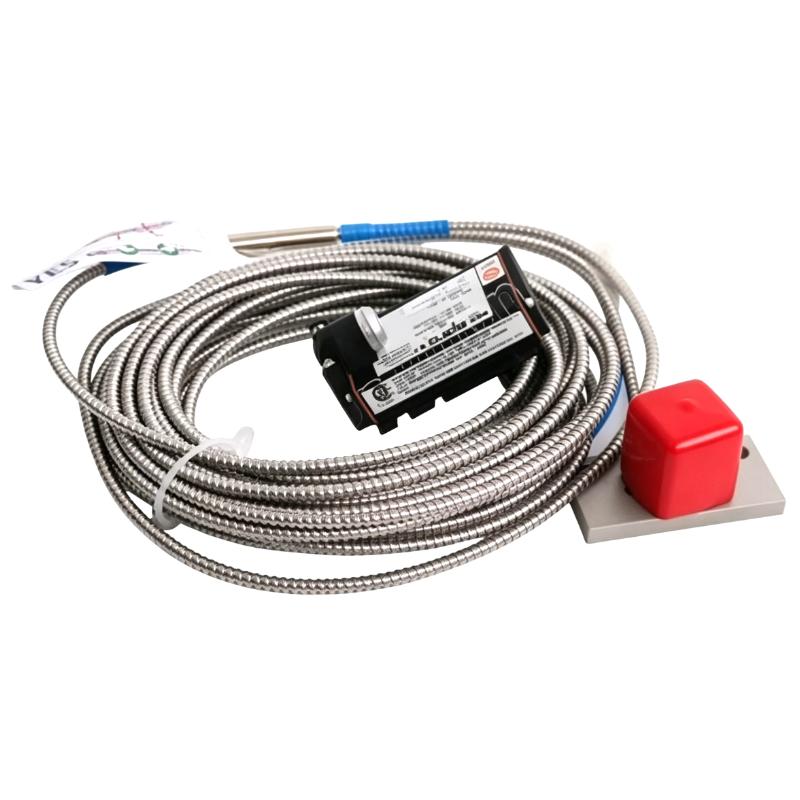
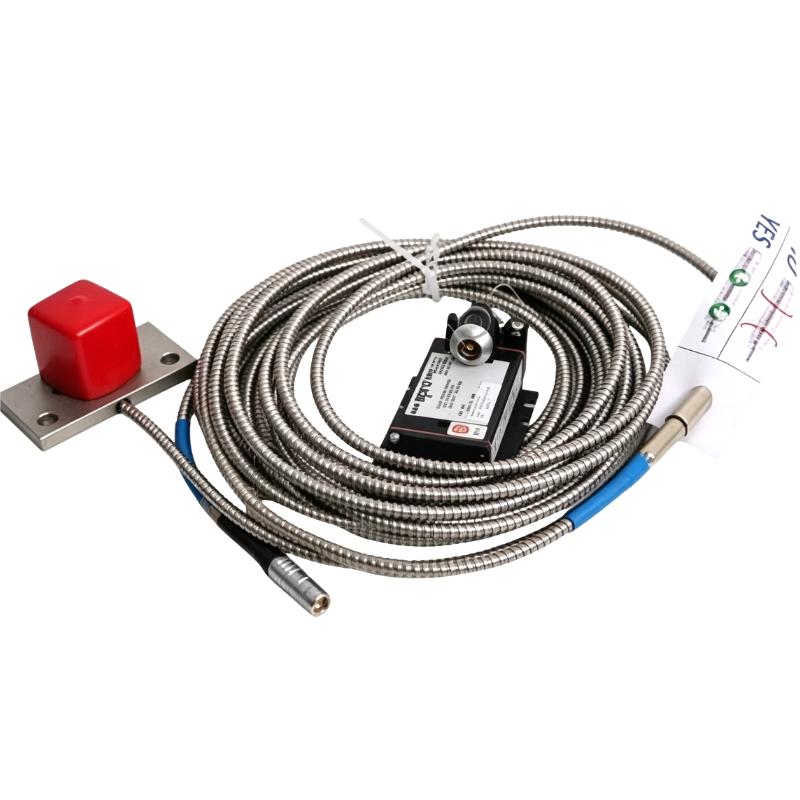
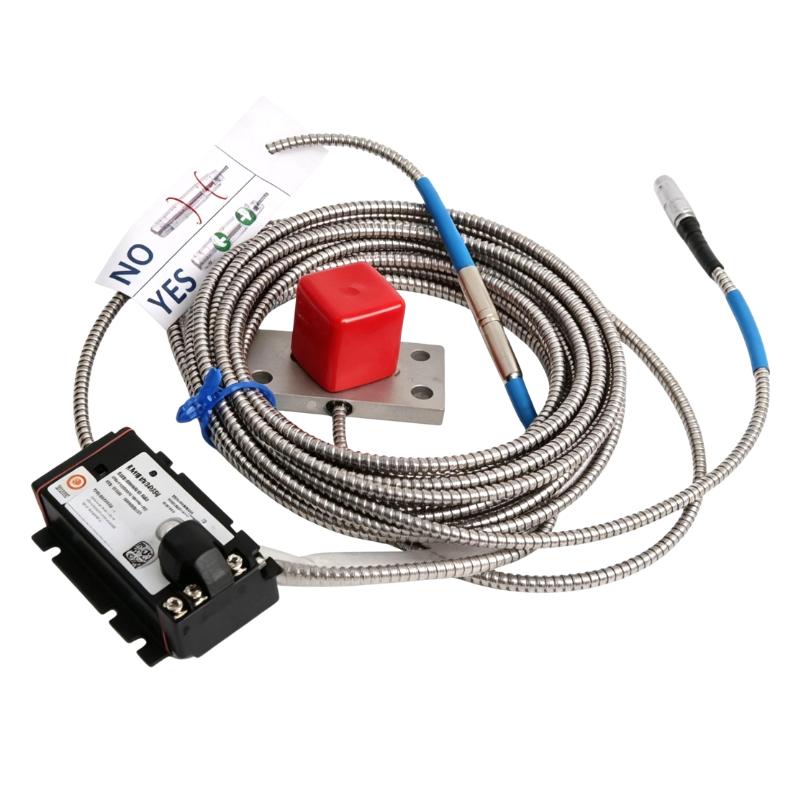
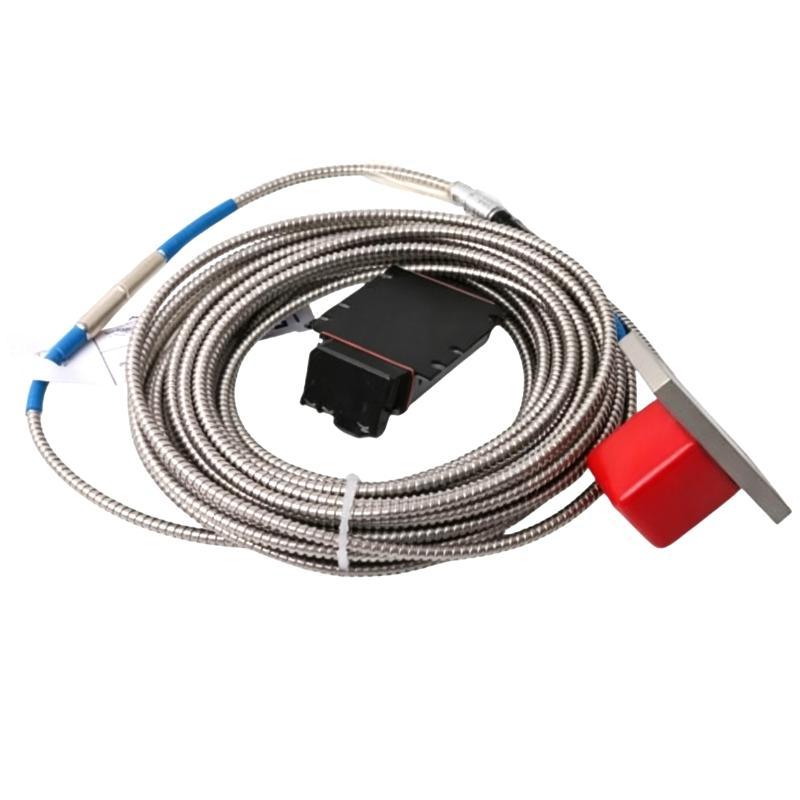
Epro PR6426/010-130+CON021 32 mm Eddy Current Sensor
Epro PR6426/010-130+CON021 32 mm Eddy Current Sensor
0.0
Points
Brand:Epro PLC Item No.:PR6426/010-130+CON021 Product Origin:Germany Product Dimensions:Sensor Head Diameter: 32 mm Product Weight:0.92 kg Payment:T/T, Western Union, Credit Card Goods_stock:15 Shipping Port:Xiamen, China Lead Time:1-3 Days Condition:Brand New And Original Warranty:1 Year Certificate:COO
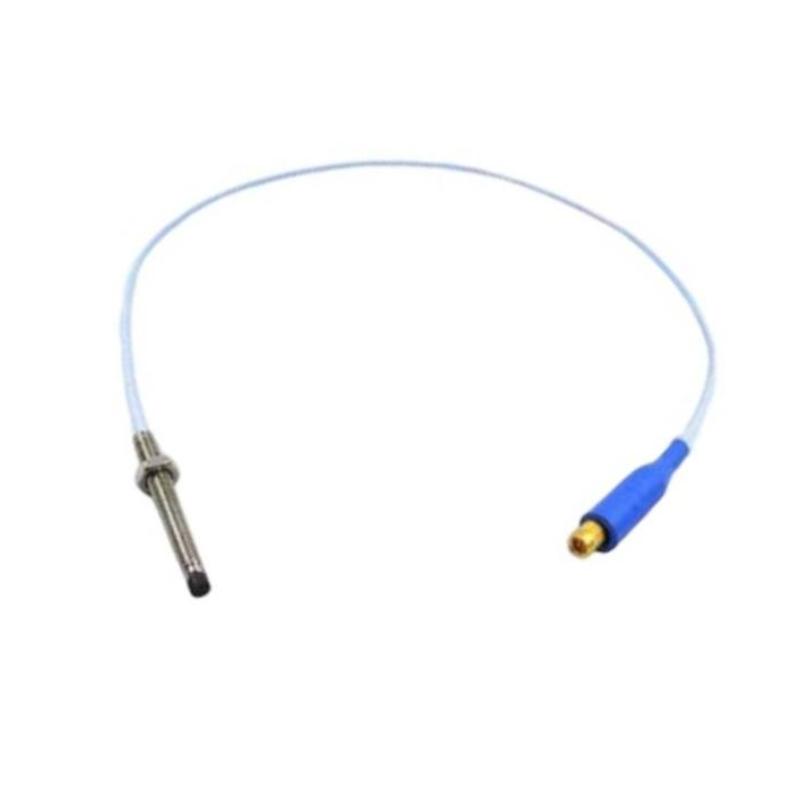
The Epro PR6426/010-130 + CON021 is a 32 mm eddy current sensor system designed for precise, continuous measurement of rotating machinery behavior. It is engineered for industrial environments where long-term stability, accuracy, and reliability are critical for equipment protection and performance monitoring.
Technical Specifications
Parameter
Specification
Product Model
PR6426/010-130 + CON021
Sensor Type
Eddy current displacement sensor
Sensor Head Diameter
32 mm
Measurement Principle
Non-contact eddy current
Measuring Range
±4.0 mm (typical system range)
Frequency Response
up to 20 kHz (system dependent)
Operating Temperature
-35°C to +180°C
Output Signal
via CON021 signal converter
Target Material
Conductive metal (typically ferromagnetic steel)
Linearity
High industrial-grade accuracy
Weight
0.92 kg
System Components
PR6426 probe + CON021 converter
Recommended Related Models
Model
Product Name
PR6424/010-110 + CON021
Epro 16 mm Eddy Current Vibration Sensor System
PR6425/010-110 + CON021
Epro 25 mm Eddy Current Displacement Sensor System
PR6426/010-110 + CON021
Epro 32 mm Eddy Current Sensor System
PR6426/010-140 + CON021
Epro 32 mm Advanced Monitoring Sensor System
Popular Related Models
Model
Product Name
PR6426/010-130 + CON021
Epro 32 mm Eddy Current Vibration Sensor System
PR6426/010-110 + CON021
Epro 32 mm Standard Monitoring Sensor System
PR6425/010-100 + CON021
Epro 25 mm Eddy Current Sensor System
PR6424/010-110 + CON021
Epro 16 mm Eddy Current Sensor System
Applications
• Turbines, compressors, and rotating machinery condition monitoring
Provides real-time measurement of shaft displacement and vibration for early fault detection in high-speed equipment.
• Power generation systems
Used in steam, gas, and hydro turbines to monitor rotor stability and mechanical health.
• Oil & gas rotating equipment
Supports continuous monitoring of pumps, compressors, and critical pipeline machinery.
• Industrial predictive maintenance systems
Enables condition-based maintenance strategies by detecting abnormal vibration patterns early.
• Heavy industrial machinery diagnostics
Helps identify imbalance, misalignment, and shaft movement deviations in large rotating assets.
• Process industry equipment monitoring
Ensures stable operation in continuous production environments requiring high reliability.
Key Advantages
• High-precision non-contact measurement
Eliminates physical contact with the shaft, reducing wear and ensuring long service life.
• Stable signal output with CON021 conditioning
Delivers consistent and noise-resistant signal processing for industrial monitoring systems.
• Robust performance in harsh environments
Designed to operate under high temperature, vibration, and electromagnetic interference conditions.
• Fast dynamic response
Accurately captures rapid changes in shaft movement and vibration behavior.
• Strong linear measurement performance
Maintains reliable accuracy across its full operational range.
• Proven reliability for critical machinery protection
Widely used in applications where equipment downtime must be minimized.
Technical FAQs
Q1: What does the PR6426/010-130 + CON021 system measure?
It measures shaft displacement, vibration, eccentricity, and position in rotating machinery.
Q2: Is it suitable for turbine applications?
Yes, it is commonly used in turbine and compressor monitoring systems.
Q3: Does it require a signal converter?
Yes, it operates with the CON021 signal conditioning unit.
Q4: What is the measurement principle?
It uses eddy current non-contact sensing technology.
Q5: Can it operate in high-temperature environments?
Yes, it is designed for harsh industrial temperature conditions.
Q6: Is it suitable for continuous monitoring?
Yes, it supports 24/7 real-time operation.
Q7: Does it experience mechanical wear?
No, because it is a non-contact measurement system.
Q8: Is it used in predictive maintenance?
Yes, it is widely applied in condition monitoring and predictive diagnostics.
Q9: Which industries use it most?
Power generation, oil & gas, and heavy industrial sectors.
Q10: Does it support high-frequency vibration signals?
Yes, it can capture dynamic vibration changes in rotating equipment.