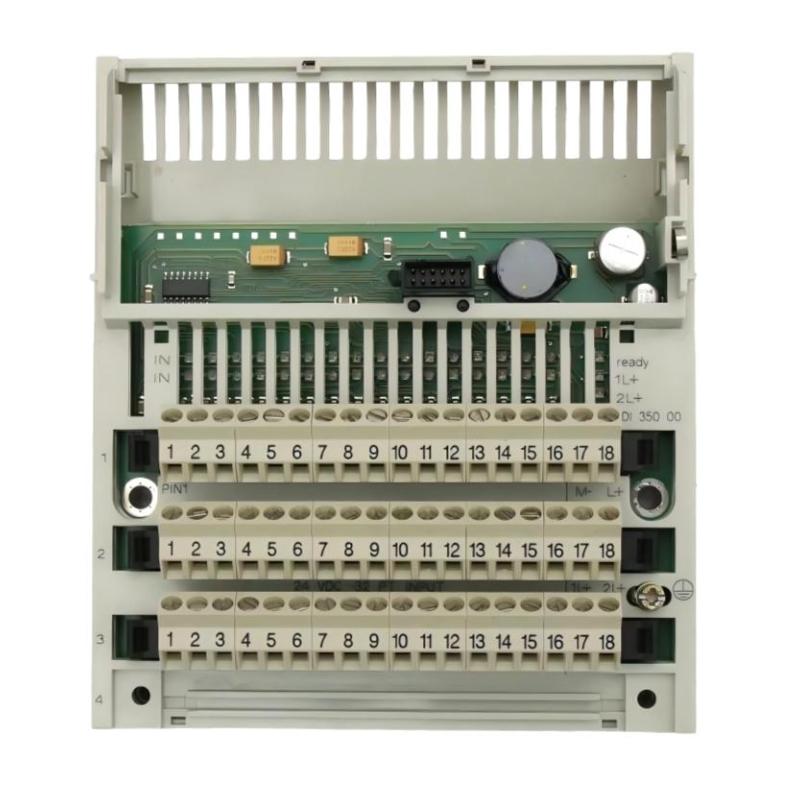
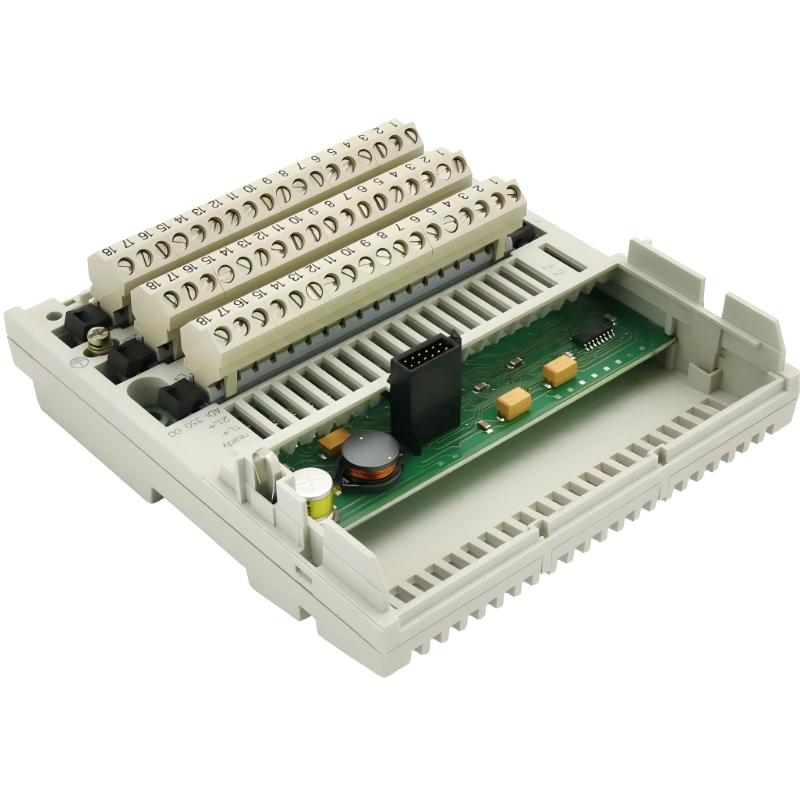
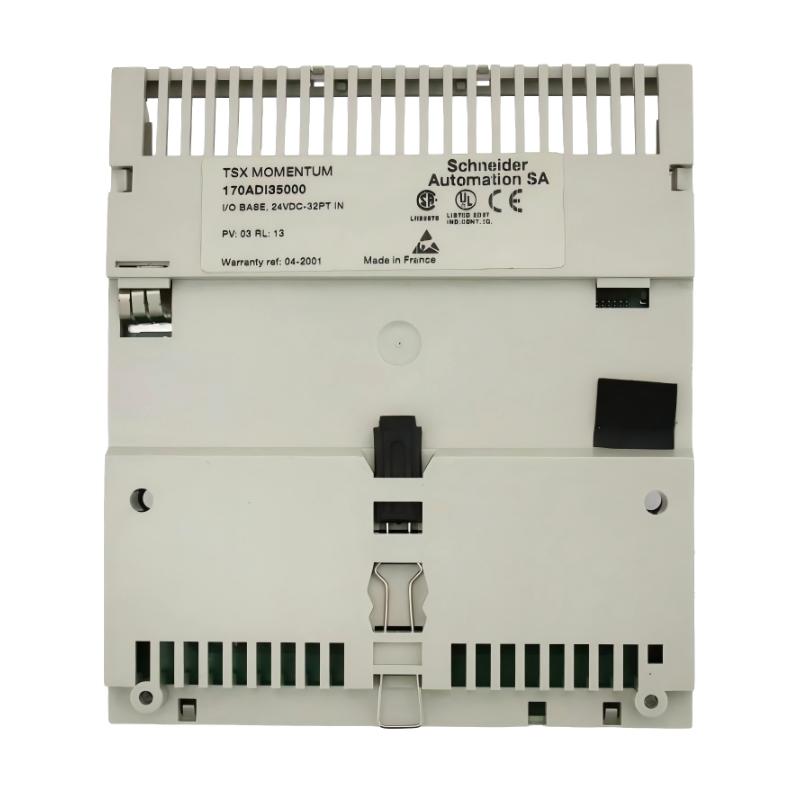
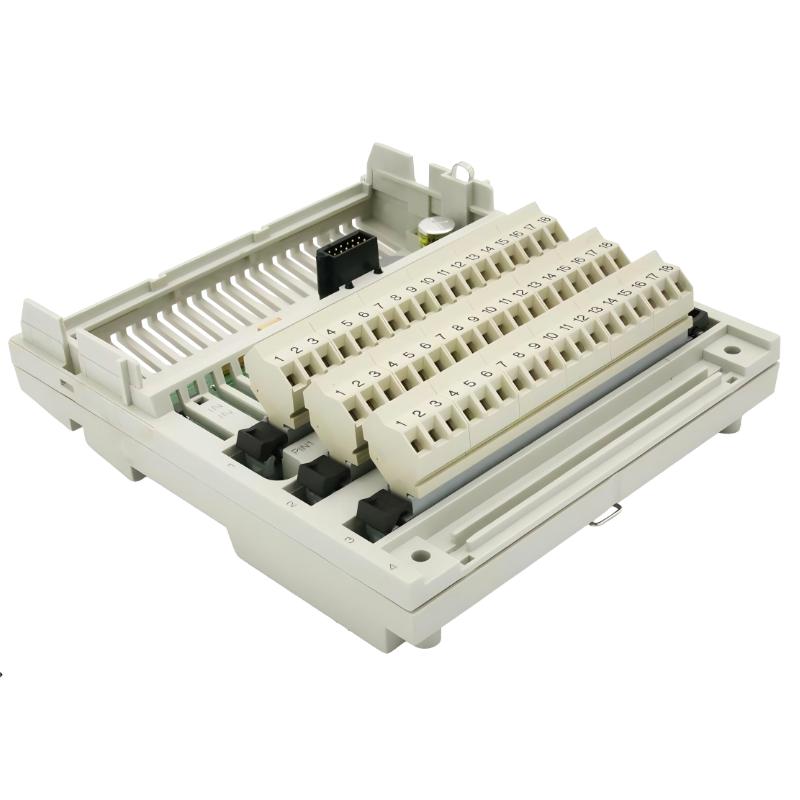
Brand:Schneider PLC Item No.:170ADI35000 Product Origin:France Product Dimensions:141.5 x 125 x 47.5 mm Product Weight:0.2 kg Payment:T/T, Western Union, Credit Card Goods_stock:15 Shipping Port:Xiamen, China Lead Time:1-3 Days Condition:Brand New And Original Warranty:1 Year Certificate:COO
The Schneider 170ADI35000 Discrete Input Module is designed for reliable digital signal acquisition in industrial automation systems. It serves as the interface between field devices and PLC controllers, ensuring that every ON/OFF signal is captured accurately and transmitted without delay. Built for stable long-term operation, it is widely used in manufacturing, process control, and infrastructure automation where dependable input monitoring is essential.
Technical Specifications
Specification
Details
Product Model
Schneider 170ADI35000
Product Type
Discrete Input Module
Input Type
24 V DC Digital Input
Channels
32 Inputs (2 × 16 groups)
Platform
Modicon Momentum
Installation
Modular I/O base
Dimensions
141.5 × 125 × 47.5 mm
Weight
0.2 kg
Recommended Related Models
Model
Product Name
Schneider 170ADI34000
Discrete Input Module
Schneider 170AAI03000
Analog Input Module
Schneider 170AAO92100
Analog Output Module
Schneider 170ENT11001
Ethernet Communication Adapter
Popular Related Models
Model
Product Name
Schneider 170ADO34000
Discrete Output Module
Schneider 170ADM35011
Discrete I/O Base Module
Schneider 170AEC92000
Ethernet Communication Adapter
Schneider 170ANR12090
Remote I/O Network Adapter
Applications
• Used in industrial automation systems for monitoring ON/OFF status of field devices.
• Applied in production lines where real-time machine state feedback is required.
• Supports conveyor and material handling systems for sensor signal collection.
• Common in packaging equipment for synchronized process control.
• Used in water treatment plants to monitor pump and valve status signals.
• Suitable for energy and utility systems requiring reliable discrete monitoring.
• Integrated into building automation for equipment status and alarm input handling.
• Widely used in Modicon Momentum-based distributed control architectures.
Key Advantages
• Delivers stable and accurate acquisition of digital input signals.
• Provides reliable operation even in electrically noisy industrial environments.
• Improves system responsiveness through fast field signal detection.
• Works seamlessly within Modicon Momentum I/O architectures.
• Reduces wiring complexity in large-scale automation systems.
• Designed for continuous operation in 24/7 industrial conditions.
• Helps maintain consistent system performance over long operating cycles.
• Clear input status indication supports easier maintenance and diagnostics.
Technical FAQs
Q1. What is the main function of this module?
A1. It collects digital ON/OFF signals from field devices and sends them to the PLC for processing.
Q2. What types of devices are typically connected to it?
A2. Sensors, limit switches, push buttons, relay contacts, and other discrete field devices.
Q3. Is it suitable for high-speed signal changes?
A3. Yes, it is designed to capture fast switching states reliably in industrial environments.
Q4. Does it require special programming to operate?
A4. No module-level programming is needed; configuration is handled through the PLC system.
Q5. Can it operate in harsh industrial conditions?
A5. Yes, it is built for environments with vibration, electrical noise, and continuous operation.
Q6. How does it improve system reliability?
A6. By ensuring accurate and stable signal acquisition from field devices.
Q7. What happens if a signal becomes unstable?
A7. The module filters input fluctuations to reduce false or incorrect state changes.
Q8. Is it compatible with distributed I/O systems?
A8. Yes, it is designed for Modicon Momentum distributed automation systems.
Q9. How is maintenance typically performed?
A9. Through checking wiring integrity, terminal connections, and field device condition.
Q10. Why is discrete input important in automation?
A10. It provides the basic real-world status information that PLCs rely on for control decisions.