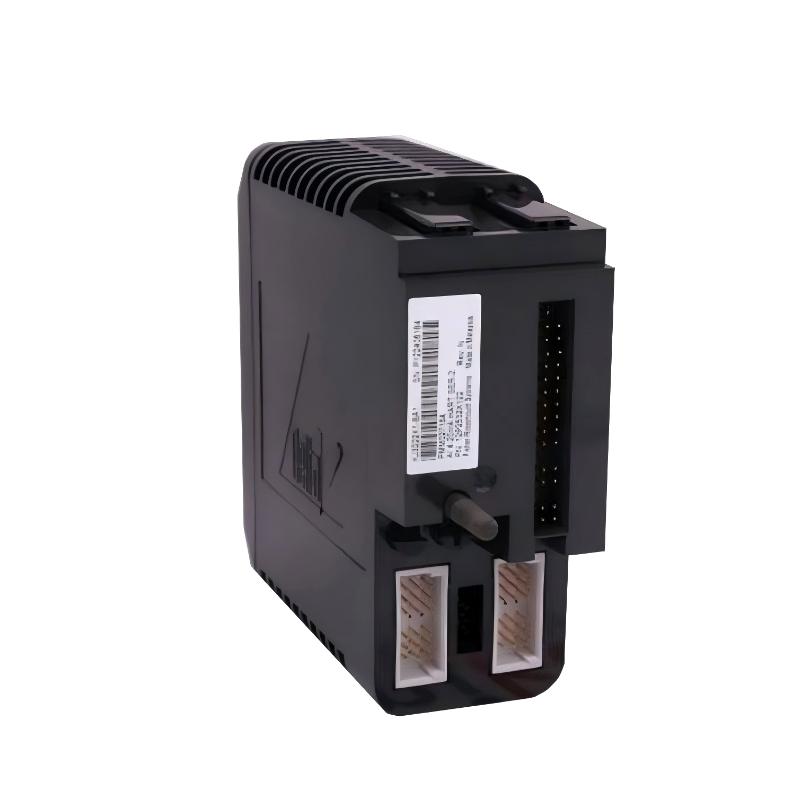
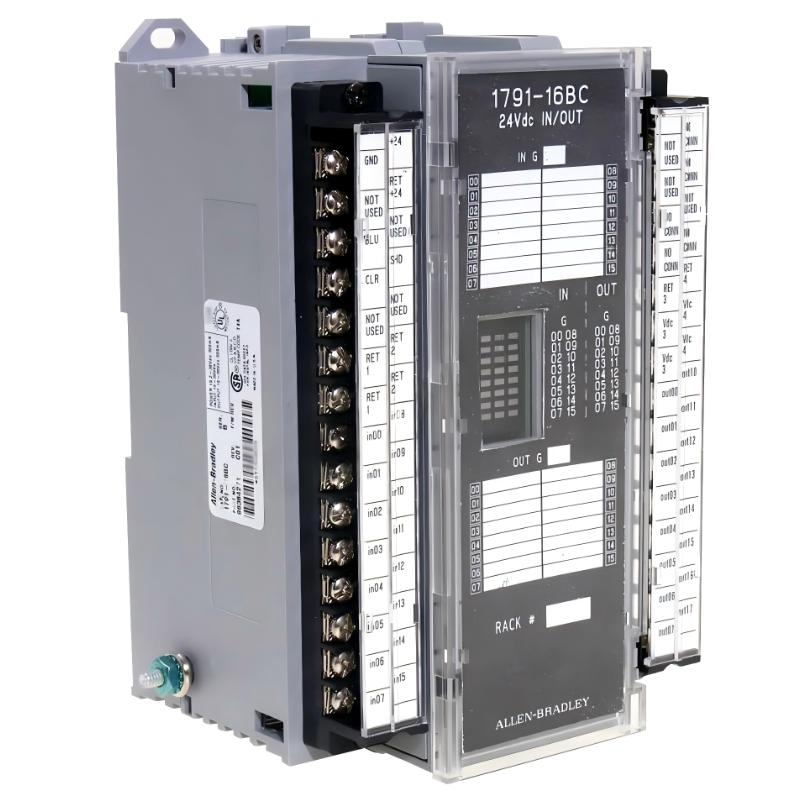
Brand:GE Fanuc PLC Item No.:IC695CPE330 Product Origin:France Product Dimensions:100 mm x 160 mm x 120 mm Product Weight:1.08 kg Payment:T/T, Western Union, Credit Card Goods_stock:15 Shipping Port:Xiamen, China Lead Time:1-3 Days Condition:Brand New And Original Warranty:1 Year Certificate:COO
The GE Fanuc IC695CPE330 is the flagship CPU module for the PACSystems RX3i platform, serving as the central processing engine for demanding industrial automation applications . It is a high-performance Programmable Automation Controller (PAC) that marries a 1.6 GHz dual-core microprocessor with 64 MB of RAM and 64 MB of non-volatile user memory . This controller is engineered to handle multi-tier communications and large-scale data synchronization.
Housed in a rugged metal casing for superior noise immunity, the CPE330 features two independent 10/100/1000 Mbps Ethernet ports and a single USB master port . It supports a robust set of communication protocols, including PROFINET, Modbus TCP, and Ethernet Global Data (EGD), and is fully programmable via Proficy Machine Edition (PME) software . Whether it is controlling discrete I/O in a high-speed assembly line or managing process loops in a refinery, the IC695CPE330 provides the processing headroom and connectivity required to optimize complex industrial processes.
Technical Specifications
Parameter
Specification
Manufacturer
GE Fanuc / Emerson
Product Type
CPU Module (PACSystems RX3i)
Processor
1.6 GHz Dual-Core
User Memory (RAM)
64 MB
Non-Volatile Memory
64 MB
I/O Capacity
Up to 32,768 Discrete and Analog I/O Points
Ethernet Ports
2 x 10/100/1000 Mbps (Independent)
USB Ports
1 x USB 2.0 Master Port
Serial Ports
None
Programming Languages
Ladder Diagram, Structured Text, Function Block, C
Redundancy
Supported (Hot Standby via PROFINET, EGD, Genius)
Protocol Support
PROFINET, Modbus TCP, SRTP, EGD, DeviceNet, PROFIBUS, OPC UA
Operating Temperature
0 °C to 60 °C
Power Requirement
0.625 Amps at +24 Volts DC
Dimensions (W x H x D)
Approx. 100 mm x 160 mm x 120 mm
Weight
Approx. 1.08 kg (2.38 lbs)
Recommended Related Models
IC695CPE330-ABAF – Region-specific variant with European certifications. Suitable for EU factory installations requiring localized firmware and compliance .
IC695CPE330-AAAB – North American variant with UL/CSA certifications. Engineered for compatibility with global systems in the Americas .
IC695ACC402 – Energy Pack accessory. Provides backup power to maintain data integrity in the CPU's non-volatile memory during power fluctuations .
IC695PNC001 – PROFINET Controller module. Used in conjunction with the CPE330 for rack-mounted PROFINET communication and redundancy .
Popular Related Models
IC695CPE305 – A lower-cost CPU option for smaller applications. It provides a cost-effective entry point into the RX3i platform with a single-core processor.
IC695CPE310 – The previous generation CPU with a 600 MHz processor. Often found in existing systems where an upgrade to the CPE330 is a drop-in replacement .
IC695CPE320 – An entry-level dual-core CPU. A budget-friendly alternative to the CPE330 for mid-scale applications like packaging lines .
IC695CHS016 – 16-slot Universal Backplane. The recommended chassis for hosting the IC695CPE330 in large I/O configurations .
Applications
Where does a controller like this make the most sense? Any environment where data density and deterministic control are non-negotiable. In high-speed packaging lines, the 1 GHz dual-core architecture ensures that vision systems and motion axes stay tightly synchronized without the scan time jitter that can ruin a production run.
We’re seeing these modules deployed in water treatment facilities where they manage complex PID loops across multiple remote I/O racks while simultaneously pushing data up to SCADA systems. The dual independent Gigabit Ethernet ports aren’t just for convenience—they're critical for applications requiring media redundancy. If you‘re running a metals processing line or a power generation auxiliary system, you appreciate the ability to separate control traffic from data collection traffic on dedicated LANs. The IC695CPE330 also excels in brownfield modernization projects where migrating legacy Series 90-30 applications is a requirement, allowing you to keep your existing wiring and I/O while dramatically upgrading the processing engine.
Advantages
Why choose this CPU over other options? The standout feature is the processing architecture. We're talking about a 1.6 GHz dual-core processor that delivers 64MB of user memory and an additional 64MB of non-volatile storage . This isn't just a number on a datasheet; it means you can store the logic and the documentation for that logic on the same chip, drastically reducing downtime when troubleshooting.
Then there's the networking capability. The embedded Ethernet interface features a dedicated microprocessor core, meaning that handling communication protocols like SRTP and Modbus/TCP doesn't come at the cost of control performance . The IC695CPE330 supports up to 48 simultaneous SRTP Server connections and 16 Modbus/TCP Server connections . This leaves the main processor free to execute complex Boolean logic or structured text without being bogged down by housekeeping tasks. For operations looking to future-proof, the integrated USB 2.0 master port is a small but significant convenience, allowing for firmware updates or program transfers using a standard thumb drive, eliminating the constant need to haul a programming laptop to the cabinet.
Technical FAQs
1. Does the IC695CPE330 require specific firmware to support legacy CPU migration? Yes. By factory default, the CPE330 is set to "Normal (CPU320)" compatibility mode. To support migration from older CPU315 or CRU320 applications, the compatibility setting can be adjusted via the firmware update web page, but note that firmware versions 8.45 through 8.60 only support CPU320 and CPU315 compatibility. Full CRU320 support begins with firmware version 8.70 .
2. Can this CPU operate in a redundant architecture, and what are the requirements? Absolutely. The IC695CPE330 supports Hot Standby Redundancy. This can be implemented using PROFINET controllers (like the rack-mounted IC695PNC001), Ethernet Global Data (EGD), or Genius I/O. It supports two independent Redundant IP addresses, one for each of the embedded Ethernet LANs .
3. What industrial communication protocols does the CPU support natively? The module supports a wide array including Modbus RTU/TCP, PROFINET, DeviceNet, PROFIBUS, Ethernet Global Data (EGD), SRTP, and Reflective Memory (CMX). It also supports OPC UA for communication with third-party devices over an Ethernet/IP connection .
4. How does the CPU handle large program files and block sizes? The IC695CPE330 supports a maximum of 512 program blocks (or up to 768 depending on configuration), with each block capable of reaching up to 128 kilobytes in size. This allows for highly modular program structures and large data tables .
5. I am upgrading from a Series 90-30. Is the migration process straightforward? Yes. The RX3i platform is designed to facilitate this migration. You can migrate CPU315 applications by converting them to a CPU320 application via Proficy Machine Edition and storing the project to the CPE330. Note that the system supports compatibility with the CPU320 and CPU315 without requiring a PME upgrade .
6. How is network load managed to ensure deterministic control? Each of the two embedded Ethernet interfaces has a dedicated microprocessor core. This ensures that handling heavy network traffic—such as the maximum of 48 SRTP connections or 32 Modbus/TCP clients—does not interfere with the primary CPU's scan cycle, maintaining deterministic performance .
7. Does the CPU support the Achilles Level 2 Communications Certification? Yes, the IC695CPE330 holds Achilles Level 2 Communications Certification, providing a verified level of cybersecurity robustness against network attacks and vulnerabilities, which is crucial for critical infrastructure applications .
8. What are the capabilities regarding data logging and storage? While the CPU has 64MB of memory, the system supports removable data storage devices (RDSD) via the USB port. Additionally, memory types such as ICFast and CompactFlash are supported for program storage, allowing for extensive data logging and recipe management .
9. What is the significance of the compatibility setting for PME software? If you are using a version of Proficy Machine Edition (PME) that does not natively support the CPE330, the CPU must remain in compatibility mode. Users with PME version 8.60 SIM 8 or later can convert the project to a CPE330 application and utilize the full feature set of the controller .
10. Is the IC695CPE330 suitable for motion control applications? Yes. It supports programming languages including Ladder Diagram, Structured Text, Function Block Diagram, and C. Coupled with its high-speed processing (1.6 GHz dual core) and support for high-speed Ethernet, it is capable of managing complex motion control tasks when paired with the appropriate RX3i motion modules .