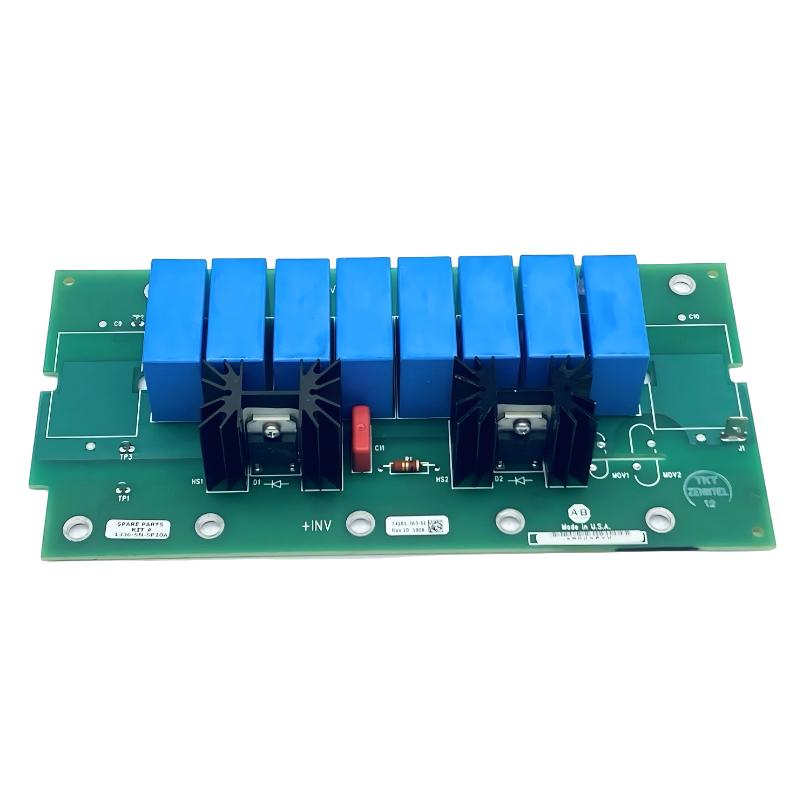
Allen-Bradley 1336-SN-SP10A Inverter Snubber Troubleshooting Guide (Fault Diagnosis)
Allen-Bradley 1336-SN-SP10A inverter snubber faults are commonly associated with excessive switching stress, inverter power component problems, loose electrical connections, or abnormal motor-side conditions rather than the snubber component alone. Effective troubleshooting requires analyzing the complete inverter protection system.
This article describes a field case where an Allen-Bradley 1336 drive experienced repeated overvoltage faults after replacing a snubber component.
Allen-Bradley 1336-SN-SP10A Inverter Snubber Fault Symptoms
Typical symptoms include:
- DC bus overvoltage alarms
- Drive trips during deceleration
- Motor stops unexpectedly
- Power module temperature increases
- Repeated component failure
Field case:
A production machine using an Allen-Bradley 1336 drive experienced frequent overvoltage trips during stopping.
Initial observations:
- Control functions operated normally
- Drive parameters were unchanged
- Fault occurred mainly during deceleration
The maintenance team suspected:
- Snubber failure
- DC bus capacitor problem
- Braking circuit issue
Engineers began troubleshooting from the inverter energy path.
Allen-Bradley 1336-SN-SP10A Fault Diagnosis Process and Voltage Analysis
Troubleshooting path:
Motor Energy Return||Inverter Power Section||Snubber Protection Circuit||DC Bus System
Engineers checked:
- Fault timing
- DC bus voltage
- Motor load condition
- Snubber connection
Diagnostic results:
- Control system: Normal
- Input power: Normal
- Fault occurred during energy regeneration
The problem was related to transient voltage management.
Allen-Bradley 1336-SN-SP10A Overvoltage Fault Investigation
Field measurements:
Before repair:
- DC bus voltage: Increased rapidly during stop command
- Fault timing: Deceleration stage
- Motor load: High inertia
Engineers analyzed:
- Deceleration settings
- Motor load characteristics
- Power protection components
The investigation found:
- Deceleration time was too short for the mechanical load
The inverter generated excessive regenerative energy, increasing stress on the DC bus and snubber circuit.
Allen-Bradley 1336-SN-SP10A Root Cause Analysis and Recovery
The final root cause was application-related regenerative stress.
Original condition:
- Normal load operation
- Stable braking performance
Changed condition:
- Increased machine inertia
- Faster stopping requirement
Failure pattern:
Normal condition:
- Controlled energy release
Fault condition:
- Excess regenerative energy
- DC bus voltage rise
- Protection activation
Engineering conclusion:
The snubber was operating as a protection device but the application conditions exceeded the original design parameters.
Allen-Bradley 1336-SN-SP10A Troubleshooting Repair and System Recovery
Corrective actions:
Drive Parameter Adjustment
Performed:
- Increased deceleration time
- Reviewed stopping profile
- Verified braking requirements
Power Section Inspection
Checked:
- Snubber condition
- DC bus components
- Power connections
Final results:
Before repair:
- Frequent drive trips
- Production interruptions
After repair:
- Stable stopping process
- Reduced electrical stress
- Reliable machine operation
Allen-Bradley 1336-SN-SP10A Common Fault Patterns and Diagnostic Methods
DC Bus Overvoltage Fault
Symptoms:
- Trip during deceleration
Diagnosis:
- Check braking conditions
- Review deceleration parameters
- Inspect snubber circuit
Repeated Snubber Damage
Symptoms:
- Protection component fails repeatedly
Diagnosis:
- Check IGBT condition
- Inspect power connections
- Analyze switching stress
Intermittent Inverter Fault
Symptoms:
- Random drive shutdown
Diagnosis:
- Review fault history
- Check electrical connections
- Inspect motor-side conditions
Allen-Bradley 1336-SN-SP10A Long-Term Maintenance Strategy
For reliable inverter operation:
- Inspect power connections regularly
- Monitor DC bus behavior
- Review motor load changes
- Check braking conditions
- Record fault trends
A practical engineering rule:
“When troubleshooting an Allen-Bradley 1336-SN-SP10A inverter snubber problem, identify the electrical stress source before replacing the protection component.”
Recommended troubleshooting sequence:
Fault history review → DC bus measurement → Power circuit inspection → Motor load analysis → Snubber verification → Final drive operation test.