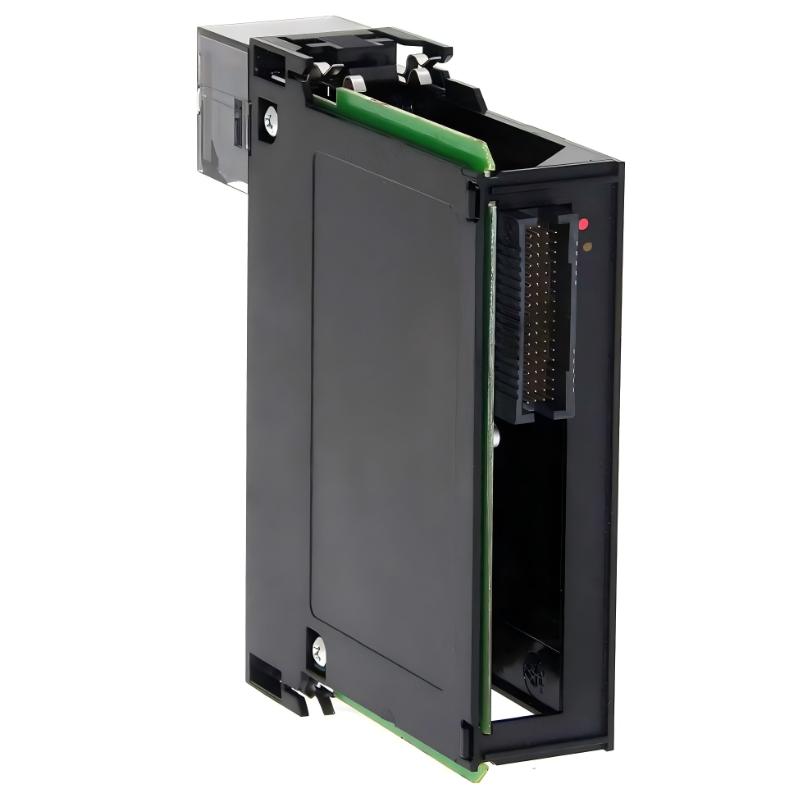
Brand:Siemens Item No.:6AG1336-4GE00-2AB0 Product Origin:Germany Product Dimensions:40 × 125 × 120 mm Product Weight:0.357 kg Payment:T/T, Western Union, Credit Card Goods_stock:15 Shipping Port:Xiamen, China Lead Time:1-3 Days Condition:Brand New And Original Warranty:1 Year Certificate:COO
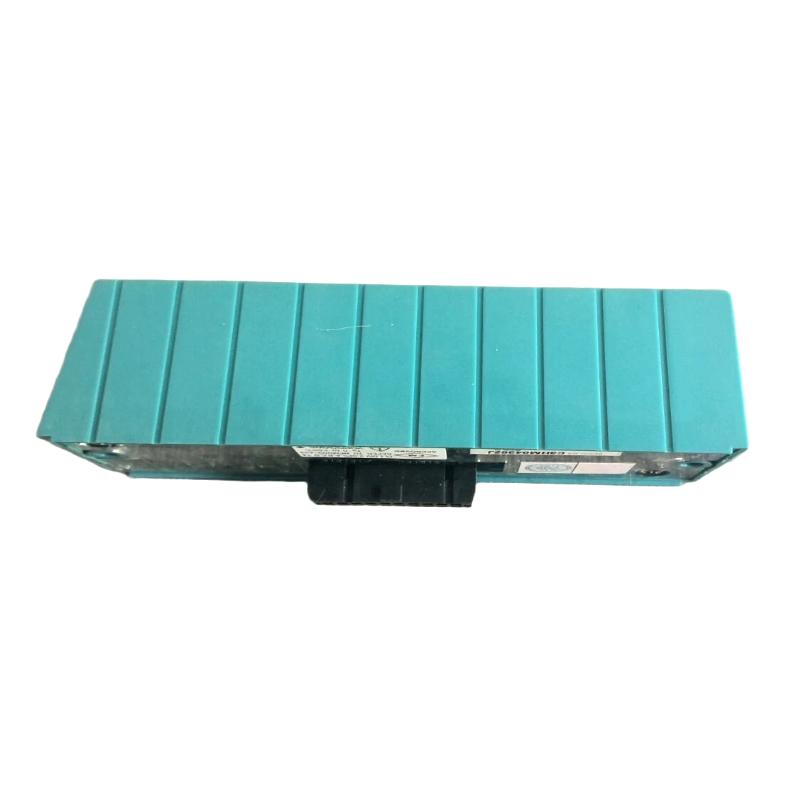
The Siemens 6AG1336-4GE00-2AB0 Analog Input Module is an industrial automation component designed for analog signal acquisition. In a modern PLC-based control system, analog input modules provide an essential connection between physical process conditions and the digital control environment.
Industrial machines and processes frequently depend on measurements that vary continuously rather than simply switching between two states. Temperature, pressure, flow, level, position, and other process parameters may need to be measured and evaluated by the PLC. An analog input module provides the interface required to bring these measurements into the control system.
The 6AG1336-4GE00-2AB0 can therefore form part of an automation architecture in which field instrumentation supplies process information to the controller. The PLC can then use the acquired values for monitoring, alarm handling, calculations, sequence control, or other programmed functions.
The module has a specified size of 40 × 125 × 120 mm, making it suitable for modular industrial control cabinets. Its specified weight is 0.357 kg (0.79 lb), which supports convenient handling during installation and maintenance.
For system integrators, correct configuration is important. Analog input performance depends not only on the I/O module itself but also on the connected field instrument, wiring, grounding, shielding, signal configuration, and PLC software. A correctly installed signal path helps ensure that the values used by the control program accurately represent the physical process.
For replacement applications, technicians should identify the module using the complete order number 6AG1336-4GE00-2AB0. This avoids confusion between modules that may have similar physical appearances but different technical functions.
Technical Specifications
Specification
Details
Brand
Siemens
Model
6AG1336-4GE00-2AB0
Product Type
Analog Input Module
Product Family
Siemens 6AG
Dimensions
40 × 125 × 120 mm
Weight
0.357 kg
Weight in Pounds
0.79 lb
Main Function
Analog Signal Acquisition
Application
Industrial Automation and Process Control
Installation
Industrial Control Cabinet / Automation System
Dimensions: 40 × 125 × 120 mm
Weight: 0.357 kg (0.79 lb)
The compact 40 mm × 125 mm × 120 mm form factor allows the module to be incorporated into modular control-system layouts. During cabinet planning, engineers should allow adequate space for field wiring, ventilation, inspection, and maintenance access.
Recommended Related Models
The following Siemens models can be considered when designing or maintaining automation systems that include analog signal acquisition and associated I/O functions:
Model
Product Type
Siemens 6AG1331-7RD00-2AB0
Analog Input Module
Siemens 6AG1331-7SF00-4AB0
Analog Input Module
Siemens 6AG1331-7TF01-7AB0
Analog Input Module
Siemens 6AG1334-0KE00-7AB0
Analog Input/Output Module
Siemens 6AG1332-5HB01-2AB0
Analog Output Module
Siemens 6AG1332-5HD01-7AB0
Analog Output Module
Siemens 6AG1332-5HF00-2AB0
Analog Output Module
Siemens 6AG1332-7ND02-4AB0
Analog Output Module
These related modules can be useful when evaluating different analog I/O configurations, expanding an existing automation system, or planning replacement parts. Exact selection should be based on the required signal characteristics and controller architecture.
Popular Related Models
For broader Siemens automation projects, the following modules are also relevant to I/O, system power, and modular control architectures:
Model
Product Type
Siemens 6AG1333-3BA10-7AA0
Power Supply Module
Siemens 6AG1333-4BA00-7AA0
Power Supply Module
Siemens 6AG1333-6SB00-7AY0
Power Supply Module
Siemens 6AG1334-2BA20-4AA0
Power Supply Module
Siemens 6AG1334-3BA10-7AA0
Power Supply Module
Siemens 6AG1337-3BA00-4AA0
Power Supply Module
Siemens 6AG1193-6BP00-7BA0
Base Unit
Siemens 6AG1193-6AF00-7AA0
PROFINET Bus Adapter
The Siemens 6AG1336-4GE00-2AB0 Analog Input Module is a compact solution for bringing analog field measurements into Siemens-oriented industrial automation systems. With dimensions of 40 × 125 × 120 mm and a weight of 0.357 kg (0.79 lb), it is well suited to modular control cabinets, process monitoring, machine automation, system expansion, and maintenance applications where accurate analog signal acquisition is required.
Applications
The Siemens 6AG1336-4GE00-2AB0 Analog Input Module is designed for industrial automation systems that need to acquire and process analog signals from field devices. It provides an interface between analog sensors or transmitters and the automation controller, allowing continuously varying process values to be incorporated into PLC control logic, monitoring, and supervisory functions.
With a compact 40 × 125 × 120 mm form factor, the module can be integrated into modular industrial control cabinets and automation stations. Its 0.357 kg (0.79 lb) weight also makes it practical for cabinet assembly, replacement, and maintenance work.
Typical applications include:
PLC-based automation systems
Process measurement and monitoring
Factory automation
Machine control
Temperature monitoring
Pressure measurement
Flow and level monitoring
Industrial instrumentation
Production-line control
Control cabinet installations
Automation system expansion
Siemens equipment replacement and retrofit projects
When designing an application, engineers should match the field sensor or transmitter characteristics with the module's supported input configuration and verify the complete system architecture before commissioning.
Key Advantages
Reliable Analog Signal Acquisition
The 6AG1336-4GE00-2AB0 provides an interface for acquiring analog signals from industrial field devices. This allows continuously changing process information to be transferred into the control system for monitoring, calculation, alarms, and closed-loop control.
Compact Industrial Form Factor
The module measures 40 × 125 × 120 mm, providing a practical form factor for modular automation cabinets. It can be installed alongside other PLC, I/O, communication, and power components when the cabinet layout provides appropriate clearance.
Suitable for Process Applications
Analog input modules are particularly useful in applications where process values cannot be represented simply as digital ON/OFF states. They can be used as part of systems that monitor variables such as temperature, pressure, flow, level, or other instrumentation signals.
Siemens 6AG Product Family
As a Siemens 6AG-series component, the module is suitable for Siemens-oriented industrial automation architectures when the controller, I/O configuration, and electrical requirements are compatible.
Practical for Maintenance
The complete 6AG1336-4GE00-2AB0 ordering number provides a precise identification reference for purchasing and spare-parts management. This is especially useful when maintaining existing automation systems with multiple similar I/O modules.
Lightweight Modular Design
The specified weight is 0.357 kg (0.79 lb). This relatively low weight makes the module convenient to handle during cabinet installation, replacement, and system expansion.
Technical FAQs
1. What is the Siemens 6AG1336-4GE00-2AB0 used for?
The 6AG1336-4GE00-2AB0 is an Analog Input Module used to acquire analog signals from compatible field devices and make those measurements available to an industrial automation controller.
2. What types of devices can be connected to an analog input module?
Depending on the supported input configuration, analog input systems can interface with sensors, transmitters, measurement instruments, and other field devices that provide compatible analog signals. The actual signal characteristics must be verified before connection.
3. Why are analog inputs important in industrial automation?
Many industrial process variables change continuously. Analog inputs allow the controller to measure these changing values and use them for monitoring, calculations, alarms, sequencing, and process regulation.
4. What should be checked before connecting a sensor?
Verify the sensor's signal type, electrical requirements, channel assignment, wiring polarity, common connections, grounding, and shielding requirements. The field device must provide a signal compatible with the selected input configuration.
5. How should analog input wiring be installed?
Analog wiring should be routed carefully to minimize electrical interference. Where required by the installation, appropriate shielding and grounding practices should be followed, and analog signal cables should be separated from high-power or high-noise circuits.
6. What can cause incorrect analog readings?
Incorrect readings may result from wiring errors, incorrect signal configuration, poor grounding, electrical interference, loose terminals, damaged cables, sensor problems, or incorrect scaling in the PLC program. Troubleshooting should check the complete signal path.
7. How can an analog input channel be tested?
A technician can compare the field signal with the value reported by the automation controller. If the two values differ, the troubleshooting process should include the field instrument, wiring, channel configuration, signal conditioning, scaling, and controller program.
8. Can the module be used in a Siemens PLC system?
The module is designed for Siemens industrial automation applications, but exact compatibility depends on the controller and hardware configuration. The complete system configuration should be checked before installation.
9. What is the purpose of signal scaling in the PLC?
Signal scaling converts the electrical input value received by the analog module into an engineering value that the control program can use. For example, a measured signal can be represented as a corresponding temperature, pressure, flow, or level value.
10. What should be done if an analog channel reports a fault?
First inspect the diagnostic information and confirm the field wiring. Then check the sensor or transmitter, input configuration, terminal connections, grounding, and signal level. If the external signal path is normal, the module and controller configuration should be examined further.