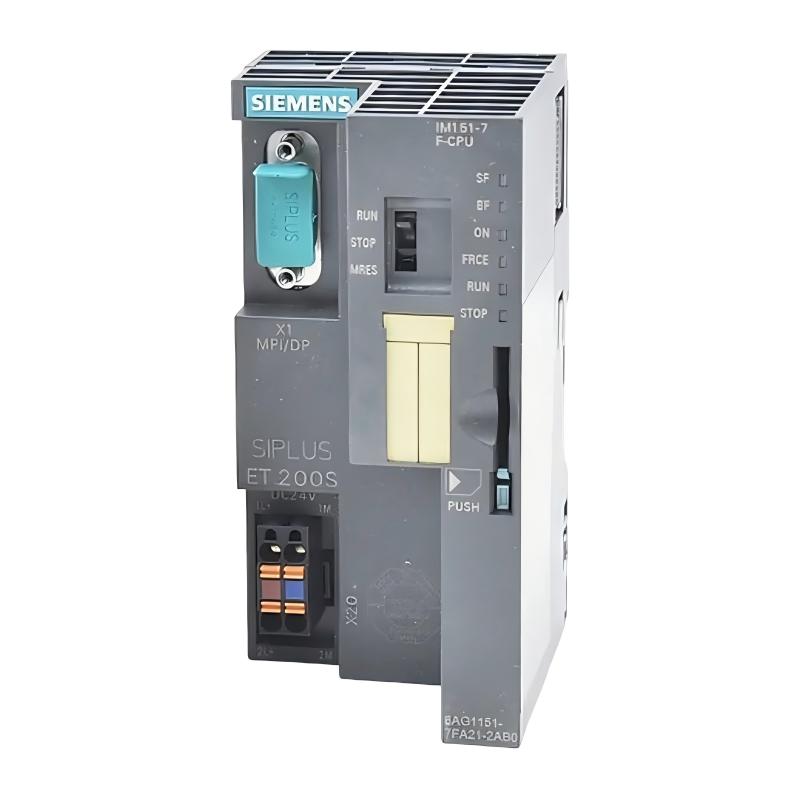
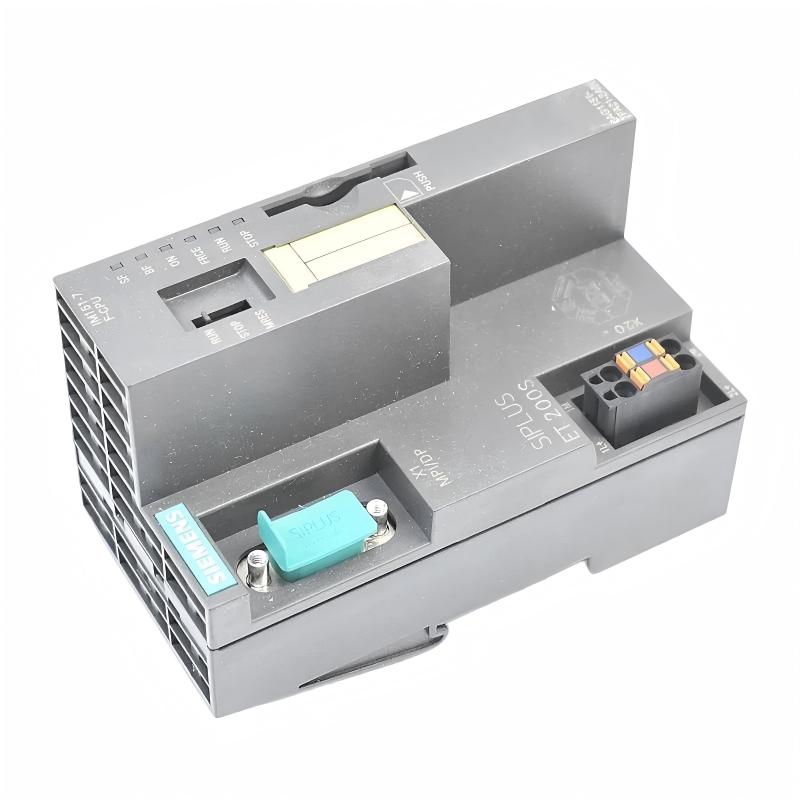
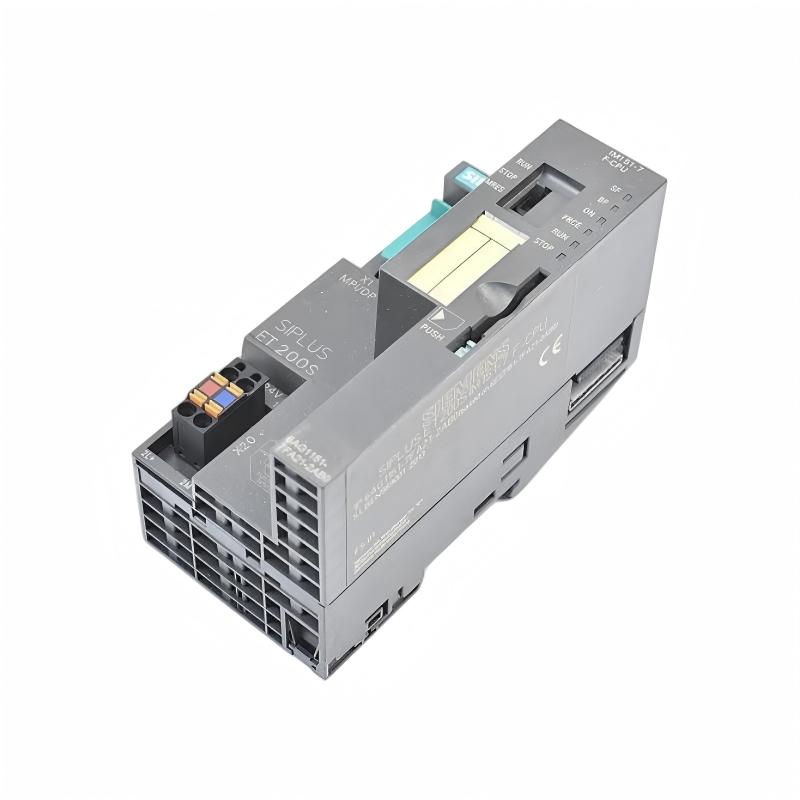
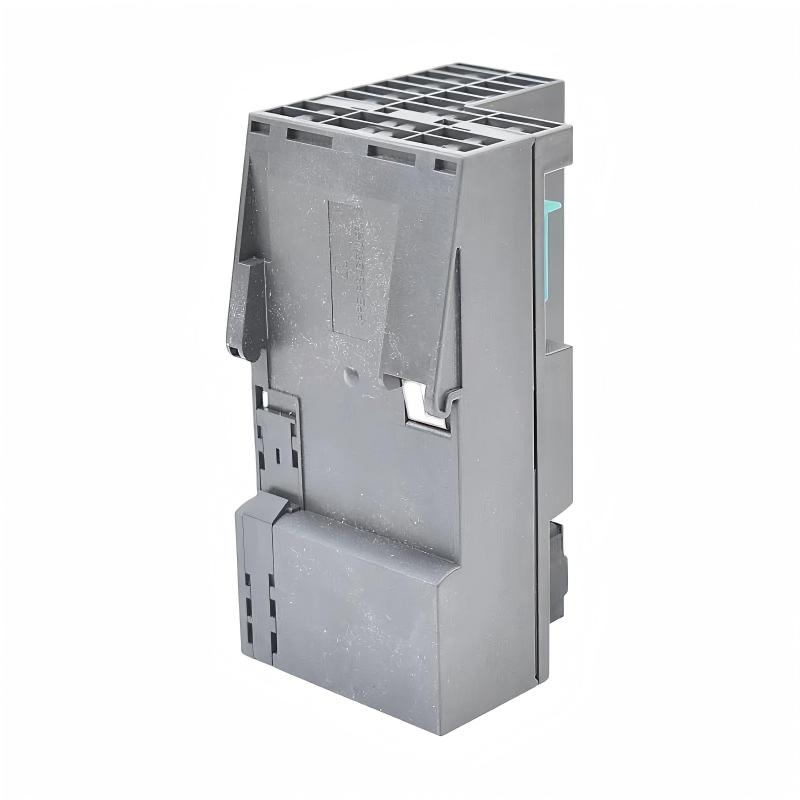
Siemens 6AG1151-7FA21-2AB0 Slave Station Interface Module
Siemens 6AG1151-7FA21-2AB0 Slave Station Interface Module
0.0
Points
Brand:Siemens Item No.:6AG1151-7FA21-2AB0 Product Origin:Germany Product Dimensions:60 × 119.5 × 75 mm Product Weight:0.263 kg Payment:T/T, Western Union, Credit Card Goods_stock:15 Shipping Port:Xiamen, China Lead Time:1-3 Days Condition:Brand New And Original Warranty:1 Year Certificate:COO
The Siemens 6AG1151-7FA21-2AB0 Slave Station Interface Module is listed for industrial automation applications requiring connectivity between compatible control-system components. In distributed automation architectures, interface modules help establish communication between field stations and higher-level control equipment.
Selecting the correct interface module is important for system reliability, maintenance efficiency, and long-term equipment support. Engineers and procurement teams should verify the communication protocol, supported hardware family, connection design, and configuration requirements before specifying this component for a new installation or using it as a replacement.
The dimensions and weight supplied for this listing provide a reference for inventory management and preliminary installation planning. Final technical selection should be based on the official Siemens product documentation.
Technical Specifications
Parameter
Specification
Brand
Siemens
Model
6AG1151-7FA21-2AB0
Product Type
Slave Station Interface Module
Dimensions (W × H × D)
60 × 119.5 × 75 mm
Weight
0.263 kg (0.58 lb)
Product Category
Industrial Automation
Functional Role
Slave-station interface, subject to verification
Communication Protocol
To be confirmed from official technical data
Mounting Requirements
Refer to the manufacturer's installation instructions
System Compatibility
Verify against the target PLC and automation network
Recommended Related Models
The following Siemens models are related references for evaluating interface hardware and distributed automation systems. They are not confirmed direct replacementsfor the 6AG1151-7FA21-2AB0.
Model
Product Type
Selection Consideration
6ES7151-1AA06-0AB0
SIMATIC ET 200S Interface Module
Verify compatibility with the intended ET 200S system configuration.
6ES7151-3BA23-0AB0
SIMATIC ET 200S Interface Module
Compare the supported system architecture and communication requirements.
6ES7155-6AU01-0BN0
SIMATIC ET 200SP Interface Module
Relevant when evaluating a compatible ET 200SP distributed I/O installation.
6ES7155-6AA01-0BN0
SIMATIC ET 200SP Interface Module
Check station configuration and supported I/O components before selection.
Popular Related Models
These Siemens automation components may also be relevant when sourcing hardware for compatible distributed I/O installations.
Model
Product Type
Typical Application
6ES7193-6BP00-0BA0
SIMATIC ET 200SP BaseUnit
Base component for compatible ET 200SP I/O modules.
6ES7134-6GF00-0AA1
SIMATIC ET 200SP Analog Input Module
Analog signal acquisition in a compatible I/O station.
6ES7132-6BH01-0BA0
SIMATIC ET 200SP Digital Output Module
Digital output control in industrial automation equipment.
6ES7151-1BA02-0AB0
SIMATIC ET 200S Interface Module
Reference model for evaluating ET 200S interface hardware.
Ordering note:The dimensions and weight are based on the information provided. Confirm the exact identity, communication capabilities, and compatibility of Siemens 6AG1151-7FA21-2AB0 against official Siemens documentation before ordering or installation.
Applications
The Siemens 6AG1151-7FA21-2AB0 Slave Station Interface Module is identified for slave-station interface applications in industrial automation. Interface modules provide connectivity between compatible automation devices, helping field-level equipment exchange data with controllers or other components within a defined control architecture.
Potential application areas include:
Distributed automation:Connecting compatible remote stations within an industrial control system.
Factory production lines:Supporting communication between automation equipment and centralized control components.
Industrial machinery:Integrating compatible field devices into coordinated machine-control architectures.
Process automation:Supporting data exchange between networked automation components when the module meets the system requirements.
Maintenance and replacement:Helping engineers identify interface hardware for existing installations and planned system upgrades.
The exact communication protocol and supported Siemens platform must be verified against the official product documentation before installation.
Key Advantages
Compact dimensions:The specified 60 × 119.5 × 75 mm footprint helps with control-cabinet layout and equipment planning.
Interface functionality:Slave-station interface hardware can provide the connection required for communication between compatible automation devices.
Modular integration:Supports organized system design when used within its documented hardware architecture.
Procurement accuracy:The complete catalog number helps distinguish the required component from similar-looking models.
Maintenance planning:Clear product identification and physical specifications support inventory control and replacement assessment.
Technical FAQs
Q1: What is the Siemens 6AG1151-7FA21-2AB0 used for?
The product is identified as a slave station interface module. Its exact purpose, supported network, and automation-system compatibility should be confirmed through Siemens technical documentation.
Q2: What is the role of a slave station interface module?
In a compatible control network, a slave-station interface enables a field station or automation device to exchange information with a controller or network master.
Q3: Which communication protocol does this model support?
The supported protocol cannot be reliably determined from the product description alone. Check the official Siemens data for the network type and communication specifications.
Q4: Can this module be connected to a Siemens PLC?
Only if the PLC and module support the same communication architecture and are listed as compatible. Verify the PLC model, network interface, and hardware configuration before connecting them.
Q5: Is it intended for distributed I/O applications?
That depends on the confirmed product family and supported system architecture. Check the official documentation to establish whether it is suitable for the intended distributed I/O arrangement.
Q6: Does the module require software configuration?
Depending on its function, an interface module may require network addressing, hardware configuration, or parameter settings in the applicable engineering environment. Follow the instructions for the exact model.
Q7: What should be checked before replacing an existing unit?
Confirm the complete part number, communication protocol, connector arrangement, system compatibility, configuration requirements, and any hardware or firmware restrictions.
Q8: What are common causes of communication faults?
Potential causes include wiring errors, incorrect network settings, power-supply problems, incompatible configuration parameters, and faults in connected devices. Use system diagnostics to identify the specific issue.
Q9: What installation requirements should be considered?
Review the manufacturer's instructions for mounting, wiring, grounding, environmental limits, network termination, and any required accessories.
Q10: How can buyers avoid ordering an incompatible module?
Compare the complete catalog number with the equipment nameplate and the original system documentation. Do not assume that modules with similar designations are interchangeable.