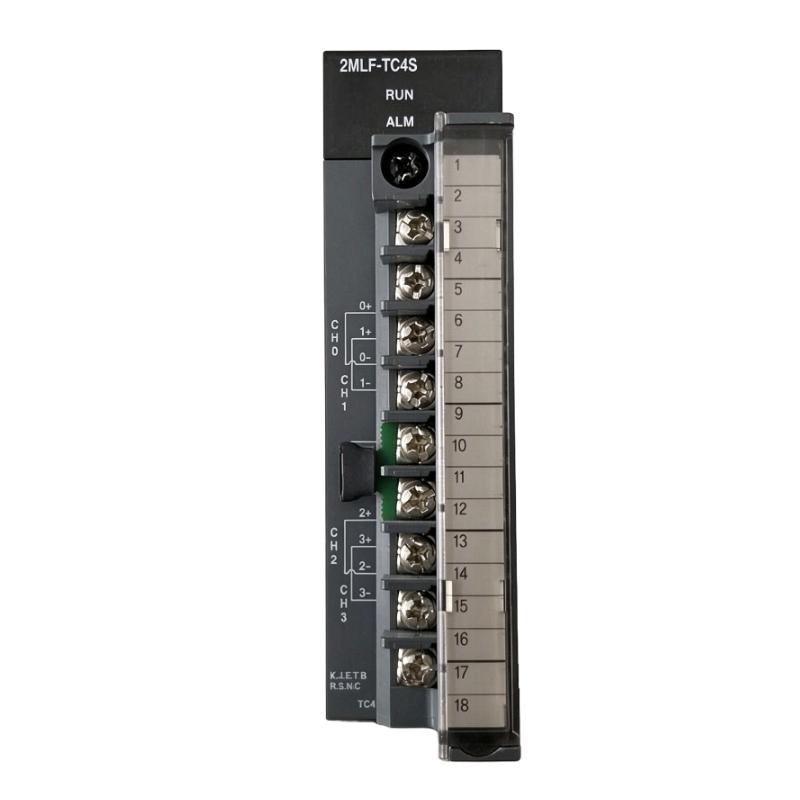
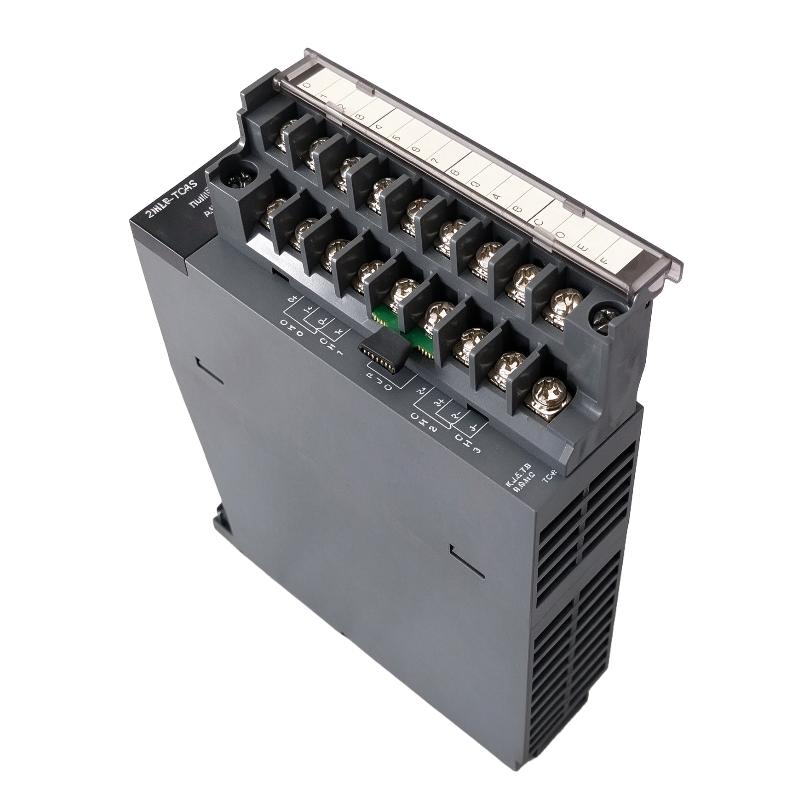
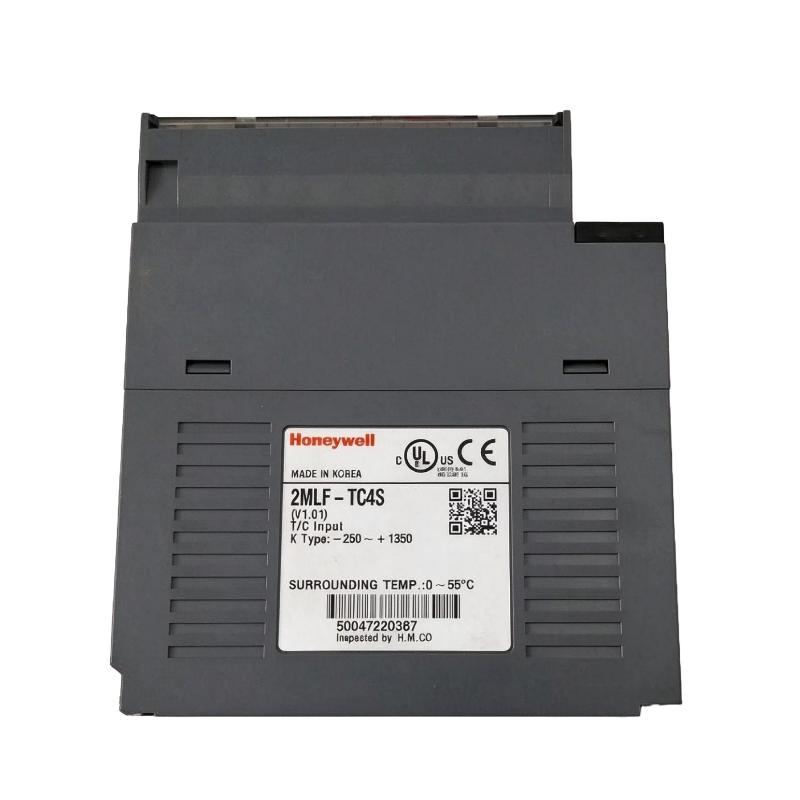
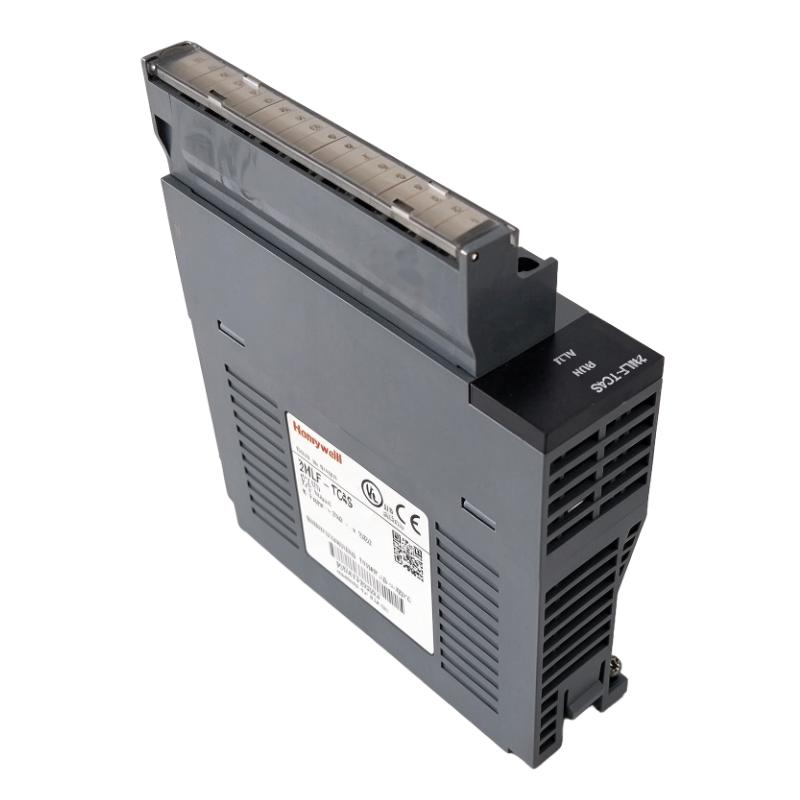
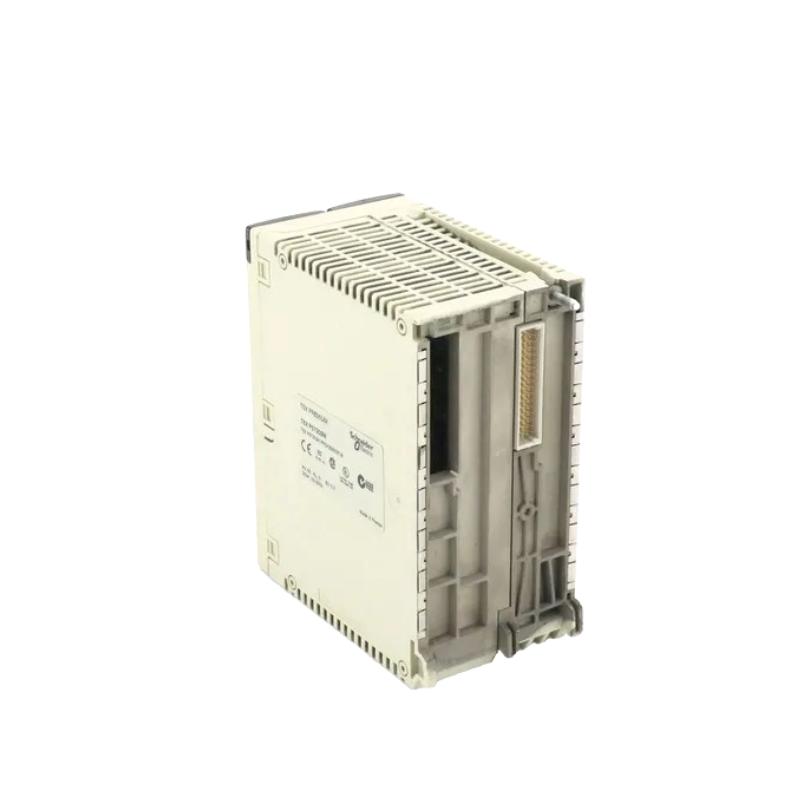
Brand:Honeywell DCS Item No.:2MLF-TC4S Product Origin:USA Product Dimensions:113 x 27 x 98 mm Product Weight:0.15 kg Payment:T/T, Western Union, Credit Card Goods_stock:15 Shipping Port:Xiamen, China Lead Time:1-3 Days Condition:Brand New And Original Warranty:1 Year Certificate:COO
The Honeywell 2MLF-TC4S Thermocouple Input Module is a four-channel, isolated temperature input module for the MasterLogic-200 PLC system. It enables compatible thermocouples to supply temperature measurements for industrial monitoring, process supervision, and automated control.
The module supports nine thermocouple types—K, J, E, T, B, R, S, N, and C—and provides automatic cold-junction compensation using a PT100 sensor. Additional functions include averaging, filtering, temperature alarms, and sensor-disconnection status monitoring.
Designed for integration into compatible Honeywell automation systems, the 2MLF-TC4S is useful for applications that need several temperature signals to be collected and processed by a single PLC module. Before commissioning, verify sensor compatibility, wiring polarity, configuration settings, and controller requirements.
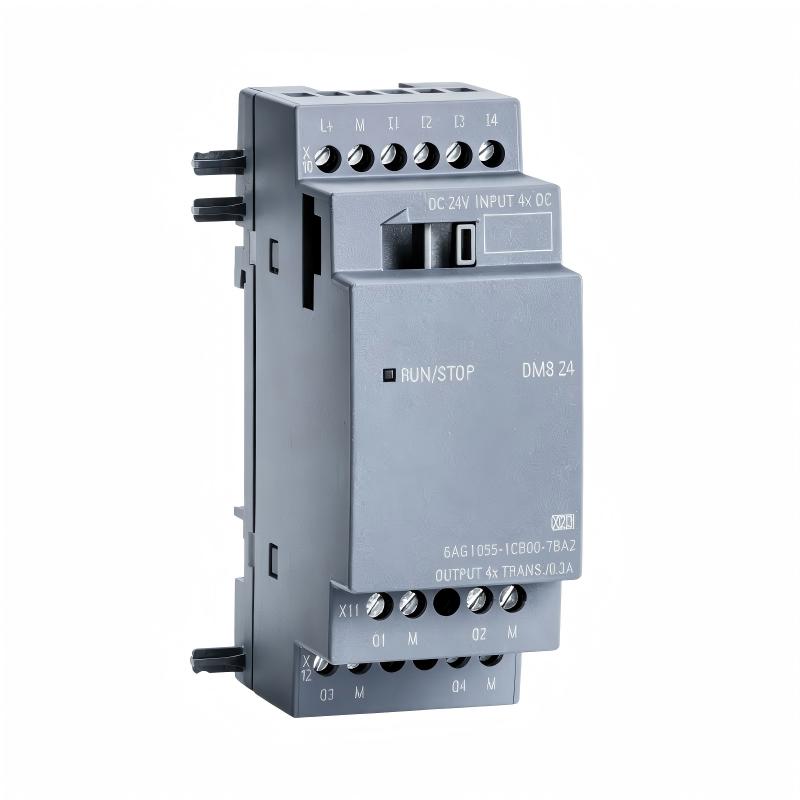
Honeywell 2MLF-SOEA Event Input Module — For recording digital events and their sequence in compatible automation systems.
Honeywell 2MLF-AV8A Analog Voltage Input Module — For acquiring compatible industrial voltage signals.
Honeywell 2MLF-AC8A Analog Current Input Module — For monitoring current-based analog process signals.
Popular Related Models
Model
Product Description
Honeywell 2MLF-TC4S
4-Channel Thermocouple Input Module
Honeywell 2MLF-RD4A
4-Channel RTD Input Module
Honeywell 2MLF-RD8A
8-Channel RTD Input Module
Honeywell 2MLF-SOEA
32-Channel Sequence of Events Input Module
Honeywell 2MLF-AV8A
8-Channel Analog Voltage Input Module
Honeywell 2MLF-AC8A
8-Channel Analog Current Input Module
Honeywell 2MLF-HO2A
2-Channel High-Speed Counting Module
Honeywell 2MLF-HD2A
2-Channel Differential High-Speed Counting Module
Applications
The Honeywell 2MLF-TC4S Thermocouple Input Module is designed for industrial temperature measurement in automation and process-control systems. As part of the Honeywell MasterLogic-200 PLC platform, it receives signals from compatible thermocouple sensors and converts them into digital temperature data for monitoring and control.
Typical applications include:
Industrial process monitoring: Measuring temperatures in manufacturing and production processes.
Furnace and heating systems: Monitoring high-temperature equipment using suitable thermocouple types.
Power generation: Collecting temperature data from compatible industrial equipment.
Chemical and petrochemical plants: Supporting temperature monitoring in process installations.
Automated production lines: Providing temperature feedback to PLC-based control systems.
Equipment diagnostics: Helping operators identify temperature deviations and investigate process issues.
With four input channels and isolation between channels, the module is suitable for systems that require multiple temperature measurements within a compatible control architecture.
Advantages
Four-channel temperature measurement: Accepts inputs from four compatible thermocouple sensors.
Wide sensor selection: Supports K, J, E, T, B, R, S, N, and C-type thermocouples.
Inter-channel isolation: Helps reduce unwanted electrical interaction between input channels.
Automatic cold-junction compensation: Uses a PT100 sensor for reference-junction compensation.
Flexible signal processing: Provides averaging, filtering, and alarm functions for temperature monitoring.
High measurement resolution: Displays temperature values to one decimal place.
MasterLogic-200 integration: Designed for compatible Honeywell PLC installations.
Technical FAQs
Q1: What is the Honeywell 2MLF-TC4S used for?
The 2MLF-TC4S is a thermocouple input module used to acquire temperature signals from compatible sensors and provide temperature data to a Honeywell MasterLogic-200 PLC system.
Q2: How many thermocouple input channels are available?
The module provides four thermocouple input channels, allowing four temperature measurement points to be connected.
Q3: Which thermocouple types does the 2MLF-TC4S support?
It supports K, J, E, T, B, R, S, N, and C-type thermocouples. The applicable temperature range depends on the selected sensor type.
Q4: What is the temperature measurement range?
The documented ranges are:
Type K: -250 to 1,350°C
Type J: -200 to 1,200°C
Type E: -250 to 1,000°C
Type T: -250 to 400°C
Type B: 400 to 1,800°C
Type R: -50 to 1,750°C
Type S: -50 to 1,750°C
Type N: -270 to 1,300°C
Type C: 0 to 2,300°C
Always confirm that the selected thermocouple and its operating environment are suitable for the intended range.
Q5: What is the measurement accuracy of the module?
At an ambient temperature of 25°C, the documented accuracy is ±0.1%, with certain portions of the sensor measurement range potentially allowing an error of up to 1% of the measurable range. Refer to the technical specifications when evaluating accuracy for a particular application.
Q6: What is the conversion speed?
The specified conversion speed is 40 ms per channel. The overall response of a control system may also depend on PLC processing and configuration.
Q7: Does the 2MLF-TC4S support cold-junction compensation?
Yes. The module provides automatic reference-junction compensation using a PT100 sensor, with a documented compensation degree of ±1.0°C.
Q8: Does the module provide electrical isolation?
Yes. It provides isolation between input channels and photo-coupler isolation between the terminal side and PLC power circuitry.
Q9: What should be checked if the temperature reading is incorrect?
Check thermocouple polarity, sensor type settings, compensating-wire selection, terminal connections, and potential electrical interference. Also inspect the sensor and verify that its operating range matches the application.
Q10: Is the 2MLF-TC4S compatible with every Honeywell PLC?
Compatibility should not be assumed across all Honeywell platforms. The module is designed for the MasterLogic-200 series, so confirm the controller model, rack configuration, and software requirements before installation or replacement.