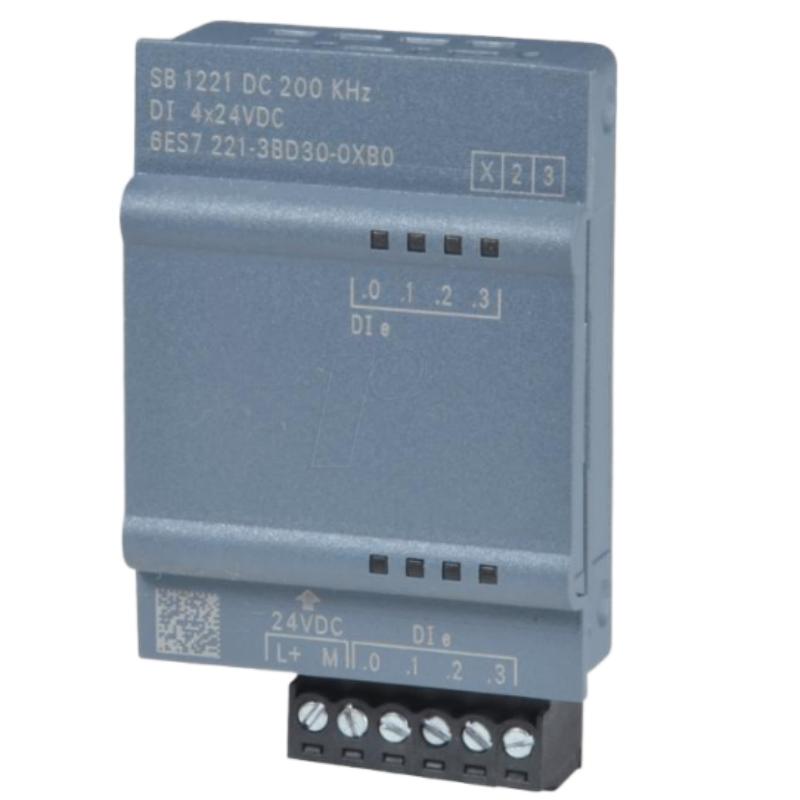
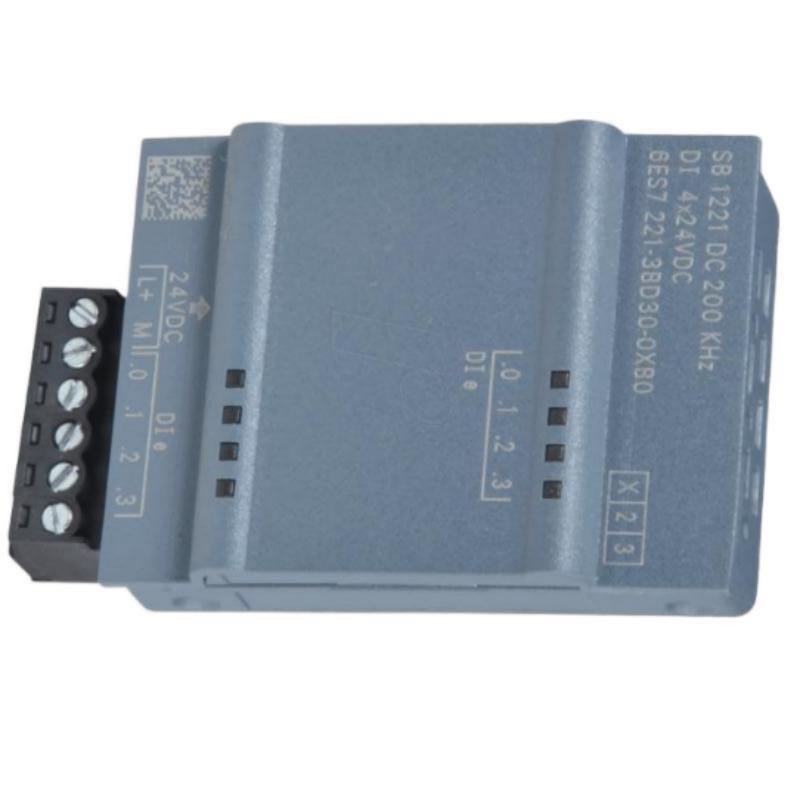
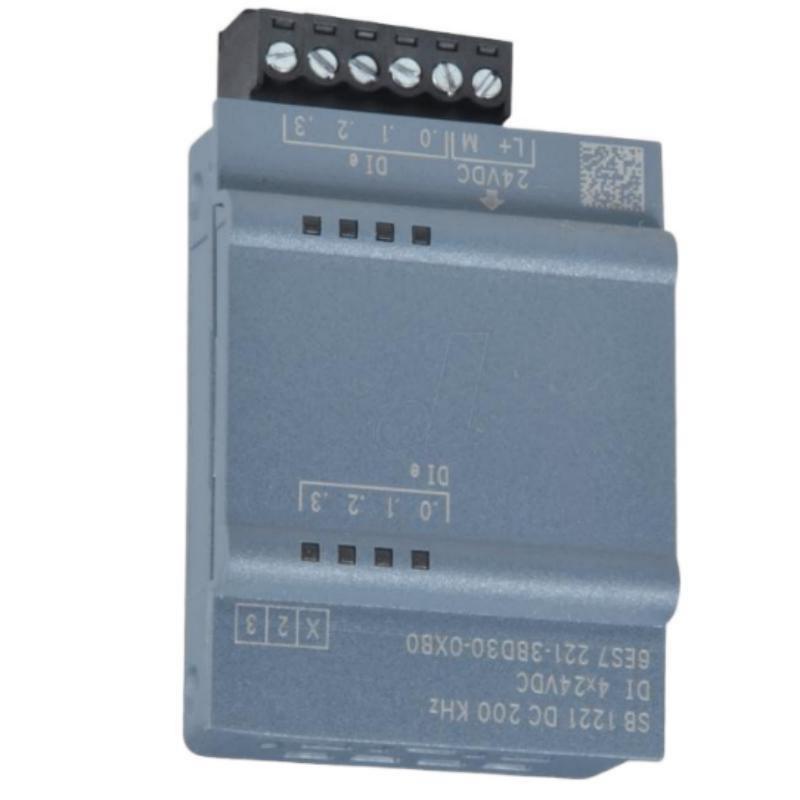
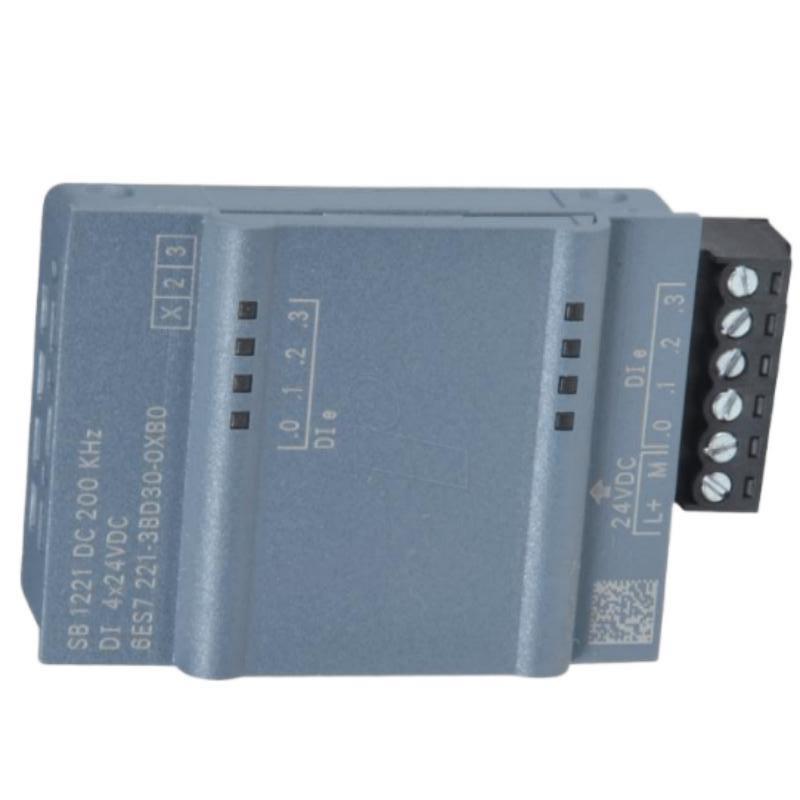
Brand:Siemens Item No.:6AG1221-3BD30-5XB0 Product Origin:Germany Product Dimensions:38 × 62 × 21 mm Product Weight:0.03 kg Payment:T/T, Western Union, Credit Card Goods_stock:15 Shipping Port:Xiamen, China Lead Time:1-3 Days Condition:Brand New And Original Warranty:1 Year Certificate:COO
In an industrial automation system, digital inputs provide the controller with a clear picture of what is happening in the field. A sensor detects an object, a limit switch confirms a mechanical position, or an operator presses a control button; each event must be transferred accurately into the PLC program. The Siemens 6AG1221-3BD30-5XB0 is designed to perform this signal-acquisition role in a compact SIPLUS solution.
One of the module's strongest practical characteristics is its extremely small physical footprint. Measuring only 38 × 62 × 21 mm, it can be considered for equipment where electrical components compete for limited cabinet or machine space. For compact OEM machinery, this can make a meaningful difference in overall panel design.
The module is also remarkably light, weighing only 0.03 kg (0.07 lb). This is convenient for installation and service work, particularly where access is restricted or I/O components must be positioned within small electrical assemblies.
Digital input modules are commonly used to monitor machine conditions, detect component positions, confirm process steps, and provide operator commands to the controller. By separating field signal acquisition from the CPU's integrated resources, a modular architecture can be expanded as the machine evolves.
The SIPLUS platform provides an additional option for industrial applications where environmental conditions are an important consideration. Engineers should evaluate the actual installation environment and verify the applicable specifications before selecting the module for a particular project.
For machine builders and system integrators, the 6AG1221-3BD30-5XB0 is best suited to designs where small dimensions, low weight, modular signal acquisition, and industrial suitability are all important. Its compact form factor makes it especially compelling for modern automation equipment where cabinet efficiency is a key engineering objective.
Technical Specifications
Parameter
Specification
Brand
Siemens
Model
6AG1221-3BD30-5XB0
Product Type
Digital Input Module
Product Platform
SIPLUS
Module Function
Digital Signal Acquisition
Signal Type
Digital / Discrete
Application
Industrial Automation
Installation
Industrial Control System
Dimensions
38 × 62 × 21 mm
Weight
0.03 kg (0.07 lb)
Recommended Related Models
Model
Product Type
Typical Role
Siemens 6AG1221-3AD30-5XB0
SIPLUS Digital Input Module
Compact digital signal acquisition
Siemens 6AG1221-1BF32-2XB0
SIPLUS Digital Input Module
Digital input expansion
Siemens 6AG1221-1BF32-4XB0
SIPLUS Digital Input Module
Digital signal acquisition
Siemens 6AG1221-1BH32-2XB0
SIPLUS Digital Input Module
Digital input expansion
Siemens 6AG1221-1BH32-4XB0
SIPLUS Digital Input/Output Module
Mixed digital I/O
Siemens 6AG1222-1BF32-4XB0
SIPLUS Digital Output Module
Digital output control
Popular Related Models
Model
Product Type
Siemens 6AG1221-3BD30-5XB0
SIPLUS Digital Input Module
Siemens 6AG1221-3AD30-5XB0
SIPLUS Digital Input Module
Siemens 6AG1221-1BF32-2XB0
SIPLUS Digital Input Module
Siemens 6AG1221-1BF32-4XB0
SIPLUS Digital Input Module
Siemens 6AG1221-1BH32-2XB0
SIPLUS Digital Input Module
Siemens 6AG1221-1BH32-4XB0
SIPLUS Digital Input/Output Module
Siemens 6AG1222-1BF32-4XB0
SIPLUS Digital Output Module
Siemens 6AG1223-1BL32-4XB0
SIPLUS Digital I/O Module
Siemens 6ES7221-1BF32-0XB0
S7-1200 Digital Input Module
Applications
The 6AG1221-3BD30-5XB0 can be used where compact digital signal acquisition is required within a compatible Siemens industrial control architecture.
Compact machine automation – Receives discrete signals from sensors, switches, and machine-status devices.
OEM machinery – Helps maintain a small control-panel footprint while providing required I/O functionality.
Production equipment – Monitors discrete operating conditions and process states.
Sensor-based applications – Interfaces compatible digital sensors with the PLC control system.
Conveyor equipment – Supports detection of position, product presence, and equipment status.
Material-handling systems – Provides digital feedback for automated positioning and sequencing.
Control-panel upgrades – Adds digital signal capability where available installation space is limited.
Industrial automation retrofits – Can be considered for compatible modernization projects requiring compact I/O hardware.
Compact I/O for Space-Conscious Automation
Minimal installation footprint At only 38 × 62 × 21 mm, the module is exceptionally compact. This makes it a strong candidate for machine builders who need to maximize usable space inside electrical enclosures.
Lightweight construction The module weighs just 0.03 kg (0.07 lb), allowing technicians to install and replace it easily, even in compact or difficult-to-access control assemblies.
Reliable digital signal acquisition Its primary role is to receive discrete field information and make the corresponding signal states available to the automation controller for processing.
Efficient machine design Compact I/O hardware can help OEMs reduce control-panel size without sacrificing the ability to connect the required field signals.
SIPLUS industrial platform The SIPLUS version is intended for industrial applications where enhanced environmental suitability is an important consideration during component selection.
Straightforward system expansion Where the compatible automation architecture permits additional I/O, the module provides a practical method of increasing digital input capacity without redesigning the entire control system.
Useful for distributed signal collection Its small size can be advantageous when digital signal interfaces need to be positioned close to specific machine functions or within compact electrical assemblies.
Maintenance-friendly form factor The low weight and compact dimensions simplify physical handling during service work, replacement, and equipment modernization.
Technical FAQs
1. What is the Siemens 6AG1221-3BD30-5XB0? It is a SIPLUS Digital Input Module designed to acquire discrete field signals in compatible Siemens industrial automation systems.
2. What is the main purpose of a digital input module? It receives discrete electrical signals from field devices and transfers their states to the PLC or control system so that the automation program can respond accordingly.
3. What field devices can typically provide digital input signals? Compatible proximity sensors, limit switches, push buttons, selector switches, relay contacts, and other discrete signal devices are common examples.
4. Why is a compact digital input module useful? It allows engineers to add or distribute digital signal acquisition without consuming the cabinet space associated with larger conventional I/O hardware.
5. What should be verified before wiring a sensor to the module? Check the sensor's output characteristics, supply voltage, polarity, wiring arrangement, common/reference connection, and compatibility with the module's electrical input specifications.
6. What could cause an input channel to remain inactive? Possible causes include incorrect wiring, missing sensor power, incorrect polarity, a defective field device, an incompatible signal, an incorrect PLC configuration, or a hardware fault.
7. How should an intermittent digital input be investigated? Inspect the sensor and wiring first, then measure the signal at the module terminal. Also examine grounding, cable routing, power stability, and possible electromagnetic interference.
8. Can electromagnetic interference affect digital input signals? Yes. Motors, contactors, variable-frequency drives, and other industrial equipment can generate interference. Appropriate cable routing, grounding, and installation practices help reduce the risk of signal disturbances.
9. Can the 6AG1221-3BD30-5XB0 be used to control an actuator? No. This is an input module. It is intended to receive field signals rather than provide the switching function required to control an actuator.
10. What should be checked during commissioning? Verify physical installation, field wiring, power conditions, PLC hardware configuration, input addressing, diagnostic status, and the actual response of each connected field device.