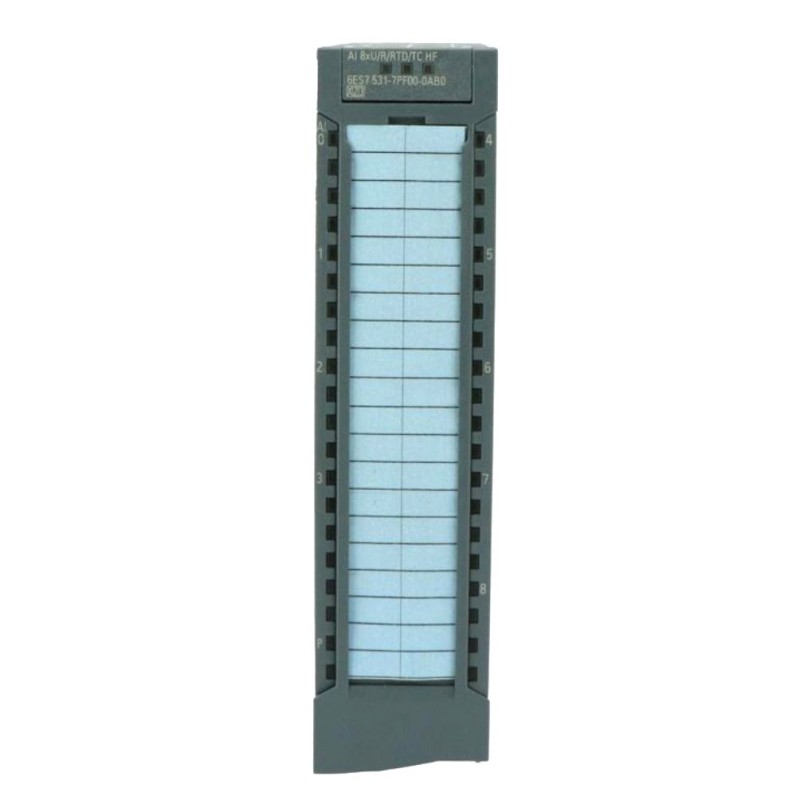
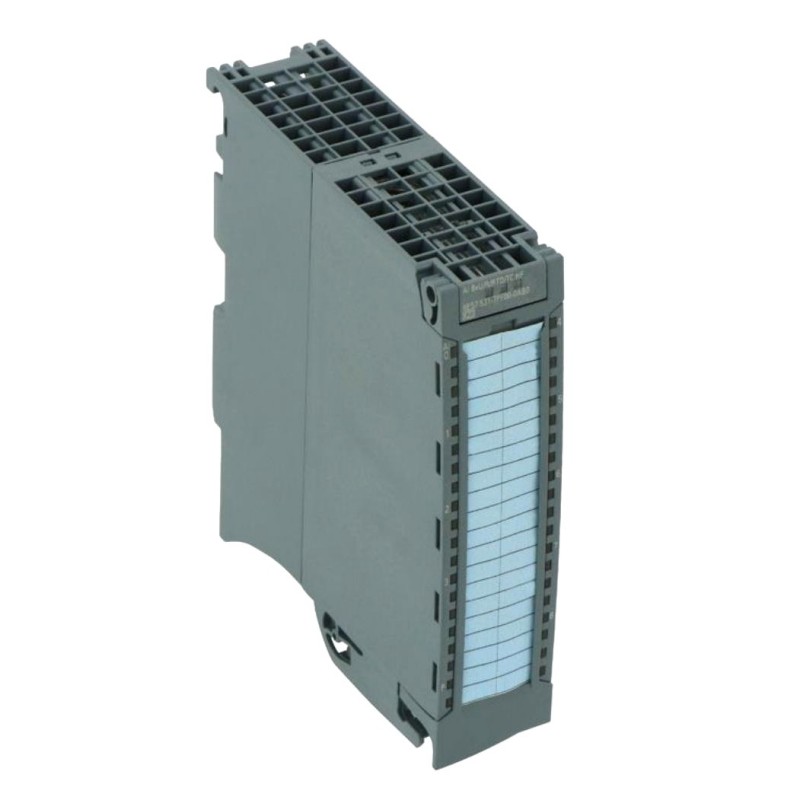
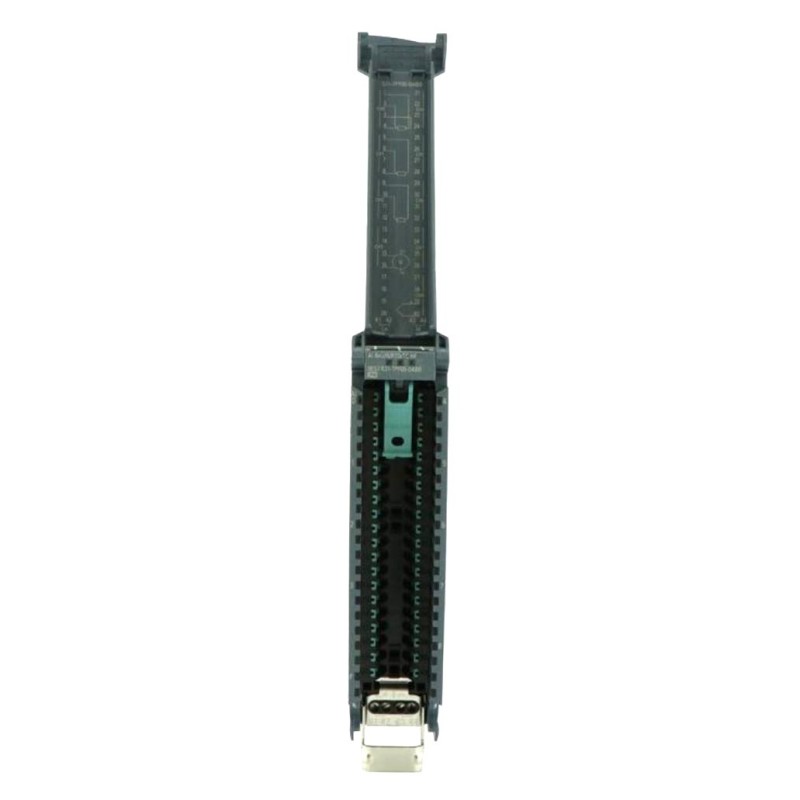
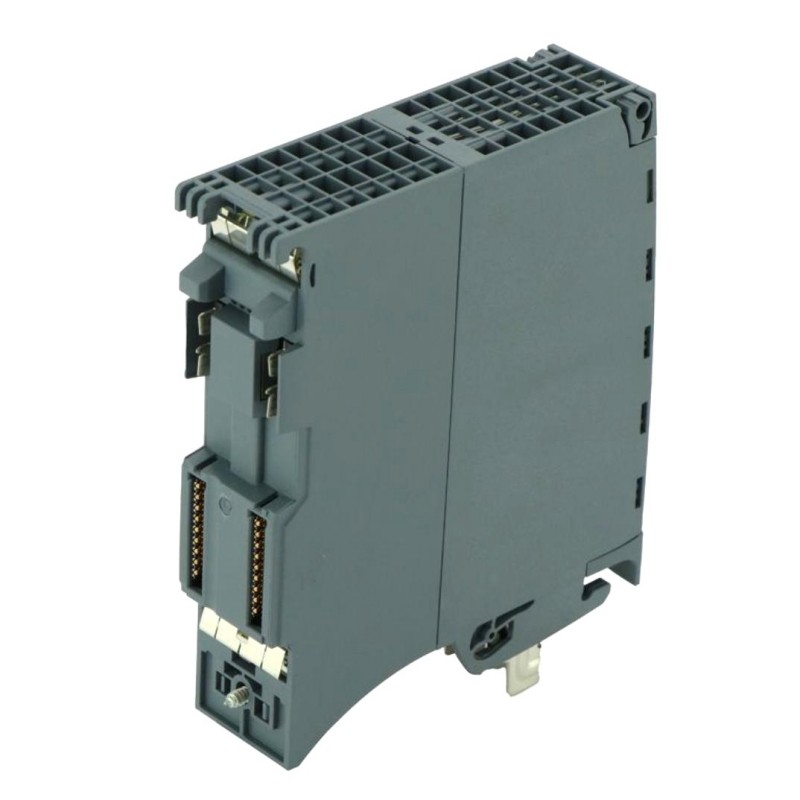
Brand:Siemens Item No.:6AG1531-7PF00-4AB0 Product Origin:Germany Product Dimensions:35 × 147 × 129 mm Product Weight:0.3 kg Payment:T/T, Western Union, Credit Card Goods_stock:15 Shipping Port:Xiamen, China Lead Time:1-3 Days Condition:Brand New And Original Warranty:1 Year Certificate:COO
Industrial automation increasingly depends on accurate process information. A PLC may need to know the exact pressure in a line, the temperature of a process, the level of a tank, or the changing position of a machine component. Analog input modules provide the electrical interface required to bring these continuously varying measurements into the control system.
The Siemens 6AG1531-7PF00-4AB0 is designed as a SIPLUS S7-1500 Analog Input Module, providing a modular solution for compatible analog signal acquisition. Once a measurement has been acquired, the PLC can use it for monitoring, calculations, alarm handling, process logic, and other automation functions.
This capability is particularly valuable in machines where process conditions change continuously. Instead of simply determining whether a device is active or inactive, the control system can evaluate the actual measurement and respond to its value. This enables more sophisticated automation strategies and provides operators with greater visibility into machine performance.
However, reliable analog measurement depends on the complete signal path. Sensor selection, transmitter configuration, wiring quality, grounding, shielding, electrical separation, input-channel configuration, and software scaling all contribute to the final measurement available to the PLC.
The SIPLUS platform is also relevant where environmental conditions influence hardware selection. Industrial installations may encounter temperature fluctuations, humidity, vibration, contamination, and other site-specific factors. These conditions should be assessed against the applicable specifications when planning the installation.
With dimensions of 35 × 147 × 129 mm and a weight of 0.3 kg (0.66 lb), the module provides a compact footprint for cabinet integration. The 35 mm width is useful when control panels contain numerous I/O modules and space efficiency is a priority.
For automation professionals looking to expand measurement capability, the 6AG1531-7PF00-4AB0 combines analog signal acquisition, S7-1500 modular integration, compact cabinet design, and SIPLUS industrial positioning in a practical package. It can be a strong fit for OEM machinery, industrial equipment, and measurement-oriented control systems.
Technical Specifications
Parameter
Specification
Brand
Siemens
Model
6AG1531-7PF00-4AB0
Product Family
SIPLUS S7-1500
Product Type
Analog Input Module
Module Function
Analog Signal Acquisition
Signal Type
Analog
Application
Industrial Automation
PLC Platform
S7-1500
Product Platform
SIPLUS
Installation
Modular PLC System
Dimensions
35 × 147 × 129 mm
Weight
0.3 kg (0.66 lb)
Recommended Related Models
Model
Product Type
Typical Role
Siemens 6AG1531-7NF10-7AB0
SIPLUS S7-1500 Analog Input Module
Analog signal acquisition
Siemens 6AG1531-7NF00-7AB0
SIPLUS S7-1500 Analog Input Module
Analog input expansion
Siemens 6AG1531-7KF00-7AB0
SIPLUS S7-1500 Digital Input Module
Digital signal acquisition
Siemens 6AG1526-1BH00-2AB0
SIPLUS S7-1500 Digital Input Module
Digital input expansion
Siemens 6AG1523-1BL00-7AB0
SIPLUS Digital Input/Output Module
Combined digital I/O
Siemens 6AG1522-5HH00-7AB0
SIPLUS S7-1500 Digital Output Module
Digital output control
Popular Related Models
Model
Product Type
Siemens 6AG1531-7PF00-4AB0
SIPLUS S7-1500 Analog Input Module
Siemens 6AG1531-7NF10-7AB0
SIPLUS S7-1500 Analog Input Module
Siemens 6AG1531-7NF00-7AB0
SIPLUS S7-1500 Analog Input Module
Siemens 6AG1531-7KF00-7AB0
SIPLUS S7-1500 Digital Input Module
Siemens 6AG1526-1BH00-2AB0
SIPLUS S7-1500 Digital Input Module
Siemens 6AG1521-1BH00-7AB0
SIPLUS Digital Input Module
Siemens 6AG1522-5HH00-7AB0
SIPLUS S7-1500 Digital Output Module
Siemens 6AG1522-5HF00-2AB0
SIPLUS S7-1500 Digital Output Module
Siemens 6AG1523-1BL00-7AB0
SIPLUS Digital Input/Output Module
Applications
The 6AG1531-7PF00-4AB0 can be used in compatible automation systems that require acquisition of analog process signals.
Process measurement – Brings variable field measurements into the PLC.
Machine automation – Provides analog feedback for measurement-dependent control functions.
Temperature applications – Supports compatible temperature measurement instrumentation.
Pressure monitoring – Acquires suitable pressure-related analog signals.
Flow systems – Integrates compatible flow measurement devices into PLC-based control.
Level monitoring – Provides continuously varying process information for automation logic.
Industrial machinery – Expands analog input resources in modular control systems.
Process control – Makes analog information available for monitoring, calculations, limits, alarms, and regulation strategies.
Practical Advantages for Measurement-Driven Automation
Continuous signal acquisition Analog inputs give the PLC access to changing process values instead of only discrete ON/OFF states, making the module useful for measurement-intensive automation.
Modular S7-1500 integration The module can form part of an appropriately configured S7-1500 architecture, allowing engineers to build an I/O system around the actual requirements of the machine or process.
SIPLUS industrial platform The SIPLUS family is intended for applications where environmental suitability is an important consideration. Engineers should assess the actual installation environment against the applicable specifications before deployment.
Better process visibility Variable measurement data allows the PLC to identify trends, compare values with limits, perform calculations, and make more informed control decisions.
Efficient cabinet utilization Its 35 mm width helps maintain a compact panel layout, which is especially useful when multiple signal modules and control components must share limited cabinet space.
Scalable system architecture Modular analog I/O expansion allows additional measurement points to be incorporated as machine functionality grows.
Suitable for OEM engineering The structured S7-1500 format can help machine builders maintain consistent control architectures across different equipment configurations.
Maintenance-friendly signal diagnosis When an analog value appears abnormal, technicians can work through the complete signal chain—from instrumentation and wiring to channel configuration and PLC scaling.
Technical FAQs
1. What is the Siemens 6AG1531-7PF00-4AB0? It is a SIPLUS S7-1500 Analog Input Module designed to acquire compatible analog signals for use in Siemens industrial automation systems.
2. Why are analog inputs important in industrial automation? They allow the PLC to work with variable process measurements rather than only discrete states, providing more detailed information about machine and process conditions.
3. What process variables can be monitored using analog signals? Depending on the connected instrumentation and supported signal type, applications may include temperature, pressure, flow, level, position, and other variable measurements.
4. Why must the sensor output be compatible with the input channel? Analog input channels are designed for defined electrical signal characteristics. A mismatch can produce incorrect values or cause improper operation.
5. What should be checked when an analog value is incorrect? Inspect the field instrument, wiring, field power, grounding, channel configuration, signal characteristics, scaling parameters, and module diagnostics.
6. What does PLC scaling accomplish? Scaling converts the electrical value acquired by the input into a meaningful engineering value that can be used by the control program.
7. Why is analog wiring more sensitive to interference than many digital signals? Because analog information is represented by a continuously varying signal, electrical noise can directly affect the measured value. Good cable routing, grounding, shielding where applicable, and separation from power wiring are important.
8. What can cause an unstable analog reading? Possible causes include electrical interference, unstable instrumentation, poor grounding, loose terminals, fluctuating field power, incorrect configuration, or unsuitable wiring.
9. How can an engineer determine whether the sensor or PLC input is responsible for a bad reading? Measure the sensor or transmitter output at the field side using suitable test equipment and compare it with the value recognized by the input channel.
10. What should be verified during commissioning? Check the instrument type, signal wiring, power supply, channel configuration, scaling, diagnostic status, and measured values across the intended operating range.