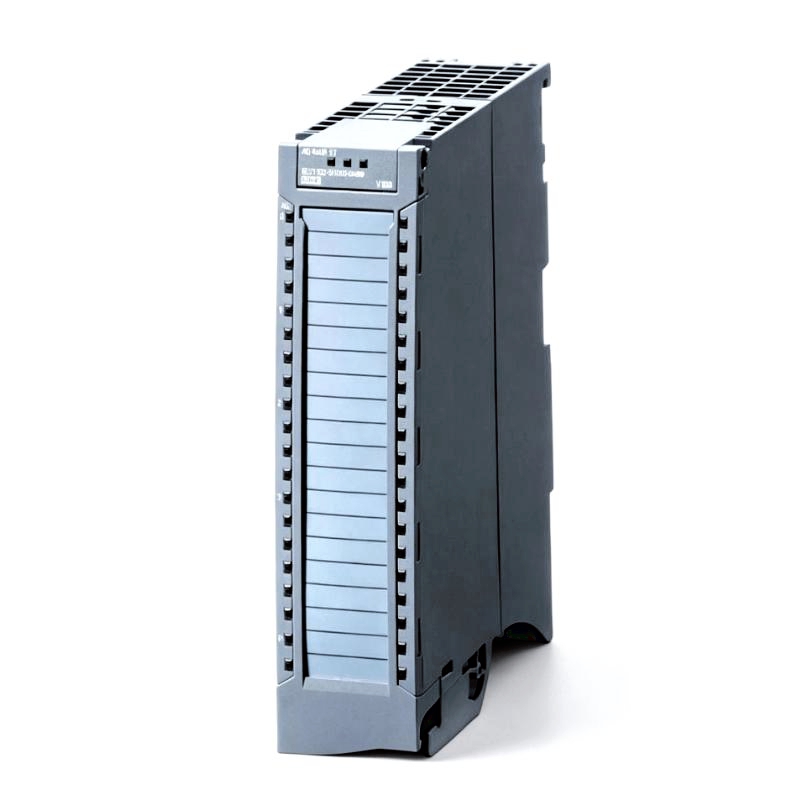
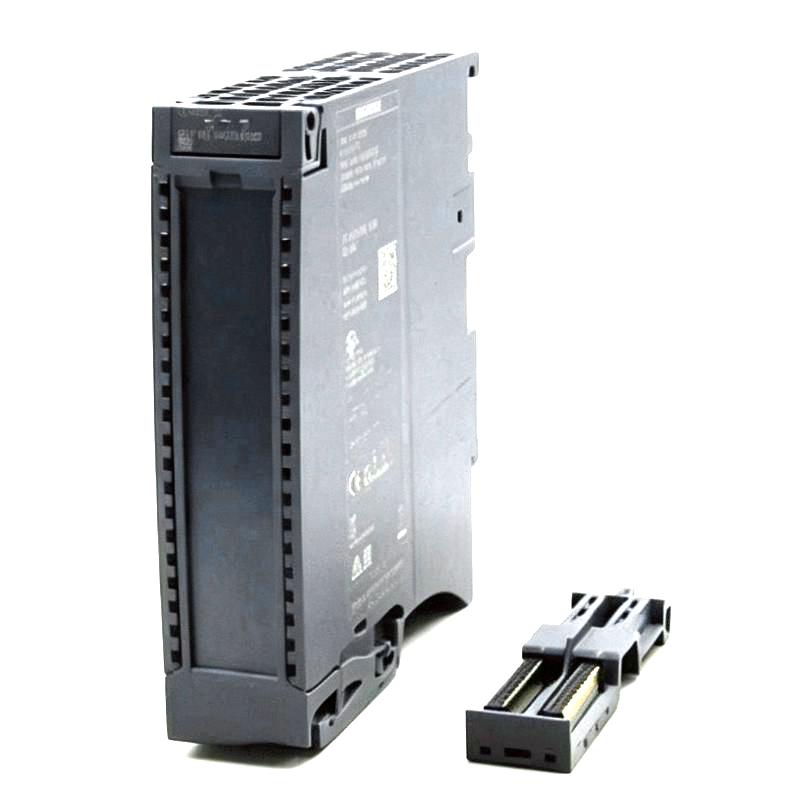
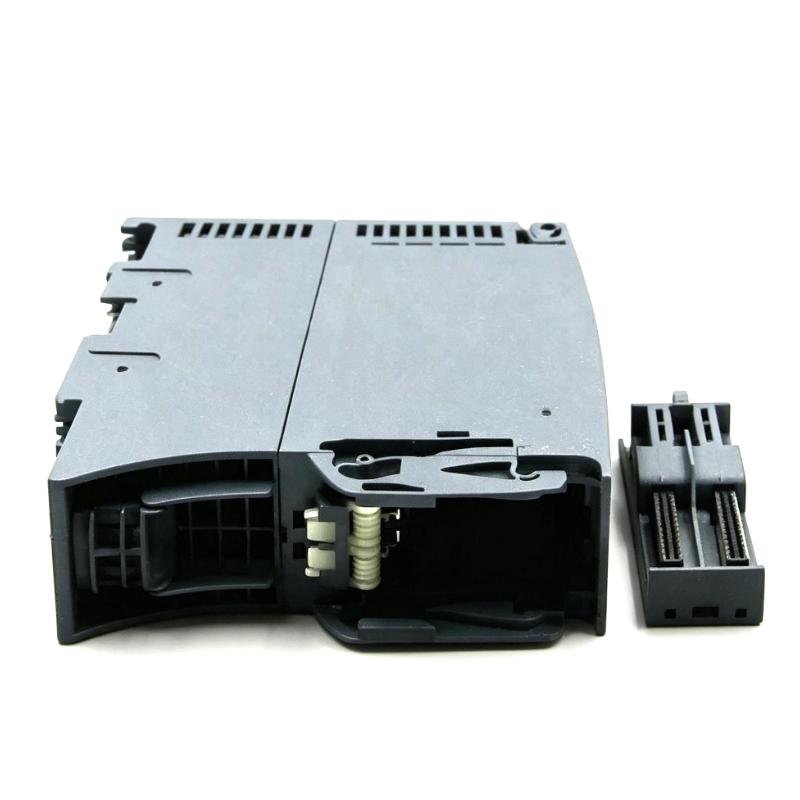
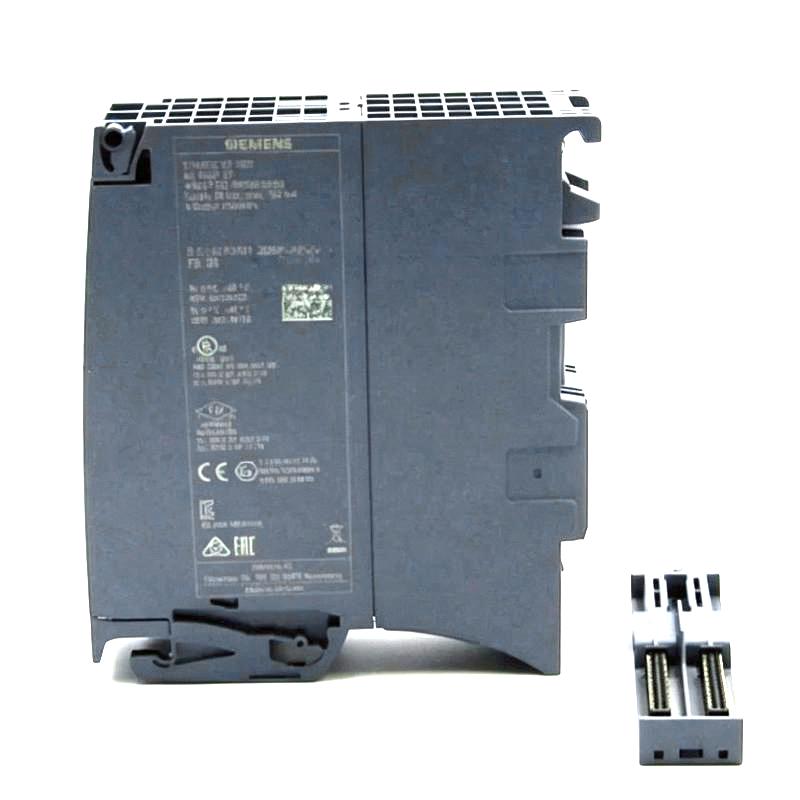
Siemens 6AG1532-5HD00-7AB0 Analog Output Module
The Siemens 6AG1532-5HD00-7AB0 is a SIPLUS S7-1500 Analog Output Module designed to provide variable control signals from the PLC to compatible field devices. While digital outputs are generally used for discrete switching, an analog output allows the automation system to influence a process using a continuously varying electrical signal.
This makes the module a valuable component for applications involving proportional control, process adjustment, speed references, valve positioning, instrumentation interfaces, and other functions where a simple ON/OFF command is not sufficient.
With dimensions of 35 × 147 × 129 mm and a weight of 0.2 kg (0.44 lb), the module offers a compact installation footprint for modular control cabinets. Its SIPLUS platform also makes environmental suitability an important consideration when selecting hardware for industrial installations.
Applications
The 6AG1532-5HD00-7AB0 can be integrated into compatible Siemens automation systems where PLC-generated analog control signals are required.
- Process control – Provides variable output signals for regulating suitable process equipment.
- Valve control – Supports compatible proportional valve interfaces.
- Drive applications – Can provide suitable analog reference signals where the drive architecture requires them.
- Machine automation – Enables continuously adjustable control commands.
- Temperature systems – Supports analog control interfaces for suitable heating or cooling equipment.
- Flow and pressure control – Provides variable signals for compatible control devices.
- OEM machinery – Adds analog output capability to Siemens-based machine architectures.
- Industrial equipment upgrades – Expands the control system with additional analog output resources.
- Process instrumentation – Interfaces with compatible analog-controlled field equipment.
Where Variable Output Control Adds Real Value
Continuous control capability
The module allows the PLC to generate variable output signals rather than limiting machine commands to simple ON/OFF switching. This is useful when a process requires proportional adjustment.
S7-1500 modular architecture
Its modular format supports structured I/O expansion in appropriately configured S7-1500 systems, giving engineers flexibility when designing automation hardware.
SIPLUS industrial platform
The SIPLUS family is intended for applications where environmental conditions are an important part of hardware selection. Actual installation requirements should be checked against the applicable specifications.
Suitable for proportional applications
Analog outputs can be used in applications where a field device needs a variable reference or command, such as suitable control valves, actuators, and drive interfaces.
Compact control-panel footprint
The 35 mm width helps conserve cabinet space, allowing analog control functionality to be incorporated without requiring a large installation area.
Scalable output architecture
Additional analog output capability can be introduced as machine functions expand, helping engineers maintain a modular control strategy.
Precise process interaction
When correctly configured, variable output signals allow the PLC to influence a process according to calculated values, setpoints, control algorithms, or operator commands.
Strong OEM and integration potential
For machine builders and system integrators, a dedicated analog output module can simplify the integration of compatible proportional field devices into standardized Siemens control systems.
Technical FAQs
1. What is the Siemens 6AG1532-5HD00-7AB0?
It is a SIPLUS S7-1500 Analog Output Module designed to provide variable analog control signals from a compatible PLC system.
2. What is the difference between an analog output and a digital output?
A digital output normally provides discrete switching states, while an analog output provides a continuously variable signal that can be used for proportional control.
3. What types of equipment can use analog output signals?
Depending on the supported signal characteristics, applications may include compatible control valves, drive interfaces, actuators, instrumentation, and proportional control devices.
4. Why must the receiving device match the output specifications?
The field device must be compatible with the electrical characteristics of the output channel. A mismatch can cause incorrect control behavior or potentially stress the interface.
5. What should be checked if the field device does not respond correctly?
Check the PLC output value, channel configuration, wiring, field power, receiving-device configuration, and the actual electrical signal at the output.
6. Why is analog output scaling important?
Scaling establishes the relationship between the PLC's internal numerical value and the physical output signal, allowing the control program to generate the intended engineering value.
7. What can cause an analog output value to fluctuate?
Possible causes include unstable PLC calculations, electrical interference, grounding problems, wiring issues, incorrect configuration, or instability in the receiving device.
8. Can analog output wiring be affected by electromagnetic interference?
Yes. Analog control signals can be sensitive to interference. Appropriate cable routing, grounding, shielding where applicable, and separation from high-power circuits are important.
9. How can an output-channel problem be distinguished from a field-device problem?
Measure the actual output signal with suitable test equipment and compare it with the PLC command. If the PLC command and measured signal agree, investigation can move toward the field wiring and receiving device.
10. What should be verified before commissioning an analog output?
Confirm channel configuration, output scaling, wiring, field power, receiving-device requirements, diagnostic status, and actual output behavior across the intended operating range.
Introduction
Many industrial processes cannot be controlled effectively with simple ON/OFF commands. A valve may need to open to a particular position, a drive may require a variable reference, or a process controller may need to continuously adjust an operating parameter. Analog output modules provide the PLC with the ability to generate these variable control signals.
The Siemens 6AG1532-5HD00-7AB0 is designed as a SIPLUS S7-1500 Analog Output Module, providing an interface between PLC calculations and compatible analog-controlled field equipment.
In a typical automation strategy, the PLC calculates a desired value based on sensor feedback, operator settings, process conditions, or a programmed control algorithm. The analog output module then provides the corresponding control signal to the connected device. This creates a practical link between digital control logic and continuously adjustable physical processes.
Analog outputs are particularly useful in applications involving proportional devices. For example, a control system may need to adjust a compatible valve gradually rather than simply switching it fully open or closed. Similar principles can apply to suitable drive references, process instrumentation, and other variable-control applications.
Signal integrity is an important part of analog output performance. The output module, wiring, receiving device, grounding arrangement, electrical environment, and software configuration all contribute to the final result. Proper engineering therefore requires the entire signal path to be considered rather than treating the output module as an isolated component.
The SIPLUS platform is also relevant where environmental conditions influence equipment selection. Industrial control installations can experience temperature changes, humidity, vibration, contamination, and other site-specific conditions. The actual installation environment should be evaluated against the applicable specifications before the hardware is deployed.
The module measures 35 × 147 × 129 mm and weighs 0.2 kg (0.44 lb). Its compact 35 mm width supports efficient cabinet design, particularly in systems containing multiple I/O modules.
For OEMs and system integrators, the 6AG1532-5HD00-7AB0 provides a practical combination of variable analog control, S7-1500 modularity, compact installation, and SIPLUS industrial positioning. It is a strong candidate for automation architectures where proportional control is more valuable than simple discrete switching.
Technical Specifications
| Parameter | Specification |
|---|---|
| Brand | Siemens |
| Model | 6AG1532-5HD00-7AB0 |
| Product Family | SIPLUS S7-1500 |
| Product Type | Analog Output Module |
| Module Function | Analog Signal Output |
| Signal Type | Analog |
| Application | Industrial Automation |
| PLC Platform | S7-1500 |
| Product Platform | SIPLUS |
| Installation | Modular PLC System |
| Dimensions | 35 × 147 × 129 mm |
| Weight | 0.2 kg (0.44 lb) |
Recommended Related Models
| Model | Product Type | Typical Role |
|---|---|---|
| Siemens 6AG1531-7NF10-7AB0 | SIPLUS S7-1500 Analog Input Module | Analog signal acquisition |
| Siemens 6AG1531-7PF00-4AB0 | SIPLUS S7-1500 Analog Input Module | Analog measurement |
| Siemens 6AG1531-7NF00-7AB0 | SIPLUS S7-1500 Analog Input Module | Analog input expansion |
| Siemens 6AG1523-1BL00-7AB0 | SIPLUS Digital Input/Output Module | Combined I/O |
| Siemens 6AG1522-5HH00-7AB0 | SIPLUS S7-1500 Digital Output Module | Digital output control |
| Siemens 6AG1526-2BF00-2AB0 | SIPLUS S7-1500 Digital Output Module | Digital output expansion |
Popular Related Models
| Model | Product Type |
|---|---|
| Siemens 6AG1532-5HD00-7AB0 | SIPLUS S7-1500 Analog Output Module |
| Siemens 6AG1531-7NF10-7AB0 | SIPLUS S7-1500 Analog Input Module |
| Siemens 6AG1531-7PF00-4AB0 | SIPLUS S7-1500 Analog Input Module |
| Siemens 6AG1531-7NF00-7AB0 | SIPLUS S7-1500 Analog Input Module |
| Siemens 6AG1522-5HH00-7AB0 | SIPLUS S7-1500 Digital Output Module |
| Siemens 6AG1522-5HF00-2AB0 | SIPLUS S7-1500 Digital Output Module |
| Siemens 6AG1522-5FH00-7AB0 | SIPLUS S7-1500 Digital Output Module |
| Siemens 6AG1526-2BF00-2AB0 | SIPLUS S7-1500 Digital Output Module |
| Siemens 6AG1523-1BL00-7AB0 | SIPLUS Digital Input/Output Module |