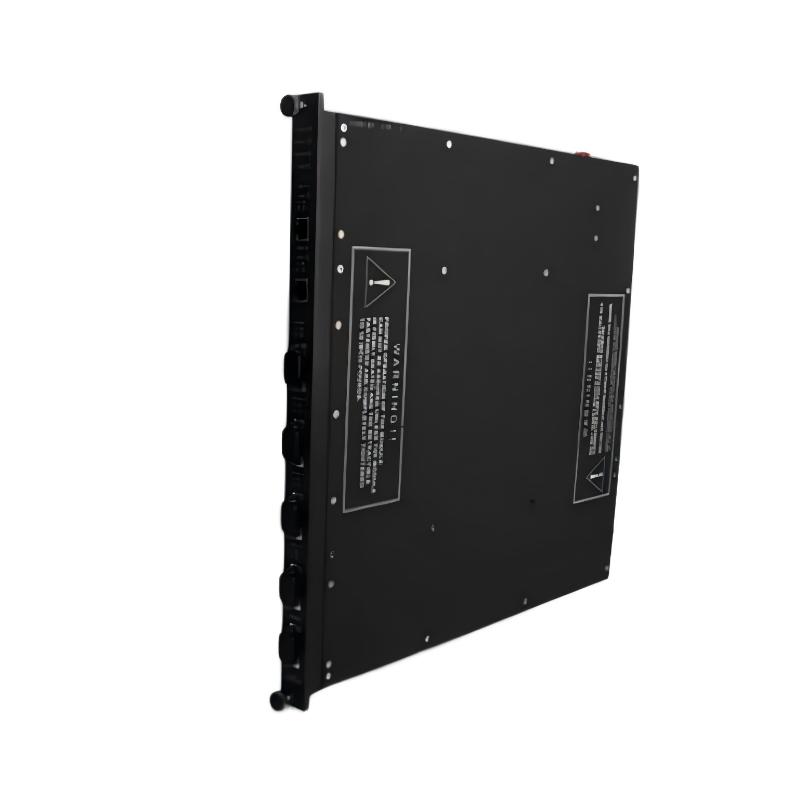
Brand:Siemens Item No.:6AG1540-1AB00-7AA0 Product Origin:Germany Product Dimensions:35 × 147 × 127 mm Product Weight:0.272 kg Payment:T/T, Western Union, Credit Card Goods_stock:15 Shipping Port:Xiamen, China Lead Time:1-3 Days Condition:Brand New And Original Warranty:1 Year Certificate:COO
Industrial automation is no longer built around isolated controllers. Modern production equipment typically consists of PLCs, distributed I/O, drives, HMIs, sensors, engineering systems, and supervisory platforms that must exchange information continuously. Reliable communication is therefore just as important to a control architecture as reliable signal acquisition and output control.
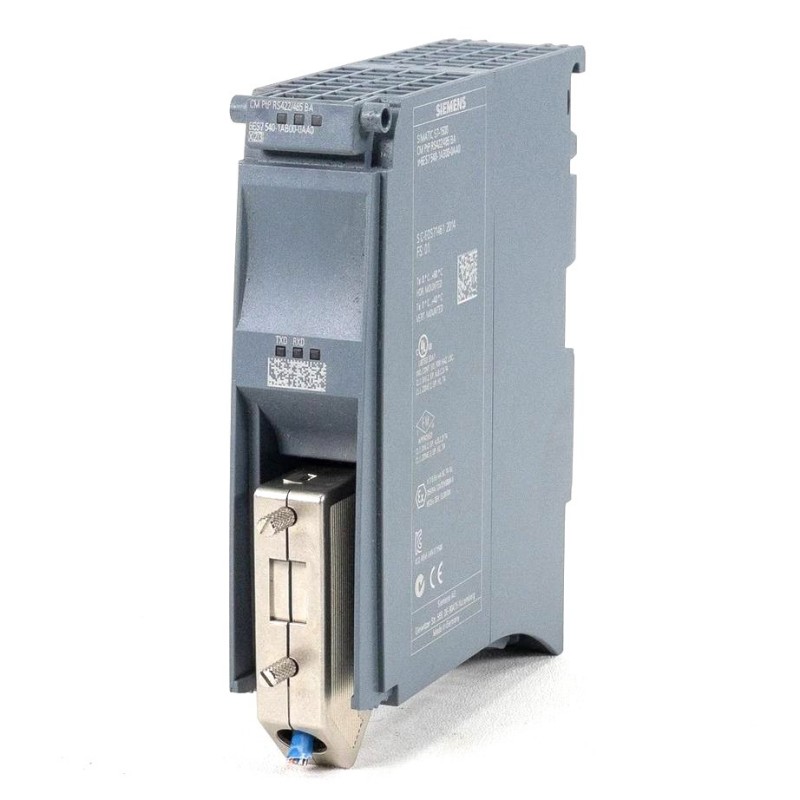
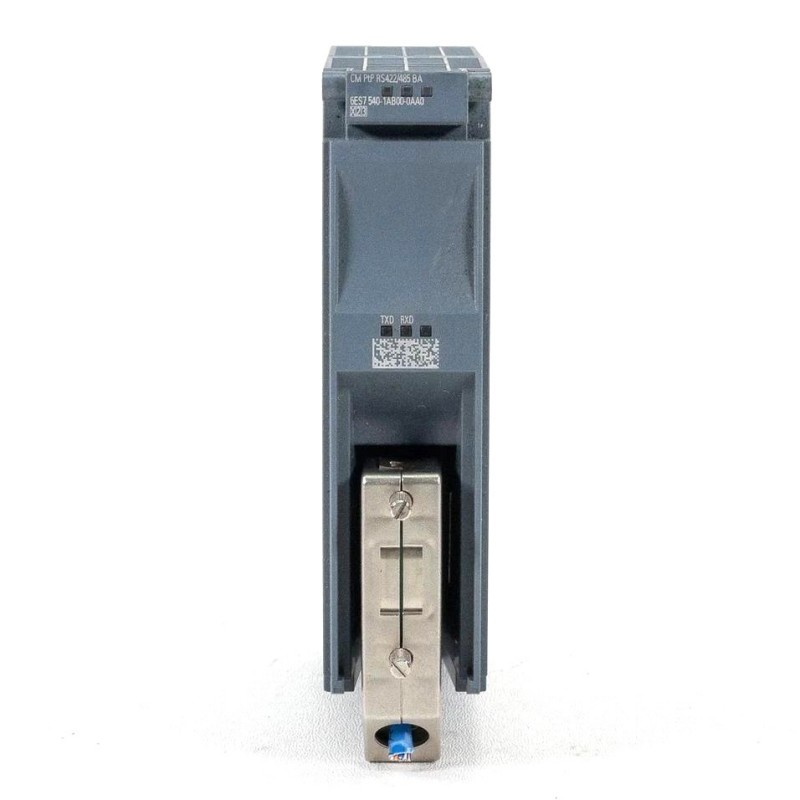
The Siemens 6AG1540-1AB00-7AA0 is a SIPLUS S7-1500 Communication Module designed to provide communication functionality within a compatible automation system. It forms part of the broader modular approach used in Siemens control architectures, allowing engineers to organize communication resources alongside processing and I/O functions.
A communication module can support more than basic data exchange. In a well-designed automation system, communication enables controllers to coordinate machine sections, exchange status information, transfer process data, support diagnostics, and connect control-level equipment with other parts of the industrial architecture.
This becomes especially important in larger machines and production lines. A single PLC may need to interact with multiple devices distributed throughout the system. By structuring communication properly, engineers can create a more coordinated automation environment and reduce unnecessary point-to-point connections.
Communication reliability also depends on the complete network design. The module itself is only one element. Network configuration, addressing, cables, connectors, power quality, grounding, shielding, electromagnetic conditions, and the configuration of connected devices all contribute to successful data exchange.
The SIPLUS platform should also be evaluated according to the environmental conditions of the intended installation. Industrial control cabinets may be exposed to temperature fluctuations, humidity, vibration, contamination, or other conditions that influence hardware selection. Engineers should verify the actual application environment against the applicable specifications.
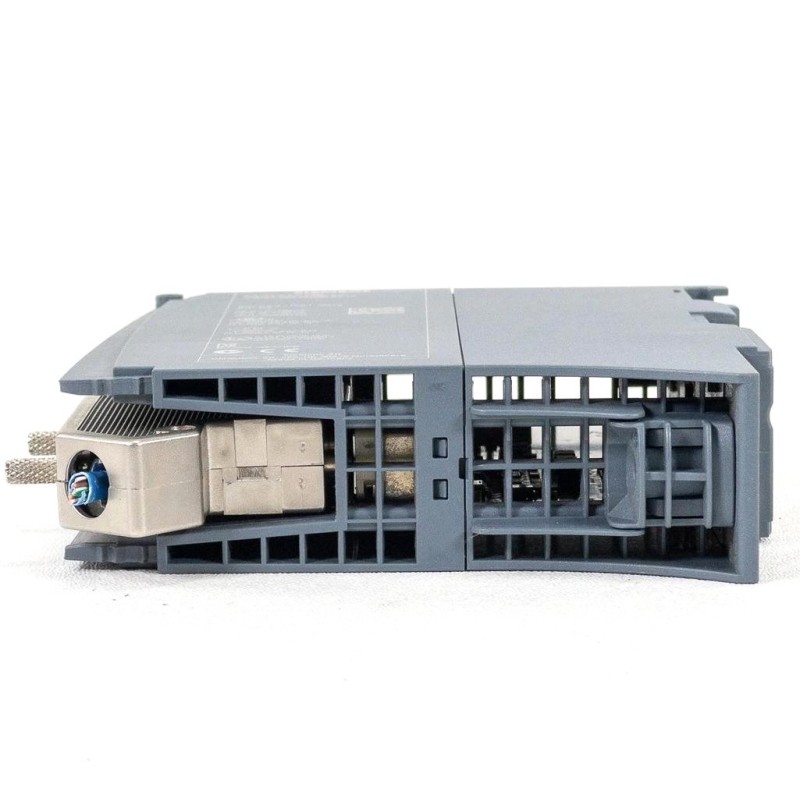
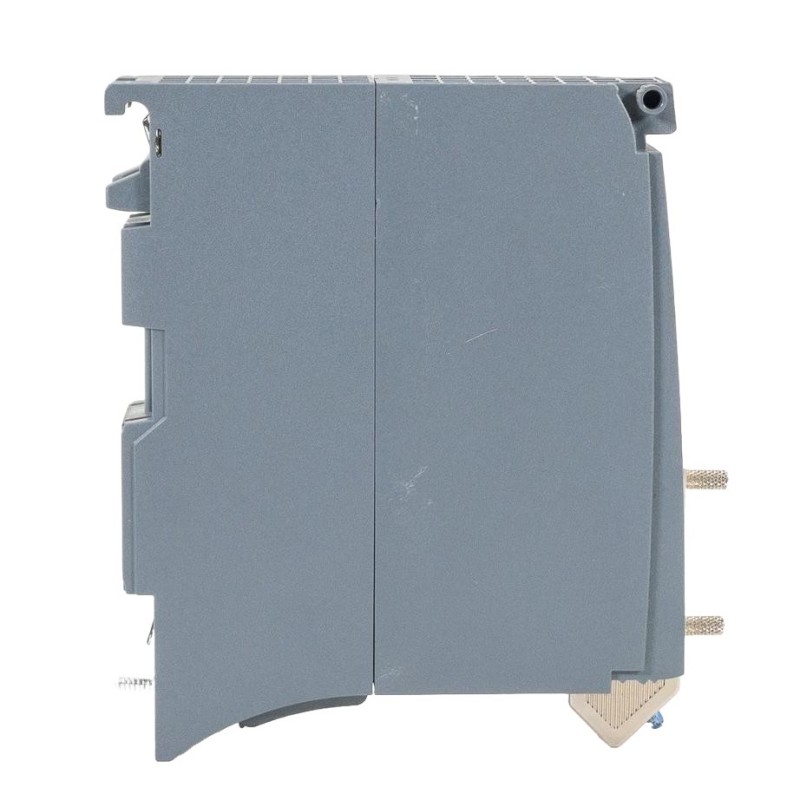
Physically, the module measures 35 × 147 × 127 mm and weighs 0.272 kg (0.60 lb). Its compact width helps maintain an efficient cabinet arrangement, particularly when communication, processing, and I/O modules are installed together.
For OEMs, system integrators, and industrial automation professionals, the 6AG1540-1AB00-7AA0 provides a compact and structured approach to communication expansion. Its combination of SIPLUS platform design, modular S7-1500 integration, efficient cabinet utilization, and communication-oriented functionality makes it a useful component for appropriately designed industrial control systems.
Technical Specifications
Parameter
Specification
Brand
Siemens
Model
6AG1540-1AB00-7AA0
Product Family
SIPLUS S7-1500
Product Type
Communication Module
Module Function
Industrial Communication
Application
Industrial Automation
PLC Platform
S7-1500
Product Platform
SIPLUS
Installation
Modular PLC System
Dimensions
35 × 147 × 127 mm
Weight
0.272 kg (0.60 lb)
Recommended Related Models
Model
Product Type
Typical Role
Siemens 6AG1540-1AB00-7AA0
SIPLUS S7-1500 Communication Module
Communication expansion
Siemens 6AG1443-5DX05-4XE0
Communication Processor
Industrial communication
Siemens 6AG1216-4BS00-7AC2
Managed Industrial Ethernet Switch
Industrial network infrastructure
Siemens 6AG1511-1AK02-2AB0
SIPLUS S7-1500 CPU Module
Central PLC processing
Siemens 6AG1215-1HG40-4XB0
CPU / DC/DC / Relay
Compact PLC control
Siemens 6AG1215-1HG40-5XB0
CPU / DC/DC / Relay
Compact PLC control
Popular Related Models
Model
Product Type
Siemens 6AG1540-1AB00-7AA0
SIPLUS S7-1500 Communication Module
Siemens 6AG1443-5DX05-4XE0
Communication Processor
Siemens 6AG1511-1AK02-2AB0
SIPLUS S7-1500 CPU Module
Siemens 6AG1216-4BS00-7AC2
Managed Industrial Ethernet Switch
Siemens 6AG1215-1HG40-4XB0
CPU / DC/DC / Relay
Siemens 6AG1215-1HG40-5XB0
CPU / DC/DC / Relay
Siemens 6AG1521-1BH10-0AA0
Digital Input Module
Siemens 6AG1522-5EH00-7AB0
Digital Output Module
Siemens 6AG1532-5HF00-7AB0
Analog Output Module
Applications
The 6AG1540-1AB00-7AA0 can be considered for compatible Siemens automation systems where additional communication capability is required.
PLC communication – Extends communication resources within compatible automation architectures.
Industrial networking – Supports communication between appropriate automation components.
Distributed automation – Helps connect control-system elements across a structured industrial architecture.
Machine-to-machine communication – Supports data exchange between compatible control systems.
Production lines – Can contribute to coordinated communication across interconnected machinery.
OEM machinery – Provides additional communication functionality for complex machine designs.
System integration – Helps integrators build communication structures around modular PLC systems.
Industrial modernization – Can be considered when existing automation systems require expanded communication capabilities.
Supervisory connectivity – Supports communication architectures linking control-level equipment with higher-level systems where compatible.
Communication Capability for a More Connected Control Architecture
Modular communication expansion The module provides an additional hardware option for communication-oriented automation architectures, helping engineers expand connectivity without rebuilding the complete PLC system.
S7-1500 integration Its modular format is aligned with the S7-1500 system concept, allowing communication functions to be incorporated into appropriately designed control architectures.
SIPLUS platform The SIPLUS family is intended for applications where environmental conditions are an important consideration during equipment selection. Actual installation requirements should be checked against the applicable specifications.
Structured system connectivity A dedicated communication module can help organize communication responsibilities within a larger automation system, particularly where several control and data-exchange functions are involved.
Efficient cabinet utilization At 35 mm wide, the module provides a compact approach to communication expansion and helps preserve valuable control-panel space.
Scalable automation design Modular communication hardware allows engineers to develop systems incrementally, adding appropriate connectivity as machine or plant requirements become more demanding.
Simplified system architecture Separating communication functions from core control tasks can help create a cleaner hardware arrangement and make maintenance activities more systematic.
OEM engineering value For machine builders and integrators, modular communication hardware can support repeatable control-panel designs and provide greater flexibility when adapting a machine to different system configurations.
Technical FAQs
1. What is the Siemens 6AG1540-1AB00-7AA0? It is a SIPLUS S7-1500 Communication Module intended to provide communication-related functionality within a compatible Siemens industrial automation architecture.
2. Why is a communication module important in a PLC system? It enables appropriate automation components to exchange control and diagnostic information, allowing separate parts of an industrial system to operate as a coordinated architecture.
3. What types of equipment may communicate through an industrial automation network? Depending on the supported communication architecture, equipment may include PLCs, distributed I/O, drives, HMIs, controllers, engineering stations, and higher-level systems.
4. Why is protocol compatibility important? The communicating devices must support compatible communication methods, configuration requirements, and data structures. A protocol mismatch can prevent reliable data exchange.
5. What should be checked when communication is unavailable? Check module status, configuration, network connections, addressing, communication parameters, connected-device status, and diagnostic information.
6. What can cause intermittent communication faults? Potential causes include unstable network connections, incorrect configuration, electrical interference, faulty cables or connectors, power problems, addressing conflicts, or problems in another network component.
7. Can network wiring affect communication reliability? Yes. Cable quality, connector condition, routing, grounding, shielding where applicable, and separation from high-power circuits can all influence industrial communication performance.
8. How can an engineer determine whether a communication problem originates from the module or the network? Review the module's diagnostic status, verify the physical connection, test communication with the relevant device, and inspect the configuration of the connected network components.
9. Why should communication parameters be documented during commissioning? Clear documentation makes troubleshooting, system expansion, replacement, and future maintenance significantly easier, especially in complex multi-device automation networks.
10. What should be verified before commissioning a communication module? Confirm hardware compatibility, module configuration, communication parameters, network connections, device addressing where applicable, diagnostics, and successful data exchange with the intended communication partners.