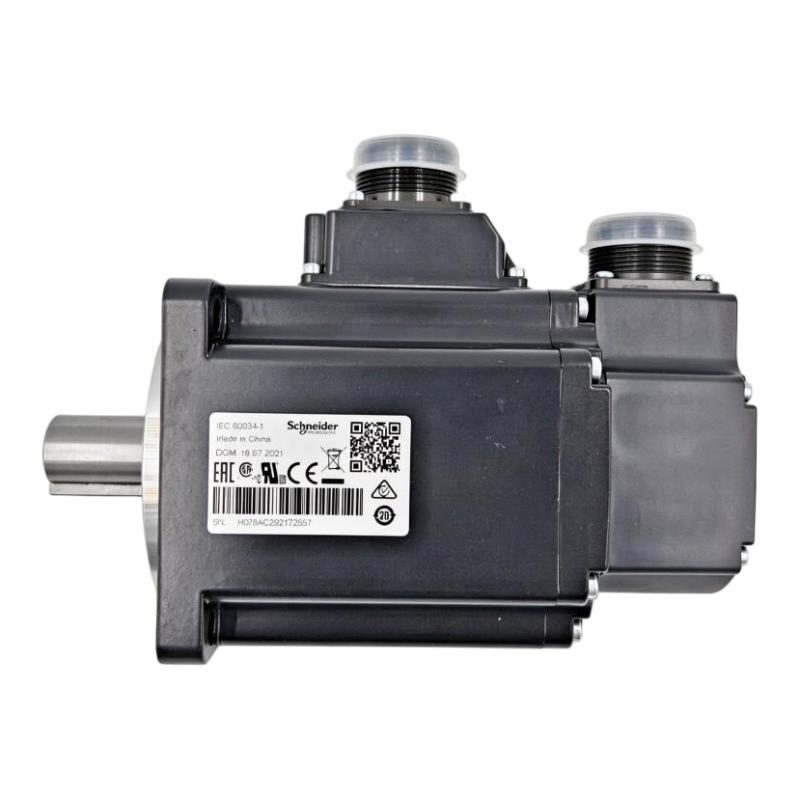
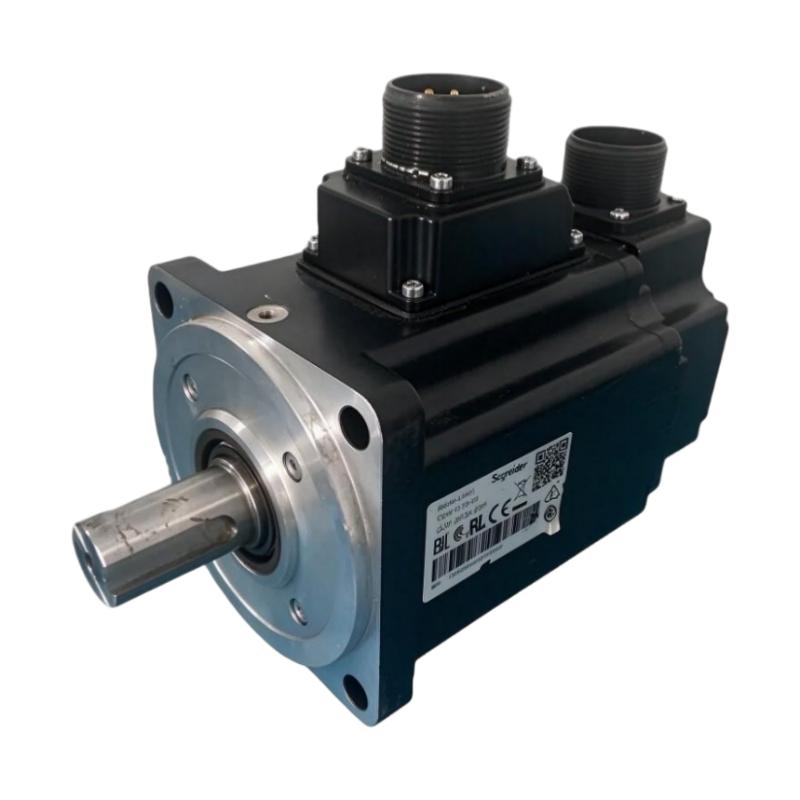
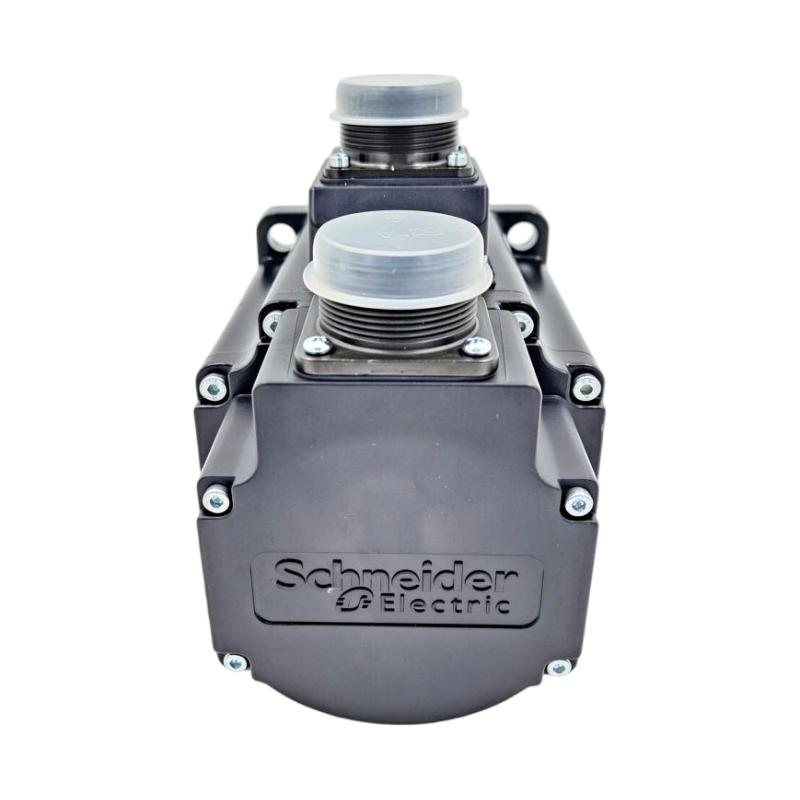
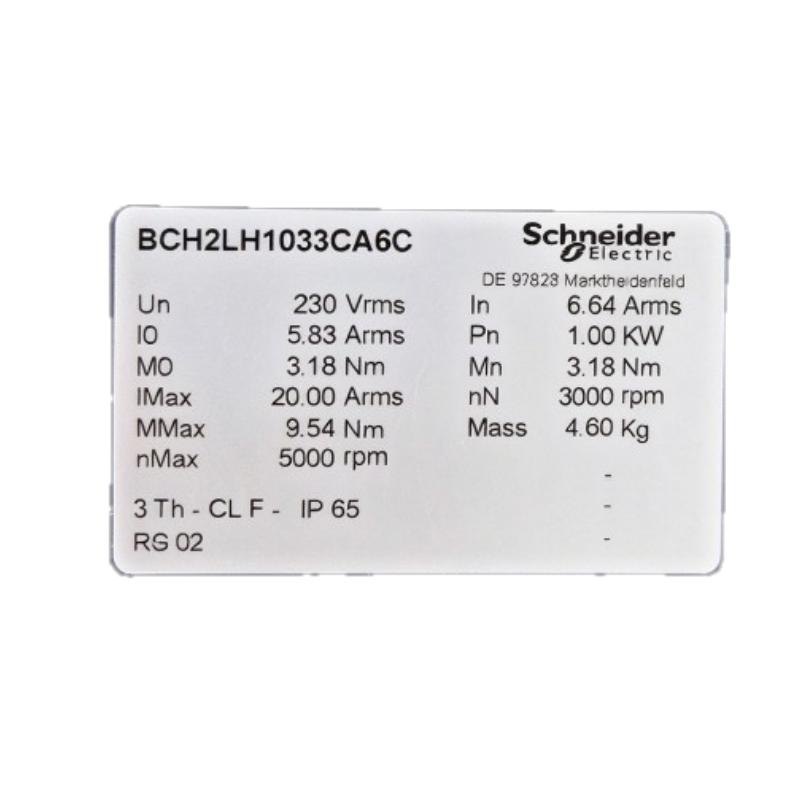
Brand:Schneider PLC Item No.:BCH2LH1033CA6C Product Origin:France Product Dimensions:Flange Size: 70 mm Product Weight:4.6 kg Payment:T/T, Western Union, Credit Card Goods_stock:15 Shipping Port:Xiamen, China Lead Time:1-3 Days Condition:Brand New And Original Warranty:1 Year Certificate:COO
The Schneider BCH2LH1033CA6C Servo Motor is intended for industrial motion-control applications where controlled rotary movement and dependable integration with automation equipment are important. The BCH2 family serves applications ranging from automated machinery to production systems that require coordinated motion and repeatable operating cycles.
With a specified 70 mm flange size and a supplied weight of 4.60 kg, this model can be evaluated for machinery designed around its mechanical installation requirements. Its actual suitability depends on the required torque, operating speed, electrical ratings, and compatibility with the selected servo drive.
For machine builders, system integrators, and maintenance teams, accurate catalog identification is an important step when sourcing servo motors. Checking the full model designation helps avoid mismatches involving connectors, feedback interfaces, mounting arrangements, and control-system requirements.
Before installation, verify the motor's complete technical specifications and compare them with the application's load profile. Correct sizing and drive configuration can help improve motion consistency, simplify commissioning, and support dependable machine operation.
Technical Specifications
Parameter
Specification
Brand
Schneider Electric
Model
BCH2LH1033CA6C
Product Family
BCH2
Product Type
Servo Motor
Flange Size
70 mm
Dimensions
Flange size: 70 mm; overall dimensions require confirmation against the applicable mechanical drawing
Weight
4.60 kg (10.14 lb)
Installation Considerations: Flange size does not represent the motor's complete external dimensions. Confirm the shaft geometry, mounting-hole pattern, connector arrangement, rated torque, operating speed, electrical characteristics, and feedback requirements before selecting a drive or installing the motor.
Recommended Related Models
The following models are presented as candidates for comparison within Schneider Electric's BCH2 servo motor family. Their exact configurations and compatibility should be verified before procurement.
Model
Product Type
Selection Consideration
BCH2LH1033CA5C
Servo Motor
Compare connector and configuration details against the original motor
BCH2LH1033CA6C
Servo Motor
Reference model for matching the required catalog configuration
BCH2LH1033CA6A
Servo Motor
Verify feedback and electrical specifications before considering substitution
BCH2LF1033CA6C
Servo Motor
Compare mechanical and performance specifications for application suitability
Popular Related Models
These BCH2-family models provide additional options to evaluate when planning a replacement, machine upgrade, or new motion-control installation.
Model
Product Type
Potential Application
BCH2LH1033CA6C
Servo Motor
Reference configuration for replacement evaluation
BCH2LH0733CA6C
Servo Motor
Alternative motor configuration requiring torque and mounting verification
BCH2LH1233CA6C
Servo Motor
Comparison candidate for different motion requirements
BCH2LF1033CA6C
Servo Motor
Alternative BCH2 configuration for compatibility assessment
Model Selection Reminder: Related catalog numbers are not guaranteed direct replacements. Confirm rated torque, rated speed, electrical requirements, feedback compatibility, connector details, shaft dimensions, and mounting specifications before ordering.
Applications
The Schneider BCH2LH1033CA6C Servo Motor is designed for industrial automation systems that require controlled rotary motion, responsive positioning, and dependable operation. As part of Schneider Electric's BCH2 servo motor family, it is intended for integration with compatible servo drives in machinery where coordinated movement and repeatable performance are important.
Automated Assembly Equipment: Supports precise movement in production systems requiring repeatable positioning.
Packaging Machinery: Provides controlled rotary motion for feeding, indexing, and product handling operations.
Material Handling Systems: Can drive positioning mechanisms and transfer equipment when matched to the application's torque requirements.
CNC and Industrial Machinery: Supports servo-controlled axes requiring coordinated movement and accurate feedback.
Textile and Printing Equipment: Can be considered for applications involving synchronized motion and repetitive operating cycles.
OEM Automation Projects: Offers a servo motor option for machine builders designing compact motion-control systems around compatible Schneider Electric equipment.
Advantages
Responsive Motion Performance
Servo motor technology enables controlled acceleration and deceleration when paired with a suitable drive. This supports applications involving frequent positioning changes and repetitive motion cycles.
Compact Machine Integration
The 70 mm flange size provides a defined mounting classification for equipment design. This can simplify initial mechanical planning, although the complete mounting pattern and shaft dimensions must be verified before installation.
Closed-Loop Motion Control
When connected to a compatible servo drive and feedback system, the motor supports controlled movement based on commanded position or speed. Correct drive configuration is essential to achieve the intended motion performance.
Flexible Automation Applications
The BCH2 platform is designed for industrial automation equipment. Its suitability for a particular application depends on the motor's rated torque, speed, electrical characteristics, and feedback configuration.
Practical Replacement Potential
Using the complete BCH2LH1033CA6C catalog number helps distinguish this motor from other BCH2 variants that may differ in electrical specifications, shaft arrangements, or feedback options.
Reliable System Integration
Correct motor sizing, mechanical alignment, suitable cabling, and compatible drive selection help support stable operation and reduce avoidable commissioning problems.
Technical FAQs
1. What type of motor is the BCH2LH1033CA6C?
It is a Schneider Electric BCH2-series servo motor intended for integration into compatible industrial motion-control systems. The exact electrical and mechanical configuration should be confirmed using the complete catalog number.
2. Does this motor require a servo drive?
Yes. A compatible servo drive is required to control motor operation according to the intended motion profile. Direct connection to a standard AC supply is not an appropriate substitute for the required servo control arrangement.
3. How is a servo motor different from a standard induction motor?
A servo motor is designed to operate within a control system that regulates motion using feedback. This supports more precise positioning and dynamic response than a conventional motor installation without equivalent closed-loop control.
4. How should the servo drive be selected?
The drive must match the motor's rated voltage, current, power, feedback interface, and operating requirements. The controller and drive must also support the required motion-control functions.
5. Can the BCH2LH1033CA6C be used for precise positioning?
It can be used in positioning applications when paired with a compatible drive and feedback configuration. Actual accuracy depends on the motor, encoder, drive tuning, mechanical transmission, and load characteristics.
6. What factors determine the motor's operating speed?
Operating speed depends on the motor's rated speed, the drive configuration, load torque, acceleration requirements, and permitted operating limits. The exact rated speed should be confirmed from the model's technical specifications.
7. What can cause a servo motor to overheat?
Potential causes include excessive load, incorrect drive settings, frequent high-torque operation, restricted heat dissipation, poor mechanical alignment, and unsuitable motor sizing. The motor and drive should be checked together when diagnosing thermal issues.
8. What should be checked when replacing an existing BCH2 motor?
Verify the full catalog number, rated torque, rated speed, voltage, feedback type, shaft dimensions, flange pattern, connector configuration, and drive compatibility. A similar flange size alone does not guarantee interchangeability.
9. How can positioning errors be reduced?
Check feedback wiring, mechanical backlash, coupling alignment, load inertia, and servo tuning. Confirm that the selected motor and drive can meet the application's acceleration and torque requirements.
10. What maintenance practices support reliable operation?
Inspect connectors, cables, mounting hardware, shaft couplings, and operating conditions at appropriate intervals. Investigate abnormal noise, vibration, overheating, and recurring drive faults according to the machine's maintenance procedures.