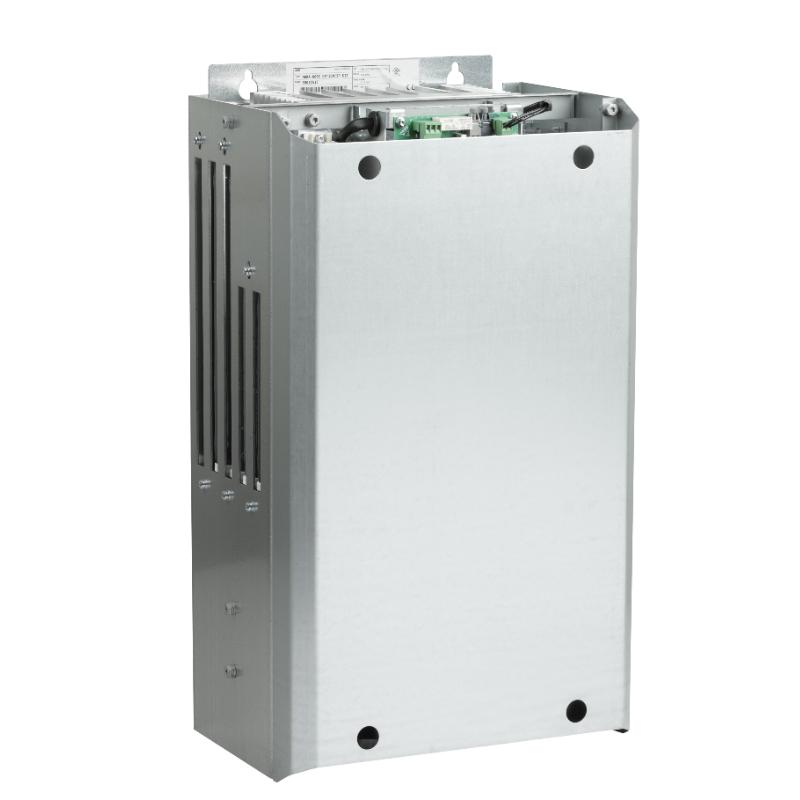
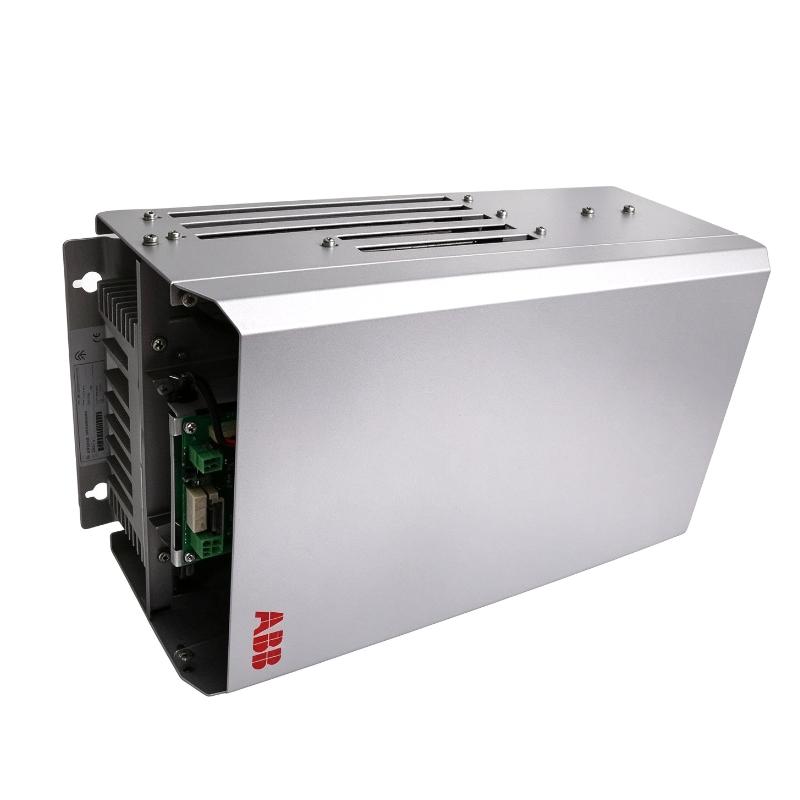
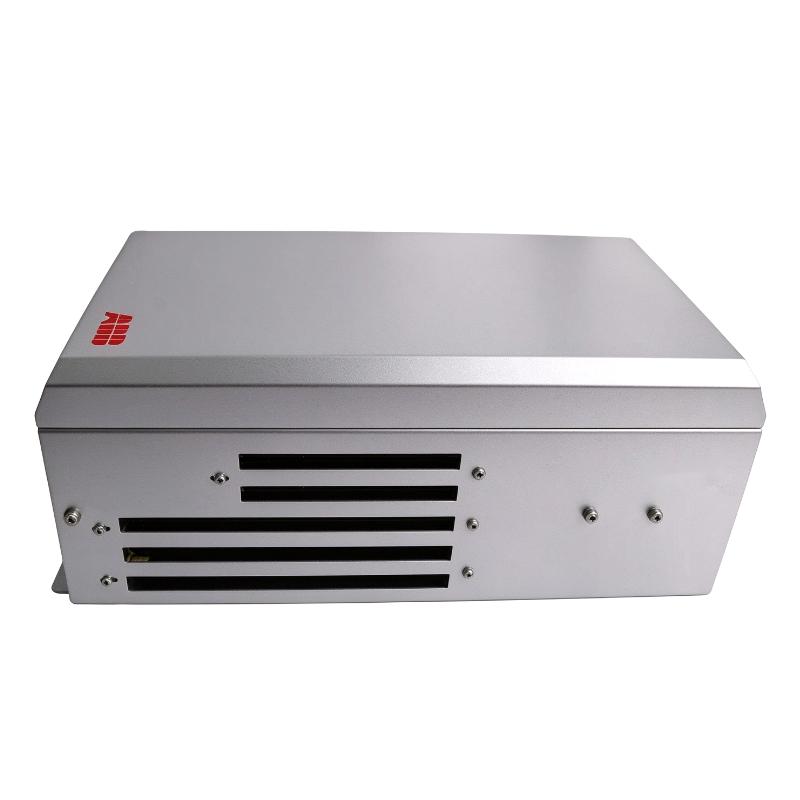
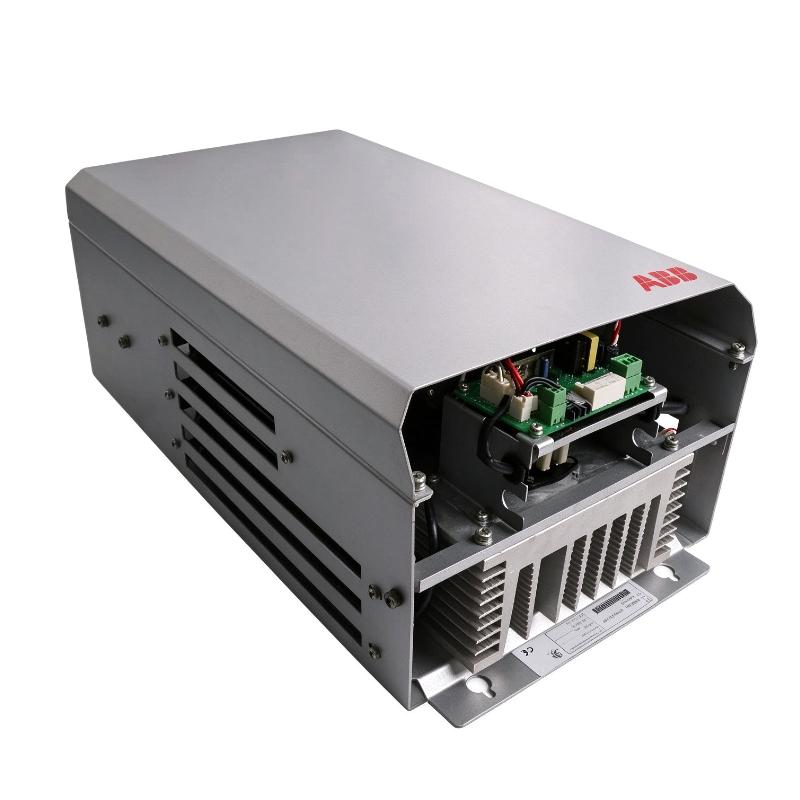
Brand:ABB PLC Item No.:NBRA-669C Product Origin:Sweden (SE) Product Dimensions:583 x 240 x 337 mm Product Weight:27.7 kg Payment:T/T, Western Union, Credit Card Goods_stock:15 Shipping Port:Xiamen, China Lead Time:1-3 Days Condition:Brand New And Original Warranty:1 Year Certificate:COO
The ABB NBRA-669C 3ABD58984124 Braking Chopper is an industrial drive component intended for braking energy management in compatible motor drive systems. It is relevant to applications where motor deceleration generates regenerative energy that must be dissipated to maintain the drive's DC-link voltage within its permissible range.
When a motor slows down, particularly when driving a high-inertia load or an overhauling load, energy can flow back into the drive. Without an appropriate energy-management arrangement, DC-link voltage may rise and trigger an overvoltage fault. A braking chopper addresses this condition by controlling the switching of a compatible external braking resistor.
For industrial facilities, system integrators, and maintenance teams, the correct braking configuration is important to achieve the intended deceleration performance and protect drive equipment. The chopper must be matched to the drive and braking resistor according to electrical ratings, peak power, thermal limits, and operating duty.
When sourcing the NBRA-669C, buyers should verify the complete ordering code and the compatibility of the existing installation. Correct component selection helps reduce replacement risks, supports commissioning, and contributes to dependable operation in demanding industrial environments.
Technical Specifications
Parameter
Specification
Brand
ABB
Model
NBRA-669C
Ordering Code
3ABD58984124
Product Type
Braking Chopper
Product Category
Variable Frequency Drive Braking Component
Primary Function
Controls switching of braking energy to a compatible resistor
Typical Application
Drive systems requiring external dynamic braking
Braking Resistor
External compatible resistor arrangement, subject to system design
Drive Compatibility
Must be verified for the exact drive model and electrical ratings
Cooling Requirements
According to the installation and product specifications
Dimensions
583 × 240 × 337 mm
Weight
27.70 kg / 61.07 lb
Electrical ratings, DC-link voltage range, peak braking current, supported resistor values, and permissible braking duty have not been established from the supplied product details. Confirm these parameters against the exact device documentation before purchase or installation.
Recommended Related Models
The following ABB drive components and product families may be relevant when designing or maintaining a braking system. They are related equipment options, not confirmed direct substitutes for the NBRA-669C.
Model
Product Type
Application
ABB NBRA-669C
Braking Chopper
Braking energy switching
ABB ACS800
Industrial Drive Family
Variable speed motor control
ABB ACS880
Industrial Drive Family
Advanced motor control and drive applications
ABB ACS550
General-Purpose Drive Family
Industrial motor speed control
ABB ACS580
General-Purpose Drive Family
Pump, fan, and general industrial applications
ABB NBRK Braking Resistor Series
Braking Resistors
Dissipation of braking energy, subject to compatibility
Popular Related Models
For industrial drive maintenance and braking-system procurement, the following ABB product families may also be worth evaluating.
Model
Product Name
Primary Function
ABB ACS800-01
Wall-Mounted Drive
Industrial motor speed control
ABB ACS800-04
Drive Module
Cabinet-integrated motor control
ABB ACS880-01
Wall-Mounted Drive
General industrial drive applications
ABB ACS880-04
Drive Module
System-integrated drive applications
ABB ACS580-01
Wall-Mounted Drive
General-purpose motor control
ABB ACS550-01
Wall-Mounted Drive
Industrial speed control
When selecting the ABB NBRA-669C 3ABD58984124 Braking Chopper, confirm the installed drive model, braking resistor requirements, and intended operating duty. Matching these components correctly is essential for effective braking performance, reliable operation, and safe commissioning.
Applications
The ABB NBRA-669C Braking Chopper is an industrial drive component associated with braking energy management in variable frequency drive systems. During deceleration, an electric motor operating as a generator can return energy to the drive's DC link, causing the DC-link voltage to rise. A compatible braking chopper controls the switching of an external braking resistor to dissipate this excess energy as heat.
Industrial Motor Drives: Supports braking arrangements for compatible drive systems requiring controlled energy dissipation during deceleration.
Centrifugal Machinery: Can be considered for applications where rapid changes in motor speed require effective management of regenerative energy.
Conveyor Systems: Supports braking configurations for material handling equipment subject to frequent stopping and deceleration.
Hoisting and Lifting Equipment: May be used in suitable drive architectures where braking energy management is required, subject to the complete system's safety and load requirements.
Production Machinery: Helps manage DC-link voltage during demanding braking cycles when paired with a correctly rated braking resistor.
Drive System Maintenance: Provides a model-specific sourcing option for compatible installations requiring replacement braking equipment.
The correct application depends on drive compatibility, braking duty, resistor selection, electrical ratings, and thermal conditions. A braking chopper should always be selected as part of the complete drive and braking system.
Advantages
Effective Braking Energy Management
A braking chopper switches a compatible braking resistor into the DC-link circuit when the voltage reaches the applicable switching threshold. This helps dissipate excess energy generated during deceleration.
Support for Dynamic Braking
In applications requiring frequent speed changes, a correctly engineered braking arrangement can help the drive achieve its intended deceleration performance without relying solely on natural motor coast-down.
Improved DC-Link Voltage Control
By directing excess braking energy to a resistor, the chopper helps prevent DC-link voltage from rising beyond the drive's permissible operating limits, provided the braking system is correctly sized.
Flexible System Design
Braking performance can be tailored through appropriate selection of the braking chopper, resistor, drive configuration, and required duty cycle.
Practical Replacement for Industrial Installations
For maintenance engineers and industrial spare-parts buyers, identifying the correct NBRA-669C variant helps simplify replacement planning and supports compatibility checks before commissioning.
Suitable for Demanding Drive Applications
When correctly matched to the application, the braking system can support controlled deceleration in machinery with substantial inertia or frequent braking demands.
Technical FAQs
Q1: What is the main function of the ABB NBRA-669C Braking Chopper?
A braking chopper controls the connection of a braking resistor to the drive's DC link. When excess energy raises the DC-link voltage during deceleration, the chopper switches the resistor into the circuit to dissipate energy as heat.
Q2: Does the NBRA-669C require an external braking resistor?
A braking chopper normally operates with a compatible braking resistor. The resistor must meet the drive system's resistance, power dissipation, pulse-energy, and duty-cycle requirements. Verify the specified arrangement for the exact NBRA-669C configuration.
Q3: What causes a drive to need a braking chopper?
During deceleration, the motor can return kinetic or load-related energy to the drive's DC link. If the DC-link voltage rises beyond the permissible range, a braking chopper and resistor can dissipate the excess energy.
Q4: Is a braking chopper the same as a braking resistor?
No. The braking chopper is the switching device that controls the energy path. The braking resistor converts electrical energy into heat. Both components must be appropriately matched when an external resistor-based braking system is used.
Q5: How is the braking resistor selected?
Selection requires the drive's DC-link and braking specifications, minimum permitted resistance, peak braking power, average power, pulse energy, braking frequency, and thermal limits. The resistor must not be selected on resistance alone.
Q6: What can cause a DC overvoltage fault during deceleration?
Possible causes include an undersized or disconnected braking resistor, an incompatible chopper, excessive deceleration demands, high load inertia, incorrect parameter settings, or a faulty braking circuit. Diagnosis should follow the drive manufacturer's troubleshooting procedures.
Q7: Can the NBRA-669C be used with any ABB drive?
No. Compatibility depends on the drive family, DC-link voltage, braking circuit design, electrical ratings, and supported braking options. Confirm the complete product code and the applicable drive documentation before installation.
Q8: Does a braking chopper reduce the motor's braking time?
It can enable more aggressive deceleration by dissipating regenerated energy, provided the motor, drive, chopper, and resistor are rated for the required braking duty. It does not independently guarantee a specific stopping time.
Q9: What maintenance checks are important for a braking chopper system?
Inspect connections, cooling conditions, resistor condition, signs of overheating, and fault history according to the approved maintenance procedure. Electrical testing must be carried out by qualified personnel after following the required isolation and DC-link discharge procedures.
Q10: What should be checked before replacing an NBRA-669C?
Verify the complete ordering code, drive compatibility, electrical ratings, resistor specifications, mounting and connection arrangements, and braking duty. After replacement, perform the required functional checks before returning the equipment to service.