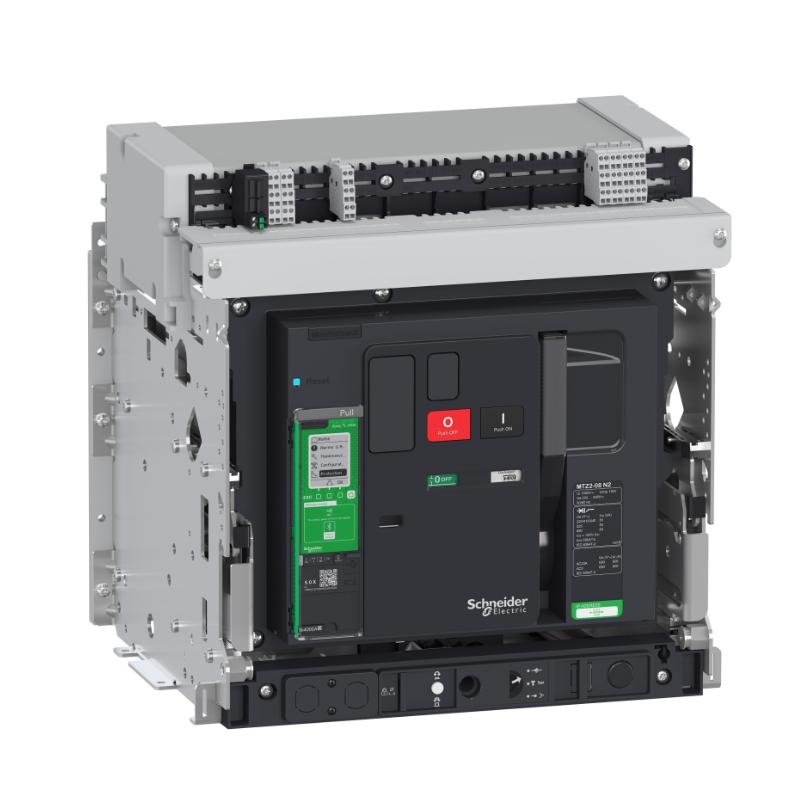
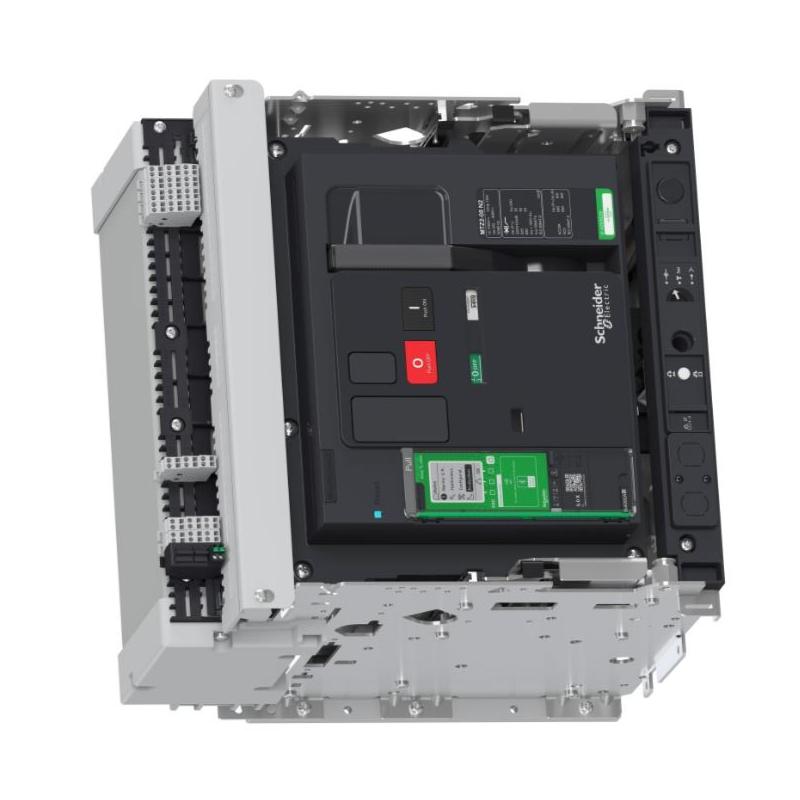
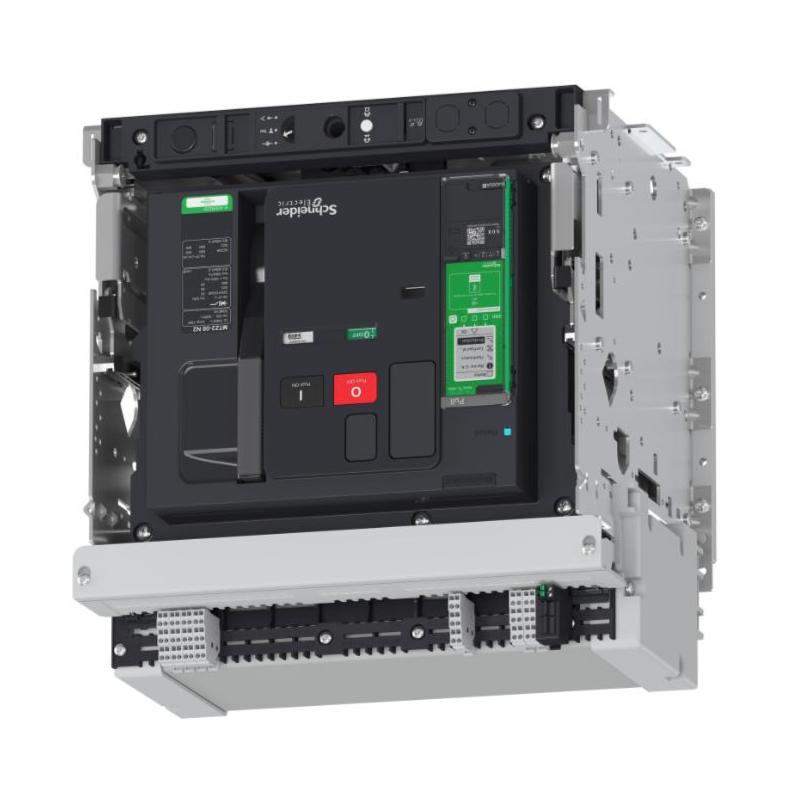
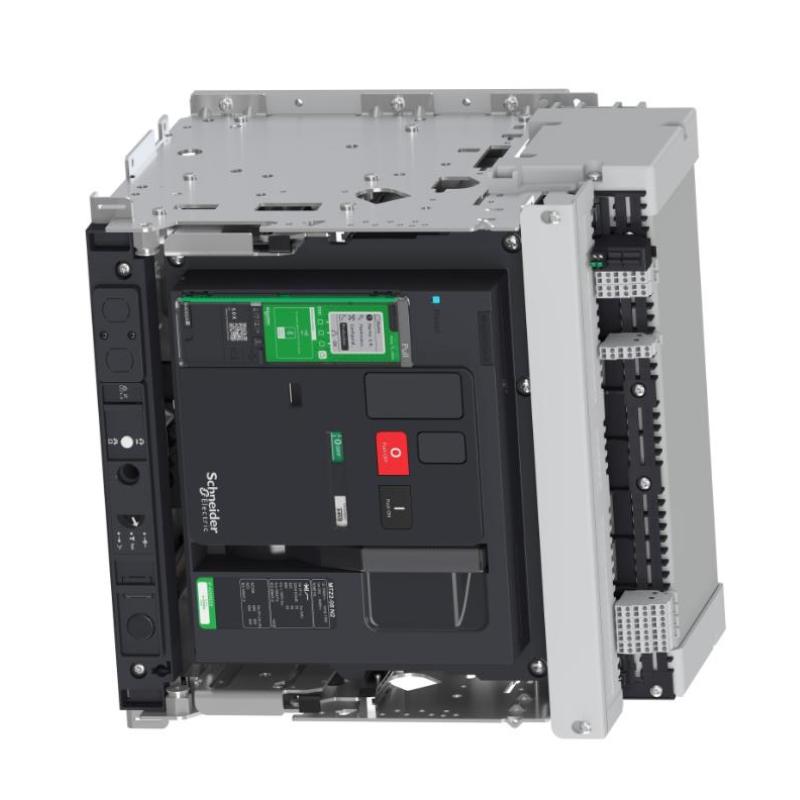
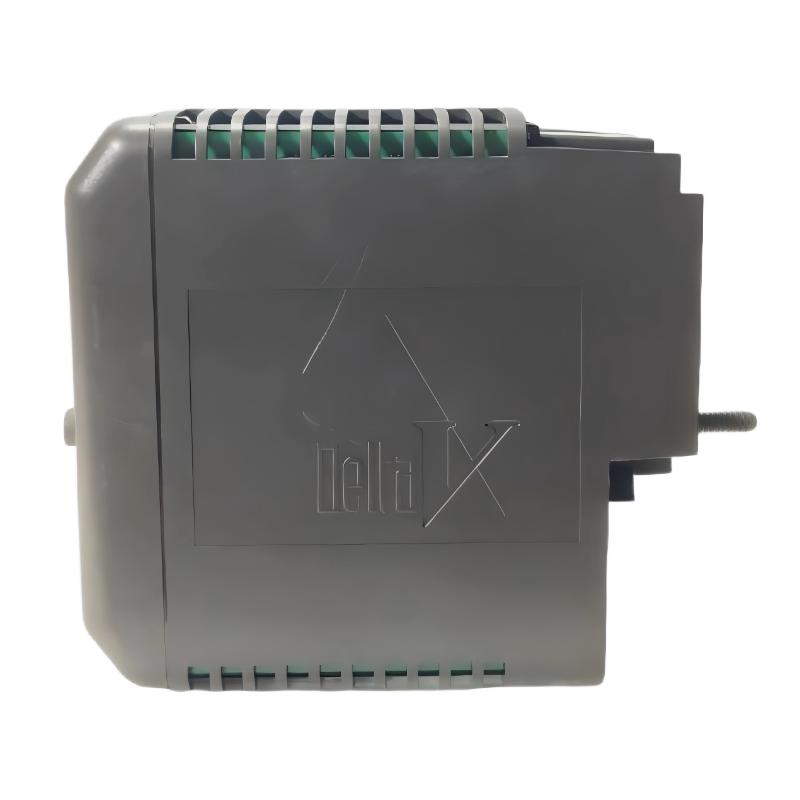
Brand:Schneider PLC Item No.:MT08N2 Product Origin:France Product Dimensions:301 x 196 x 276 mm Product Weight:14 kg Payment:T/T, Western Union, Credit Card Goods_stock:15 Shipping Port:Xiamen, China Lead Time:1-3 Days Condition:Brand New And Original Warranty:1 Year Certificate:COO
Introduction: A Specification-Focused Choice for Industrial Protection
The Schneider MT08N2 Circuit Breaker is a model designation to assess when sourcing electrical protection equipment for industrial installations. For electrical engineers, maintenance teams, and industrial equipment distributors, selecting a suitable breaker requires a clear understanding of the circuit requirements and the configuration of the existing distribution system.
A circuit breaker's performance depends on the relationship between its electrical ratings and the conditions in which it operates. Rated current, operating voltage, fault-interruption capability, and coordination with other protective devices all influence the suitability of the selected component.
In replacement projects, checking the existing breaker's nameplate and complete catalog number helps reduce the risk of purchasing an incompatible unit. In new installations, engineers should evaluate the device against the electrical design and applicable installation standards.
For procurement teams, confirming product identity, condition, available documentation, and required accessories before ordering helps improve purchasing accuracy. A structured technical review also supports smoother installation and more effective maintenance planning.
The MT08N2 should therefore be selected only after its specifications have been matched to the intended application.
Technical Specifications
The following table summarizes the information provided for the Schneider MT08N2 Circuit Breaker. Electrical characteristics not supplied with the product data are listed for verification.
Parameter
Specification
Brand
Schneider Electric
Model
MT08N2
Product Type
Circuit Breaker
Application
Industrial Electrical Distribution
Dimensions (W × H × D)
301 × 196 × 276 mm
Weight
14 kg (30.86 lb)
Rated Current
Verify against the product nameplate
Rated Operational Voltage
Verify against the product nameplate
Number of Poles
Confirm the exact configuration
Short-Circuit Breaking Capacity
Confirm from applicable technical documentation
Trip-Unit Configuration
Verify the installed unit
Mounting Arrangement
Confirm before installation
Product Condition
Confirm with the supplier
Technical note: The dimensions and weight are based on the supplied information. Confirm the manufacturer's specifications and exact product configuration before installation or replacement.
Recommended Related Models
The following Schneider Electric model designations may be useful when evaluating related circuit breakers for industrial power distribution. They are comparison candidates rather than confirmed direct replacements for the MT08N2.
Model
Product Type
Evaluation Focus
Schneider MT06N1
Circuit Breaker
Electrical ratings and installation compatibility
Schneider MT08N1
Circuit Breaker
Configuration and replacement compatibility
Schneider MT10N1
Circuit Breaker
Protection requirements for the target circuit
Schneider MT12N1
Circuit Breaker
Trip-unit and mounting characteristics
Schneider MT16N1
Circuit Breaker
Alternative rating configuration for evaluation
Before choosing an alternative, verify the complete model number, rated current, operating voltage, breaking capacity, pole arrangement, trip unit, and switchgear interface.
Popular Related Models
For broader product comparisons and industrial spare-parts sourcing, the following model designations may be relevant to Schneider Electric MT-series circuit breaker research.
Model
Product Family
Procurement Consideration
Schneider MT06N1
MT Series
Verify electrical and mechanical compatibility
Schneider MT08N1
MT Series
Confirm the full configuration
Schneider MT10N1
MT Series
Review application and protection requirements
Schneider MT12N1
MT Series
Check trip-unit and connection details
Schneider MT16N1
MT Series
Confirm ratings and mounting compatibility
For dependable procurement, provide the complete model designation and clear nameplate information when requesting a quotation. Verify the product's identity, condition, electrical characteristics, and accessory configuration before purchase. This approach helps reduce ordering errors and supports more reliable industrial equipment maintenance.
Applications
Reliable circuit protection is a fundamental requirement in industrial electrical distribution. The Schneider MT08N2 Circuit Breaker is a product designation for technical evaluation and procurement in industrial power systems. Before selecting this model for a particular installation, engineers should verify its complete catalog number, electrical ratings, and compatibility with the intended switchgear assembly.
Potential application areas for a suitably specified circuit breaker include:
Industrial Power Distribution: Integration into compatible distribution assemblies to support circuit protection and controlled power delivery.
Manufacturing Facilities: Use in electrical systems supplying production equipment, plant utilities, and auxiliary loads, subject to the verified ratings.
Switchgear Systems: Evaluation for installations where the mechanical interface, electrical characteristics, and accessory requirements match.
Electrical Infrastructure Upgrades: Consideration during distribution equipment refurbishment or replacement projects.
Maintenance and Spare-Parts Procurement: Identification of replacement equipment for existing installations after confirming the full model designation.
Industrial Engineering Projects: Inclusion in protection designs that require coordinated operation with other circuit breakers and protective devices.
For all these applications, selection must be based on verified technical information. Rated current, operational voltage, breaking capacity, pole arrangement, and trip-unit characteristics should be confirmed before installation.
Advantages and Engineering Value
1. Supports a Reliable Protection Strategy
A correctly selected circuit breaker helps interrupt current under specified overload or short-circuit conditions. The actual protection performance depends on the device's design and verified electrical ratings.
Matching the breaker to the existing switchgear requires attention to mounting arrangements, terminal connections, frame compatibility, and accessory configurations. Verifying these details in advance can reduce installation complications.
3. Helps Simplify Replacement Procurement
Accurate identification of the installed device gives procurement teams a stronger basis for comparing replacement candidates and checking technical compatibility before ordering.
4. Supports Coordinated Electrical Protection
Appropriate coordination between upstream and downstream protective devices helps establish a consistent response to electrical faults and supports the wider protection strategy of an industrial facility.
5. Improves Spare-Parts Planning
Recording model numbers, protection settings, and installation details helps maintenance teams organize inventory and prepare for planned replacement activities.
6. Encourages More Efficient Project Preparation
Confirming product specifications before purchase helps engineers identify potential differences in ratings, connections, or mounting requirements before equipment arrives on site.
7. Suitable for Professional Industrial Sourcing
For equipment distributors and maintenance contractors, a clear verification process helps establish product identity, condition, and suitability for the intended application.
Technical FAQs
Q1. What does the Schneider MT08N2 Circuit Breaker do?
Its exact protection functions should be verified using the applicable product documentation. In general, a circuit breaker interrupts an electrical circuit under specified abnormal current conditions.
Q2. How can I verify the rated current?
Check the nameplate and technical documentation for the exact device configuration. The rated current should not be inferred from the MT08N2 designation alone.
Q3. Why must the breaking capacity match the installation?
The breaker must be capable of interrupting the prospective short-circuit current at the installation point under its specified operating conditions. An unsuitable breaking capacity can compromise electrical safety.
Q4. What information is required to confirm voltage compatibility?
Verify the rated operational voltage, applicable insulation ratings, system frequency, pole arrangement, and intended circuit configuration against the installation requirements.
Q5. Can this breaker be used in a motor-control circuit?
Suitability depends on the verified breaker characteristics and the motor protection design. Starting current, overload protection, short-circuit protection, and coordination with contactors or overload relays must be considered.
Q6. What determines compatibility with an existing switchgear assembly?
Important factors include the complete catalog number, frame configuration, electrical ratings, mounting arrangement, terminal connections, trip unit, and required accessories.
Q7. What should I do if the breaker trips repeatedly?
Investigate possible overloads, short circuits, ground faults, incorrect settings, and faults in connected equipment. Do not repeatedly reset the breaker without identifying the cause.
Q8. How are protection settings selected?
Settings should be based on the electrical system design, conductor ratings, load characteristics, prospective fault current, and coordination requirements. Adjustments should be performed by qualified personnel.
Q9. What maintenance checks are appropriate?
Follow the manufacturer's instructions and the facility's electrical safety procedures. Depending on the design, inspections may include mechanical operation, connection condition, insulation integrity, and signs of overheating or damage.
Q10. Can the MT08N2 replace an MT08N1 breaker?
Do not assume direct interchangeability based on the similar model numbers. Confirm the complete catalog designations, electrical ratings, mounting interfaces, pole configuration, trip-unit characteristics, and accessory requirements before substitution.