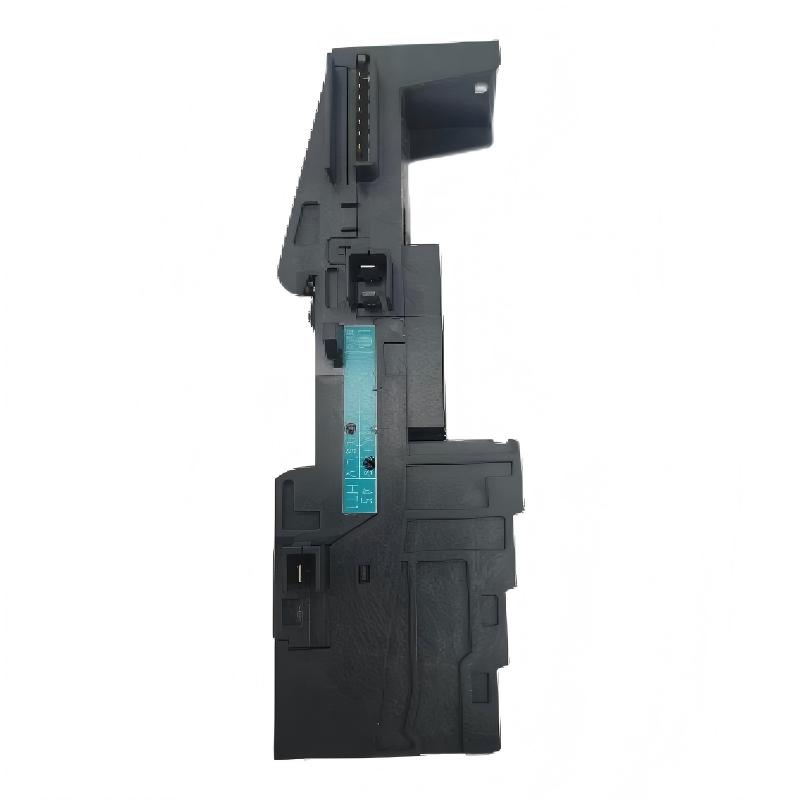
Brand:Siemens Item No.:6AG1315-2FJ14-2AB0 Product Origin:Germany Product Dimensions:40 × 125 × 130 mm Product Weight:0.399 kg Payment:T/T, Western Union, Credit Card Goods_stock:15 Shipping Port:Xiamen, China Lead Time:1-3 Days Condition:Brand New And Original Warranty:1 Year Certificate:COO
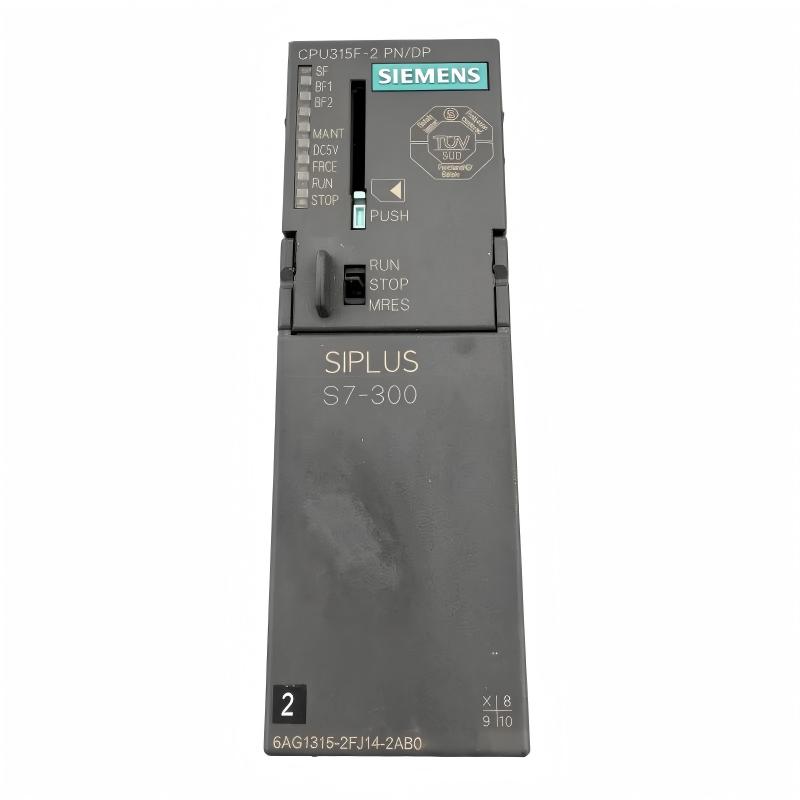
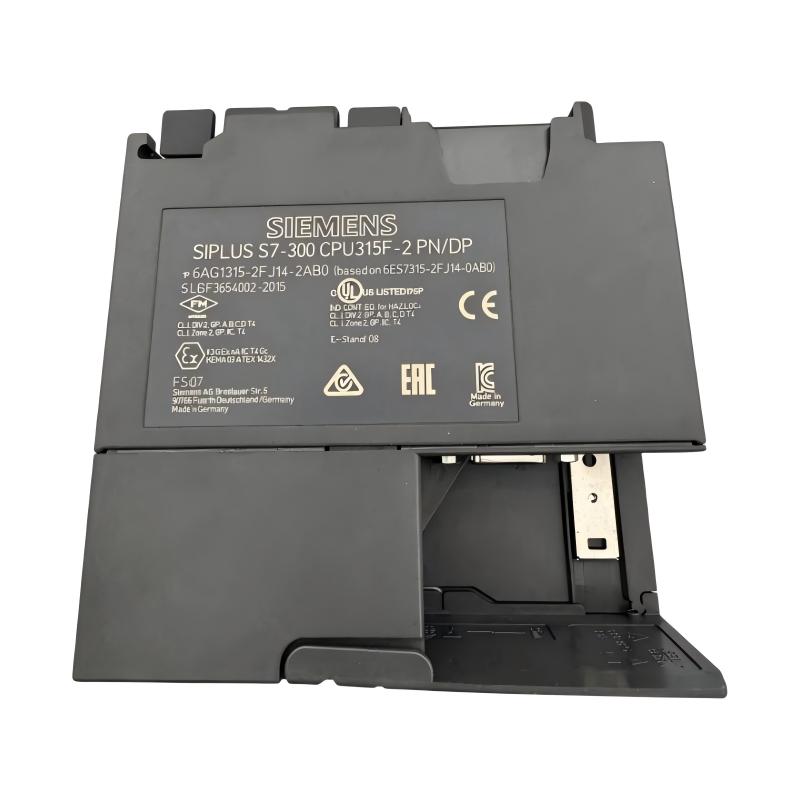
The Siemens 6AG1315-2FJ14-2AB0 SIPLUS S7-300 CPU 315F-2PN/DP is a fail-safe programmable logic controller designed for industrial applications that require reliable control and safety-oriented automation. Based on the 6ES7315-2FJ14-0AB0 platform, it combines standard PLC processing with integrated safety functionality and supports communication through MPI/PROFIBUS DP and PROFINET.
The CPU provides 512 KB of work memory and features a two-port PROFINET switch for Ethernet-based automation networks. Its SIPLUS design includes conformal coating and a specified operating temperature range of -25 to +60°C, making it suitable for selected industrial environments with more demanding operating conditions.
For system integrators and maintenance engineers, this module offers a practical option for compatible S7-300 control systems that need fail-safe processing, distributed device communication, and established Siemens engineering tools. A Micro Memory Card is required, and safety applications must be engineered and validated according to the applicable system requirements.
Technical Specifications
Parameter
Specification
Manufacturer
Siemens
Model
6AG1315-2FJ14-2AB0
Product Family
SIPLUS S7-300
CPU Type
CPU 315F-2PN/DP
Product Type
Fail-Safe CPU Module
Base Model
6ES7315-2FJ14-0AB0
Work Memory
512 KB
First Interface
MPI / PROFIBUS DP
PROFIBUS DP Speed
Up to 12 Mbps
Second Interface
Ethernet PROFINET
PROFINET Switch
Integrated 2-port switch
Memory Card
Micro Memory Card required
Engineering Software
STEP 7 V5.5 or higher
Safety Engineering
Distributed Safety V5.4 SP4
Supply Voltage
24 V DC
Permissible Supply Range
20.4–28.8 V DC
Environmental Protection
Conformal coating
Operating Temperature
-25 to +60°C
Dimensions (W × H × D)
40 × 125 × 130 mm
Weight
0.399 kg / 0.88 lb
Recommended Related Models
The following Siemens S7-300 CPUs are worth considering when comparing fail-safe capabilities, communication interfaces, or system configuration requirements.
Model
Product Description
6AG1315-2FJ14-2AY0
SIPLUS S7-300 CPU 315F-2PN/DP (EN50155)
6AG1315-6FF04-2AB0
SIPLUS S7-300 CPU 315F-2DP
6AG1317-2FK14-2AB0
SIPLUS S7-300 CPU 317F-2PN/DP
6ES7315-2FJ14-0AB0
SIMATIC S7-300 CPU 315F-2PN/DP
6ES7317-2FK14-0AB0
SIMATIC S7-300 CPU 317F-2PN/DP
Popular Related Models
For maintenance, expansion, and spare-part planning, the following S7-300 CPU models may also be relevant:
Siemens 6AG1315-2AH14-2AY0 – SIPLUS S7-300 CPU 315-2DP
Siemens 6AG1315-2EH14-2AY0 – SIPLUS S7-300 CPU 315-2PN/DP
Siemens 6AG1317-2EK14-7AB0 – SIPLUS S7-300 CPU 317-2PN/DP
Siemens 6AG1317-2FK14-2AY0 – SIPLUS S7-300 CPU 317F-2PN/DP
Siemens 6ES7315-2AH14-0AB0 – SIMATIC S7-300 CPU 315-2DP
Siemens 6ES7315-2EH14-0AB0 – SIMATIC S7-300 CPU 315-2PN/DP
Siemens 6ES7318-3EL01-0AB0 – SIMATIC S7-300 CPU 319-3 PN/DP
Applications
The Siemens 6AG1315-2FJ14-2AB0 is a SIPLUS S7-300 CPU 315F-2PN/DP designed for industrial automation systems that require both standard PLC control and fail-safe automation capabilities. It combines processing functions with PROFIBUS DP and PROFINET communication, making it suitable for coordinated control architectures involving distributed I/O, drives, and safety-related equipment.
Typical applications include:
Safety-related machine control: Supports fail-safe automation architectures for machinery requiring coordinated standard and safety functions.
Manufacturing production lines: Manages sequential processes, equipment interlocks, and production operations.
Distributed automation systems: Connects remote I/O stations and field devices through PROFIBUS DP and PROFINET.
Industrial material handling: Supports control tasks in conveyor systems, transfer equipment, and automated handling lines.
Process and equipment monitoring: Coordinates PLC logic, communication, and safety-related operating conditions.
Machine modernization: Provides a CPU option for compatible SIMATIC S7-300 installations requiring fail-safe functionality.
Advantages
1. Integrated Fail-Safe Processing
The CPU 315F-2PN/DP supports safety-oriented automation tasks alongside standard control operations. This helps engineers implement coordinated control architectures without treating every safety function as an independent control platform.
2. Dual Communication Capabilities
With an MPI/DP interface and an Ethernet PROFINET interface, the module supports communication with different automation devices and distributed system components.
3. 512 KB Work Memory
Its integrated 512 KB work memory provides resources for PLC program execution and data processing in appropriately configured S7-300 applications.
4. SIPLUS Environmental Protection
The SIPLUS version features conformal coating and an extended specified operating temperature range of -25 to +60°C. These characteristics make it suitable for applications where environmental conditions require additional protection compared with standard configurations.
5. Flexible Distributed I/O Integration
PROFIBUS DP and PROFINET connectivity allow the CPU to work within distributed automation architectures, helping simplify communication between the central controller and field-level devices.
6. Established SIMATIC Engineering Environment
The module is engineered using Siemens STEP 7 software, with Distributed Safety engineering support required for its fail-safe functions. This provides a familiar engineering environment for compatible S7-300 installations.
Technical FAQs
Q1: What is the main function of the Siemens 6AG1315-2FJ14-2AB0?
It is a fail-safe PLC central processing unit designed for SIMATIC S7-300 automation systems. It executes standard control programs and supports safety-related automation functions within a properly configured and validated system.
Q2: What does the F designation mean in CPU 315F-2PN/DP?
The F designation identifies the CPU as a fail-safe model. It indicates support for safety-related automation functions in addition to standard PLC control.
Q3: Which communication interfaces are available on this CPU?
The module provides an MPI/PROFIBUS DP interface supporting up to 12 Mbps and an Ethernet PROFINET interface with an integrated two-port switch.
Q4: Does the 6AG1315-2FJ14-2AB0 support PROFINET communication?
Yes. Its Ethernet PROFINET interface enables communication with compatible controllers, distributed I/O stations, and other PROFINET devices.
Q5: Is a Micro Memory Card required for operation?
Yes. A compatible Siemens Micro Memory Card is required for storing the user program and relevant configuration data. The card must be selected according to the application and system requirements.
Q6: Which engineering software is used to configure this CPU?
STEP 7 V5.5 or higher is specified for engineering. Distributed Safety V5.4 SP4 is also specified for the corresponding fail-safe engineering environment.
Q7: Can this CPU communicate with distributed I/O modules?
Yes. It supports distributed automation through PROFIBUS DP and PROFINET. Compatible remote I/O devices must be correctly configured in the hardware and network setup.
Q8: What is the difference between the 6AG1315-2FJ14-2AB0 and a standard CPU 315-2PN/DP?
The 6AG1315-2FJ14-2AB0 is a fail-safe CPU with SIPLUS environmental protection features. A standard CPU 315-2PN/DP is intended for conventional automation tasks and does not provide the same integrated fail-safe functionality.
Q9: What should engineers check if PROFINET communication fails?
Check the Ethernet cable, connector condition, device power, network topology, IP configuration, device names, and hardware configuration in STEP 7. Diagnostic information from connected devices can help identify whether the problem is related to wiring, addressing, or configuration.
Q10: Can this CPU be used as a direct replacement for another S7-300 CPU?
Not in every installation. Replacement compatibility depends on the original CPU type, hardware configuration, communication requirements, safety program, firmware, and engineering software. The complete application should be checked before replacement, particularly when fail-safe functions are involved.