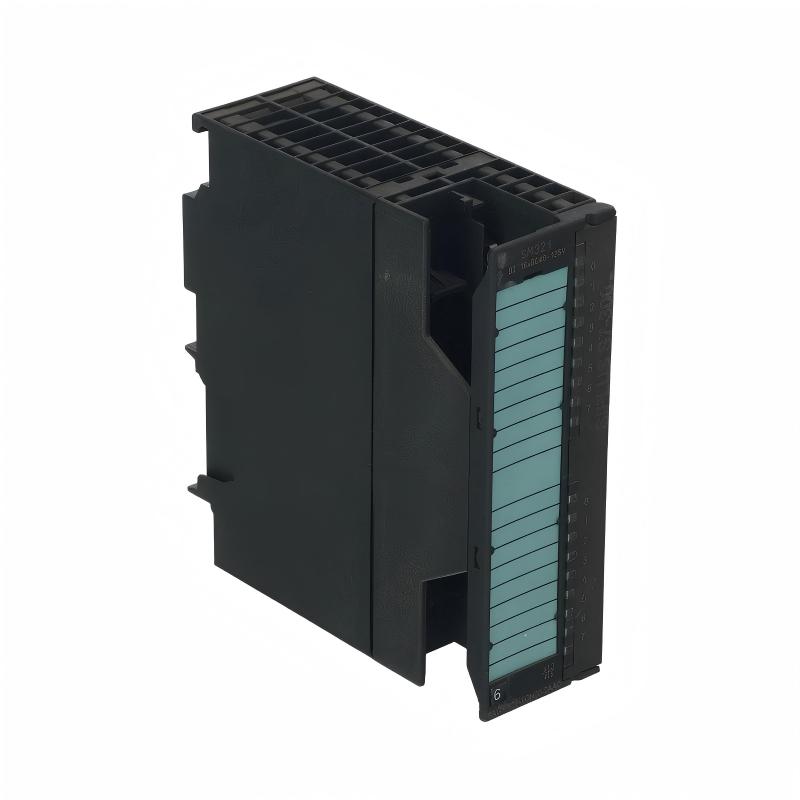
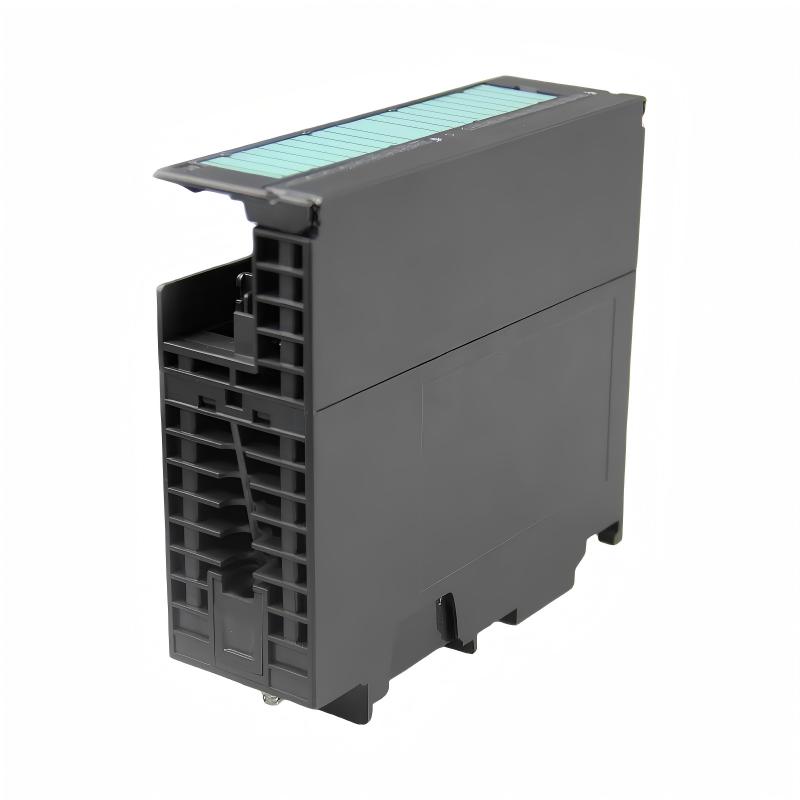
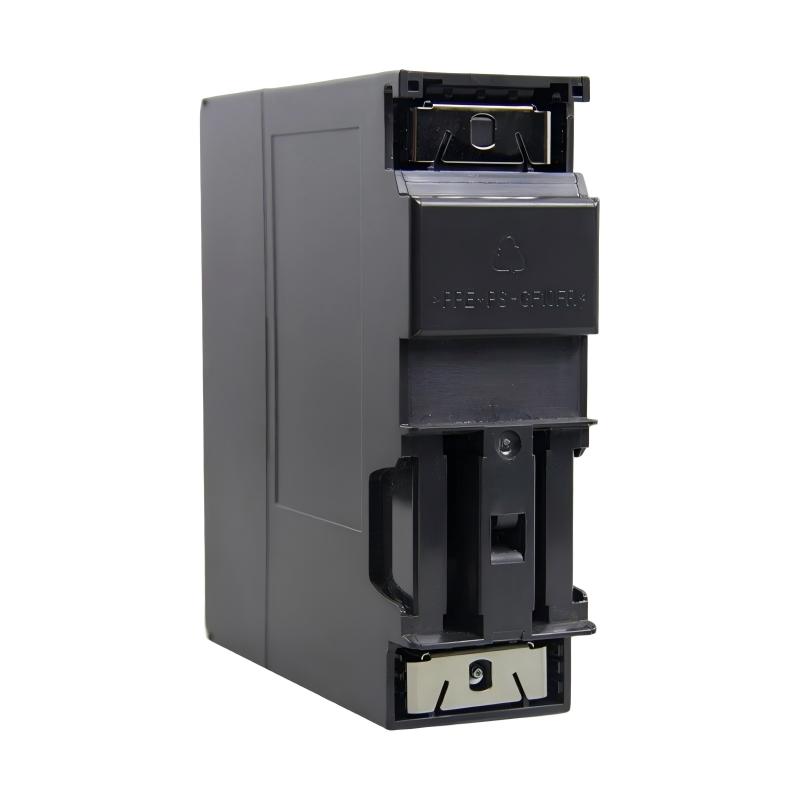
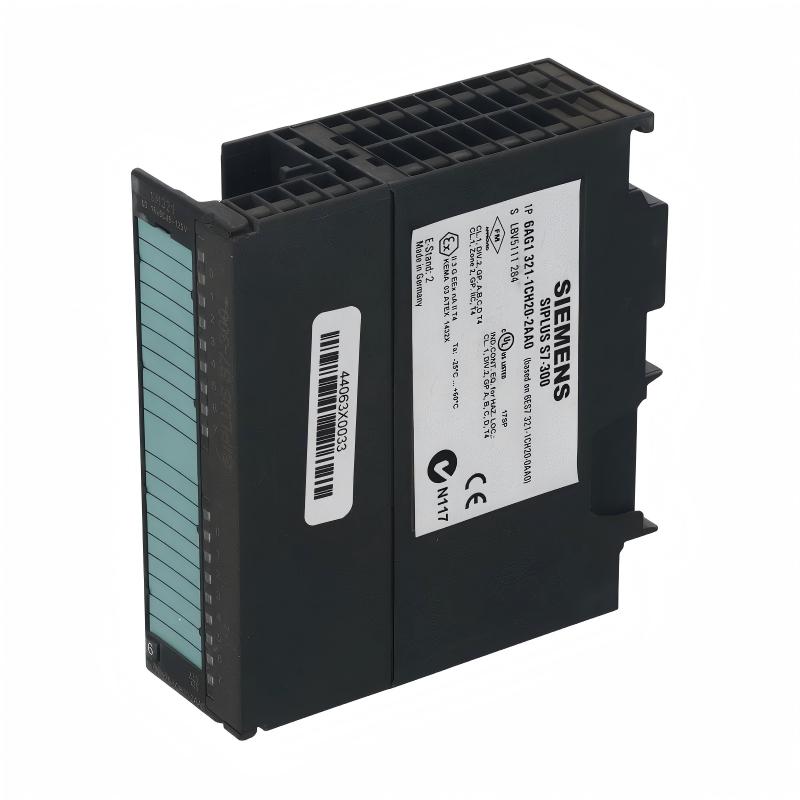
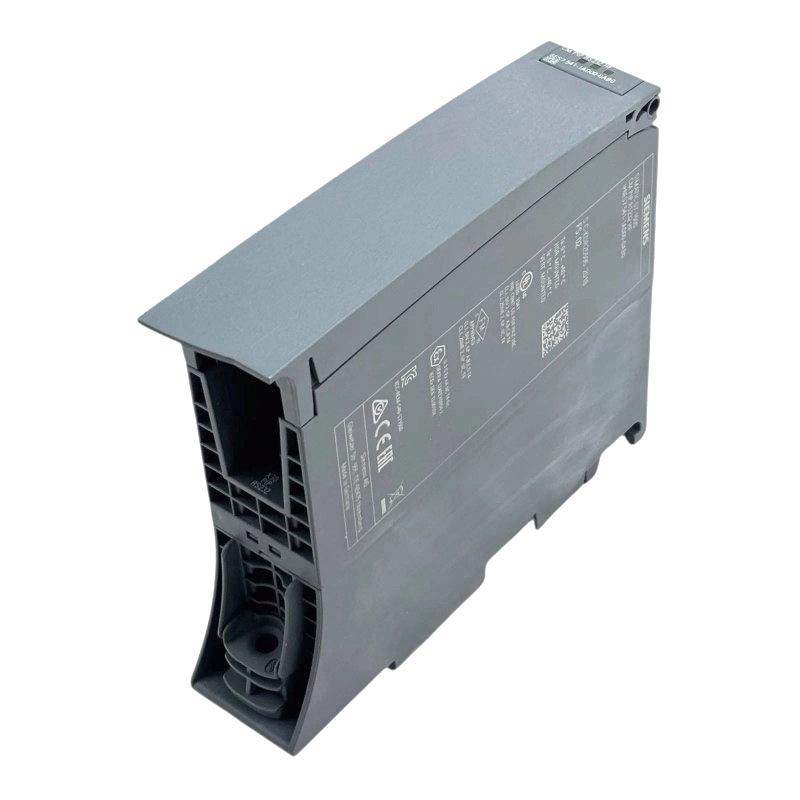
Brand:Siemens Item No.:6AG1321-1CH20-2AA0 Product Origin:Germany Product Dimensions:40 × 125 × 120 mm Product Weight:0.251 kg Payment:T/T, Western Union, Credit Card Goods_stock:15 Shipping Port:Xiamen, China Lead Time:1-3 Days Condition:Brand New And Original Warranty:1 Year Certificate:COO
The Siemens 6AG1321-1CH20-2AA0 Digital Input Module is an industrial automation component designed to collect discrete signals from field devices. It provides the input interface through which external switching conditions and equipment status information become available to the control system.
Digital input modules are essential in applications where automated equipment must respond to sensor signals, operator commands, and machine status changes. By incorporating field signals into the controller's logic, they help support coordinated machine operation, process monitoring, and automated response functions.
The 6AG1321-1CH20-2AA0 belongs to the Siemens SIPLUS product range. When selecting this module for a new installation or replacement project, engineers should verify the required hardware platform, electrical specifications, and configuration details to ensure correct integration. Proper installation and signal testing are important for maintaining stable operation throughout the equipment lifecycle.
Technical Specifications
Parameter
Specification
Brand
Siemens
Model
6AG1321-1CH20-2AA0
Product Type
Digital Input Module
Product Range
SIPLUS
Signal Type
Digital Input
Application
Industrial Automation and Control
Installation
Compatible Siemens Automation System
Dimensions
40 × 125 × 120 mm
Weight
0.251 kg / 0.55 lb
Recommended Related Models
The following Siemens digital I/O models may be relevant when configuring or maintaining related automation systems. Input and output functions differ, so confirm the required signal type and system compatibility before ordering.
Siemens 6AG1321-1BH02-2AA0 Digital Input Module
Siemens 6AG1321-1BL00-2AA0 Digital Input Module
Siemens 6ES7131-4BD01-0AA0 Digital Input Module
Siemens 6ES7131-4BF00-0AA0 Digital Input Module
Popular Related Models
Siemens 6AG1317-2FK14-2AB0 Central Processing Unit
Siemens 6AG1317-2FK14-2AY0 Central Processing Unit
Siemens 6AG1317-6FF04-2AB0 Central Processing Unit
Siemens 6ES7132-4FB01-0AB0 Digital Output Module
Siemens 6ES7132-4HB01-0AB0 Digital Output Relay Module
Applications
The Siemens 6AG1321-1CH20-2AA0 Digital Input Module is designed for industrial automation systems that require dependable acquisition of discrete signals from field-level equipment. It provides an interface between external devices and the control system, allowing machine conditions and switching events to be incorporated into automated operations.
Typical applications include:
Factory Automation: Receiving signals from sensors, switches, and machine operating components.
Production Line Control: Monitoring equipment status and discrete process conditions.
Industrial Machinery: Supporting control sequences that depend on external digital signals.
Process Monitoring: Collecting field information for controller-based monitoring and response.
Automation System Expansion: Adding digital signal acquisition capacity to a compatible Siemens configuration.
Advantages
Reliable Field Signal Collection
The module is designed to receive digital signals from connected field devices, helping the controller monitor equipment states and respond to changes in operating conditions.
Integration with Siemens Automation Systems
As a Siemens SIPLUS component, the 6AG1321-1CH20-2AA0 is intended for use within compatible industrial automation architectures. Proper hardware configuration supports coordinated operation with the associated control system.
Flexible Automation Design
A modular I/O arrangement allows engineers to organize signal acquisition according to machine and process requirements. This can simplify system expansion and maintenance planning.
Support for Equipment Monitoring
Digital input signals provide the controller with information about switching states, operating conditions, and discrete events, forming an important part of automated control logic.
Practical Maintenance and Replacement
A clearly identified module model helps maintenance teams manage spare parts and verify replacement requirements during scheduled servicing or equipment repair.
Technical FAQs
Q1: What is the purpose of the Siemens 6AG1321-1CH20-2AA0?
It is a digital input module used to receive discrete electrical signals from field devices and transfer their status to a compatible automation controller.
Q2: What devices are commonly connected to digital input modules?
Typical signal sources include proximity sensors, limit switches, push buttons, relay contacts, and other devices that provide compatible digital signals.
Q3: How does the module participate in an automated control sequence?
It acquires field signals that the controller can use as conditions for executing programmed operations, interlocks, alarms, or equipment responses.
Q4: Can the module be used as a digital output module?
No. Its designated function is digital signal acquisition. Driving external loads requires a suitable digital output module.
Q5: What should be verified before connecting field wiring?
Confirm the electrical signal requirements, terminal assignment, wiring arrangement, and compatibility of the connected devices with the module.
Q6: Why might an input channel fail to change state?
Potential causes include incorrect wiring, a faulty sensor, missing field power, loose terminals, an unsuitable signal level, or an incorrect hardware configuration.
Q7: What can cause unstable or intermittent input signals?
Loose connections, damaged cables, electrical interference, unstable power supplies, and inconsistent switching behavior from field devices are common areas to investigate.
Q8: Does replacing the module require checking the PLC hardware configuration?
Yes. Confirm that the replacement is supported by the installed hardware configuration and that the controller recognizes the module correctly.
Q9: How should technicians troubleshoot an input that remains active?
Check the actual field signal, inspect the connected device and wiring, and verify that no unintended voltage or contact condition is holding the input active.
Q10: What is important when commissioning the module?
Verify the installation, wiring, electrical compatibility, hardware configuration, and individual channel responses. Test the associated control logic before returning the equipment to normal operation.