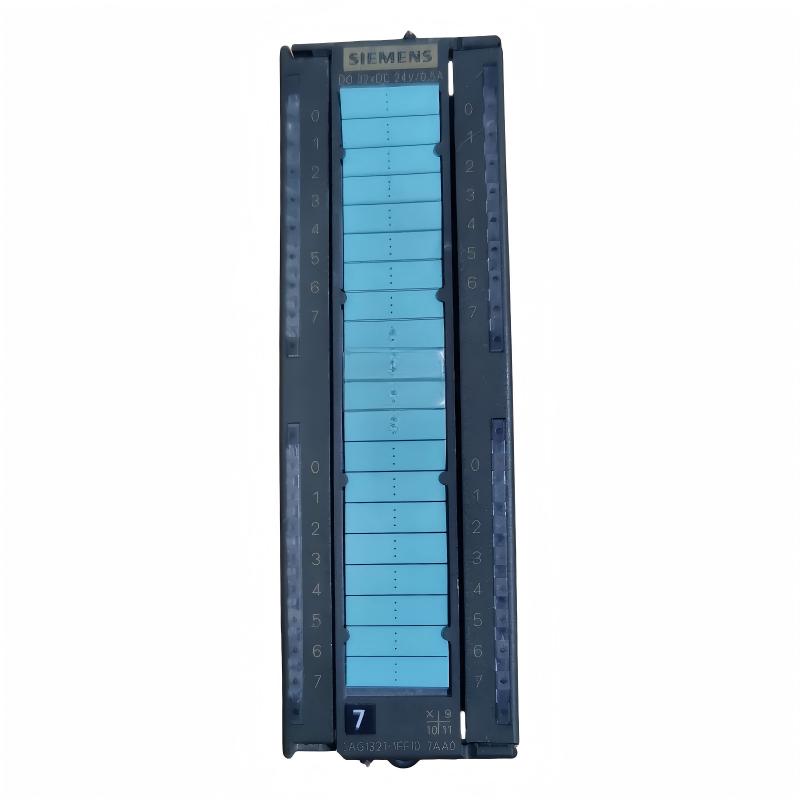
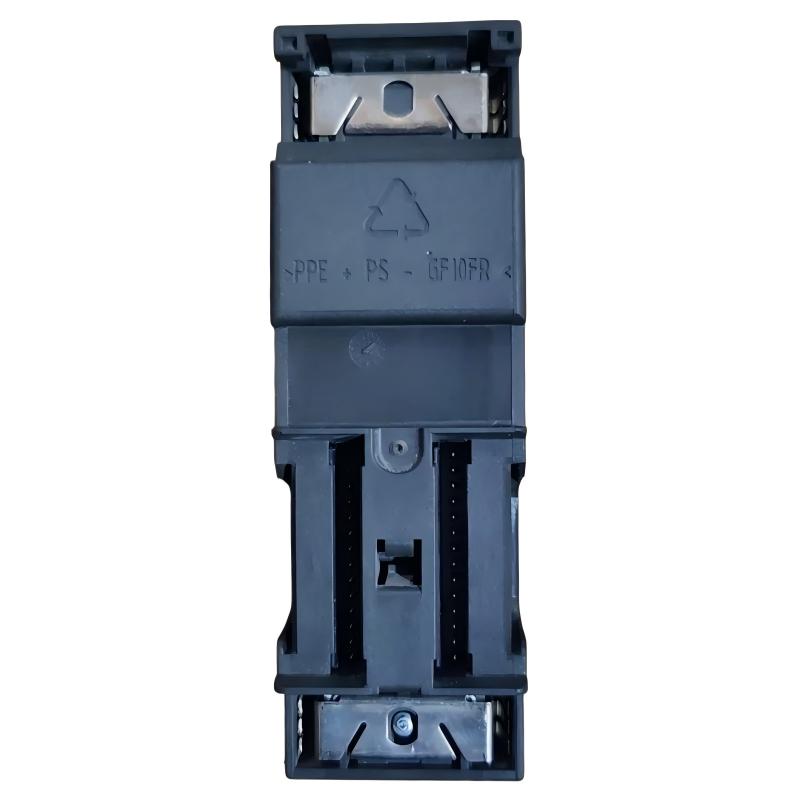
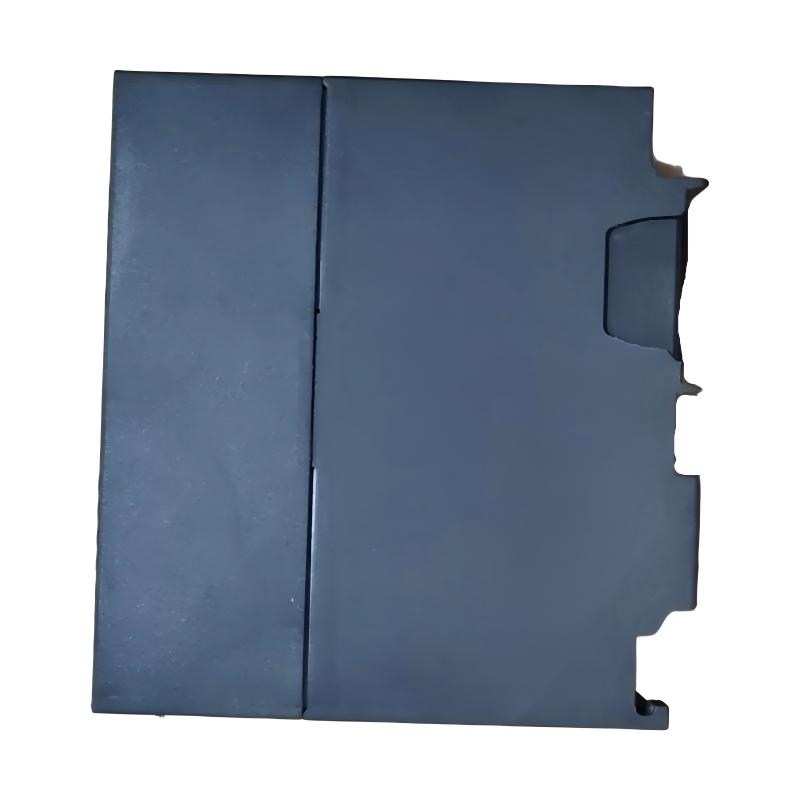
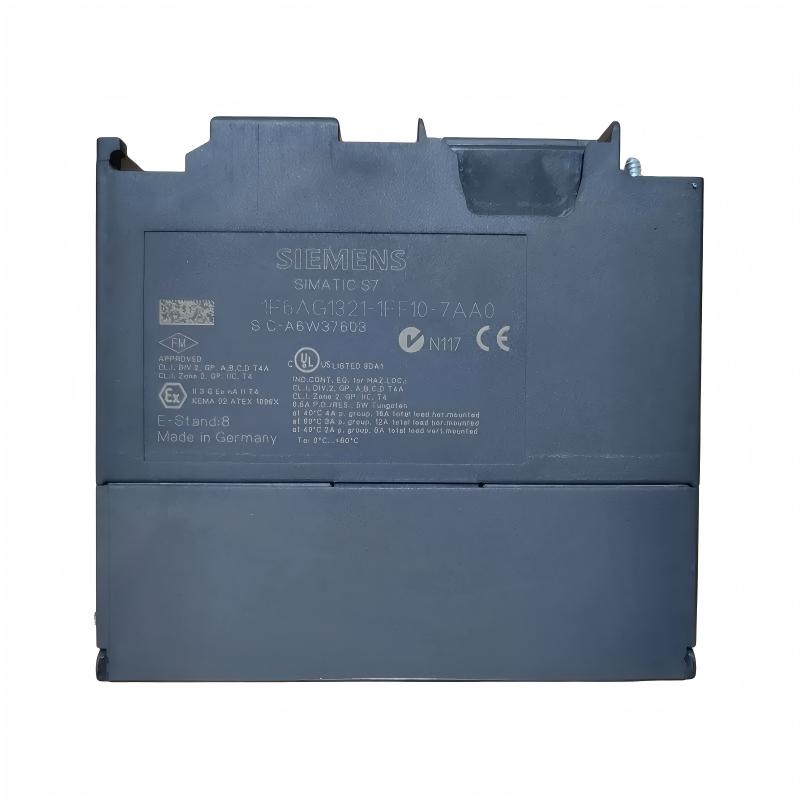
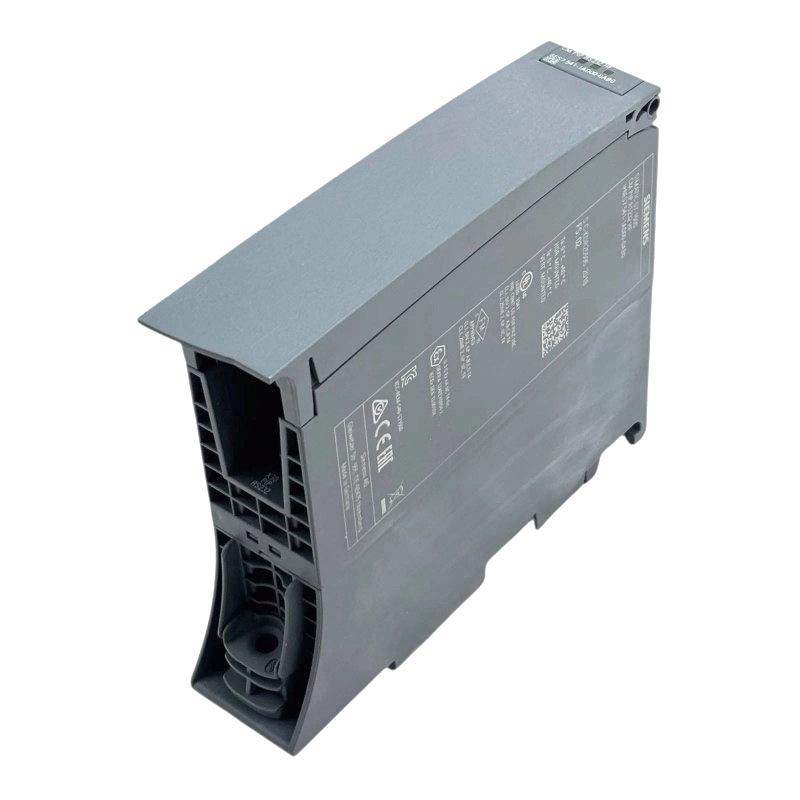
Brand:Siemens Item No.:6AG1321-1FF10-7AA0 Product Origin:Germany Product Dimensions:40 × 125 × 120 mm Product Weight:0.328 kg Payment:T/T, Western Union, Credit Card Goods_stock:15 Shipping Port:Xiamen, China Lead Time:1-3 Days Condition:Brand New And Original Warranty:1 Year Certificate:COO
The Siemens 6AG1321-1FF10-7AA0 Digital Input Module is used in industrial control systems to acquire discrete signals from external devices. By connecting field-level switching equipment to the automation controller, it helps make machine status and process events available for monitoring and control.
Digital input modules are important components in automated production environments. They allow controllers to receive information from sensors, switches, and other compatible devices, supporting programmed sequences, equipment interlocks, and operational monitoring.
This model belongs to the Siemens SIPLUS product range. When purchasing or replacing the 6AG1321-1FF10-7AA0, it is important to verify the complete ordering number and confirm that its electrical characteristics and hardware requirements match the existing system. Correct configuration and commissioning help maintain dependable signal acquisition.
Technical Specifications
Parameter
Specification
Brand
Siemens
Model
6AG1321-1FF10-7AA0
Product Type
Digital Input Module
Product Range
SIPLUS
Signal Type
Digital Input
Application
Industrial Automation and Control
System Integration
Compatible Siemens Automation System
Dimensions
40 × 125 × 120 mm
Weight
0.328 kg / 0.72 lb
Recommended Related Models
The following Siemens digital input modules are relevant models to consider for related signal acquisition applications. Their electrical specifications and hardware compatibility should be checked individually before selection.
Siemens 6AG1321-1BH02-2AA0 Digital Input Module
Siemens 6AG1321-1BL00-2AA0 Digital Input Module
Siemens 6AG1321-1CH20-2AA0 Digital Input Module
Siemens 6AG1321-1FF01-2AA0 Digital Input Module
Siemens 6ES7131-4BD01-0AA0 Digital Input Module
Popular Related Models
Siemens 6AG1317-2FK14-2AB0 Central Processing Unit
Siemens 6AG1317-2FK14-2AY0 Central Processing Unit
Siemens 6AG1317-6FF04-2AB0 Central Processing Unit
Siemens 6ES7132-4FB01-0AB0 Digital Output Module
Siemens 6ES7132-4HB01-0AB0 Digital Output Relay Module
Applications
The Siemens 6AG1321-1FF10-7AA0 Digital Input Module is designed for industrial automation systems that need to acquire discrete signals from field-level devices. It serves as an input interface between sensors, switches, and the automation controller, enabling external equipment conditions to be incorporated into programmed control sequences.
Typical applications include:
Factory Automation: Collecting switching signals from sensors and machine components.
Machine Control: Monitoring operating states, interlocks, and equipment conditions.
Production Line Systems: Supporting automated sequences through field signal acquisition.
Process Monitoring: Transmitting discrete status information to the control system.
Industrial Control Panels: Expanding digital input capacity in compatible Siemens automation installations.
Advantages
Reliable Digital Signal Interface
The module provides a dedicated interface for receiving discrete signals from connected field devices, supporting communication between field equipment and the controller.
Designed for Industrial Automation
As part of the Siemens SIPLUS product family, the 6AG1321-1FF10-7AA0 is intended for industrial automation applications. Its suitability should be evaluated against the environmental and electrical conditions of the installation.
Modular System Configuration
Digital input modules allow engineers to organize field signal connections according to individual machine functions, making it easier to plan and maintain automation systems.
Support for Equipment Diagnostics
Input status information can help operators and maintenance personnel identify switching events and monitor equipment conditions through the control system.
Simplified Model Identification
Using the complete Siemens ordering number helps distinguish this module from other digital input variants and reduces the risk of selecting an unsuitable replacement.
Technical FAQs
Q1: What is the main function of the 6AG1321-1FF10-7AA0?
It is a digital input module designed to acquire discrete signals from connected field devices for use by a compatible automation controller.
Q2: What types of signals does a digital input module receive?
It receives discrete switching signals representing states such as ON/OFF, open/closed, or active/inactive, subject to its specified electrical input characteristics.
Q3: Which field devices can be connected to this type of module?
Common signal sources include proximity sensors, limit switches, push buttons, and auxiliary contacts. Their electrical characteristics must match the module requirements.
Q4: How does the module work with a PLC?
The module receives field signals and makes the corresponding input states available to the controller, where they can be used in programmed logic and machine sequences.
Q5: What should be checked before connecting the wiring?
Confirm the terminal assignment, electrical ratings, signal compatibility, field power requirements, and wiring diagram for the exact module version.
Q6: Why might an input channel fail to detect a field signal?
Possible causes include incorrect wiring, insufficient field power, a defective sensor, loose terminals, or an input signal outside the specified range.
Q7: How can intermittent input faults be diagnosed?
Inspect terminal tightness, cable condition, field power stability, grounding, and possible electrical interference. Testing the connected field device can help isolate the source.
Q8: Is the 6AG1321-1FF10-7AA0 interchangeable with other 6AG1321 models?
Interchangeability should not be assumed. Different ordering numbers may represent different electrical or hardware characteristics. Verify the complete specifications before replacement.
Q9: What should be checked after installing a replacement module?
Confirm that the automation controller recognizes the module, verify the hardware configuration, and test the affected input channels against their actual field signals.
Q10: What precautions are necessary during maintenance?
Follow the equipment manufacturer's electrical safety procedures, isolate power where required, label field wiring, and verify the correct module version before reconnecting the system.