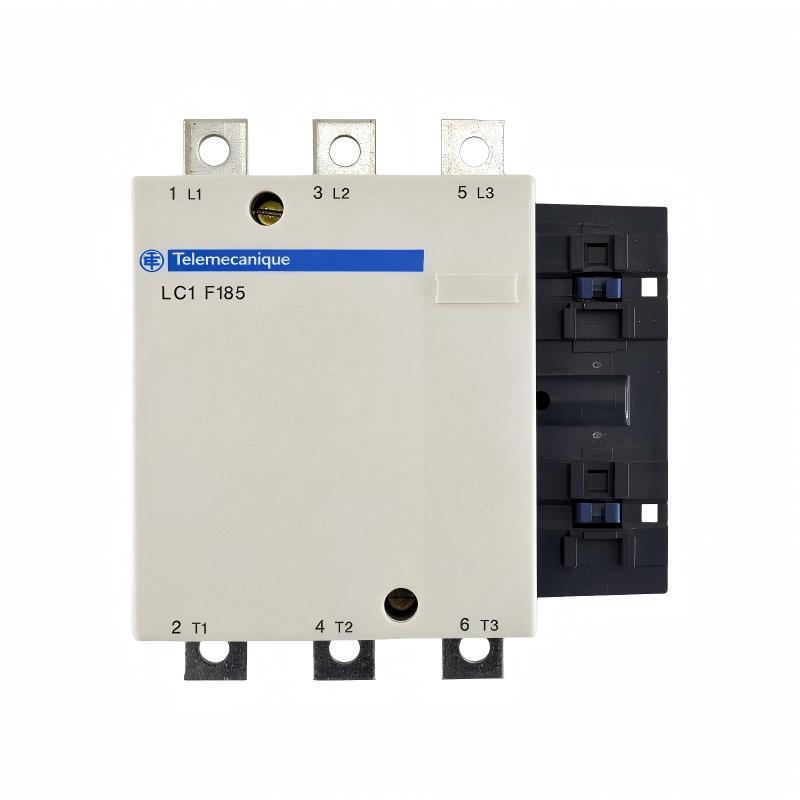
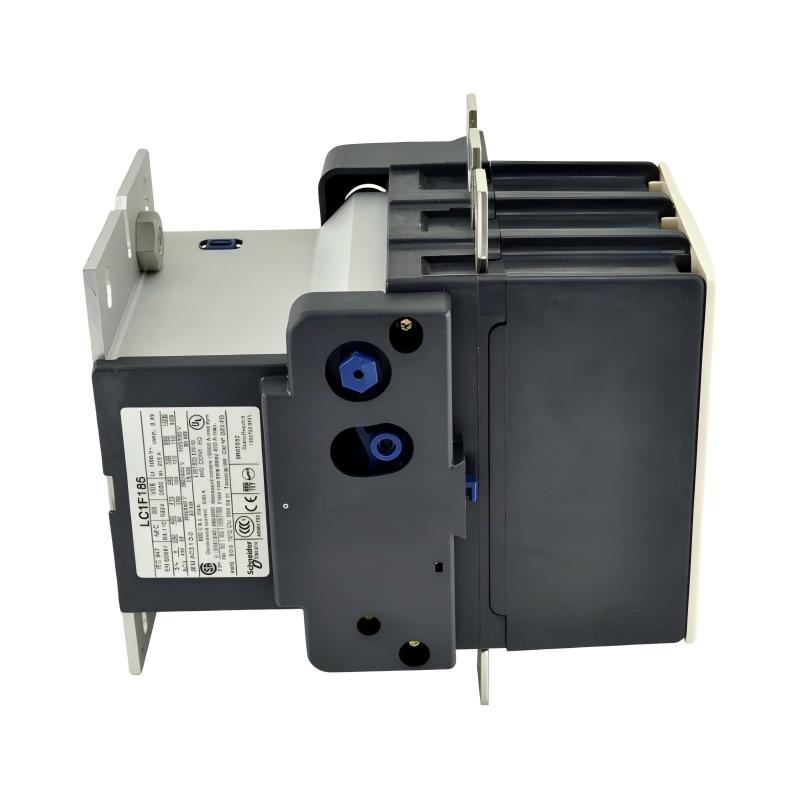
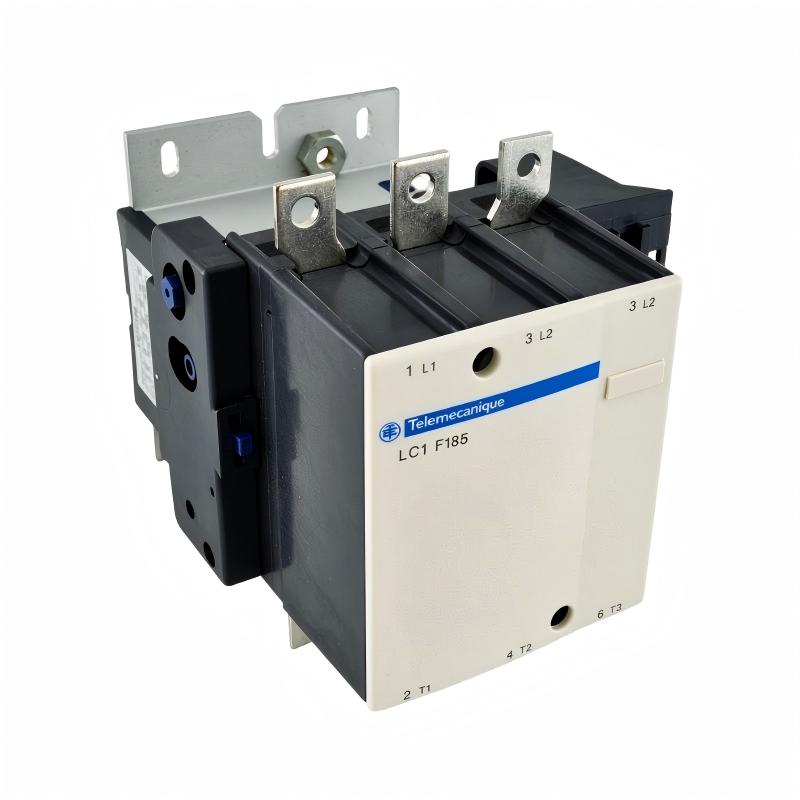
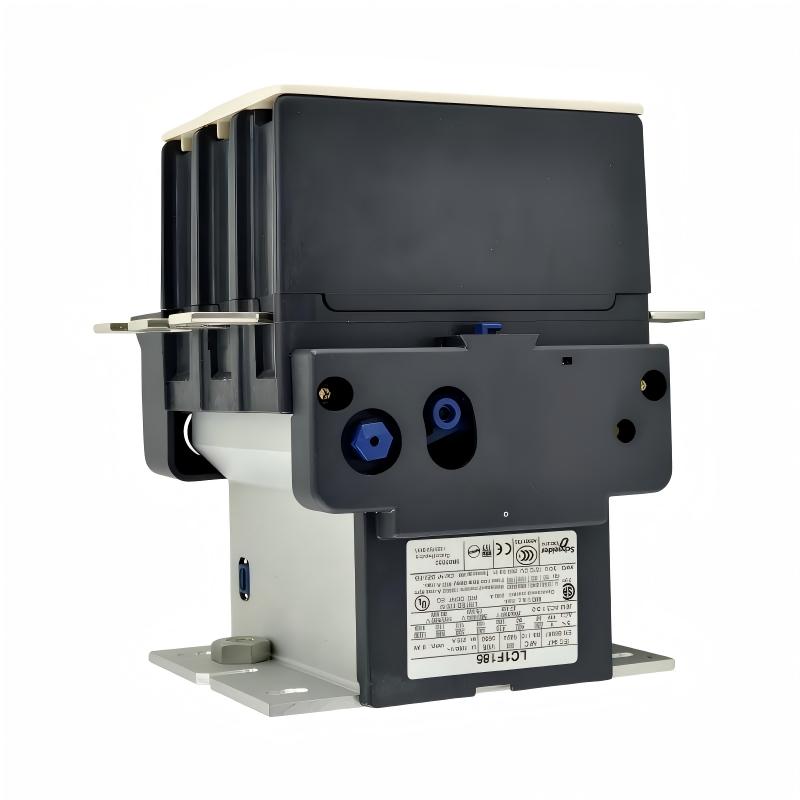
Brand:Schneider PLC Item No.:LC1F185R7 Product Origin:France Product Dimensions:174 x 168.5 x 181 mm Product Weight:4.65 kg Payment:T/T, Western Union, Credit Card Goods_stock:15 Shipping Port:Xiamen, China Lead Time:1-3 Days Condition:Brand New And Original Warranty:1 Year Certificate:COO
The Schneider LC1F185R7 TeSys F Contactor is an industrial electrical switching device designed for power control in demanding applications. It provides electromagnetic switching of electrical circuits and can be integrated into motor control panels, industrial machinery, and electrical distribution assemblies.
As part of Schneider Electric's TeSys F product family, the LC1F185R7 is intended for applications requiring a robust contactor solution. It can be used in suitable motor starter configurations and industrial switching systems, helping connect control signals with the operation of power circuits.
When selecting this model for installation or replacement, users should verify the coil voltage, rated operational current, load characteristics, and protective device coordination. Correct specification matching helps ensure dependable switching performance and reduces the risk of electrical compatibility problems.
Technical Specifications
Parameter
Specification
Brand
Schneider Electric
Model
LC1F185R7
Product Family
TeSys F
Product Type
Contactor
Product Category
Industrial Power Switching Component
Main Function
Electromagnetic switching of electrical circuits
Typical Applications
Motor control, industrial machinery, pumps, compressors, and electrical panels
Coil Configuration
R7 coil version
Dimensions
174 × 168.5 × 181 mm
Weight
4.65 kg / 10.25 lb
Recommended Related Models
The following models belong to Schneider Electric's TeSys F contactor range and may be useful when comparing contactor configurations. Confirm electrical ratings and coil specifications before choosing a replacement.
Model
Product Type
LC1F115
TeSys F Contactor
LC1F150
TeSys F Contactor
LC1F185
TeSys F Contactor
LC1F225
TeSys F Contactor
LC1F265
TeSys F Contactor
LC1F330
TeSys F Contactor
Popular Related Models
Schneider LC1F115 TeSys F Contactor
Schneider LC1F150 TeSys F Contactor
Schneider LC1F185R7 TeSys F Contactor
Schneider LC1F225 TeSys F Contactor
Schneider LC1F265 TeSys F Contactor
Schneider LC1F330 TeSys F Contactor
Schneider LC1F400 TeSys F Contactor
Schneider LC1F500 TeSys F Contactor
Applications
Industrial Motor Control: Used for switching motors in heavy-duty industrial machinery, production lines, and large mechanical drive systems.
Manufacturing Equipment: Suitable for electrical control assemblies in metalworking, material processing, and automated manufacturing facilities.
Pump and Compressor Systems: Supports motor switching in industrial pumping stations, air compressors, and fluid-handling equipment.
HVAC and Utility Installations: Can be integrated into suitable ventilation, cooling, and auxiliary motor control circuits.
Material Handling Systems: Used in compatible conveyor drives, lifting equipment, and industrial material transport applications.
Motor Control Centers: Installed in industrial electrical panels and motor control assemblies requiring a contactor with an appropriate high-current rating.
Advantages and Key Features
1. High-Current Switching Capability
The LC1F185R7 belongs to Schneider Electric's TeSys F contactor range, designed for industrial power switching applications. Its suitability depends on the load type and applicable electrical ratings.
2. Robust Industrial Construction
Its solid construction supports installation in industrial control cabinets and electrical assemblies exposed to demanding operating conditions.
3. Reliable Electromagnetic Operation
The contactor uses an electromagnetic operating mechanism to control the connection and disconnection of power circuits through an external control signal.
4. Defined Coil Configuration
The R7 suffix identifies a specific coil version. The exact rated control voltage should be verified against the product nameplate before installation.
5. Integration into Motor Starter Assemblies
The LC1F185R7 can be incorporated into suitable motor starter arrangements with correctly selected overload and short-circuit protection.
6. Practical Equipment Replacement
Its complete model reference helps maintenance teams identify the required contactor configuration and verify compatibility during equipment servicing.
Technical FAQs
Q1: What is the Schneider LC1F185R7 used for?
The LC1F185R7 is an industrial contactor designed for switching electrical power circuits. It is commonly considered for motor control and other industrial switching applications within its rated operating limits.
Q2: Which product family does the LC1F185R7 belong to?
It belongs to Schneider Electric's TeSys F contactor family, which is intended for industrial power control applications.
Q3: What does the R7 suffix indicate?
The R7 suffix identifies a particular coil configuration. The precise coil voltage and frequency should be confirmed using the product nameplate or the applicable Schneider Electric technical documentation.
Q4: Can the LC1F185R7 control three-phase motors?
It can be used in suitable three-phase motor control circuits. The motor current, operating voltage, starting conditions, and utilization category must be checked against the contactor's rated specifications.
Q5: Can this contactor be operated by a PLC?
Yes. A PLC can control the contactor through a compatible output circuit or an appropriately rated interposing relay. The control arrangement must meet the coil's electrical requirements.
Q6: What protective devices are required with this contactor?
Motor applications generally require suitable short-circuit and overload protection. The selection and coordination of protective devices should follow the motor characteristics, applicable standards, and manufacturer recommendations.
Q7: Why does the contactor fail to pull in?
Possible causes include an incorrect control voltage, insufficient coil supply, loose control wiring, coil damage, or a mechanical obstruction. Check the control circuit and coil condition before replacing the contactor.
Q8: What causes excessive contactor heating?
Common causes include loose terminal connections, excessive load current, damaged contacts, unsuitable conductor sizing, and inadequate ventilation. The installation should be inspected after the power supply has been safely isolated.
Q9: Can the LC1F185R7 replace another TeSys F contactor?
Not automatically. Verify the rated operational current, utilization category, coil voltage, terminal arrangement, auxiliary contact requirements, and mounting configuration before selecting an alternative.
Q10: What maintenance procedures are recommended?
Inspect power and control terminals, wiring insulation, contact condition, signs of overheating, and mechanical operation. Maintenance must be performed by qualified personnel after isolating the equipment and confirming that it is de-energized.