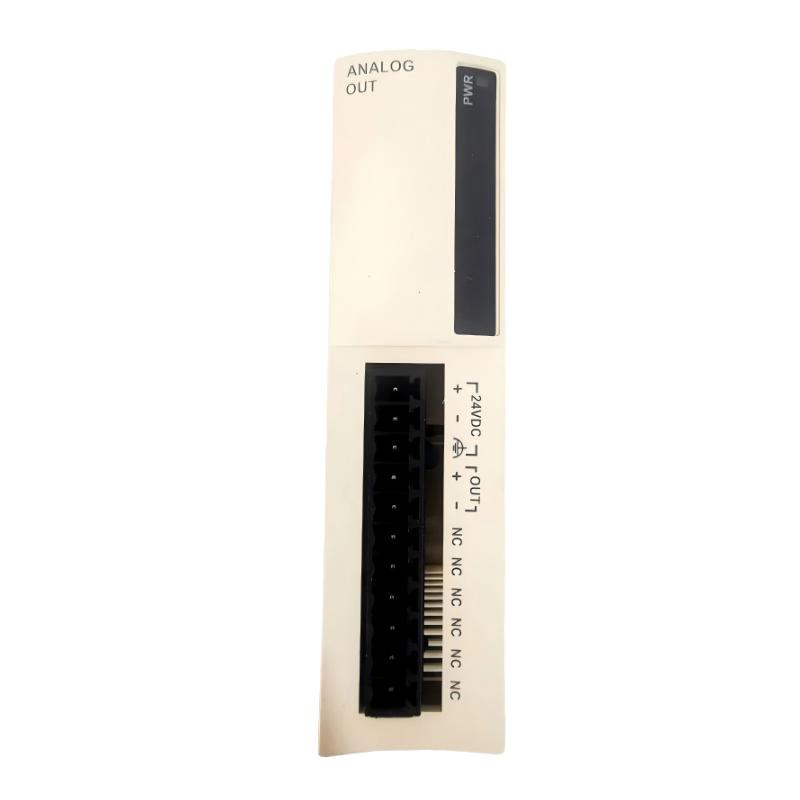
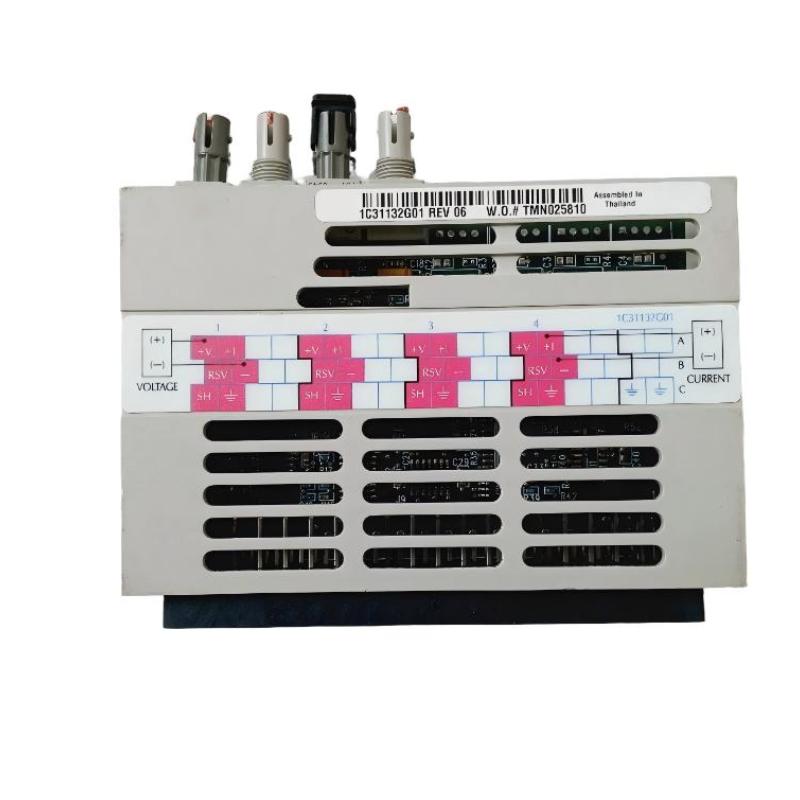
Brand:ABB PLC Item No.:UF C762 AE101 Product Origin:Sweden (SE) Product Dimensions:230 x 150 x 35 mm Product Weight:0.3 kg Payment:T/T, Western Union, Credit Card Goods_stock:15 Shipping Port:Xiamen, China Lead Time:1-3 Days Condition:Brand New And Original Warranty:1 Year Certificate:COO
The ABB UF C762 AE101 3BHE006412R0101 CVMI Board is a high-performance signal interface board designed to capture and condition critical industrial measurements with exceptional consistency. ABB engineered this module for environments where precision and stability directly influence system safety and output quality.
Its well-balanced mix of analog accuracy, digital reliability, and robust environmental tolerance allows it to outperform generic interface modules. Plants seeking dependable monitoring infrastructure—especially in energy, petrochemical, and high-demand automation systems—frequently rely on the UF C762 AE101 as part of their long-term modernization or maintenance strategies.
Analog output module with stable current/voltage drive
ABB CI854A
Communication interface module for external protocol integration
ABB PM861A
Controller module for distributed automation
ABB DSQC1000
Extended automation and robotics control interface
Popular Related Models
Model
Description
ABB PM864
Widely used CPU module for high-volume automation systems
ABB CI853
Industrial communication module for ABB I/O networks
ABB DI830
High-speed digital input module
ABB DO840
Robust digital output module
ABB AI845
Analog acquisition module with extended resolution
ABB AO820
Reliable analog output module for precision control
ABB PM865
High-capacity industrial controller
ABB TU830V1
Terminal base unit for modular expansion
ABB 07AC91
Analog input card for legacy ABB platforms
ABB 5STP1752H000 Power Module
High-power semiconductor module for ABB drive systems
Applications
The ABB UF C762 AE101 CVMI Board is designed for advanced monitoring, conditioning, and interface management within ABB’s control and protection platforms. It is widely deployed in turbine control, refinery process units, high-reliability power generation systems, and large-scale industrial automation frameworks requiring precise signal acquisition and conditioned feedback. Its stable architecture makes it suitable for both system expansions and long-life replacements in installed ABB infrastructures.
Advantages
The CVMI Board excels in delivering clean, well-conditioned measurement data, even in electrically harsh environments. Its engineered signal path, noise-resistant design, and optimized firmware contribute to highly stable control-loop behavior. The module’s compact size and low power profile reduce thermal load within the rack, extending overall system lifetime. With ABB-grade reliability and strict quality control, the UF C762 AE101 is a trusted component for integrators who prioritize uptime and predictable performance.
FAQs
1. What signal conditioning functions are integrated on the CVMI Board?
It incorporates differential input filtering, isolation barriers, and multi-stage analog conditioning to ensure stable and noise-free readings.
2. How does the board interface with the main controller CPU?
Communication occurs through ABB’s structured rack backplane, using reserved high-speed channels for deterministic data transfer.
3. What types of input channels are supported for monitoring tasks?
The board supports multi-format industrial signals, including isolated analog sensing and conditioned feedback from field instrumentation.
4. Does the board support automatic fault isolation for bad channels?
Yes. It performs channel-level diagnostics and isolates faulty inputs to prevent signal contamination across the bus.
5. How does the module maintain accuracy in high-EMI environments?
A shielded multilayer PCB, low-noise components, and EMI-filtered input stages maintain measurement stability.
6. What is the typical update rate for conditioned input data?
Depending on system configuration, the board delivers processed data to the controller at millisecond-level intervals.
7. How does the board handle thermal drift in analog components?
It applies internal compensation routines and uses temperature-stable components to maintain consistent precision across operating ranges.
8. Can the CVMI Board operate in redundant control architectures?
Yes. It is compatible with dual and triple-redundant ABB configurations, synchronizing seamlessly with redundant CPUs.
9. What onboard protections prevent backplane faults?
The board uses overcurrent-limited drivers, isolation sections, and gated buffers to protect both itself and the rack backplane.
10. How is calibration maintained over long service periods?
The board employs factory calibration curves stored in protected memory, with periodic self-checks to verify measurement stability.