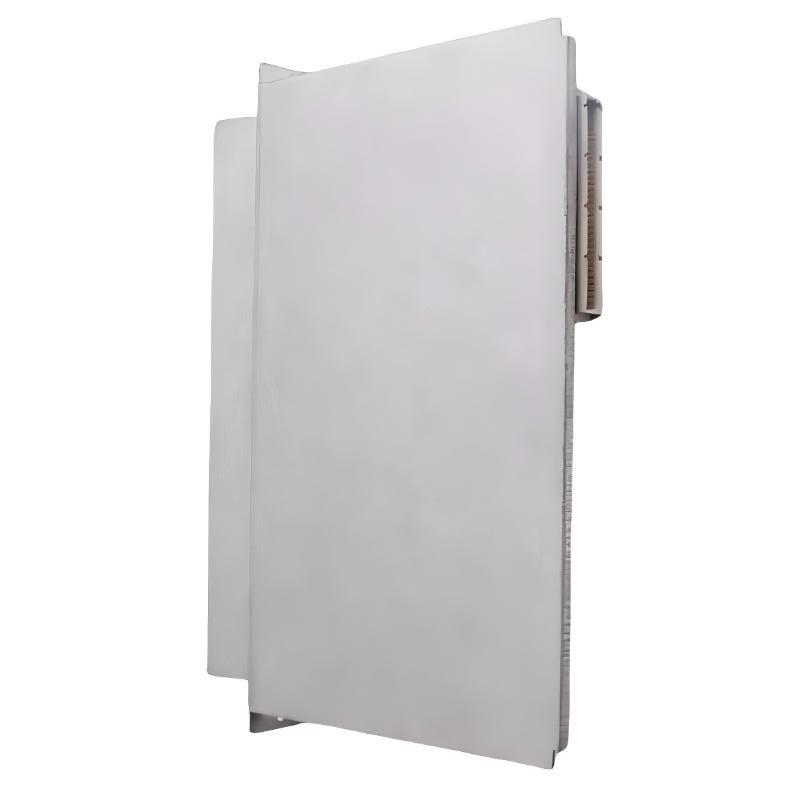
Brand:ABB PLC Item No.:YPQ-112B Product Origin:Sweden (SE) Product Dimensions:150 × 100 × 25 mm Product Weight:0.181 kg Payment:T/T, Western Union, Credit Card Goods_stock:15 Shipping Port:Xiamen, China Lead Time:1-3 Days Condition:Brand New And Original Warranty:1 Year Certificate:COO
The ABB YPQ-112B 63986771 Interface Adapter is a compact, high-reliability module designed to bridge communication between control modules, I/O devices, and industrial automation systems. By providing seamless signal adaptation, it ensures compatibility across legacy and modern ABB equipment.
Engineered for durability, ease of integration, and minimal maintenance, the YPQ-112B is an essential component for upgrading, expanding, or maintaining industrial control systems.
Technical Specifications
Parameter
Specification
Product Model
YPQ-112B 63986771
Module Type
Interface Adapter
Application
Signal adaptation and communication between ABB modules and devices
System Compatibility
ABB PLC, DCS, and I/O systems
Dimensions
150 × 100 × 25 mm
Weight
0.181 kg
Recommended Related Models
Model
Product Type
Key Function
1VCR000996G0002
Communication Module
Network and field device integration
1VCR000995G0004
I/O Module
Digital and analog signal management
NCBC-61C 64539434
Power Control Board
Stable power distribution for control modules
AGDR-71C 68439990A
Driver Board
Driving signals for IGBT and I/O modules
FS450R17KE3/AGDR-71C
IGBT Kit
High-speed power switching for industrial drives
Popular Related Models
Model
Product Type
Application Focus
FS500R17OE4D-B61/BGAD-21C
IGBT Module
High-power drive switching
NCBC-71C 3AUA0000064959
Power Control Board
Regulation and distribution of power
AFIN-01C 64693808
Fan Inverter
Cabinet cooling and airflow management
1VCR000993G0002
Power Supply Module
DC power delivery for control and IGBT circuits
1VCR000994G0003
I/O Module
Mixed-signal input/output management
Applications
The ABB YPQ-112B Interface Adapter is designed to enable seamless communication and integration between control modules, I/O devices, and industrial automation systems. It ensures reliable signal transmission and compatibility across various ABB equipment.
Typical applications include:
Connecting legacy modules to modern control systems
Facilitating communication between I/O modules and controllers
Integration of distributed automation components in industrial cabinets
Supporting industrial process control in manufacturing, energy, and chemical sectors
Bridging communication between devices requiring protocol or signal adaptation
This adapter is critical for maintaining system interoperability and simplifying upgrades or retrofits.
Advantages
Reliable signal adaptation
Ensures accurate and consistent communication between modules.
Compact and lightweight design
Optimized for installation in space-constrained cabinets.
Durable industrial construction
Built to withstand vibration, temperature variations, and other harsh conditions.
Plug-and-play integration
Simplifies installation and reduces system downtime.
Enhances system compatibility
Bridges communication between different modules and devices.
Low maintenance
Minimal servicing required due to robust design and passive operation.
Technical FAQs
1. What is the primary function of the YPQ-112B?
It provides interface adaptation for reliable communication between ABB modules and devices.
2. Is it compatible with legacy ABB equipment?
Yes, it can bridge legacy and modern modules for seamless operation.
3. Can it be installed in standard control cabinets?
Yes, its compact form factor fits typical industrial enclosures.
4. Does it require configuration?
No, it is mostly plug-and-play for straightforward integration.
5. Is it suitable for harsh industrial environments?
Yes, it is designed to tolerate vibration and temperature variations.
6. Can it support multiple communication protocols?
Yes, it adapts signals to ensure interoperability between devices.
7. Is maintenance-intensive?
No, its passive design minimizes upkeep.
8. Can it be used in distributed control systems?
Yes, it facilitates communication across distributed modules.
9. Does it provide signal amplification?
No, it primarily adapts and bridges signals without amplifying.
10. Is it compatible with ABB PLC and DCS systems?
Yes, it integrates seamlessly with ABB automation platforms.