ABB DSBC 173A High-Integrity Bus Communication Module for Advanced Distributed Control Architectures
ABB DSBC 173A High-Integrity Bus Communication Module for Advanced Distributed Control Architectures
0.0
Points
Brand:ABB PLC Item No.:ABB DSBC 173A Product Origin:Sweden Product Dimensions:40 × 120 × 115 mm Product Weight:0.35 kg Payment:T/T, Western Union, Credit Card Goods_stock:15 Shipping Port:Xiamen, China Lead Time:1-3 Days Condition:Brand New And Original Warranty:1 Year Certificate:COO
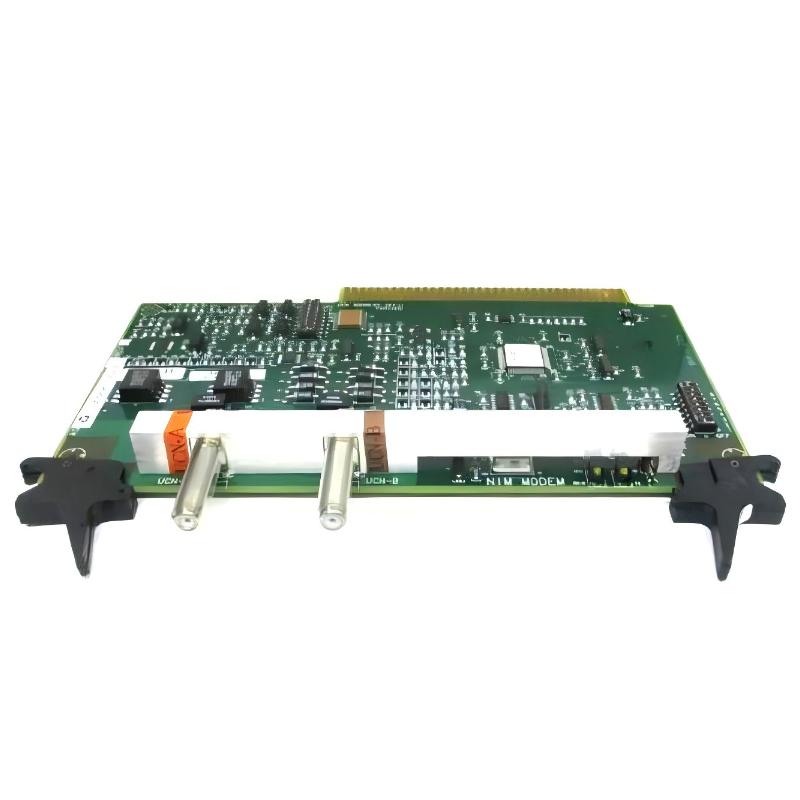
The ABB DSBC 173A is a high-integrity bus communication module designed to provide stable and deterministic data transmission within ABB distributed control systems. Developed for demanding industrial environments, this module ensures that control processors, communication buses, and I/O subsystems operate in synchronized harmony.
In complex automation infrastructures—where real-time signal exchange directly influences productivity and plant safety—the DSBC 173A delivers dependable communication performance with long operational longevity. Its robust mechanical structure and industrial-grade electronics make it an excellent choice for both system expansion projects and lifecycle maintenance replacements.
Technical Specifications
Parameter
Specification
Brand
ABB
Model
DSBC 173A
Module Type
Bus Communication Module
System Platform
ABB Distributed Control Systems
Installation Method
Rack / Backplane Mounting
Bus Function
Internal System Bus Communication
Operating Temperature
−25°C to +60°C
Storage Temperature
−40°C to +85°C
Humidity Rating
5–95% non-condensing
Cooling Method
Natural Convection
Dimensions (W × H × D)
Approx. 40 × 120 × 115 mm
Weight
Approx. 0.35 kg
Mechanical data is provided for cabinet design planning and engineering evaluation.
Recommended Related Models
For enhanced system architecture and communication redundancy, the following ABB modules are frequently deployed alongside the DSBC 173A:
ABB DSBC 172 Bus Communication Module
ABB DSBB 172B Communication Interface Module
ABB DSAI 110 Analog Input Module
ABB DSDO 115 Digital Output Module
ABB DSBC 176 Bus Extension Module
Popular ABB Automation Modules
These ABB modules are widely recognized in large-scale industrial automation systems:
ABB PM866K01 Processor Unit
ABB CI854A Communication Interface Module
ABB AI810 Analog Input Module
ABB DI810 Digital Input Module
ABB DO810 Digital Output Module
Typical Applications
The ABB DSBC 173A is commonly used in:
Power generation and turbine control systems
Oil & gas processing facilities
Petrochemical production plants
Pulp & paper manufacturing
Water and wastewater automation systems
Large distributed control network expansions
Its reliable bus architecture ensures consistent communication between controllers and field-level modules, helping maintain process stability.
Key Advantages
Deterministic Bus Communication – Ensures precise and stable data transfer
Industrial Reliability – Designed for continuous 24/7 plant operation
Compact Form Factor – Efficient cabinet space utilization
Seamless ABB Integration – Optimized for ABB DCS platforms
Long Lifecycle Support – Suitable for infrastructure with extended service requirements
The DSBC 173A reinforces system communication integrity, minimizing risk while maximizing operational continuity.
Technical FAQs
1. What is the primary function of the ABB DSBC 173A?
It provides internal system bus communication within ABB distributed control systems.
2. How is the module installed?
It is mounted directly into a compatible ABB rack or backplane.
3. What environmental conditions can it operate in?
It operates between −25°C and +60°C with humidity up to 95% non-condensing.
4. Does it require external power wiring?
No. Power is supplied via the system backplane.
5. Is it suitable for continuous industrial operation?
Yes, it is engineered for uninterrupted plant environments.
6. Can it be used in retrofit projects?
Yes, it is commonly selected for system upgrades and maintenance replacements.
7. What industries rely on this module?
Energy, oil & gas, chemical processing, and heavy manufacturing sectors.
8. How does it enhance system reliability?
By ensuring stable and synchronized bus communication between control layers.
9. What cooling method does it use?
Passive cooling through natural convection.
10. Why choose ABB DSBC 173A?
Because it combines proven ABB engineering, stable communication architecture, and durable industrial construction—making it a dependable choice for mission-critical automation systems.