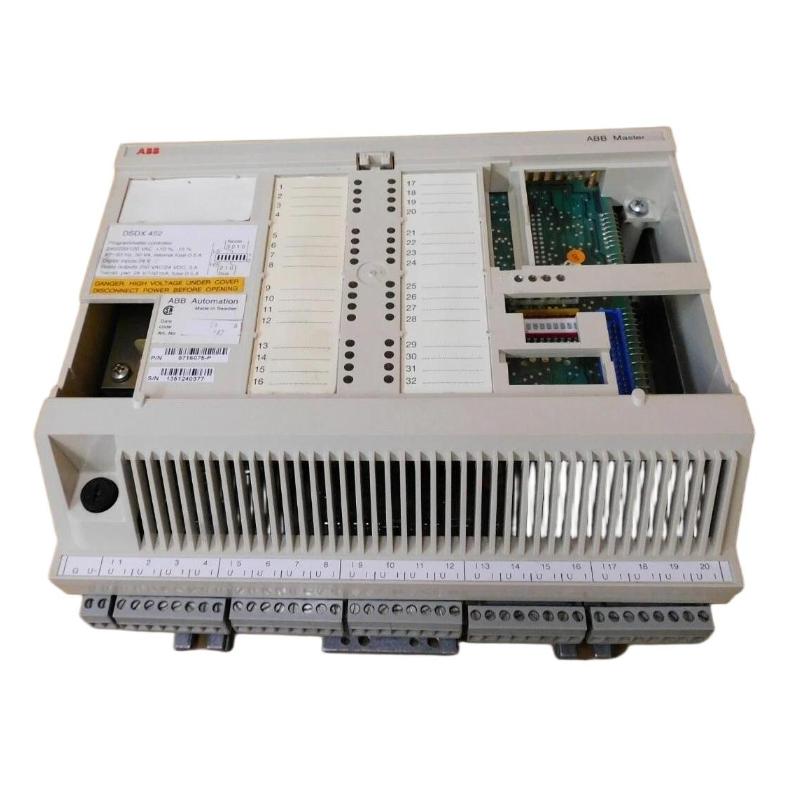
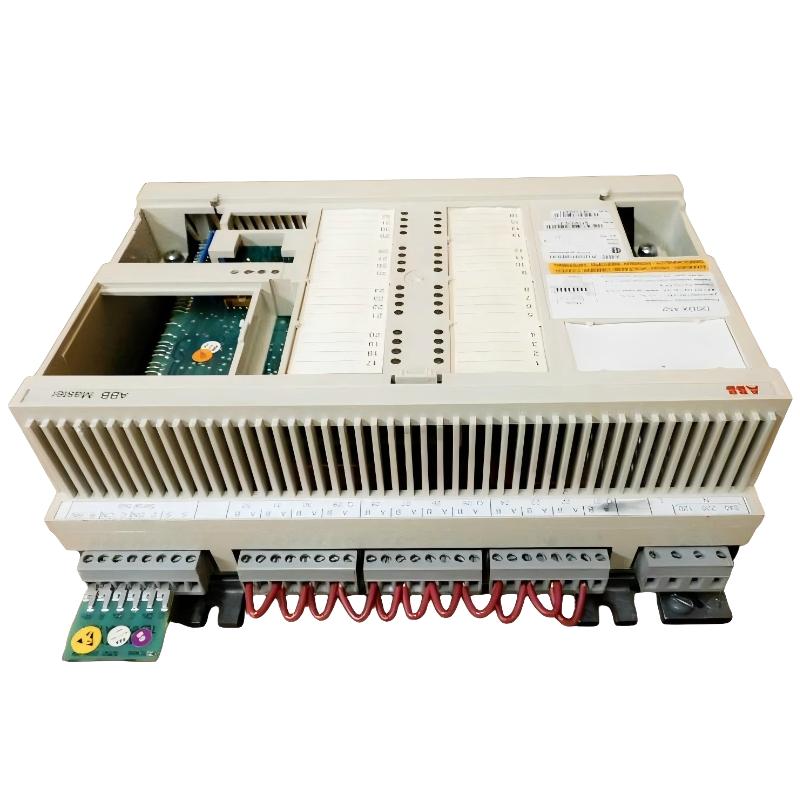
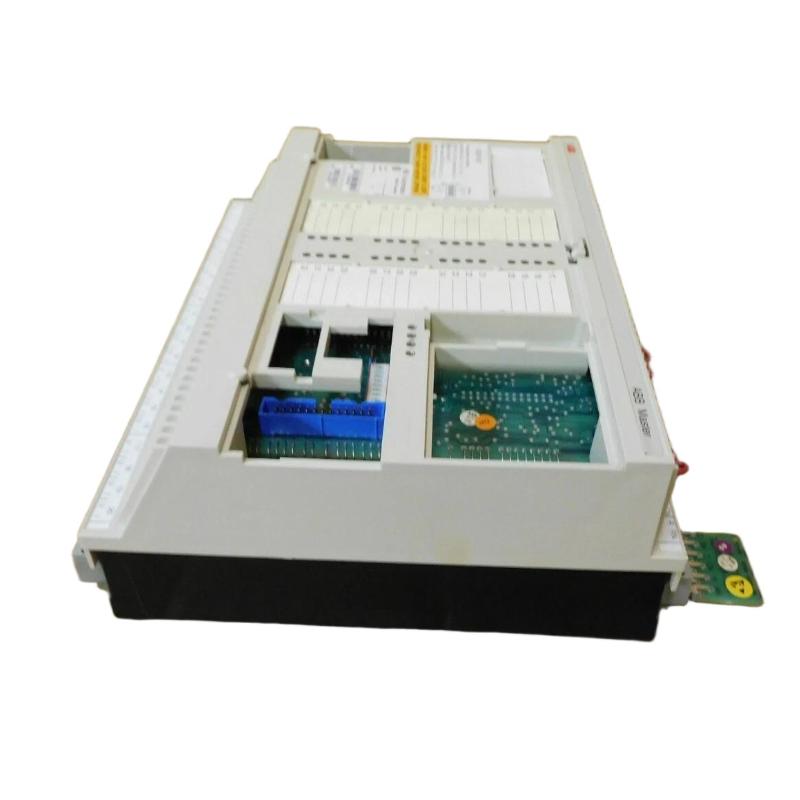
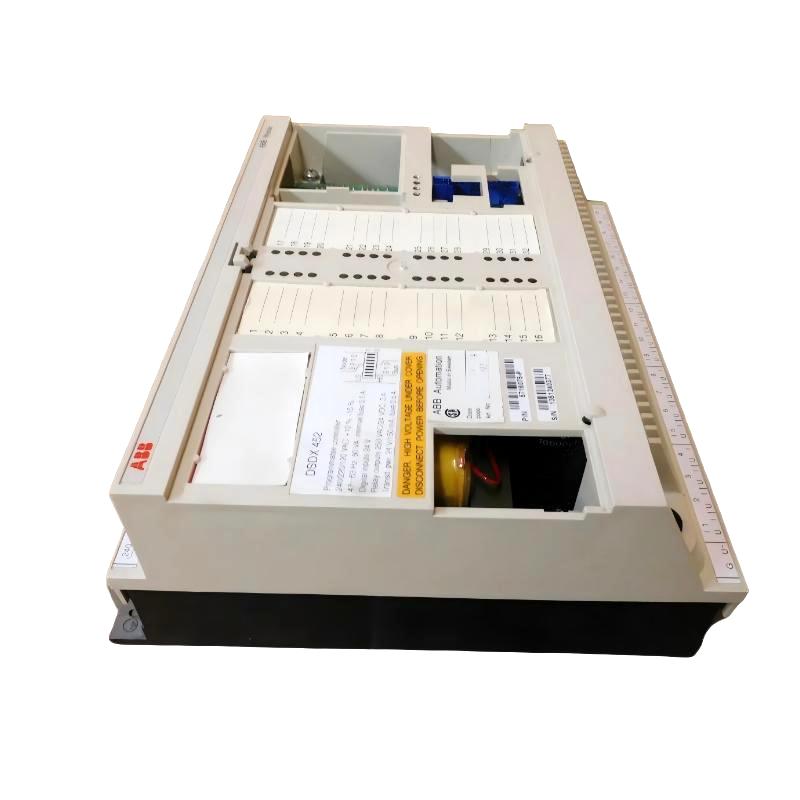
ABB DSAX 452 5712289-A Remote Input/Output Basic Unit
ABB DSAX 452 5712289-A Remote Input/Output Basic Unit
0.0
Points
Brand:ABB PLC Item No.:DSAX 452 Product Origin:Sweden (SE) Product Dimensions:324 x 18 x 234 mm Product Weight:2.7 kg Payment:T/T, Western Union, Credit Card Goods_stock:15 Shipping Port:Xiamen, China Lead Time:1-3 Days Condition:Brand New And Original Warranty:1 Year Certificate:COO
The ABB DSAX 452 5712289-A Remote Input/Output Basic Unit is a reliable component designed to extend input and output capabilities in industrial automation systems. It functions as a remote I/O base unit, allowing field signals to be collected and transmitted efficiently to the central control system.
Engineered for distributed automation architectures, the DSAX 452 provides stable communication between field instruments and control platforms. Its design allows facilities to expand monitoring and control capabilities without significant modifications to existing control infrastructure.
Technical Specifications
Parameter
Specification
Product Model
DSAX 452
Part Number
5712289-A
Manufacturer
ABB
Product Type
Remote Input/Output Basic Unit
Installation
Control System Rack / Industrial Cabinet
Application
Distributed I/O Expansion
Dimensions
324 × 18 × 234 mm
Weight
2.7 kg
Recommended Related Models
ABB DSAI 155A 3BSE014162R1 – DS Analog Input Unit
ABB DSAO 110 57120001-AT/1 – DS Analog Output Board
ABB DSDI 110 57160001-AA – Digital Input Module
ABB DSDO 115 57160001-NF – Digital Output Module
Popular Related Models
ABB AI810 3BSE008516R1 – Analog Input Module
ABB AO810 3BSE008522R1 – Analog Output Module
ABB DI810 3BSE008508R1 – Digital Input Module
ABB DO810 3BSE008510R1 – Digital Output Module
Typical Industrial Applications
Remote signal acquisition and control within distributed automation systems
Expansion of input/output capacity in industrial control cabinets
Field device integration in manufacturing and processing plants
Industrial monitoring systems requiring decentralized I/O architecture
Automation infrastructure used in power generation and energy facilities
Large-scale process control networks in chemical and petrochemical industries
Key Operational Advantages
Enables reliable remote I/O expansion for complex automation systems
Designed for stable signal communication between field devices and controllers
Supports distributed system architectures for flexible plant design
Robust industrial construction suitable for demanding environments
Ensures consistent performance in continuous process monitoring systems
Technical FAQs
1. What is the main function of the DSAX 452 basic unit?
The unit serves as a remote input/output base module that allows field signals to be collected and transmitted to the main control system.
2. How does the DSAX 452 support distributed automation systems?
It enables remote I/O connectivity, allowing field devices to communicate with central controllers across the automation network.
3. What types of devices typically connect to this unit?
Sensors, actuators, transmitters, and other field instruments can connect through compatible I/O modules.
4. Is the DSAX 452 suitable for industrial environments?
Yes, it is designed to operate reliably within industrial automation cabinets and plant control infrastructures.
5. Can this unit improve system scalability?
Yes, remote I/O units allow automation systems to expand efficiently without major control system modifications.
6. What industries commonly use remote I/O units like the DSAX 452?
Power generation, manufacturing, oil and gas, chemical processing, and utility operations frequently deploy this type of equipment.
7. Does the unit support continuous industrial operation?
Yes, it is engineered for long-term operation in automation systems that run continuously.
8. How does the DSAX 452 enhance system flexibility?
By allowing field devices to be connected remotely, it simplifies wiring and improves overall plant layout flexibility.
9. Can this unit be integrated with other ABB automation modules?
Yes, it is designed to operate alongside other ABB control system modules within a unified automation platform.
10. What role does the unit play in process monitoring?
It helps transmit field-level signals to the control system, enabling accurate monitoring and responsive process control.