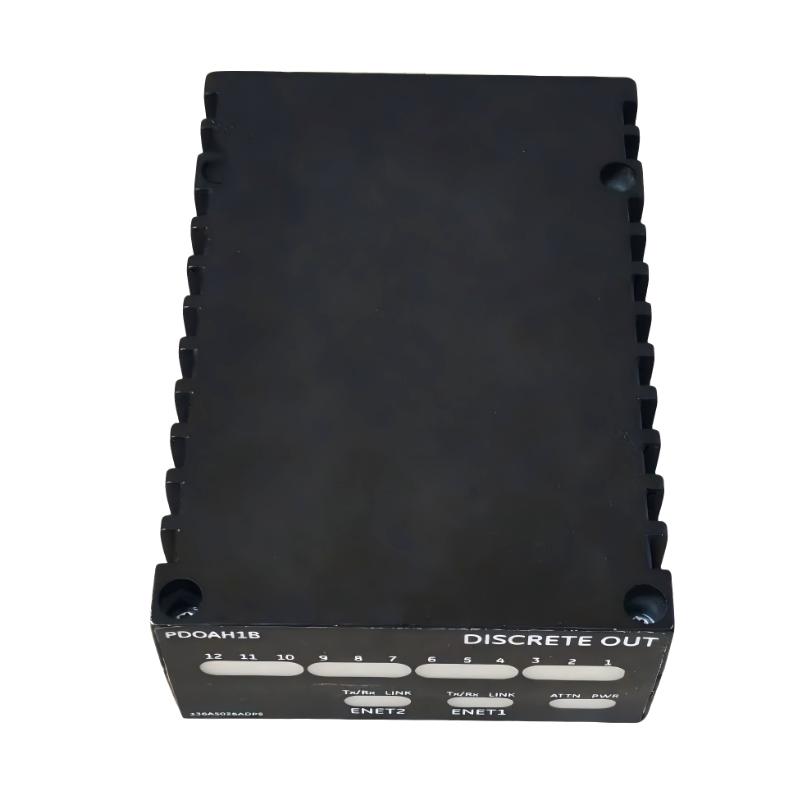
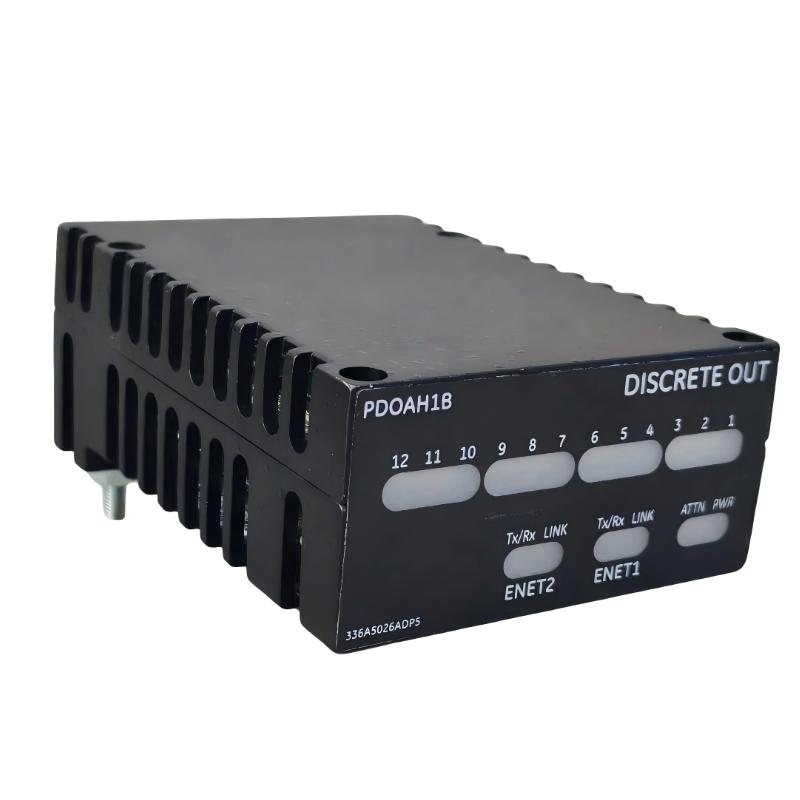
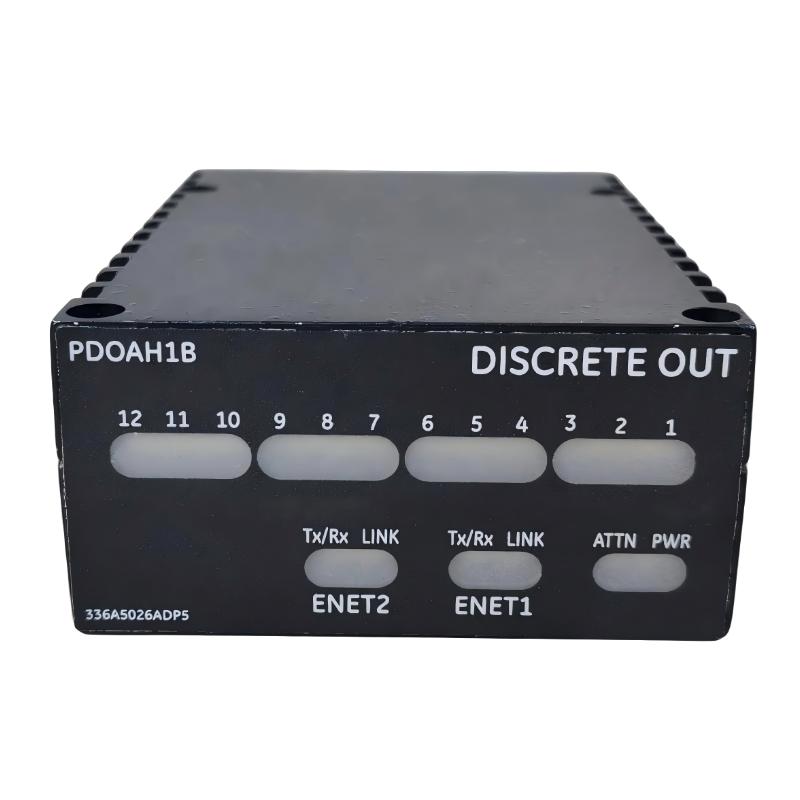
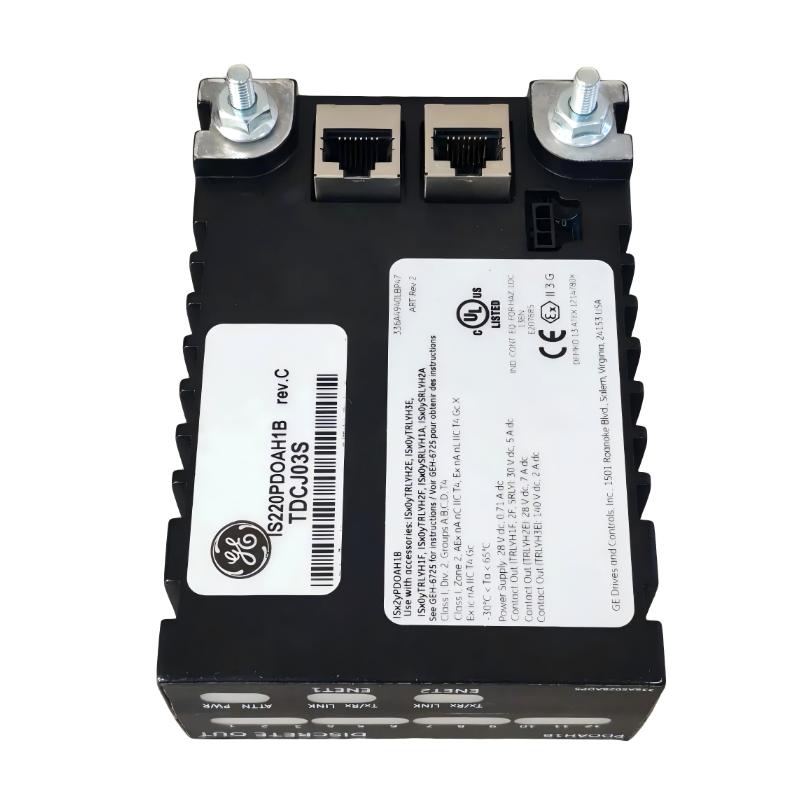
The GE IS220PDIIH1A is a Mark VIe distributed control system (DCS) I/O pack designed for high-reliability discrete signal acquisition. It is part of GE’s turbine control architecture and is typically used to interface field-level digital signals with control processors through Ethernet-based communication.
This module is engineered for critical industrial environments, where fast, deterministic, and fault-tolerant input processing is required for turbine, generator, and process control systems.
Technical Specifications
| Parameter | Details |
|---|---|
| Manufacturer | General Electric (GE) |
| Model | IS220PDIIH1A |
| Series | Mark VIe I/O Pack |
| Module Type | Discrete Input Interface Pack |
| Input Voltage Range | 24 VDC nominal (typical field signals) |
| Input Channels | High-density digital input (multi-point) |
| Signal Type | Dry contact / wet contact inputs |
| Communication | Ethernet-based Mark VIe network |
| Protocol | Industrial real-time control communication |
| Processing | Local embedded I/O processing |
| Diagnostics | Channel-level fault detection |
| Redundancy Support | System-level redundant architecture support |
| Mounting | DIN rail / cabinet-mounted I/O pack |
| Operating Temperature | -40°C to +70°C |
| Environmental Rating | Industrial / turbine control environment |
Physical Dimensions & Weight
| Parameter | Value |
|---|---|
| Dimensions (L × W × H) | 135 × 85 × 60 mm |
| Weight | ~0.4 – 0.6 kg |
The compact sealed housing is designed for cabinet installation close to field termination panels, minimizing wiring distance and improving signal reliability.
System Role & Functional Behavior
The IS220PDIIH1A functions as a distributed discrete input acquisition node:
- Collects digital signals from field devices (switches, relays, sensors)
- Converts and transmits input data via Ethernet to Mark VIe controllers
- Performs local signal conditioning and fault detection
- Supports high-speed deterministic input scanning
- Integrates into redundant turbine control architectures
- Provides real-time diagnostics per input channel
It acts as the field-level intelligence layer between hardware signals and central turbine control logic.
Recommended Related Modules
- IS220PDOAH1A Discrete Output I/O Pack
- IS220PPDAH1B Power Distribution I/O Pack
- IS220UCSAH1A Controller Module
- IS220PVIBH1A Vibration Monitoring Module
- IS200 series terminal and interface boards
Popular GE Mark VIe Modules
- IS200JPDG power distribution boards
- IS200TSVO turbine servo modules
- IS200TRLY relay output boards
- IS200EISB excitation interface modules
- IS200TVIB vibration input modules