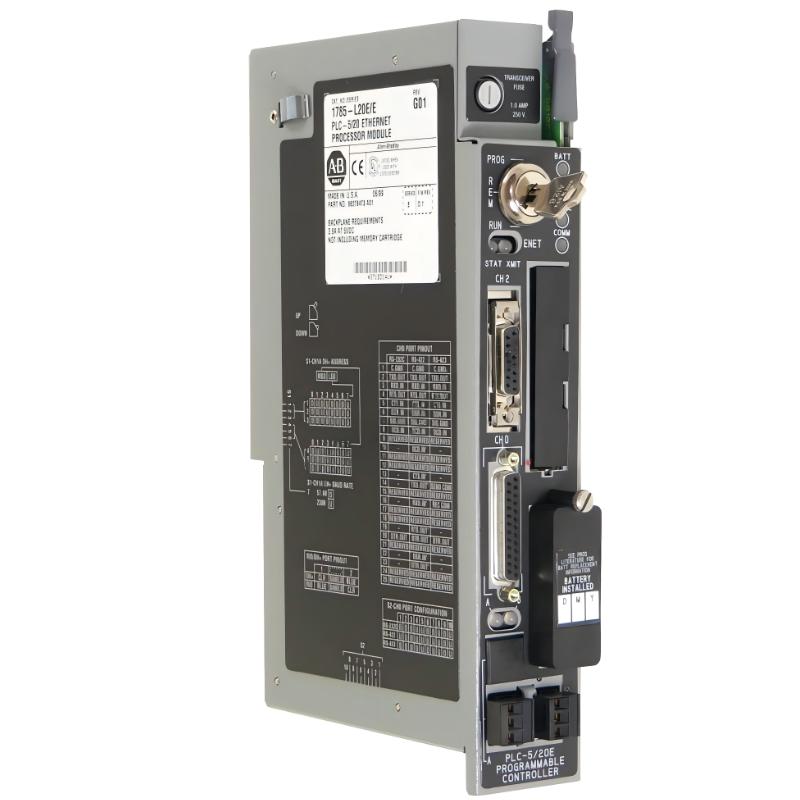
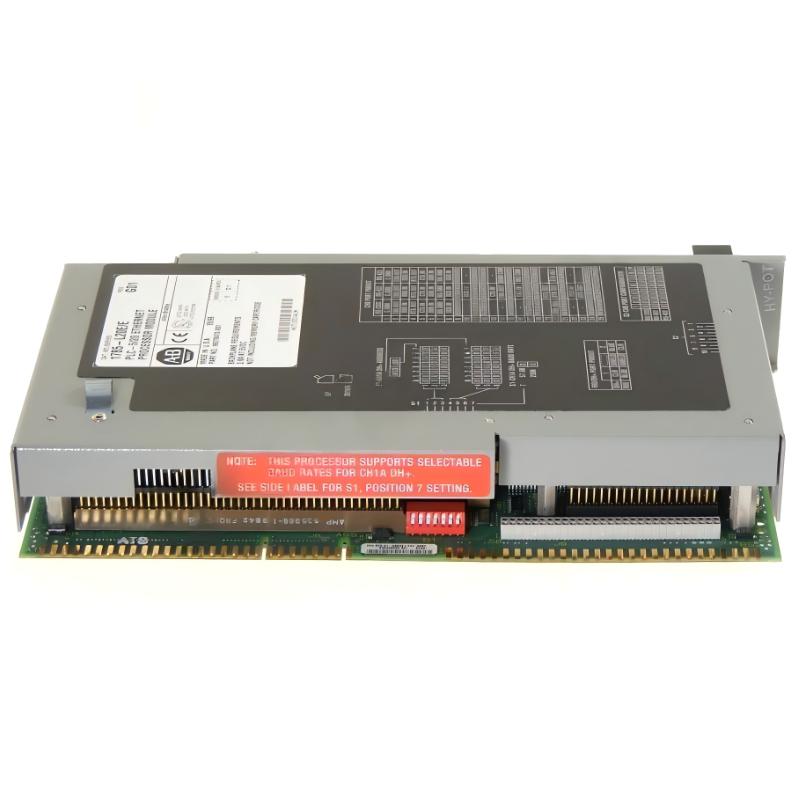
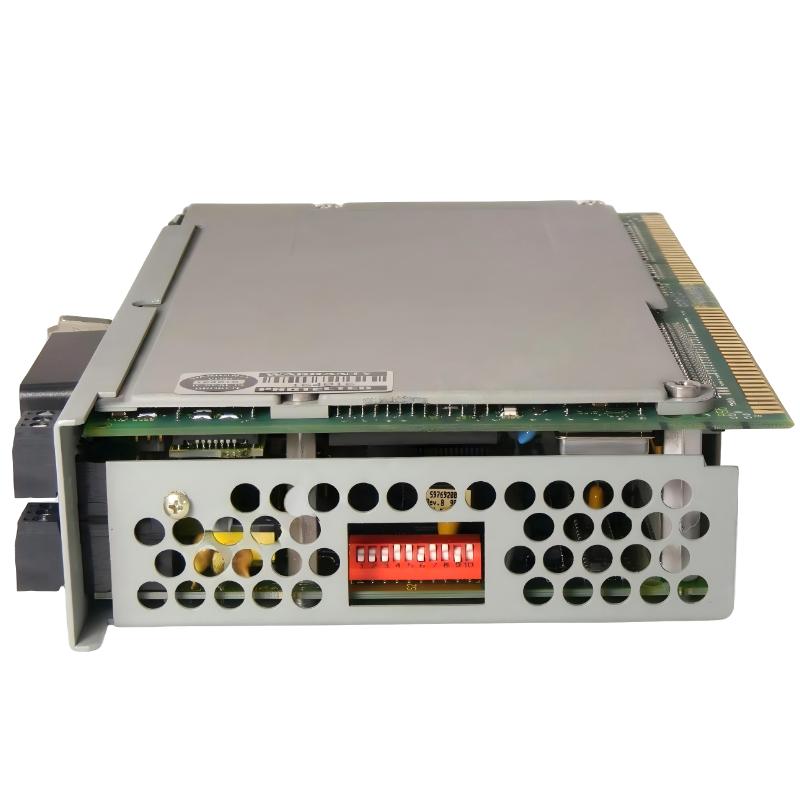
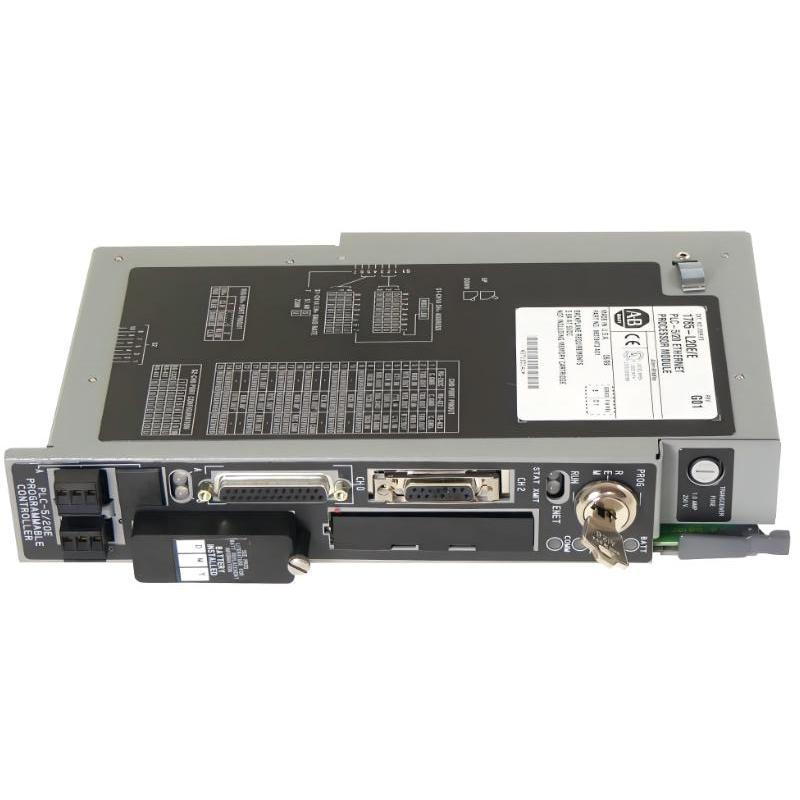
Brand:Allen Bradley PLC Item No.:1785-L20E/E Product Origin:USA Product Dimensions:165 x 51 x 89 mm Product Weight:1.45 kg Payment:T/T, Western Union, Credit Card Goods_stock:15 Shipping Port:Xiamen, China Lead Time:1-3 Days Condition:Brand New And Original Warranty:1 Year Certificate:COO
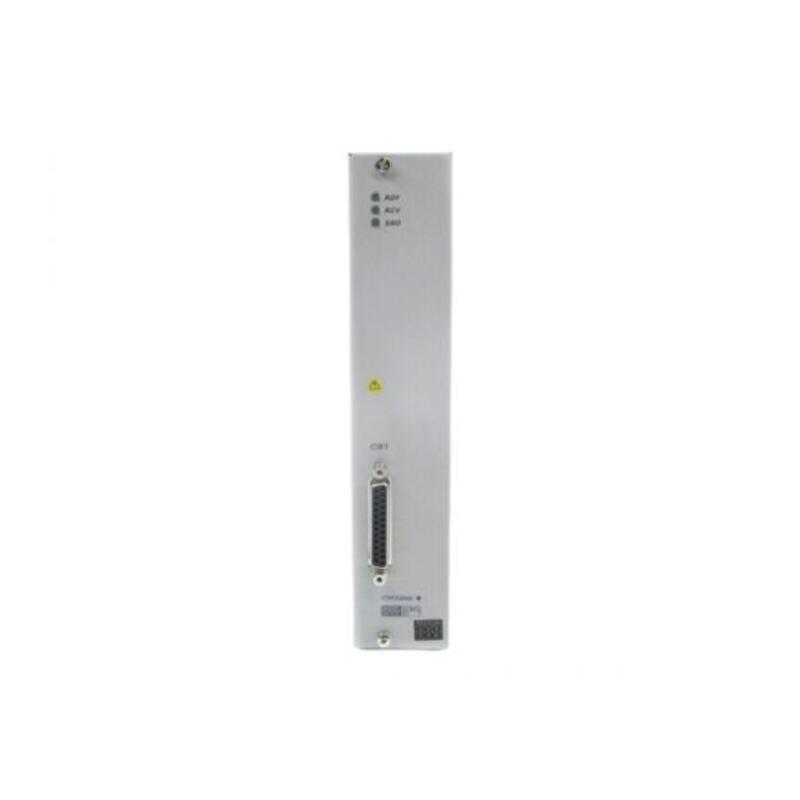
The Allen Bradley 1785-L20E/E PLC-5/20 Processor is a well-established industrial automation controller designed for reliable operation in PLC-5 architecture systems. It serves as a central processing unit for complex control applications, coordinating I/O modules, communication networks, and distributed chassis configurations. Despite being part of a legacy platform, it remains widely used in installed industrial environments where system continuity and long-term stability are critical.
Technical Specifications
Category
Specification
Product Series
PLC-5
Model
1785-L20E/E
Processor Type
PLC-5/20E Controller
User Memory
16K words SRAM
Maximum I/O Capacity
Up to 512 total I/O (any mix)
Maximum Analog I/O
Up to 512
I/O Chassis Support
Up to 13 chassis
Communication Ports
DH+, Remote I/O, Serial (RS-232/RS-422/RS-485), Ethernet (variant dependent)
Power Dissipation
~12 W
Backplane Current Load
~2.3 A
Operating Temperature
0 to 60 °C
Dimensions
165 × 51 × 89 mm
Weight
1.45 kg
Recommended Related Models
Model
Product Name
1785-L40E/E
PLC-5/40 Enhanced Processor
1785-L30B/E
PLC-5/30 Processor Module
1785-L80B/E
PLC-5/80 High-Capacity Controller
1785-L20B/E
PLC-5/20 Standard Processor Variant
Popular Related Models
Model
Product Name
1756-L72S
ControlLogix 5572S GuardLogix Controller
1769-L33ER
CompactLogix 5370 Ethernet Controller
1783-BMS10CGL
Stratix 5700 Managed Ethernet Switch
1747-L551
SLC 5/05 Processor Module
Applications
• Legacy process control systems in industrial plants
Used in continuous and batch process industries where PLC-5 architecture remains in long-term operation.
• Discrete manufacturing automation
Applies to production lines requiring reliable deterministic control of machines and assembly systems.
• Factory-wide control integration
Functions as a central processor for coordinated multi-rack industrial automation systems.
• Material handling and logistics control
Supports conveyor systems, sorting lines, and warehouse automation infrastructure.
• Retrofit and system expansion projects
Commonly installed in existing PLC-5 installations to extend lifecycle and maintain compatibility.
• Heavy-duty industrial environments
Used in steel, cement, chemical, and power applications requiring stable legacy control systems.
1. What PLC family does the 1785-L20E/E belong to?
It belongs to the PLC-5/20E processor family used in legacy Allen-Bradley systems.
2. How much user memory does it support?
It supports approximately 16K words of user memory.
3. Can it be used in modern Ethernet-based systems?
It includes Ethernet capability in enhanced versions but is primarily designed for legacy PLC-5 networks.
4. What types of I/O systems are supported?
It supports up to 512 total I/O points across multiple racks and configurations.
5. Is it suitable for new automation projects?
No, it is mainly used for maintaining and upgrading existing PLC-5 installations.
6. What communication protocols are available?
DH+, Remote I/O, serial communication, and Ethernet (depending on configuration).
7. Can it handle multiple chassis systems?
Yes, it supports distributed multi-chassis architectures.
8. Is programming still supported?
Yes, through legacy Rockwell PLC programming software environments.
9. Does it support redundancy?
Redundancy is limited and depends on system architecture rather than built-in CPU redundancy.
10. What industries commonly use this processor?
Industries with long-life equipment such as utilities, manufacturing, and process plants.