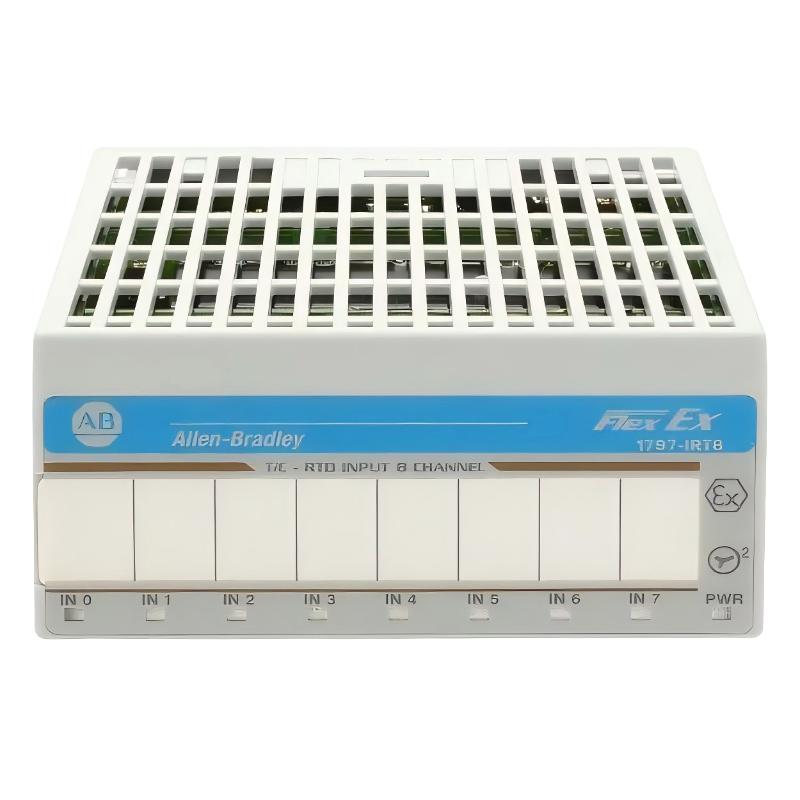
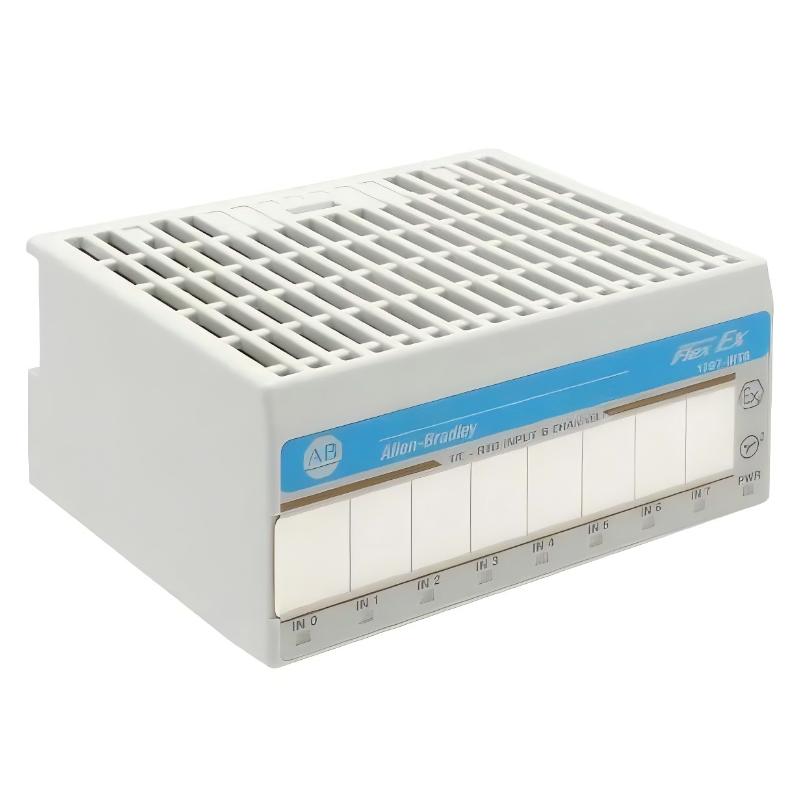
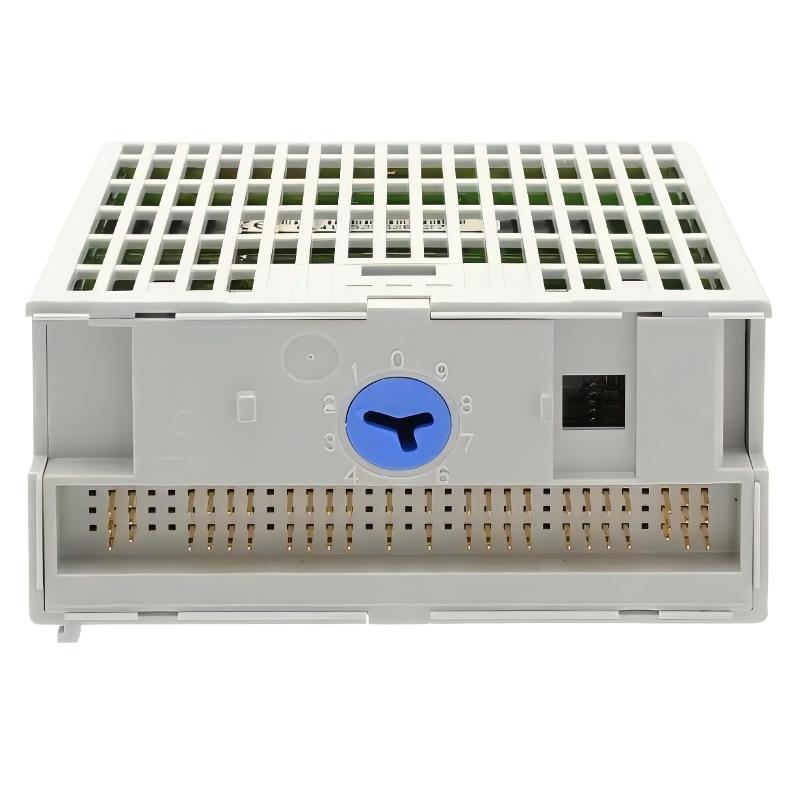
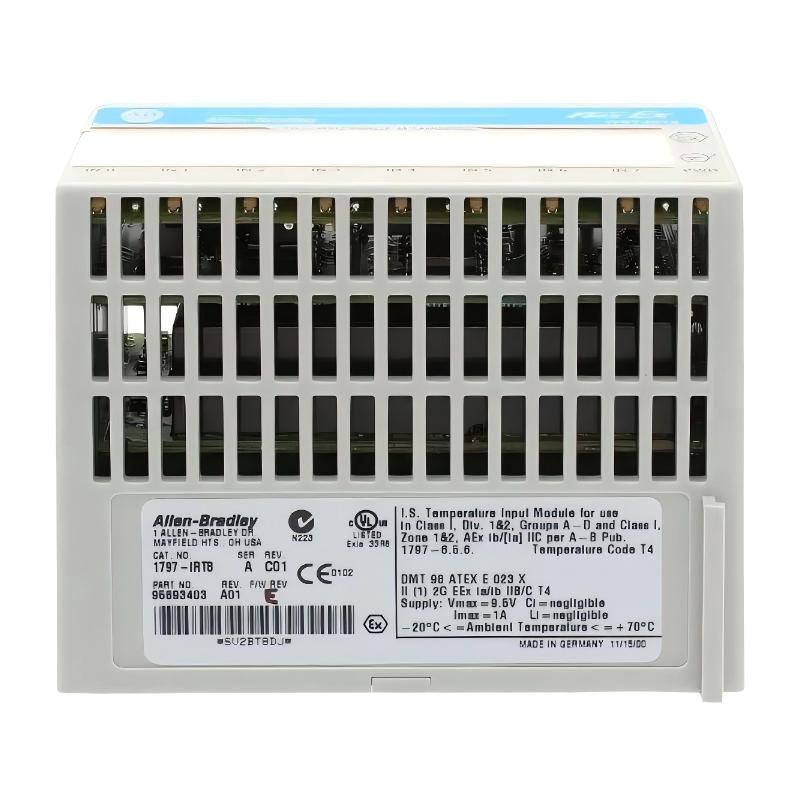
Allen Bradley 1797-IRT8 Flex Ex I/O RTD/Thermocouple/Millivolt Input Module
Allen Bradley 1797-IRT8 Flex Ex I/O RTD/Thermocouple/Millivolt Input Module
0.0
Points
Brand:Allen Bradley PLC Item No.:1797-IRT8 Product Origin:USA Product Dimensions:94 x 46 x 75 mm Product Weight:0.2 kg Payment:T/T, Western Union, Credit Card Goods_stock:15 Shipping Port:Xiamen, China Lead Time:1-3 Days Condition:Brand New And Original Warranty:1 Year Certificate:COO
The Allen-Bradley 1797-IRT8 Flex Ex I/O RTD/Thermocouple/Millivolt Input Module is a versatile intrinsically safe input module developed for demanding industrial process environments. It provides precise acquisition of temperature and low-level analog signals while maintaining compliance with hazardous-area safety standards.
Its ability to support multiple sensor technologies makes it highly adaptable for critical thermal monitoring applications in oil & gas, petrochemical, and process manufacturing industries. Combined with the Flex Ex distributed I/O platform, the module offers scalable integration, reliable performance, and enhanced process visibility in challenging industrial environments.
Technical Specifications
Parameter
Specification
Product Model
1797-IRT8
Product Type
Flex Ex I/O RTD/Thermocouple/Millivolt Input Module
Brand
Allen-Bradley
Function
Temperature and low-level analog signal acquisition
Input Channels
8
Supported Signals
RTD, Thermocouple, Millivolt
System Compatibility
Flex Ex distributed I/O systems
Installation
DIN rail mounting
Dimensions
94 × 46 × 75 mm
Weight
0.2 kg (0.44 lb)
Process Industry Applications
The Allen-Bradley 1797-IRT8 Flex Ex I/O RTD/Thermocouple/Millivolt Input Module is engineered for high-accuracy temperature and low-level signal monitoring in hazardous industrial environments. It supports RTD sensors, thermocouples, and millivolt input devices, making it ideal for advanced process automation systems requiring intrinsically safe operation.
Typical applications include:
Oil & gas temperature monitoring systems
Petrochemical and refinery process automation
Industrial furnace and heat treatment systems
Hazardous-area thermal process control
Turbine and compressor temperature monitoring
Chemical processing instrumentation
Offshore platform process measurement systems
Distributed intrinsically safe I/O architectures
Core Advantages
Supports RTD, thermocouple, and millivolt input signals
Intrinsically safe design for hazardous industrial locations
High-precision temperature and analog signal acquisition
Excellent signal stability in electrically noisy environments
Compact module design for space-saving installation
Seamless integration with Flex Ex distributed I/O systems
Improves process accuracy and thermal monitoring reliability
Rugged industrial construction for continuous-duty applications
Simplifies system expansion and maintenance
Ideal for mission-critical temperature monitoring applications
Technical FAQs
1. What is the main purpose of the 1797-IRT8 module?
It monitors RTD, thermocouple, and millivolt signals in hazardous industrial environments.
2. How many input channels does the module provide?
The module supports 8 input channels.
3. Is the module suitable for hazardous areas?
Yes, it is designed for intrinsically safe Ex-rated applications.
4. What sensor types are compatible with this module?
It supports RTD sensors, thermocouples, and millivolt signal devices.
5. Which industries commonly use this module?
Oil & gas, petrochemical, chemical processing, energy, and heavy manufacturing industries.
6. Can it be integrated into Flex Ex systems?
Yes, it is fully compatible with Allen-Bradley Flex Ex distributed I/O architectures.
7. Does it provide reliable performance in industrial environments?
Yes, it is designed for stable operation under harsh electrical and environmental conditions.
8. Why are thermocouple and RTD inputs important in process automation?
They enable accurate monitoring and control of critical process temperatures.
9. Is the module suitable for continuous process operation?
Yes, it is designed for 24/7 industrial process monitoring applications.
10. Can the module help improve process efficiency?
Yes, accurate temperature and low-level signal monitoring improve process stability and operational efficiency.