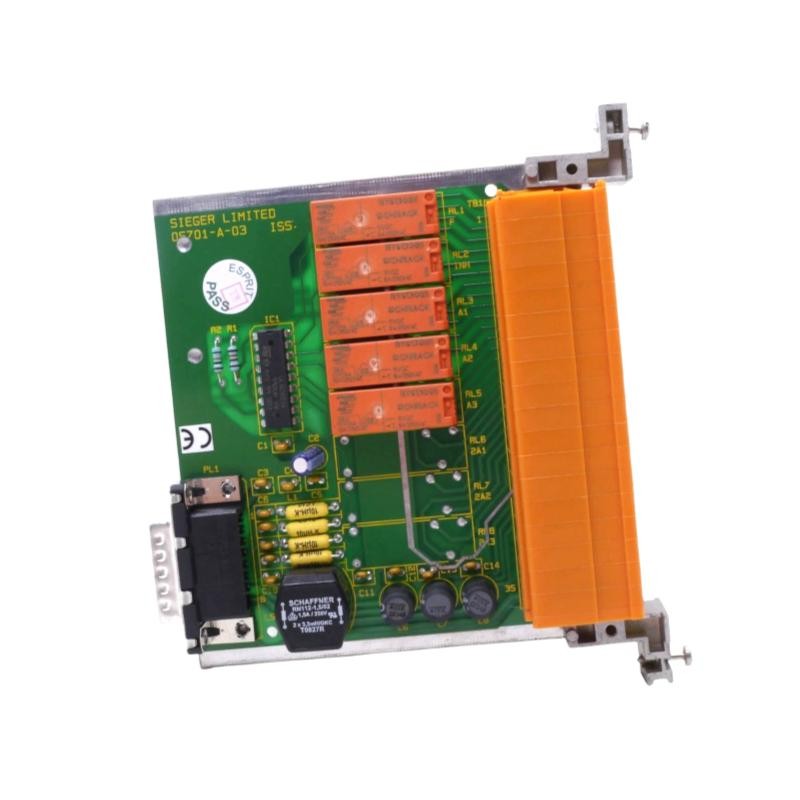
Honeywell 05701-A-0328 Control Card Fault Troubleshooting Guide (PID Instability & False Alarm)
Honeywell 05701-A-0328 faults are frequently misdiagnosed as sensor or controller failures. Field experience shows most issues stem from backplane contact instability, EMI interference, or grounding loops.
Honeywell 05701-A-0328 Fault Symptoms
- Intermittent PID loop oscillation
- False A1/A2/A3 alarms
- LED Fault/Inhibit without sensor input change
- Delayed analog output response
- Communication errors with redundant controller modules
In one chemical plant, repeated false alarms occurred every 20 minutes. Sensor measurements were stable, confirming the problem originated at the control card.
Field Diagnostic Approach
1. Analog Signal Verification
- Stable 4–20 mA → sensor healthy
- Fluctuating current → check wiring or grounding
- Sudden drop → open loop or connector issue
2. Mechanical & Backplane Inspection
- Check card seating and latch engagement
- Inspect connectors for oxidation or wear
A 0.25 mm misalignment caused intermittent PID instability in a refinery multi-channel rack.
3. Power & EMI Analysis
- Nominal 24 V DC; ripple <100 mV
- Ripple >300 mV indicates EMI or shared load issues
- Reroute analog cables away from high-current devices if needed
Common Field Failure Patterns
- Loose Card Seating: intermittent alarms and loop instability
- EMI Interference: signal spikes during high-current operation
- Aged Backplane Contacts: gradual drift, fixed by cleaning or replacement
Field Recovery Case Study
Scenario: False A2 alarm on a single channel.
Symptoms: Repeated alarms every 25–30 minutes.
Diagnosis:
- Loop current stable at sensor
- Voltage fluctuation at card backplane
- Card slightly loose due to rack vibration
Action:
- Reinsert card and tighten screws
- Clean contacts
- Add vibration damping
Result: Signal stabilized; false alarms eliminated with ±2% variation maintained.