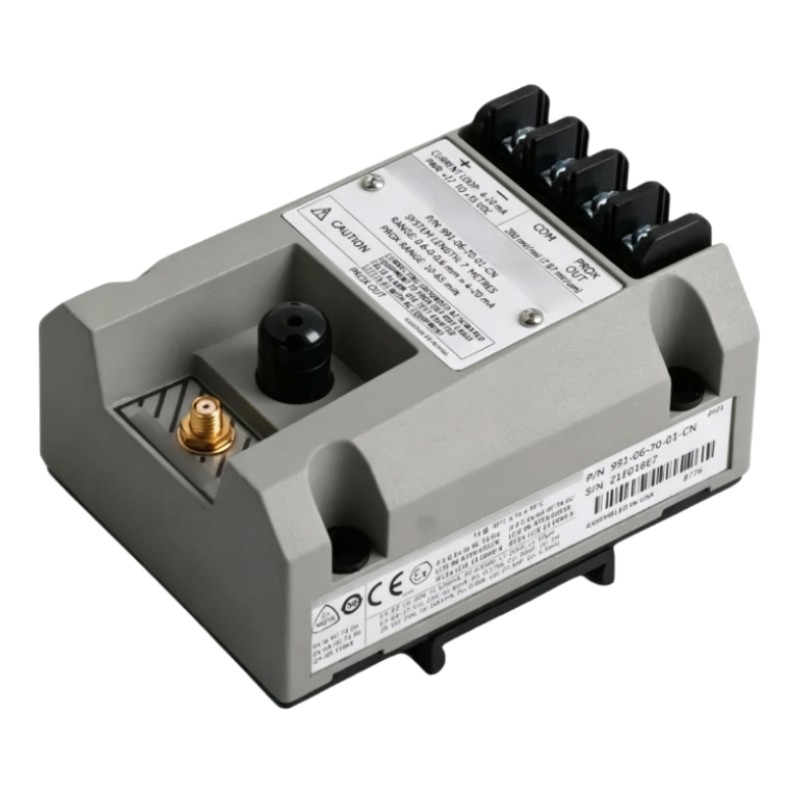
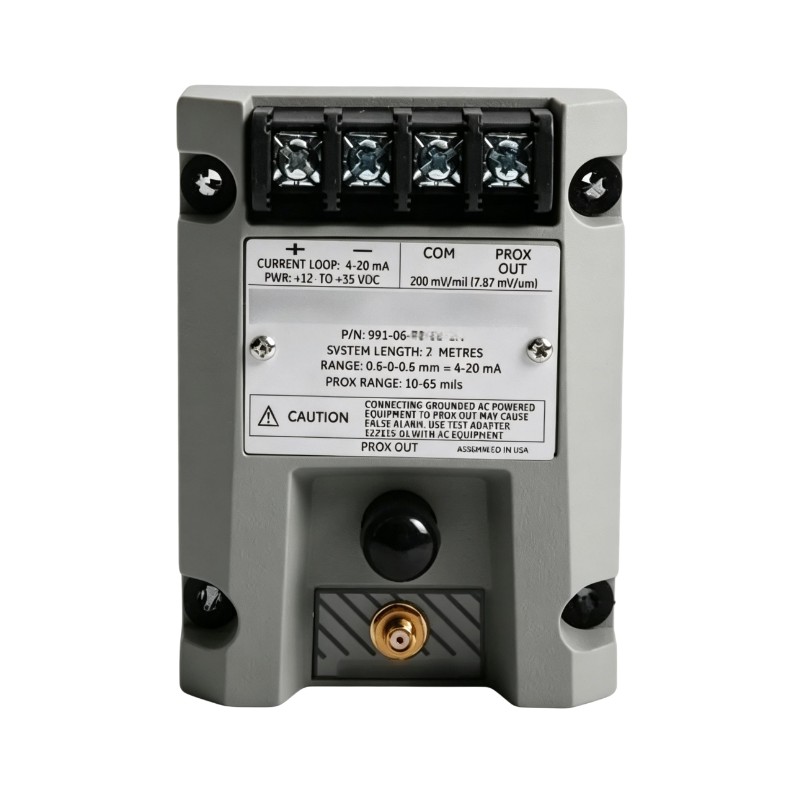
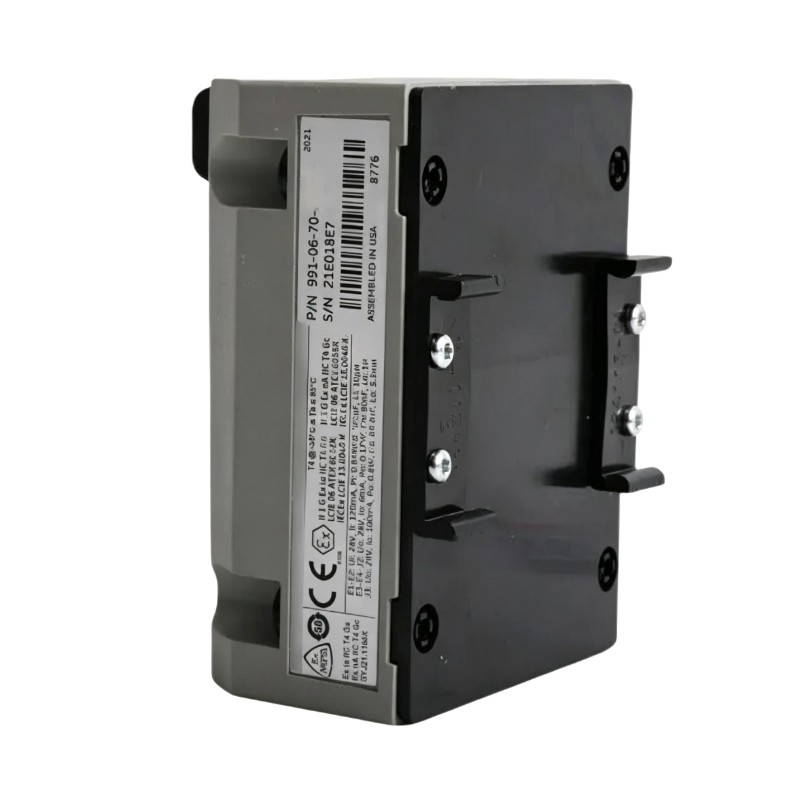
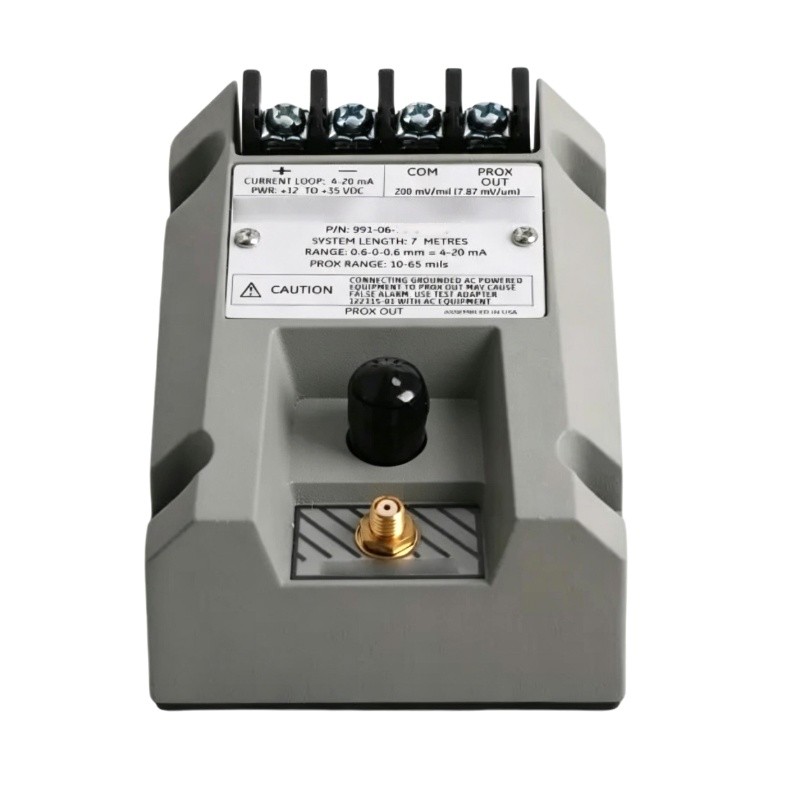
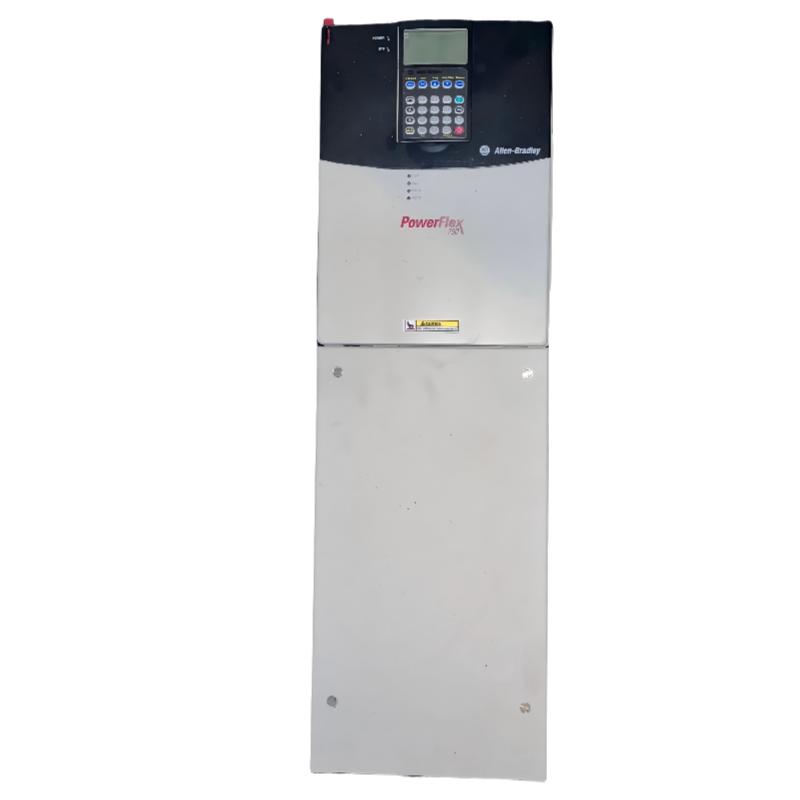
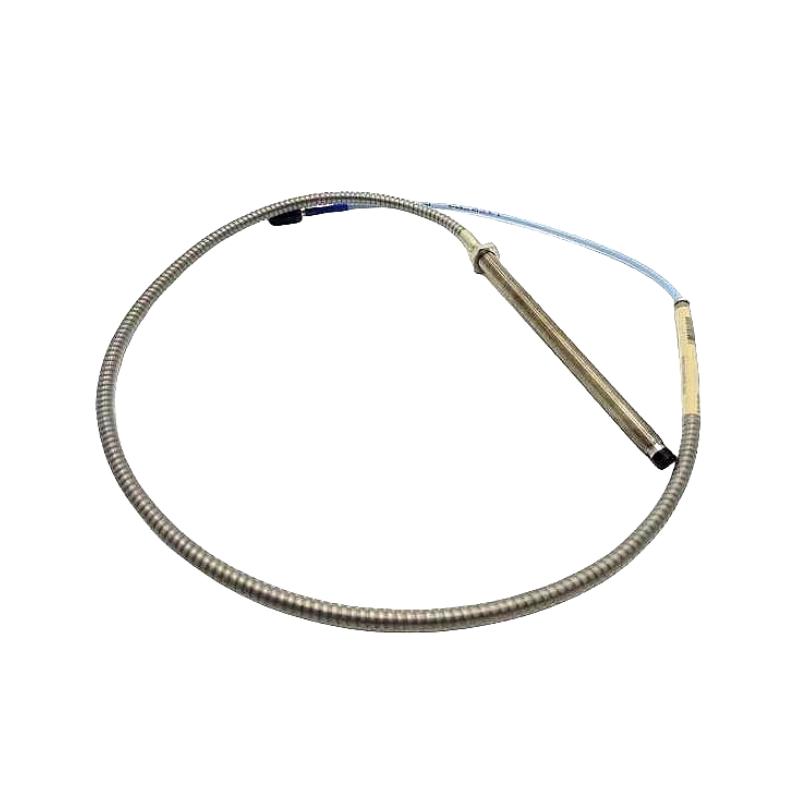
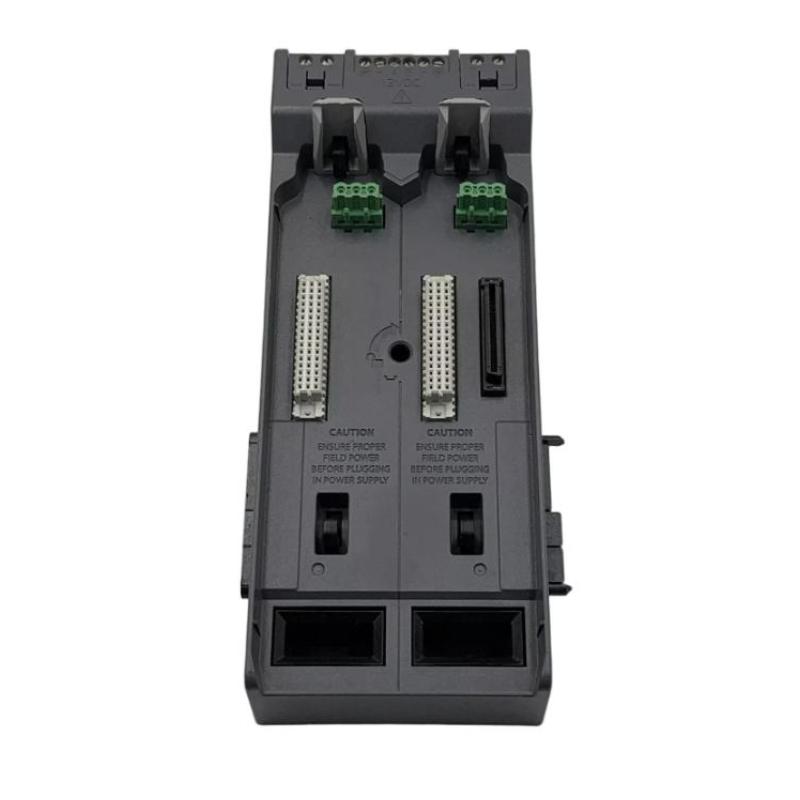
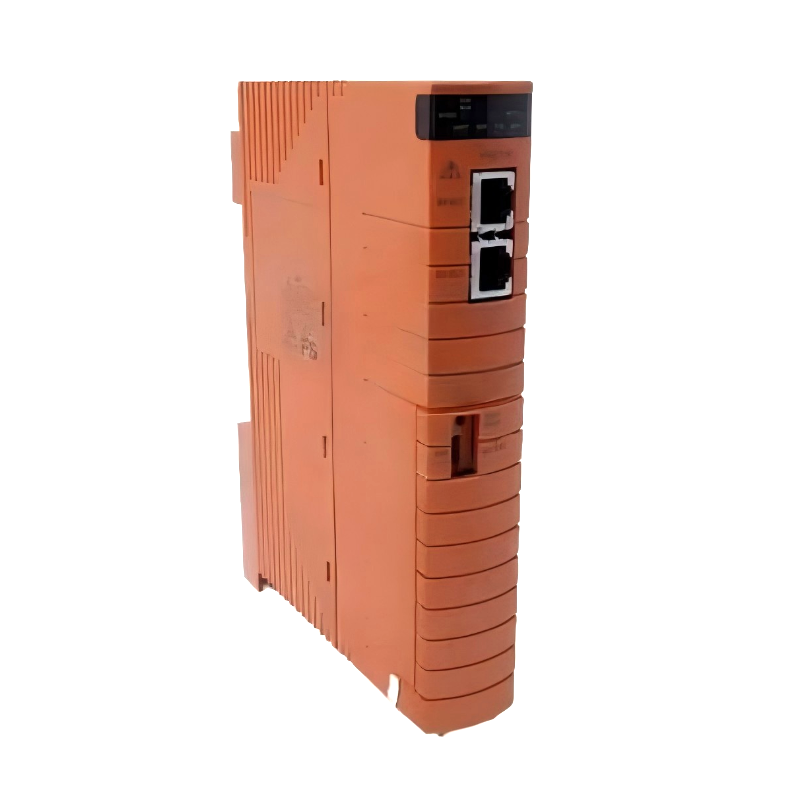
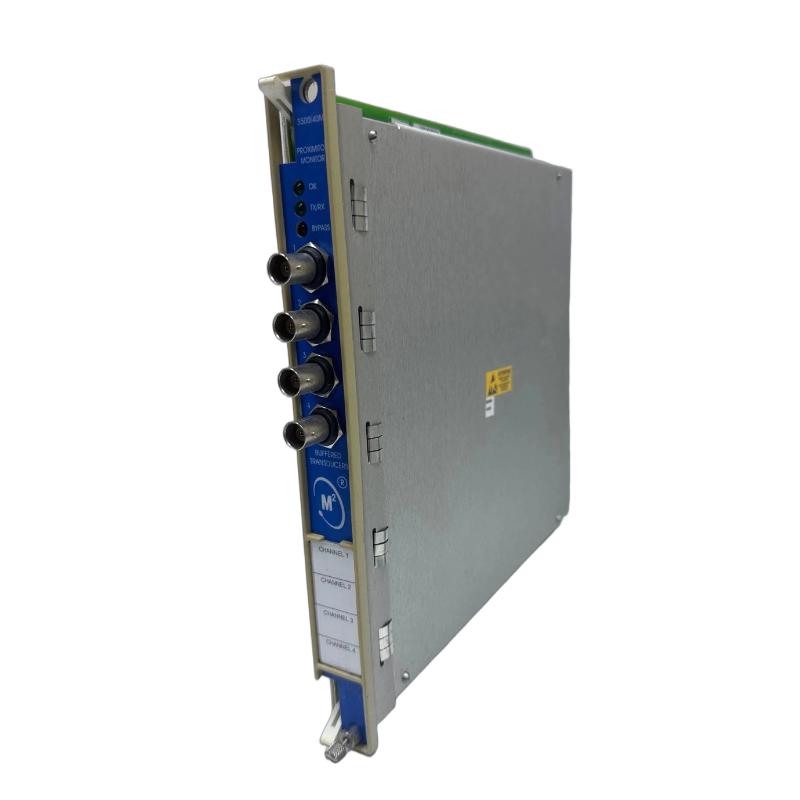
Brand:Bently Nevada PLC Item No.:991-06-XX-01-01 Product Origin:USA Product Dimensions:100.1 x 73.9 x 53.3 mm Product Weight:0.43 kg Payment:T/T, Western Union, Credit Card Goods_stock:15 Shipping Port:Xiamen, China Lead Time:1-3 Days Condition:Brand New And Original Warranty:1 Year Certificate:COO
The Bently Nevada 991-06-XX-01-01 991 Thrust Sensor is a compact axial displacement monitoring device designed for rotating machinery protection applications. It converts shaft thrust movement into a standard 4–20 mA signal, enabling easy integration with PLC and DCS control systems. Built for OEM machinery and industrial applications, it provides reliable and stable performance for monitoring thrust bearings and ensuring safe machine operation in demanding environments.
Technical Specifications
Parameter
Specification
Product Type
Thrust Sensor
Model
991-06-XX-01-01
Measurement Type
Axial displacement (thrust)
Output Signal
4–20 mA analog
Input System
3300 NSv proximity probe compatible
Function
Machinery condition monitoring
Application
Pumps, compressors, motors, fans
Dimensions
100.1 × 73.9 × 53.3 mm
Weight
0.43 kg
Installation Type
DIN rail / bulkhead mounting
Recommended Related Models
Model
Product Name
991-06-70-01-01
Bently Nevada 991 Thrust Sensor Variant
330901-14-43-05-02-05
Bently Nevada 3300 NSv Proximity Probe
330180-X0-00
Bently Nevada 3300 XL Preamplifier Sensor
3500/42M
Bently Nevada Proximitor Seismic Monitor
Popular Related Models
Model
Product Name
3500/15
Bently Nevada Power Supply Module
3500/22M
Bently Nevada Transient Data Interface Module
3500/25
Bently Nevada Keyphasor Module
3500/92
Bently Nevada Communication Gateway Module
Applications
• Axial thrust (shaft position) monitoring in centrifugal compressors, pumps, motors, and fans in industrial rotating equipment systems
• OEM machinery protection applications where a simple 4–20 mA thrust signal is required for control and alarm logic integration
• Condition monitoring in small to medium rotating machines used in power generation, oil and gas, petrochemical, and general industry
• Integration into PLC or DCS systems for real-time thrust position feedback and basic protection functions
• Monitoring fluid-film thrust bearings to detect axial movement and prevent mechanical damage
• Retrofit and replacement applications in existing Bently Nevada 991 NSv-based measurement systems
Key Advantages
• Integrated proximity sensing design simplifies system architecture and reduces external module requirements
• Provides direct 4–20 mA proportional output for easy integration into industrial control systems
• Compatible with Bently Nevada 3300 NSv probe systems for flexible installation configurations
• Compact and rugged construction supports reliable operation in harsh industrial environments
• Supports early detection of thrust bearing wear and abnormal axial shaft movement
• Designed for stable long-term operation in continuous-duty industrial applications
• Easy installation and configuration for OEM and retrofit applications
Technical FAQs
Q1: What is the main function of the 991 thrust sensor?
It measures axial shaft displacement (thrust) in rotating machinery and converts it into a 4–20 mA output signal.
Q2: What type of machinery uses this device?
Centrifugal compressors, pumps, motors, fans, and other small to medium rotating equipment.
Q3: What output signal does it provide?
It provides a 4–20 mA analog output proportional to thrust position.
Q4: Does it require a separate signal processor?
No, it includes integrated signal conditioning for direct control system input.
Q5: What probe system is it compatible with?
It works with Bently Nevada 3300 NSv proximity probe systems.
Q6: Why is thrust monitoring important?
It helps prevent rotor damage caused by excessive axial movement or thrust bearing failure.
Q7: Is it suitable for continuous monitoring?
Yes, it is designed for continuous industrial operation.
Q8: Can it be used in OEM systems?
Yes, it is specifically designed for OEM integration.
Q9: What industries typically use this sensor?
Power generation, oil and gas, petrochemical, and industrial manufacturing.
Q10: Is it suitable for harsh environments?
Yes, it is built for industrial-grade durability and stable long-term performance.