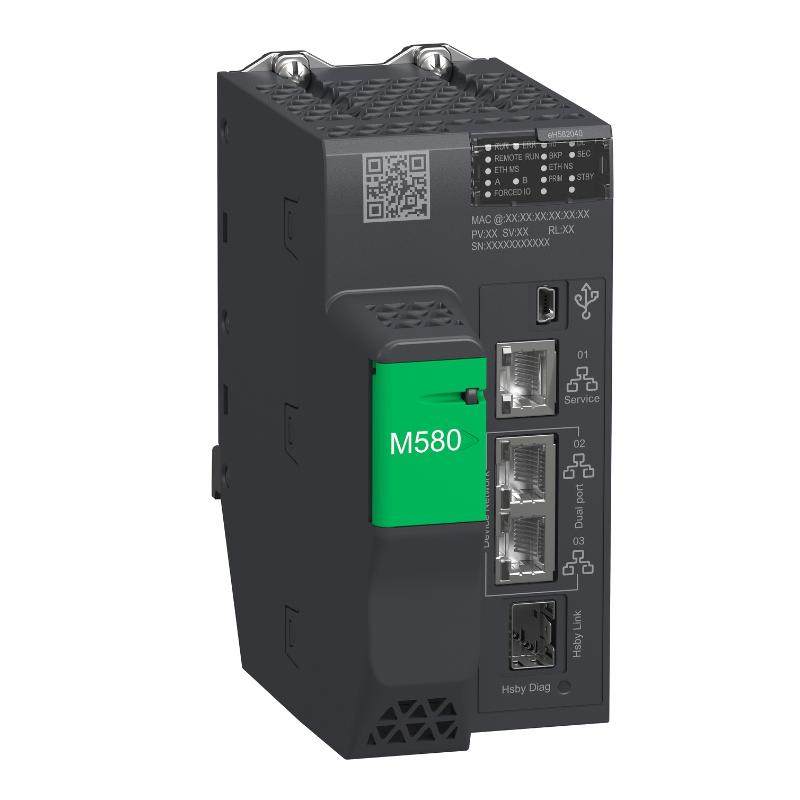
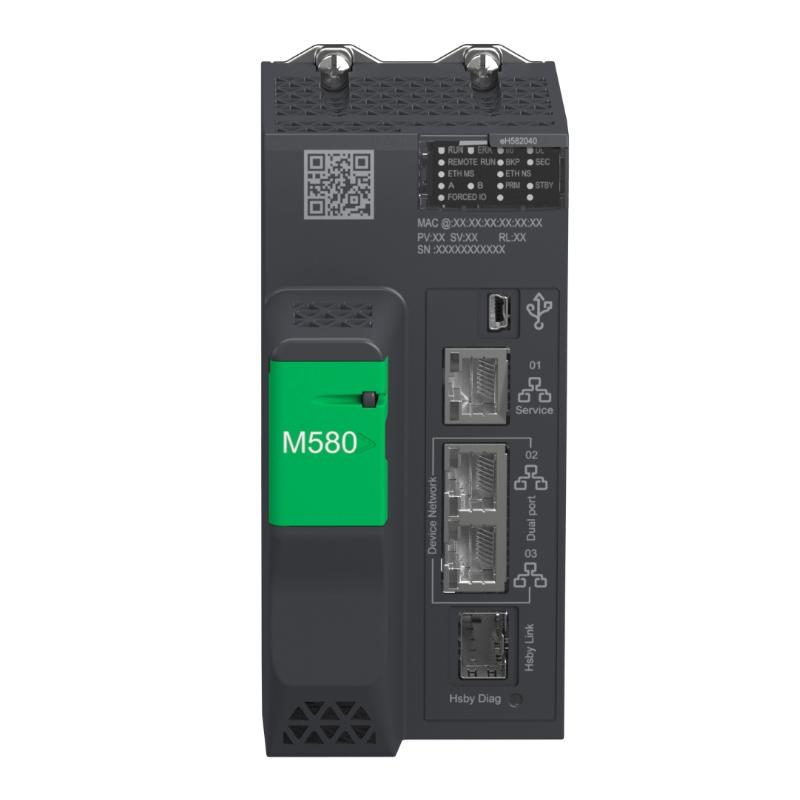
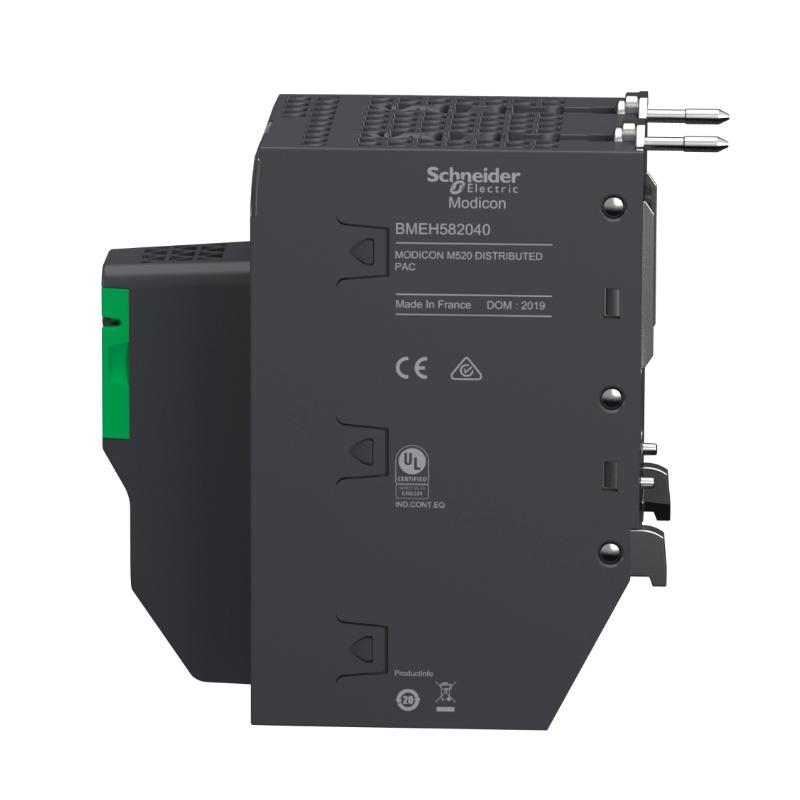
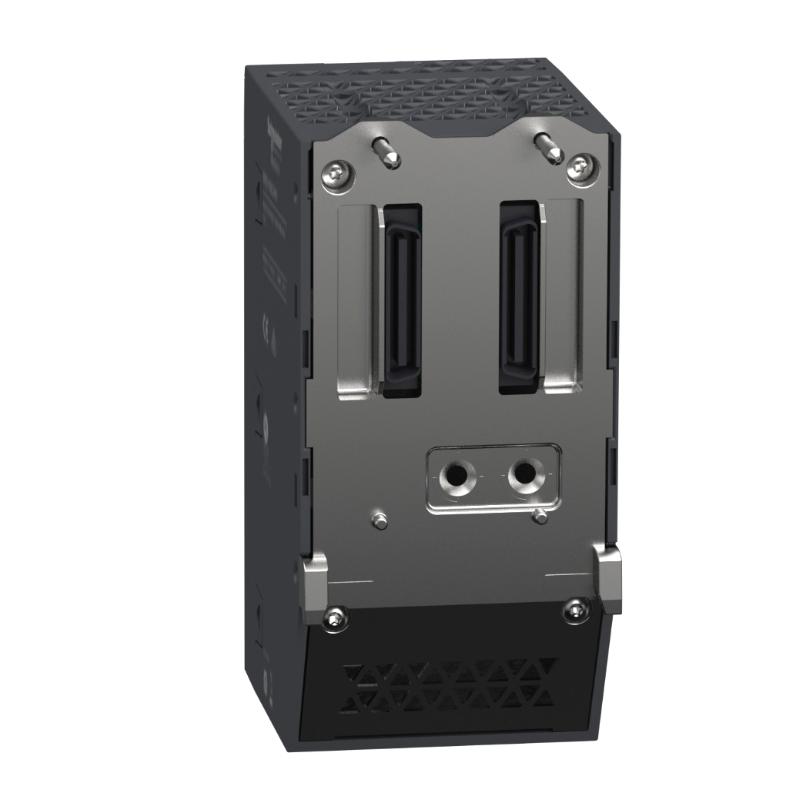
Brand:Schneider PLC Item No.:BMEH582040 Product Origin:France Product Dimensions:134.6 x 64.6 x 130.3 mm Product Weight:0.849 kg Payment:T/T, Western Union, Credit Card Goods_stock:15 Shipping Port:Xiamen, China Lead Time:1-3 Days Condition:Brand New And Original Warranty:1 Year Certificate:COO
The Schneider Electric BMEH582040 is a redundant processor module from the Modicon M580 platform designed for high-availability industrial automation. It is engineered for applications where continuous control and system resilience are essential.
By using a hot-standby CPU architecture, the module ensures uninterrupted operation even if one processor fails. It integrates seamlessly into Ethernet-based control systems and supports large-scale distributed I/O architectures, making it suitable for complex industrial environments.
Technical Specifications
Item
Value
Product Model
BMEH582040
Type
Redundant Processor Module
Platform
Modicon M580
Processor Architecture
Hot Standby Redundant CPU
Power Supply
24 V DC (rack backplane)
Current Consumption
270 mA
Memory
8 MB program RAM + expandable flash
Communication
Ethernet TCP/IP (service, device, HSBY)
Supported Racks
1 main rack
Distributed Devices
Up to 64
Remote I/O Stations
Up to 8
Protection Class
IP20
Dimensions
134.6 × 64.6 × 130.3 mm
Weight
0.849 kg
Recommended Related Models
Model
Product Name
BMEP582040
Standard M580 Processor Module
BMEH584040
High Performance Redundant CPU
BMEXBP0800
M580 Rack Backplane
BMXCRA31210
Remote I/O Adapter Module
Popular Related Models
Model
Product Name
BMXCPS4002
Power Supply Module
BMXNOE0110
Ethernet Communication Module
BMXDDI3202
Digital Input Module
BMXDDO3202
Digital Output Module
Applications
• High-Availability Process Control Systems
Used in continuous industrial processes where system downtime is not acceptable, such as chemical, oil & gas, and power generation plants.
• Large-Scale Automation Architectures
Supports complex Modicon M580 control systems with multiple I/O racks and distributed equipment.
• Critical Infrastructure Systems
Applied in utilities, water treatment, and energy distribution systems requiring redundant CPU architecture.
• Industrial Digital Transformation Systems
Enables Ethernet-based data integration for advanced monitoring, diagnostics, and system optimization.
Key Advantages
• Redundant Hot-Standby CPU Architecture
Ensures continuous operation by switching instantly in case of processor failure.
• High Processing Capacity
Supports large-scale I/O configurations and high-speed control tasks for complex automation systems.
• Integrated Ethernet Communication
Provides multiple Ethernet ports for device networks, service access, and redundancy synchronization.
• Robust Industrial Reliability
Designed for mission-critical environments with high MTBF and strong fault tolerance.
Technical FAQs
Q1 What is the main function of the BMEH582040 module?
A: It is a redundant processor module used to control and manage Modicon M580 automation systems with high availability.
Q2 What does “redundant processor” mean in this module?
A: It means two CPUs operate in hot standby mode so one can take over instantly if the other fails.
Q3 Which PLC platform does it belong to?
A: It belongs to the Schneider Electric Modicon M580 PAC system.
Q4 How does redundancy improve system reliability?
A: It prevents system shutdown by maintaining continuous control during CPU failure.
Q5 How many racks can it support?
A: It supports a maximum of one main rack configuration with multiple I/O expansions.
Q6 What communication interfaces are included?
A: It includes Ethernet TCP/IP service, device network ports, and a dedicated HSBY redundancy port.
Q7 Is it suitable for large industrial systems?
A: Yes, it is designed for medium to large-scale industrial automation systems.
Q8 What type of applications use this module?
A: It is used in process control, energy systems, and critical infrastructure automation.
Q9 Does it support distributed I/O systems?
A: Yes, it supports both local and distributed I/O architectures.
Q10 Why is this module used in industrial plants?
A: Because it increases system uptime, reliability, and operational safety in critical processes.