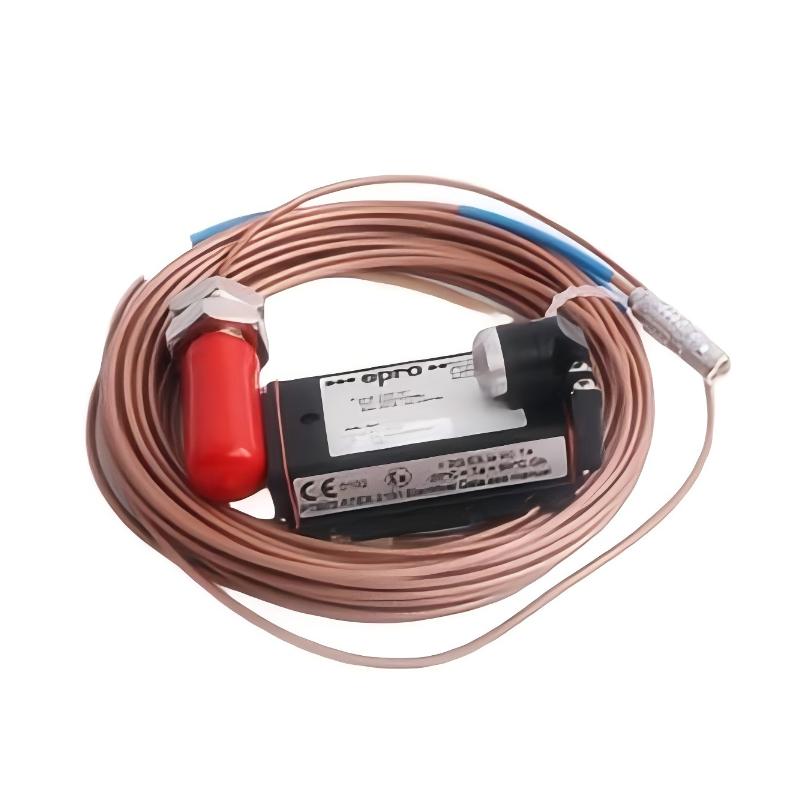
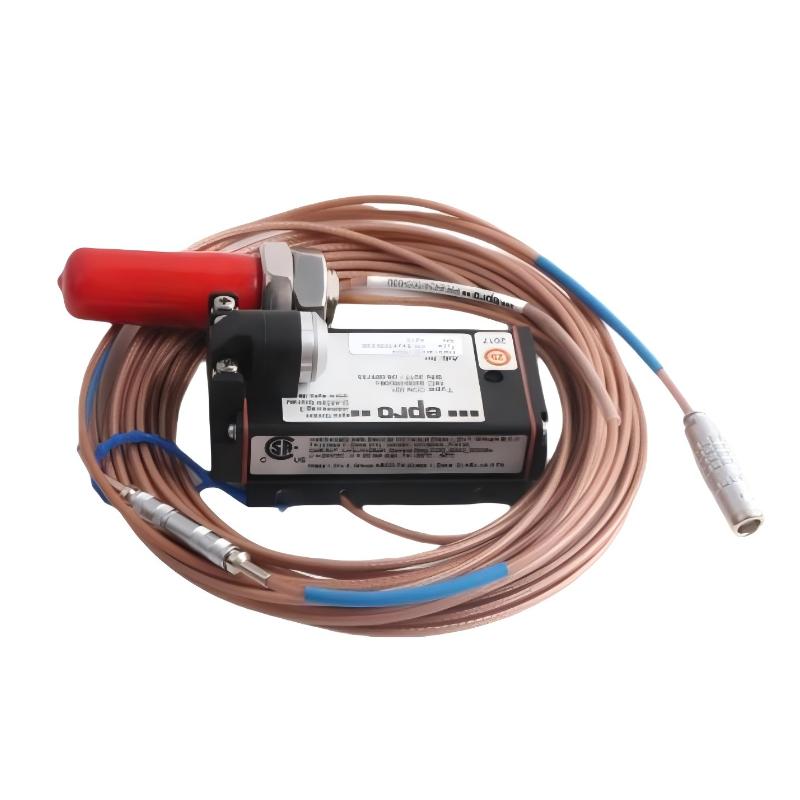
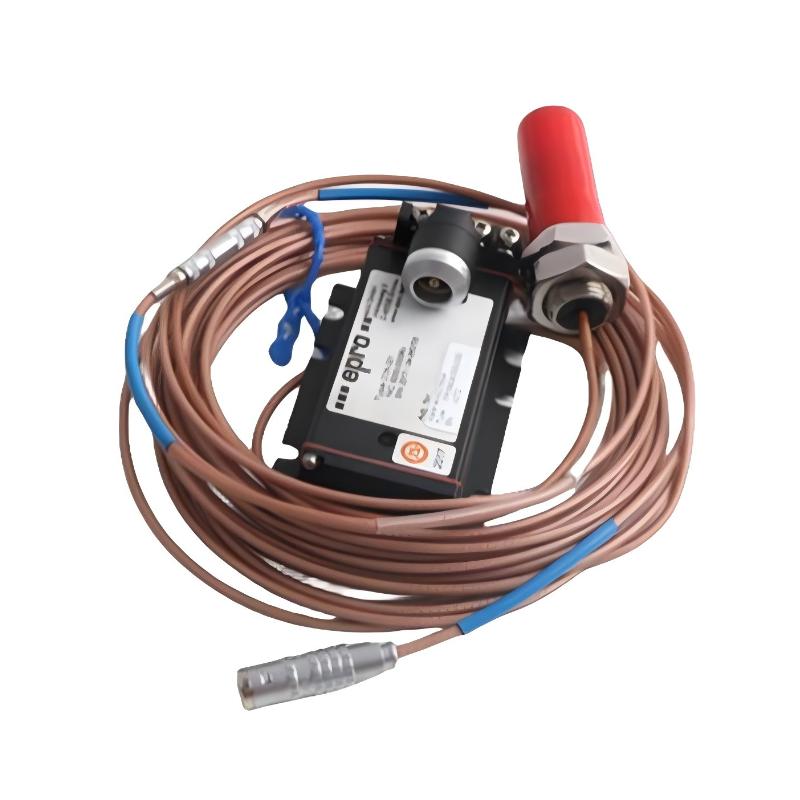
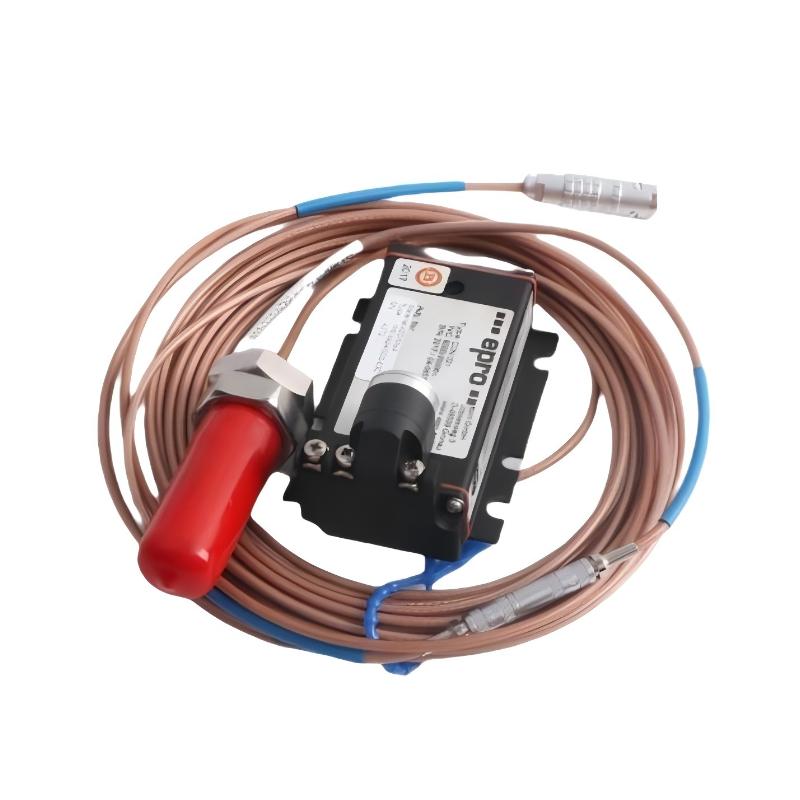
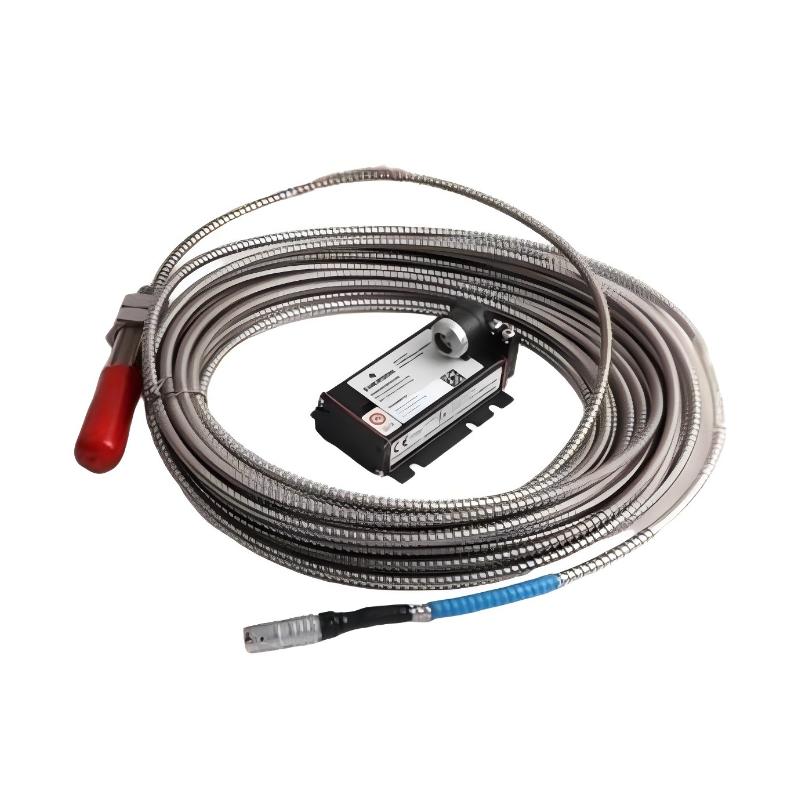
Brand:Epro PLC Item No.:PR6424/107-101 Product Origin:Germany Product Dimensions:Sensor Head Diameter: 16 mm Product Weight:0.2 kg Payment:T/T, Western Union, Credit Card Goods_stock:15 Shipping Port:Xiamen, China Lead Time:1-3 Days Condition:Brand New And Original Warranty:1 Year Certificate:COO
The Epro PR6424/107-101 16 mm Eddy Current Sensor is a high-performance proximity transducer used in turbomachinery condition monitoring systems. It operates using the eddy current principle, where a high-frequency electromagnetic field is generated at the probe tip and changes according to the distance from a conductive target surface.
When paired with a compatible signal converter, it delivers accurate real-time shaft vibration and displacement data, enabling predictive maintenance and reliable machinery protection in demanding industrial environments.
Technical Specifications
Parameter
Specification
Model
PR6424/107-101
Series
Epro PR6424
Sensor Type
Eddy current proximity sensor
Probe Diameter
16 mm
Measurement Type
Non-contact displacement & vibration
Sensitivity
4 V/mm (±1.5% linearity)
Static Range
±2.0 mm
Dynamic Range
0 to 1000 µm
Nominal Air Gap
~2.7 mm
Minimum Shaft Diameter
≥80 mm
Operating Temperature
-35°C to +180°C
Material
Stainless steel sensor body
Output Signal
Requires external converter (CON series)
Weight
0.2 kg (0.44 lb)
Applications
The Epro PR6424/107-101 16 mm eddy current sensor is designed for precise, non-contact measurement of shaft vibration, displacement, and eccentricity in high-reliability rotating machinery systems.
Steam turbine radial and axial vibration monitoring
Gas turbine rotor position and eccentricity measurement
Hydro turbine shaft displacement tracking
Industrial compressor condition monitoring
Pump vibration and imbalance detection
Fan and blower stability analysis
API 670 compliant machinery protection systems
Advantages
High-precision eddy current non-contact sensing technology for stable dynamic measurement
Excellent long-term stability with minimal signal drift (<0.3%)
Strong resistance to harsh industrial environments (temperature, vibration, contamination)
High linearity and repeatability for protection-grade applications
Compatible with Epro CON series signal converters (CON011 / CON021 / CON041)
Rugged stainless-steel probe construction for industrial durability
Designed for continuous 24/7 monitoring of rotating machinery
Technical FAQs
Q1: What is the working principle of this sensor?
It uses eddy current induction to measure distance changes between the probe tip and conductive target without contact.
Q2: What is the main application of PR6424/107-101?
It is used for shaft vibration, displacement, and eccentricity monitoring in turbomachinery.
Q3: What system is required for operation?
It must be paired with an Epro signal converter such as CON021 or CON041.
Q4: Is it suitable for turbine applications?
Yes, it is widely used in steam, gas, and hydro turbines.
Q5: What shaft size is required?
Typically suitable for shafts ≥80 mm diameter.
Q6: Can it measure both static and dynamic behavior?
Yes, it measures both shaft position (static) and vibration (dynamic).
Q7: What is the operating temperature range?
Approximately -35°C to +180°C depending on system configuration.
Q8: Does it require physical contact?
No, it is a fully non-contact measurement sensor.
Q9: What industries use this model?
Power generation, oil & gas, petrochemical, and heavy industry sectors.
Q10: What makes it suitable for critical machinery protection?
Its stability, precision, and compliance with industrial monitoring standards ensure reliable long-term condition monitoring.