Ingersoll Rand Expands Industrial Automation Portfolio Through Life Sciences and Laboratory Automation Integration
Ingersoll Rand Broadens Its Automation Strategy
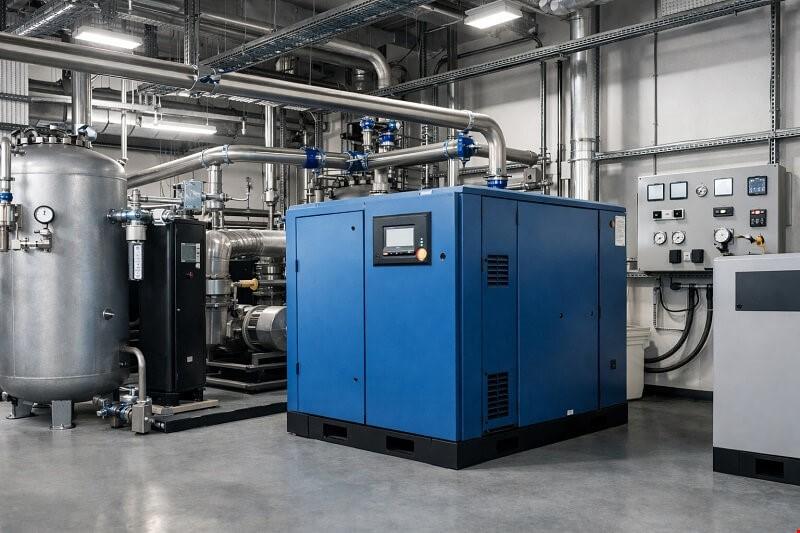
Ingersoll Rand is actively expanding beyond its traditional strength in industrial flow creation and compressed air systems, moving into higher-value automation markets such as laboratory automation and life sciences technologies.
This strategic shift reflects a broader transformation within the industrial sector, where companies are increasingly integrating mechanical systems with digital automation, precision robotics, and data-driven process optimization.
By expanding into laboratory automation, Ingersoll Rand is positioning itself within one of the fastest-growing segments of industrial technology.
Strategic Expansion into Laboratory Automation
The company has strengthened its automation portfolio through the acquisition of a specialized laboratory automation technology provider focused on sample handling, labeling, barcode tracking, and precision workflow systems.
These technologies are widely used in clinical research, pharmaceutical production, biotechnology laboratories, forensic analysis, and genetic testing environments.
By integrating these capabilities, Ingersoll Rand is able to offer more complete automation solutions that improve workflow efficiency, reduce manual handling, and enhance data accuracy across laboratory operations.
This expansion represents a significant shift from traditional industrial equipment toward precision automation systems designed for highly controlled environments.
Automation Trends in Life Sciences Industry
The life sciences industry is experiencing rapid automation adoption due to increasing demand for high-throughput testing, accurate sample tracking, and regulatory compliance.
Automation systems in this sector must ensure:
- High precision
- Full traceability
- Reduced human error
- Faster processing cycles
- Digital data integration
Laboratory automation systems now play a critical role in accelerating drug discovery, improving diagnostic accuracy, and supporting large-scale research operations.
Ingersoll Rand’s expansion into this space allows it to apply its industrial engineering expertise to highly specialized automation applications.
Integration of Industrial Flow and Precision Automation
One of the key advantages of Ingersoll Rand’s strategy is the combination of industrial flow systems with precision automation technologies.
Compressed air systems, fluid control technologies, and industrial pumps can be integrated with advanced automation platforms to create more efficient and intelligent operational environments.
This convergence supports:
- Automated laboratory workflows
- Smart industrial fluid handling
- Precision dosing systems
- Automated production environments
- Data-driven process control
Such integration improves both operational efficiency and system reliability across multiple industries.
Digitalization and Smart Industrial Systems
Modern industrial automation is increasingly driven by data and connectivity.
Ingersoll Rand is developing systems that support real-time monitoring, predictive maintenance, and intelligent process optimization.
By collecting and analyzing operational data from automated systems, manufacturers and laboratories can:
- Reduce downtime
- Improve resource utilization
- Enhance system accuracy
- Optimize workflow efficiency
This shift toward digital automation is transforming traditional mechanical systems into intelligent, connected platforms.
Industry Applications
Ingersoll Rand automation solutions are used across:
- Life sciences and laboratories
- Industrial manufacturing
- Chemical processing
- Energy systems
- Food and beverage production
- Pharmaceutical industries
Each application benefits from improved automation efficiency, higher precision, and better data management.