ABB Robots Showcase Industrial Physical AI Innovations at WAIC 2026, Redefining the Boundaries of Robotic Capabilities
Meta Description (SEO):
ABB robots presented industrial-grade Physical AI innovations at WAIC 2026, demonstrating advances in intelligent robotics, autonomous operation, and next-generation smart manufacturing.
ABB Robotics Demonstrates Industrial Physical AI Innovations at WAIC 2026
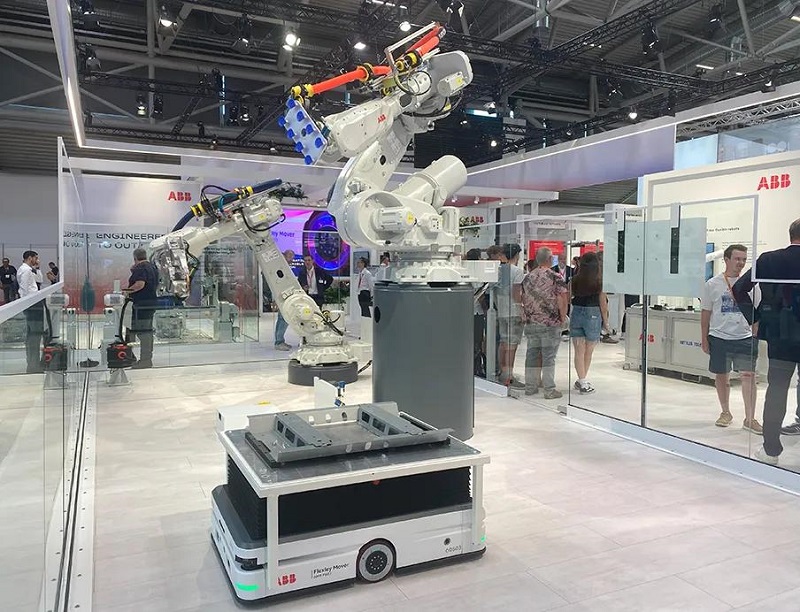
ABB showcased its latest robotic technologies and industrial Physical AI innovations at the World Artificial Intelligence Conference (WAIC) 2026, highlighting how artificial intelligence is expanding the capabilities of industrial robots.
The exhibition demonstrated how AI technologies are enabling robots to move beyond traditional repetitive automation toward more adaptive, intelligent, and flexible operations.
Physical AI Brings New Possibilities to Industrial Robots
Physical AI refers to the integration of artificial intelligence with physical machines, allowing robots to better understand environments, make decisions, and perform complex tasks.
Compared with traditional automation systems, Physical AI focuses on improving:
- Environmental perception
- Intelligent decision-making
- Autonomous task execution
- Adaptive movement control
- Human-machine collaboration
This technology represents a major development direction for the next generation of industrial robotics.
ABB Robots Move Toward More Intelligent Automation
At WAIC 2026, ABB highlighted robotic solutions designed to support smarter industrial applications, including:
- AI-enhanced robot control
- Advanced vision and sensing technologies
- Flexible manufacturing solutions
- Intelligent robot programming
- Human-robot collaboration systems
These innovations help manufacturers improve production flexibility while reducing the complexity of automation deployment.
Expanding Robot Applications Beyond Traditional Manufacturing
Traditional industrial robots are widely used in welding, assembly, painting, and material handling.
With AI integration, robots are increasingly capable of handling more complex scenarios such as:
- Precision assembly
- Flexible production lines
- Quality inspection
- Intelligent logistics
- Dynamic manufacturing environments
This enables factories to respond more efficiently to customized production requirements.
AI and Robotics Accelerate Smart Factory Development
The combination of robotics, artificial intelligence, and industrial data is becoming a key foundation for Industry 4.0.
Future smart factories will increasingly rely on:
- AI-driven production optimization
- Digital twins
- Autonomous robotic systems
- Real-time data analysis
- Intelligent manufacturing execution platforms
ABB’s Physical AI exploration reflects the broader transformation of industrial automation from fixed processes toward adaptive intelligent systems.
Supporting China’s Intelligent Manufacturing Upgrade
China remains one of the world’s largest industrial automation markets, with strong demand for:
- Advanced manufacturing technologies
- Industrial robots
- AI-powered production systems
- Digital factory solutions
Through participation in WAIC 2026, ABB demonstrates its continued focus on supporting industrial customers in adopting intelligent automation technologies.
Industry Outlook: Physical AI May Become the Next Robotics Growth Engine
The robotics industry is moving toward a new era driven by:
- Artificial intelligence
- Machine vision
- Autonomous control
- Advanced sensors
- Industrial software platforms
Physical AI is expected to become an important technology direction for improving robot flexibility, intelligence, and real-world application capabilities.