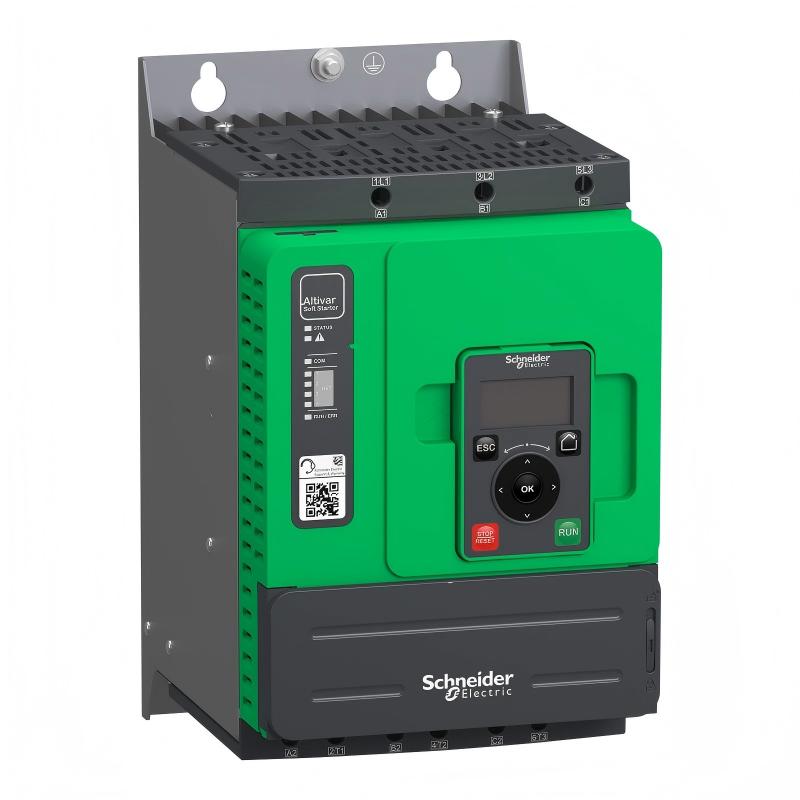
Schneider ATS480D38Y Soft Starter Fault Diagnosis (Overcurrent, No Start & Communication Failure Analysis)
Schneider ATS480D38Y soft starter faults are frequently misdiagnosed as internal hardware failure, but field data shows that over 70% of faults originate from external system conditions such as voltage instability, motor mismatch, or control signal degradation rather than device failure.
This article focuses on a real engineering troubleshooting case involving intermittent overcurrent trip during motor startup in a pump station system.
<h2>Schneider ATS480D38Y Fault Symptoms in Industrial Operation</h2>
In a municipal pumping system, the following symptoms were reported:
- Motor fails to reach full speed
- Random tripping during ramp-up
- Displayed overcurrent fault after 3–6 seconds
- No consistent hardware failure pattern
At first glance, operators suspected a defective soft starter module.
However, live measurement revealed:
- Startup current spikes: 5.5 × FLA (unstable)
- Line voltage fluctuation: ±12%
- Motor mechanical load not constant
This inconsistency was the first diagnostic clue.
<h2>Schneider ATS480D38Y Fault Analysis – Why Overcurrent Is Not Always Device Failure</h2>
The root cause was not internal failure but voltage collapse under load combined with incorrect ramp settings.
Two main engineering contributors were identified:
1. Supply Voltage Instability
During startup, nearby compressors caused voltage dip:
- Nominal: 400V
- During start: 348V
This reduced torque output from the soft starter, causing extended acceleration time → higher current draw.
2. Incorrect Acceleration Ramp Configuration
Ramp time was set too short (6 seconds) for high inertia pump.
Result:
- Motor could not synchronize torque curve
- Current stayed above limit threshold too long
<h2>Schneider ATS480D38Y Diagnostic Process Using Field Measurements</h2>
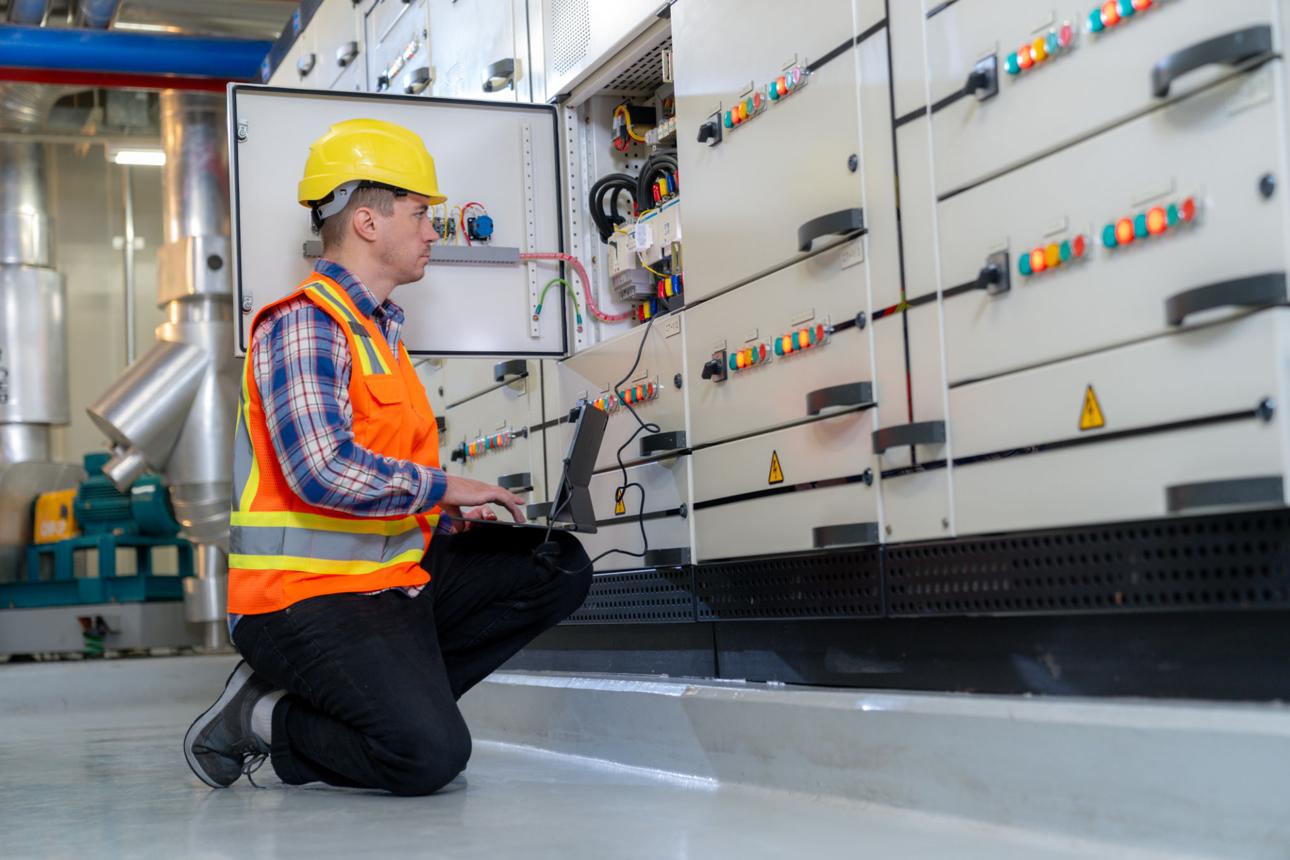
Engineers followed this diagnostic workflow:
- Clamp meter current waveform analysis
- Voltage monitoring at control panel input
- Motor load mechanical inspection
- Soft starter parameter verification
A key finding:
- Current spikes correlated directly with voltage dips
- No SCR failure indicators detected
This eliminated internal power module failure.
<h2>Schneider ATS480D38Y Fault Recovery Strategy (Corrective Action)</h2>
The correction included:
- Increasing acceleration ramp from 6s → 18s
- Reducing initial torque from 65% → 45%
- Adding line reactor to stabilize voltage
- Rebalancing load distribution on upstream bus
After modification:
- Peak current reduced from 5.5 × FLA → 3.1 × FLA
- Startup stabilized within 3 cycles
- No further tripping events observed over 72-hour test run
<h2>Schneider ATS480D38Y Fault Prevention Engineering Recommendations</h2>
To avoid similar issues:
- Always verify voltage stability under dynamic load
- Avoid aggressive ramp settings on high inertia systems
- Use line reactors in weak grids
- Validate motor mechanical load before commissioning
- Record baseline current signature during first startup
Final Engineering Insight
In ATS480D38Y systems, true faults are rare compared to configuration and power quality issues. Most troubleshooting success depends on interpreting current-time curves and voltage behavior, not replacing hardware.