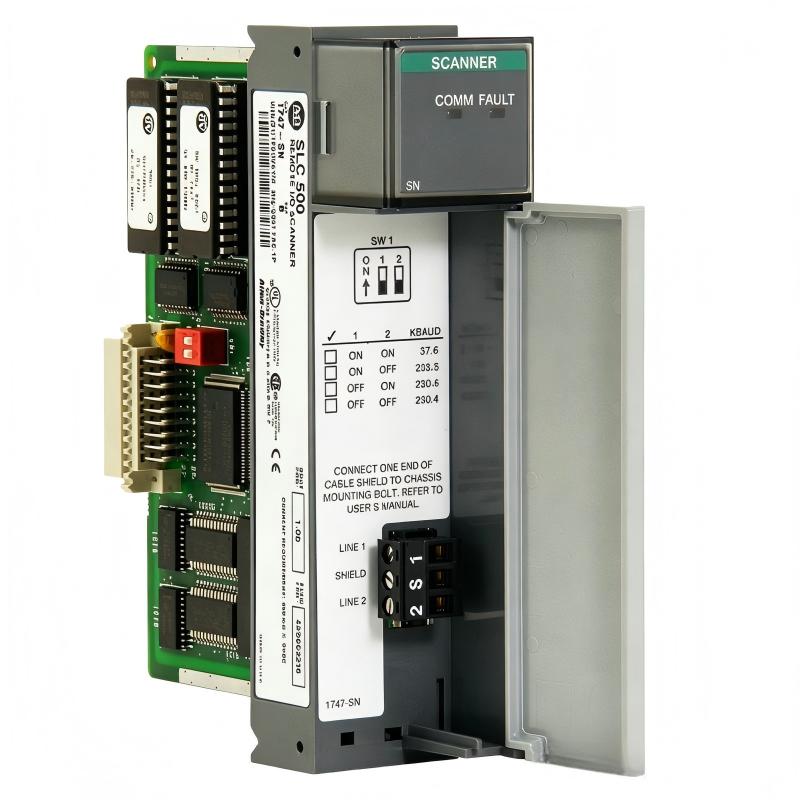
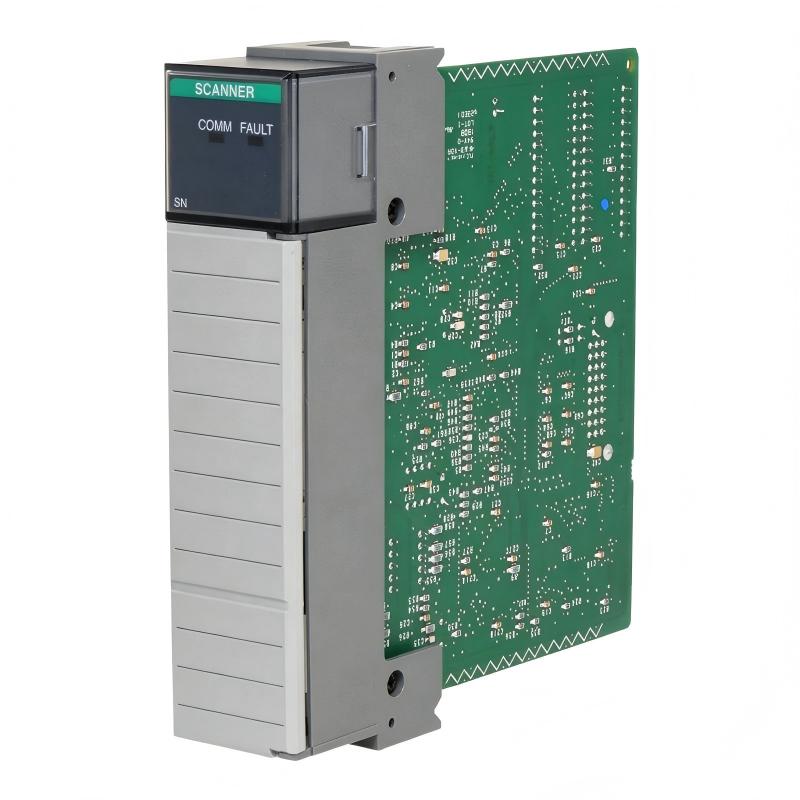
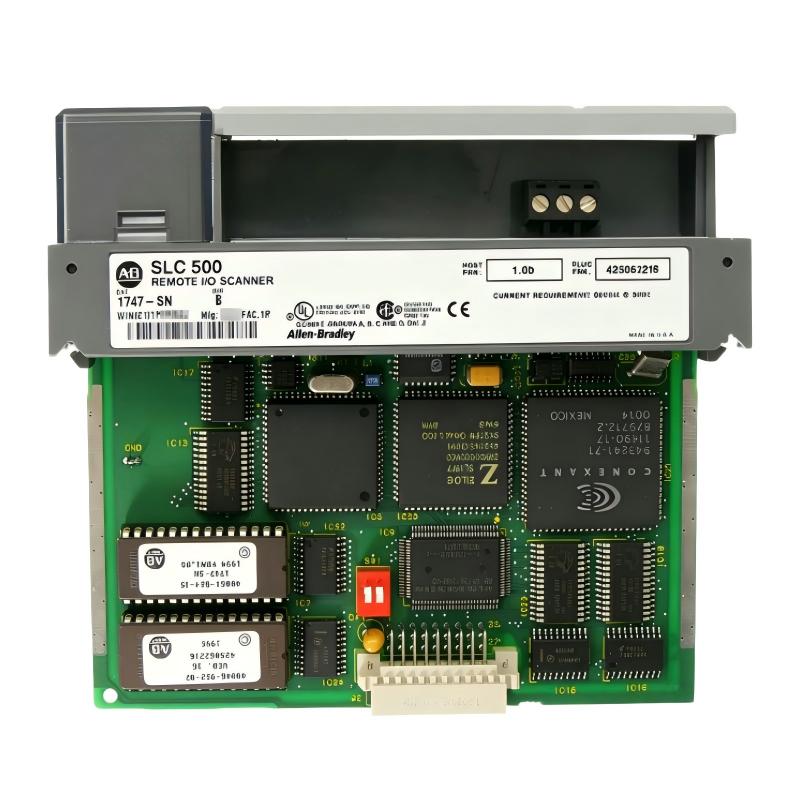
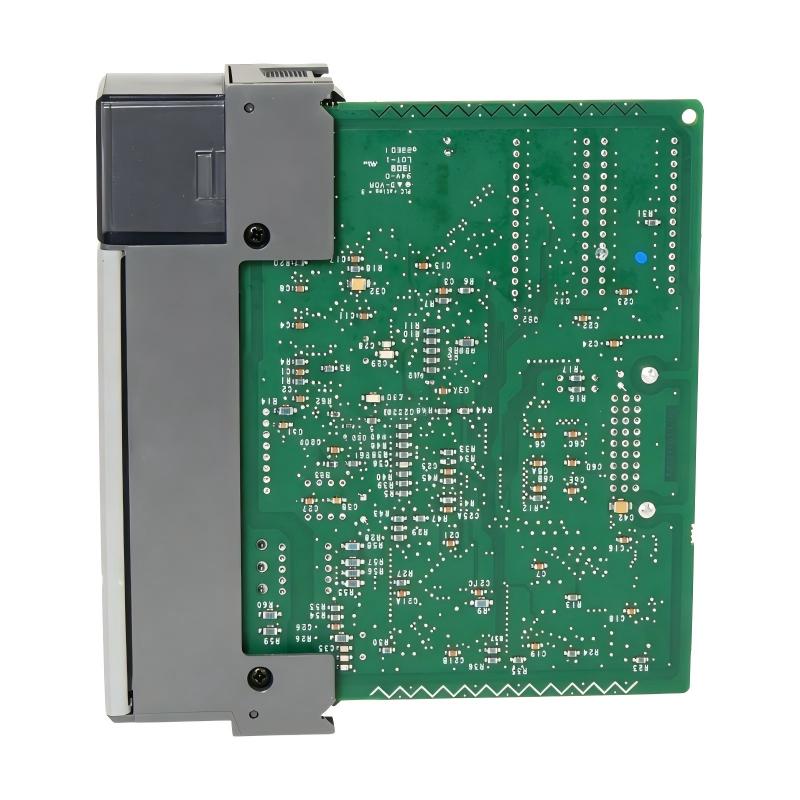
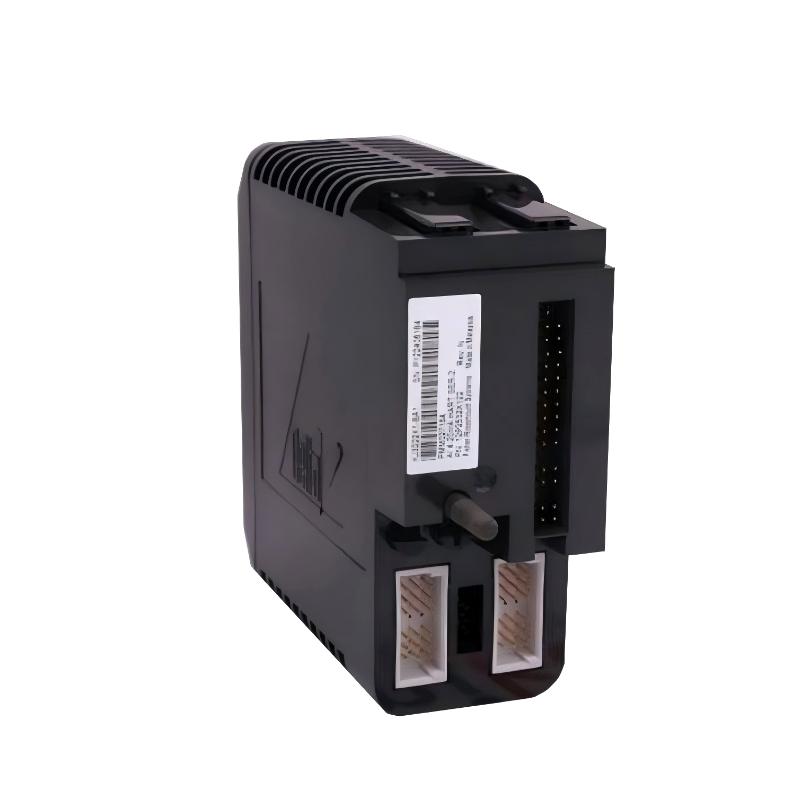
Allen Bradley 1747-SN/B SLC500 Remote I/O Scanner Module
Allen Bradley 1747-SN/B SLC500 Remote I/O Scanner Module
0.0
Points
Brand:Allen Bradley PLC Item No.:1747-SN/B Product Origin:USA Product Dimensions:152 x 51 x 152 mm Product Weight:0.27 kg Payment:T/T, Western Union, Credit Card Goods_stock:15 Shipping Port:Xiamen, China Lead Time:1-3 Days Condition:Brand New And Original Warranty:1 Year Certificate:COO
The Allen-Bradley 1747-SN/B SLC 500 Remote I/O Scanner Module delivers dependable communication performance for distributed automation systems. Designed for engineers working with SLC 500 platforms, it provides a practical method for connecting remote I/O racks and field devices to a centralized controller.
With its proven Remote I/O scanning capability, the 1747-SN/B helps simplify system expansion and improve control system organization. It remains a valuable choice for factories and industrial facilities that rely on established SLC 500 architectures and require stable communication between local processors and remote equipment.
Technical Specifications
Specification
Details
Manufacturer
Allen-Bradley
Model Number
1747-SN/B
Product Family
SLC 500
Module Type
Remote I/O Scanner Module
Communication Interface
Allen-Bradley Remote I/O
Application
SLC 500 Remote I/O communication
Compatible Controllers
SLC 5/02, SLC 5/03, SLC 5/04, SLC 5/05
Installation Method
SLC chassis slot mounting
Backplane Power Requirement
5 VDC, 600 mA
Remote Communication Distance
Up to 3,048 m (10,000 ft) depending on network configuration
Maximum Remote I/O Data Transfer
Up to 4 logical racks of discrete I/O data
Dimensions (H × W × D)
152 × 51 × 152 mm
Weight
0.27 kg (0.60 lb)
Recommended Related Models
Model
Module Type
Description
Allen-Bradley 1747-SN
Remote I/O Scanner Module
Standard SLC 500 Remote I/O communication module
Allen-Bradley 1747-ASB
Remote I/O Adapter Module
Provides Remote I/O communication for remote chassis
Allen-Bradley 1747-SDN
DeviceNet Scanner Module
Adds DeviceNet network communication capability
Allen-Bradley 1747-SCNR
ControlNet Scanner Module
Provides ControlNet communication for SLC 500 systems
Allen-Bradley 1746-A10
SLC 500 Chassis
Ten-slot chassis for SLC 500 module installation
Popular Related Models
Model
Module Type
Description
Allen-Bradley 1747-L542
SLC 5/04 Processor Module
High-performance SLC processor for industrial control applications
Allen-Bradley 1747-L551
SLC 5/05 Processor Module
Ethernet-enabled SLC processor module
Allen-Bradley 1746-P2
Power Supply Module
SLC 500 chassis power supply solution
Allen-Bradley 1746-IB16
Digital Input Module
16-point DC input module for SLC systems
Allen-Bradley 1746-OB16
Digital Output Module
16-point DC output module for SLC systems
The Allen-Bradley 1747-SN/B SLC 500 Remote I/O Scanner Module is a dependable communication solution for industrial automation environments requiring stable Remote I/O connectivity. Its compatibility with established SLC 500 systems makes it a practical component for control system maintenance, expansion, and long-term operation.
Application Overview
The Allen-Bradley 1747-SN/B SLC 500 Remote I/O Scanner Module is designed to provide reliable Remote I/O communication between SLC 500 processors and distributed I/O devices. As a dedicated Remote I/O interface module, it allows SLC controllers to exchange input and output data with remote chassis, operator interface devices, and other compatible Allen-Bradley Remote I/O components.
This module is widely used in industrial automation systems where remote rack communication, centralized control, and efficient I/O management are required. It is especially suitable for maintaining and expanding existing SLC 500 installations in manufacturing equipment, process automation, packaging systems, and machine control applications.
Key Benefits and System Advantages
Advantage
Description
Remote I/O Connectivity
Provides communication between SLC 500 processors and distributed Remote I/O devices
Reliable Data Exchange
Supports consistent transfer of digital I/O information between local and remote systems
SLC 500 Integration
Designed specifically for SLC 500 chassis-based control architectures
Flexible Remote Expansion
Allows additional I/O locations without installing all modules in the local chassis
Industrial Communication Stability
Uses Allen-Bradley Remote I/O network technology for dependable automation communication
Legacy System Support
Helps extend the operating life of existing SLC 500 control platforms
Technical FAQs
1. What is the main function of the Allen-Bradley 1747-SN/B module?
The 1747-SN/B functions as a Remote I/O Scanner Module, allowing an SLC 500 processor to communicate with remote I/O devices through the Allen-Bradley Remote I/O network.
2. Which PLC family is the 1747-SN/B designed for?
The module is designed for the Allen-Bradley SLC 500 automation platform.
3. What communication protocol does the 1747-SN/B use?
The module uses the Allen-Bradley Remote I/O communication protocol.
4. Which processors can work with the 1747-SN/B?
The module is commonly used with SLC 5/02, SLC 5/03, SLC 5/04, and SLC 5/05 processors.
5. How does the 1747-SN/B exchange data with remote devices?
The scanner communicates with remote adapters through the Remote I/O link and transfers I/O data between remote devices and the SLC processor.
6. Can the 1747-SN/B support remote I/O chassis?
Yes. The module is designed to communicate with compatible remote I/O chassis and Remote I/O adapter devices.
7. What type of network connection does the 1747-SN/B provide?
The module provides a Remote I/O scanner interface for connection to Remote I/O networks.
8. Can multiple scanner modules be installed in an SLC system?
Multiple scanners may be used depending on processor capacity, chassis configuration, and available system resources.
9. What software is used for configuring SLC 500 systems?
SLC 500 systems are typically configured and programmed using RSLogix 500 software.
10. Is the 1747-SN/B suitable for automation system upgrades?
Yes. It is commonly used in maintenance and upgrade projects where existing SLC 500 Remote I/O infrastructure needs to remain operational.