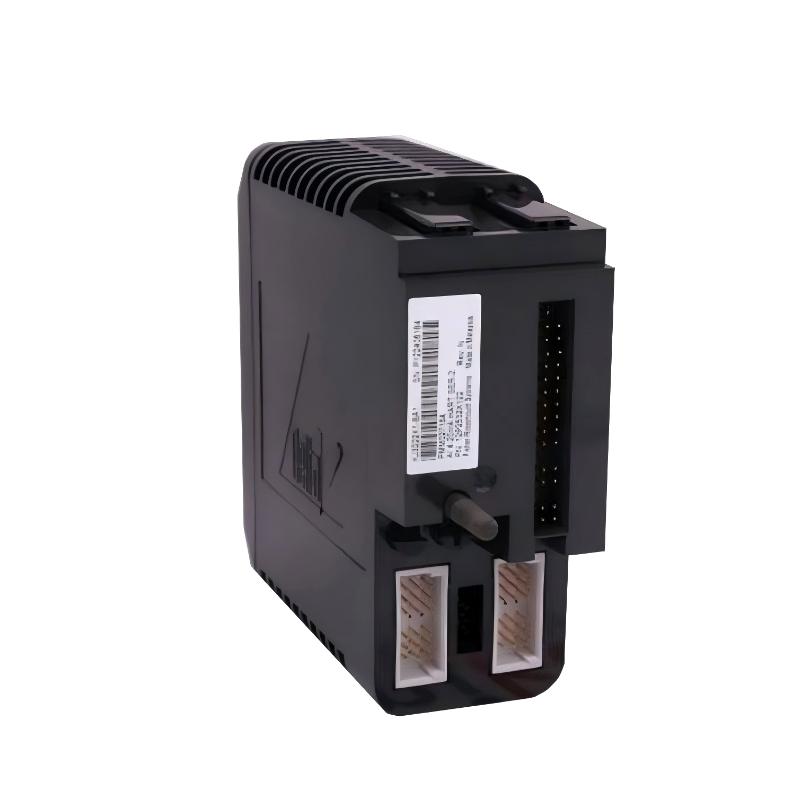
Brand:Yokogawa Electric Item No.:ALR121-S50 Product Origin:JAPAN Product Dimensions:22 × 124 × 126 mm Product Weight:0.34 kg Payment:T/T, Western Union, Credit Card Goods_stock:15 Shipping Port:Xiamen, China Lead Time:1-3 Days Condition:Brand New And Original Warranty:1 Year Certificate:COO
The Yokogawa ALR121-S50 is a serial communication interface module purpose-built for the CENTUM VP and ProSafe-RS control systems. It enables deterministic, reliable data exchange between the field control station (FCS) and external subsystems that communicate via RS-422 or RS-485 serial protocols . This includes PLCs from major manufacturers (Mitsubishi MELSEC, Allen-Bradley SLC500), motor control centers, variable frequency drives, analytical instruments, and legacy process equipment.
The module features two independently configurable serial ports, each capable of supporting point-to-point (RS-422) or multi-drop (RS-485) connections at speeds up to 115.2 kbps, with transmission distances reaching 1200 meters . It offers protocol support for Modbus RTU (master/slave), FA-M3, MELSEC-A, YS communication, and SLC500, making it one of the most versatile serial integration tools in the Yokogawa ecosystem . Engineered for harsh industrial environments, the S50 variant includes ISA Standard G3 coating and extended temperature tolerance, ensuring reliable operation where standard modules would fail .
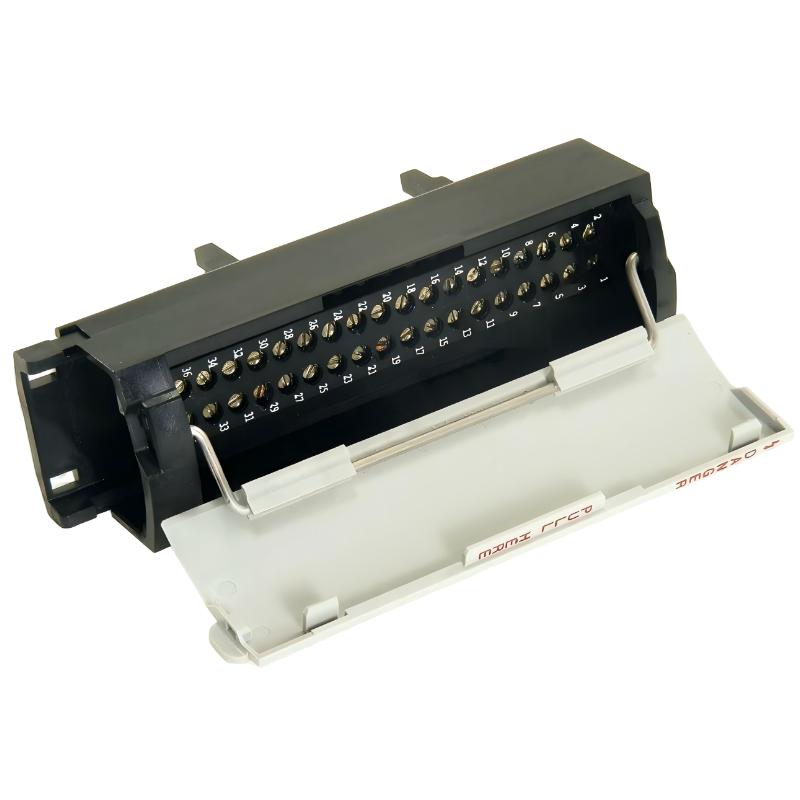
Clamped terminal block, M4 screws (5 poles × 2 ports)
Current Consumption
0.5 A @ 5 VDC
Suffix Code
S = Standard type / 50 = No explosion protection, with G3
Certification
ISA Standard G3, CE, UL
Operating Temperature
-20 °C to +70 °C
Dimensions (W × H × D)
Approx. 22 × 124 × 126 mm
Weight
Approx. 0.34 kg
Recommended Related Models
ALR121-S51 – Enhanced variant with G3 protection and optimized firmware for extended operation in highly corrosive environments. Suitable for chemical and offshore applications .
ALR111-S50 – RS-232C serial communication module (2 ports) for point-to-point connections where RS-232 is required instead of RS-422/485 .
ALE111-S50 – Ethernet communication module for direct Vnet/IP integration, an alternative when you need IP-based connectivity over serial .
ANB10 – ESB Bus Node Unit required to host the ALR121 in an ESB bus configuration .
Popular Related Models
ALR121-S00 – Basic variant without G3 corrosion protection, suitable for standard indoor control room environments .
ALR121-SE0 – Explosion-protected version for hazardous area installations, with enhanced safety certifications .
ALR121-S53 – Variant combining G3 protection with extended temperature specifications for extreme operating conditions .
ALP111-S50 – Pulse input module often deployed alongside the ALR121 in applications requiring both serial communication and high-speed pulse counting.
Applications
You'll find the ALR121-S50 deployed wherever serial devices need a reliable voice in the Yokogawa ecosystem. In a typical power plant, it's the bridge connecting the DCS to multiple PLCs managing ash handling or water treatment, aggregating Modbus RTU data from dozens of remote terminal units. Process industries rely on it to pull analyzer data from gas chromatographs and continuous emissions monitors that stubbornly speak only RS-485 over long distances (up to 1200 meters, to be precise) .
The dual independently configurable ports are a game-changer here. One port might run a Modbus master network polling 30 VFDs in a pump station, while the second operates in slave mode to serve data to a legacy SCADA system . It's also the go-to module for integrating FA-M3 or MELSEC-A subsystems into the broader CENTUM architecture, effectively making them look like native I/O points to the FCS
Advantages
What justifies the ALR121-S50's place in your control cabinet? First, the flexibility. You're not locked into a single protocol—the module handles Modbus RTU (master/slave), FA-M3 communication, MELSEC-A, SLC500, and even Yokogawa's own YS communication protocols . That versatility alone makes it the Swiss Army knife of serial integration.
Then there's the physical resilience. The S50 suffix indicates a version designed for long-term reliability in harsh or corrosive environments, with conformal coating and ISA Standard G3 protection . When your module sits in a cabinet near a chemical reactor or in a coastal facility, that extra protection against airborne contaminants isn't a luxury—it's a necessity. The terminal block wiring using M4 screws (instead of flimsy DB9 connectors) ensures your field terminations stay solid despite vibration and temperature cycling . And with dual ports supporting redundant serial links, you can architect a communication path that doesn't have a single point of failure.
Technical FAQs
1. What industrial communication protocols does the ALR121-S50 support natively?
The module supports FA-M3 communication, Modbus RTU (both master and slave), MELSEC-A computer link, YS communication (with direct connection support), SLC500, and PLC-S protocols, configurable via the system engineering software .
2. Can each of the two ports be configured for different protocols and serial standards?
Yes. Each port is independently configurable, allowing you to run, for example, RS-422 on Port 1 for a point-to-point connection and RS-485 on Port 2 for a multi-drop network, each with its own protocol and baud rate settings .
3. What does the "S50" suffix mean, and how does it differ from S51 or S00?
The S50 suffix indicates a standard type module with no explosion protection but includes ISA Standard G3 option for corrosion resistance and extended temperature range. S51 adds the same G3 protection with enhanced firmware, while S00 is the basic version without G3 protection .
4. How many Modbus slave devices can I connect to a single ALR121 port?
When configured for Modbus RTU, the module supports up to 30 slave stations per communication port on a multi-drop RS-485 network .
5. Is this module compatible with the ProSafe-RS safety system?
Yes, the ALR121-S50 is supported for use with ProSafe-RS as well as CENTUM VP, enabling Modbus communication between the safety controller and external systems .
6. What's the maximum transmission distance I can achieve with this module?
The ALR121 supports serial communication up to 1200 meters total extended length over shielded twisted-pair cable when using RS-422 or RS-485 .
7. Does the module support redundant communication paths?
For certain protocols like FA-M3 and Modbus communication, the ALR121 supports dual-redundant communication configurations, meaning both ports can be used in a redundant pair for increased system availability .
8. What types of field control units can host the ALR121 module?
The module mounts on Yokogawa AFV30, AFV40, AFV10, AFF50 field control units, ANB10 ESB bus node units, ANB11 optical ESB bus node units, and ANR10 ER bus node units .
9. What's the purpose of the "lag time after data transmission" setting?
This is a 1ms configurable delay that the module inserts after transmitting data before it starts listening for a response—critical for half-duplex RS-485 networks where transceivers need time to switch between transmit and receive modes .
10. What are the data frame format options available on the ALR121?
The module supports 7 or 8 data bits, 1 or 2 stop bits, and parity settings of none, even, or odd, allowing it to match virtually any legacy device's serial configuration .